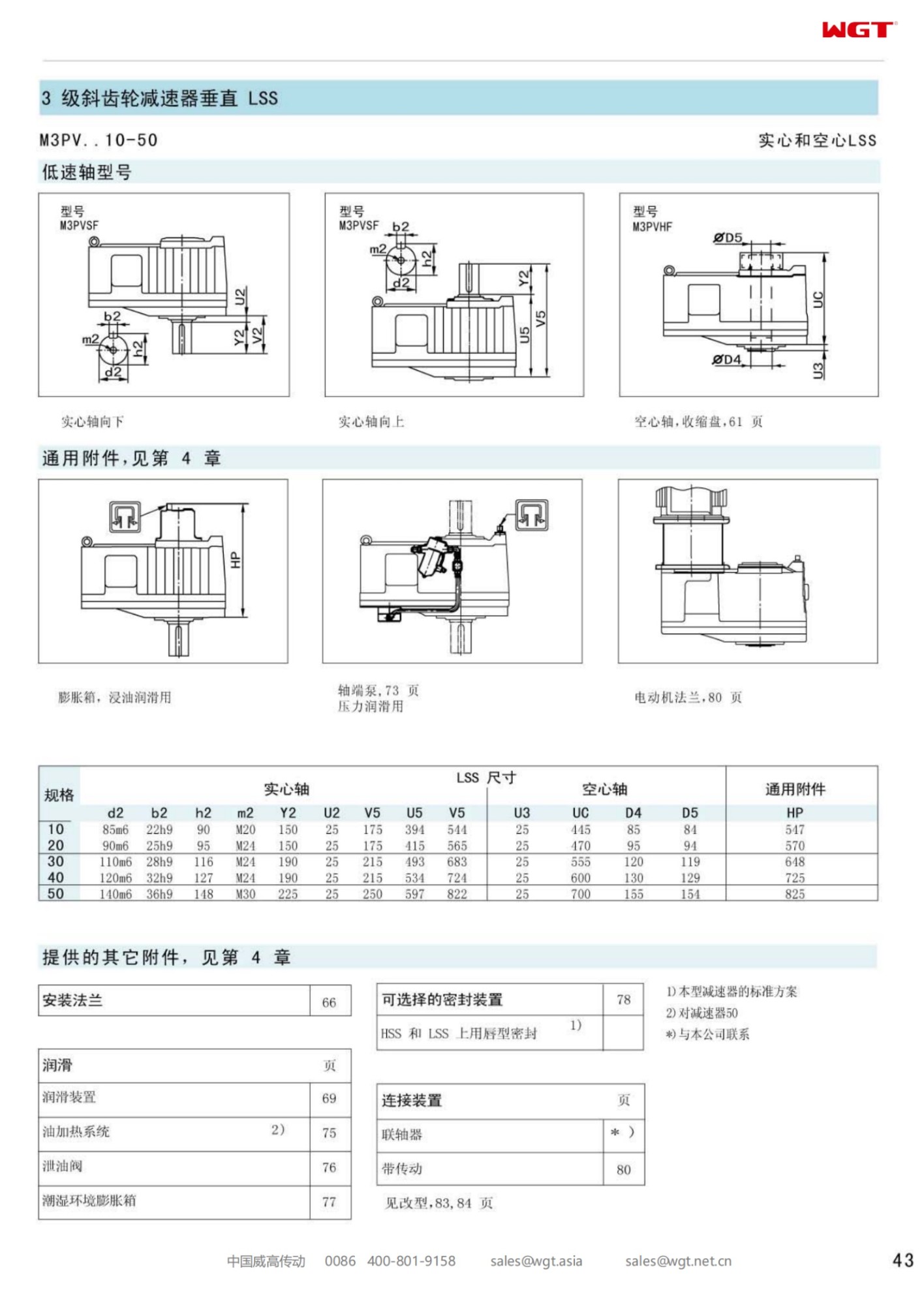
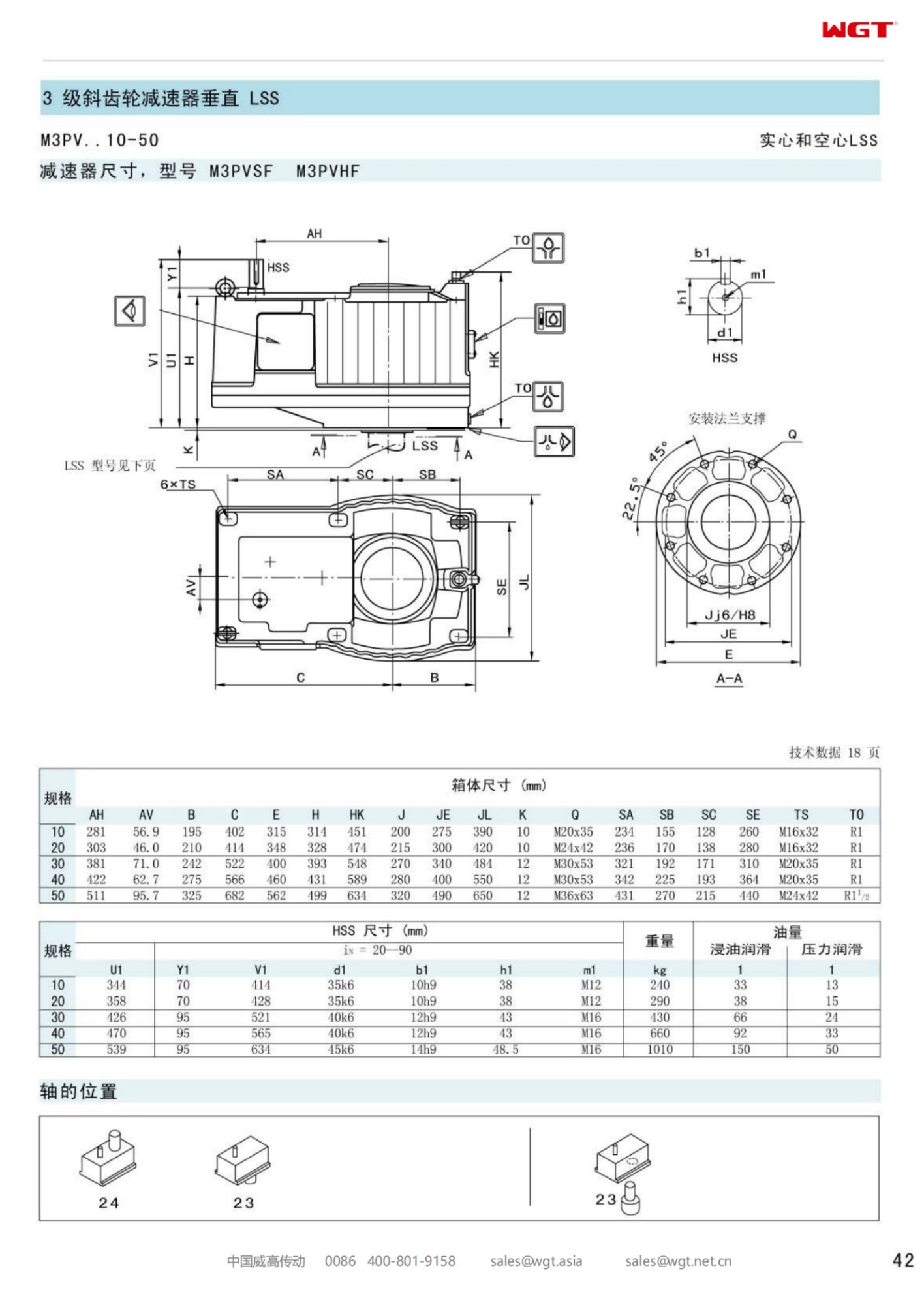
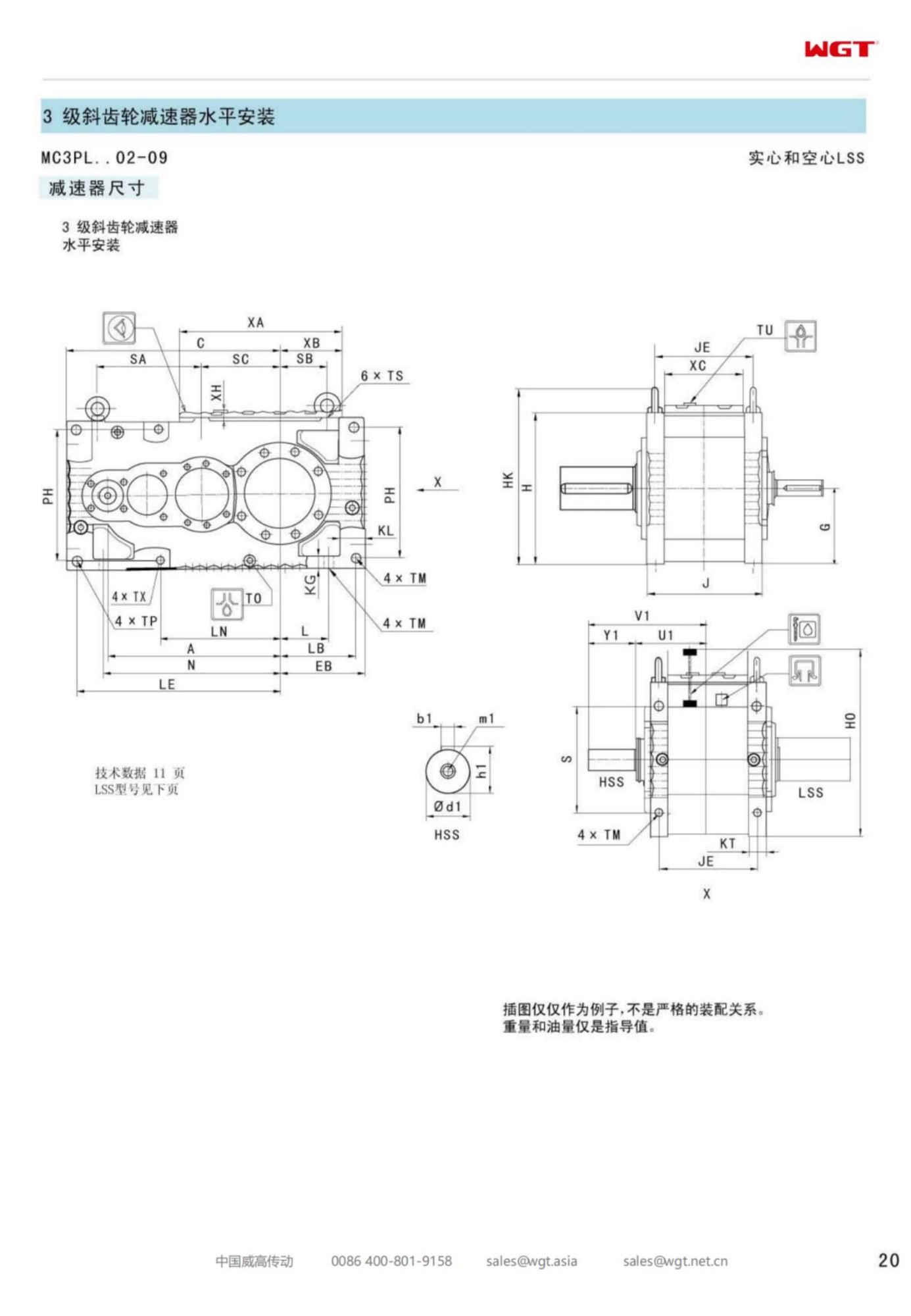
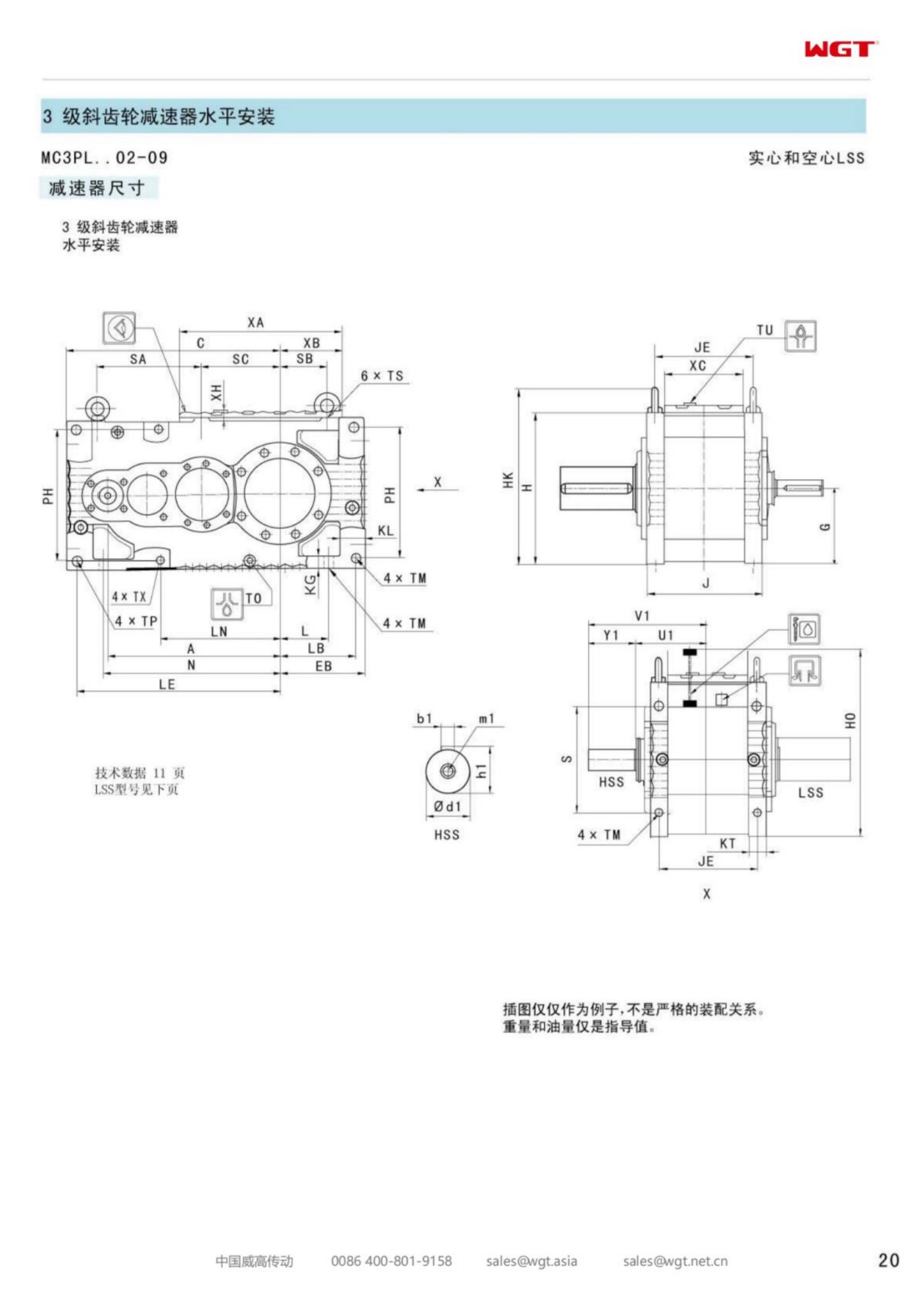
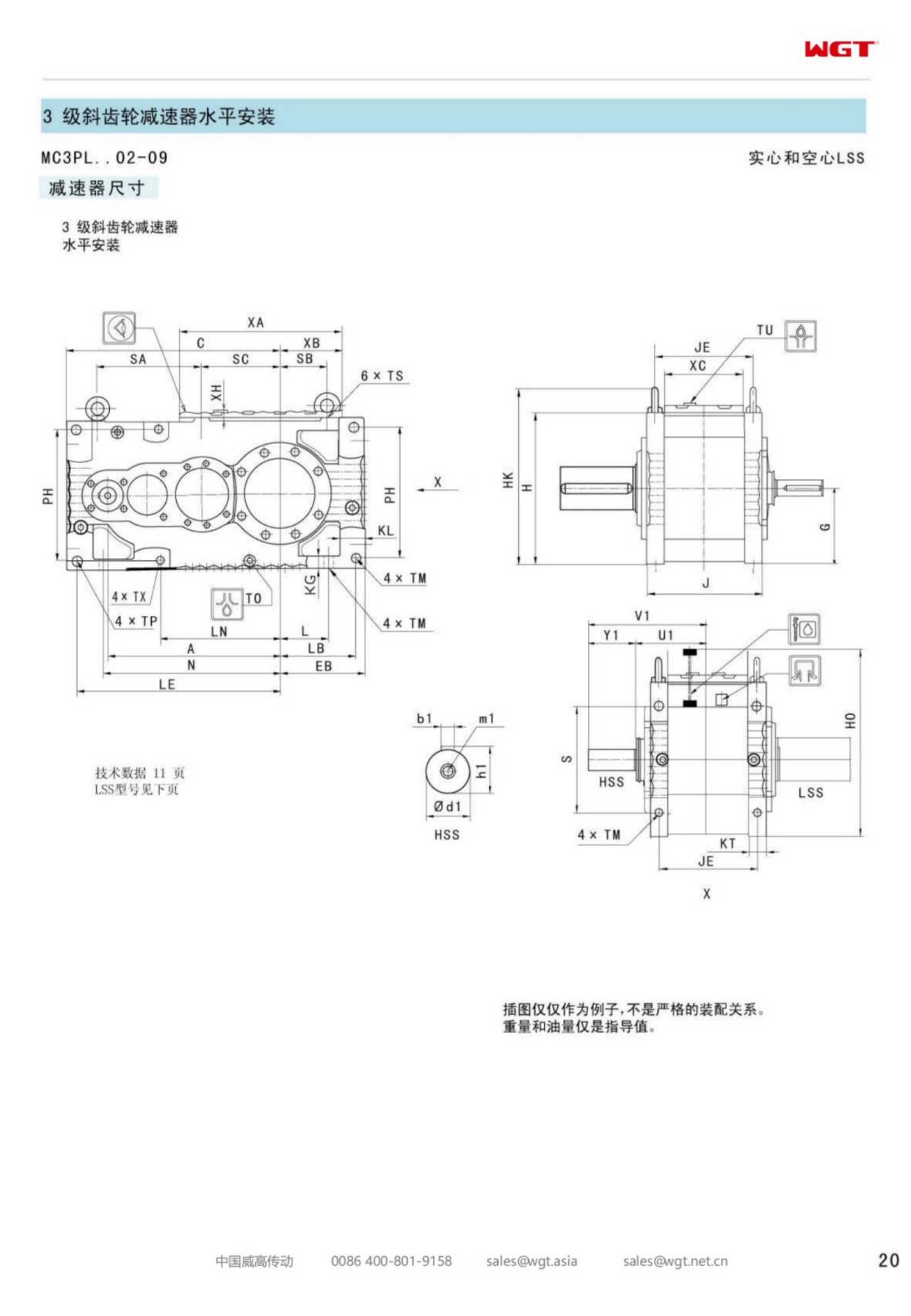
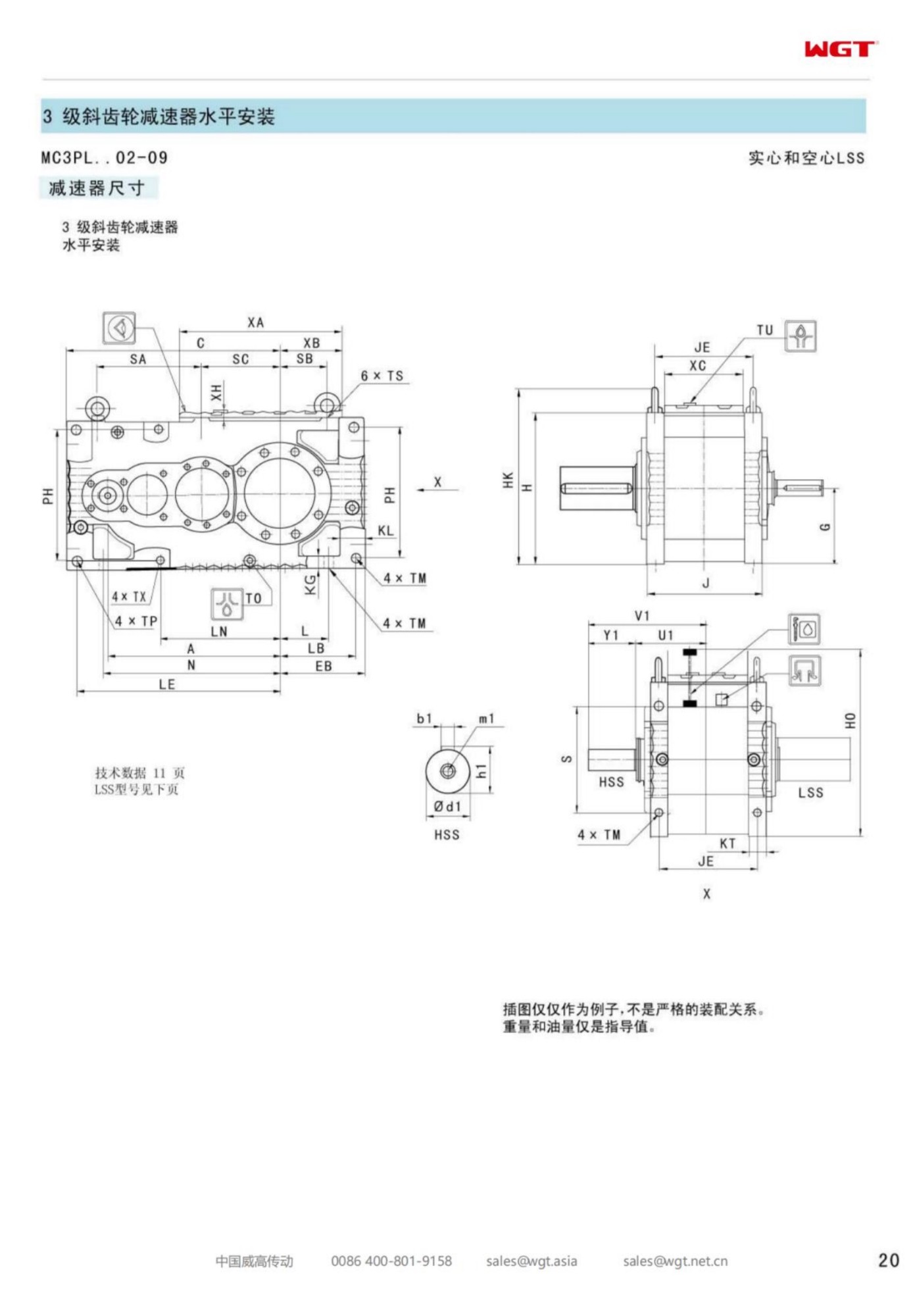
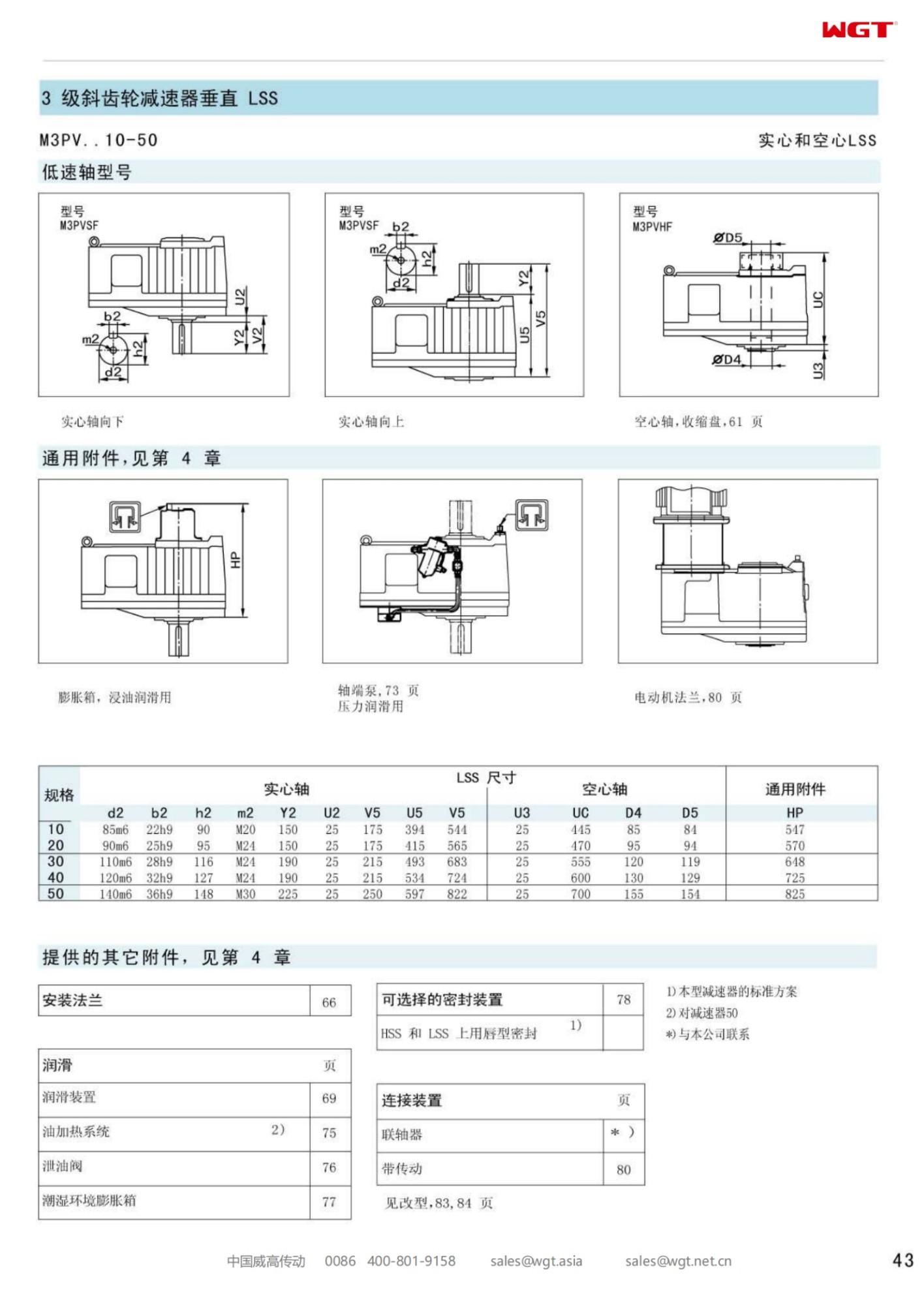
The M3PVHF40 vertical hollow shaft helical gearbox is the bored-output counterpart of the 40-frame upright parallel line. The process shaft runs straight through the housing and the torque is carried by a key or a shrink disc inside the bore, so the drive train has no coupling anywhere between motor and agitator. Three helical stages keep the mesh quiet, and the 40-frame casting gives the bore the wall thickness it needs at the higher torque band while keeping the same hang-from-the-flange installation as the rest of the family.
A Larger Bore, the Same Coupling-Free Logic
Moving from size 30 to 40 on a hollow-shaft build changes one dimension above all: the bore. A larger process shaft can now pass through, which is exactly what happens when a vessel grows from a pilot kettle to a production fermenter - the agitator shaft thickens first, the torque follows, and the gear unit has to match both. The coupling-free logic stays identical: end float is set against the drawing, the clamping element carries the torque, and the whole drive can be slid off the shaft for service without opening a single coupling bolt.
What scales with the bore is the measurement discipline. Bore tolerance, key dimensions or shrink-disc grade and the marked insertion depth must all be stated to the millimetre, because at this torque level a loose clamping fit does not slip quietly - it scores the shaft.
Marking Decoded for the 40 Frame
| M | Industrial multi-stage gear unit family |
| P | Parallel helical stages without a bevel set |
| V | Vertical housing, output at the underside |
| H | Hollow machined bore through the output |
| F | Foot pads and top flange for hanging the unit |
| 40 | Frame size, one step above the compact 30 |
Each letter ends as a line on the order confirmation: bore and fit, clamping element grade, seal material, flange drilling, breather position. Quoting the duty sheet together with the shaft drawing is what produces a unit that drops onto the existing column without rework.
Steady Bearings and Long Shafts
A 40-frame unit usually hangs over a taller vessel than its smaller sibling, and a longer agitator shaft flexes more at the bottom. Where the layout allows one, a steady bearing at the vessel floor takes the lateral load off the gearbox output and visibly extends both the lower bearing life and the seal life. When no steady bearing is possible, the overhung load at the bore must be stated honestly at order stage - it decides the bearing arrangement the factory fits, and it is the one figure that cannot be recovered from a nameplate photograph later.
Machine groups this unit is specified into: Bore-mounted agitators on fermenters and bio-reactors Scraper and rake mechanisms inside circular clarifiers Kettle and cooker shafts that are lifted out for cleaning Vertical ribbon and paddle mixers in food-grade halls Dye-vat and liquor-circulation drives in textile works Sludge-drum drives in municipal treatment plants
Fitting Sequence on Site
Measure the vessel boss before the order, not after: bolt circle, face flatness and any pedestal height belong on the drawing next to the shaft data. On site, support the unit until the fixing bolts are tight, raise the shaft through the bore to the marked insertion depth, set the end float against the drawing, then close the key or shrink disc to the recorded torque in the sequence the manual gives. Fill to the plate quantity and read the oil level at rest before the first start.
Hand-rotate the train once before power is connected - binding at one angle means the shaft is running out or the bore fit is wrong, not that the gears are faulty. A short unloaded run followed by a logged oil temperature and a check for seal weep gives the site its baseline for every later inspection on that vessel.
Seal Choices for Wet Process Halls
The output seal faces the process medium directly, and at this frame size the vessels involved - fermenters, dye vats, sludge drums - tend to hold the aggressive media. Washdown regimes add a second attack from outside. Stating the chemistry and the cleaning regime at order stage lets the factory fit the right seal grade instead of a general-purpose one, and the breather position should be chosen so that hose-down water cannot sit above it. These two declarations cost nothing at order time and are the difference between a seal that lasts years and one that weeps each quarter.
Ordering Sheet Checklist
Before an enquiry leaves the desk, six items should be on it: torque or absorbed power, required output speed, process shaft diameter with tolerance and its overhung load, the medium in the vessel, the mounting posture with boss measurements, and the daily running hours. A mating shaft sketch and a photo of the old nameplate close the remaining questions in one reply. Sites that keep that packet with the vessel file can reorder an identical unit years later from a single message - which is the quiet argument for the hollow-shaft build wherever the shaft must come out for cleaning.
Model Range and Centre Distances
| Model | Centre distance | Output | Typical duty |
|---|
| M3PSF50 | size 50 | solid shaft, foot | conveyors, feeders |
| M3PSF60 | size 60 | solid shaft, foot | crushers, mixers |
| M3PSF70 | size 70 | solid shaft, foot | ball mills, shredders |
| M3PSF80 | size 80 | solid shaft, foot | kilns, heavy conveyors |
| M3PSF90 | size 90 | solid shaft, foot | mill and kiln drives |
| M3RSF50 | size 50 | solid shaft, foot, right-angle | inclined conveyors, elevators |
| M3RSF60 | size 60 | solid shaft, foot, right-angle | screw classifiers, feeders |
| M3RHF70 | size 70 | hollow shaft, foot, right-angle | agitators, drum drives |
| M3PHT80 | size 80 | hollow shaft, torque arm, parallel | shaft-mounted conveyors |
| M3RHT90 | size 90 | hollow shaft, torque arm, right-angle | heavy shaft-mounted drives |
Frame sizes in this series follow a widely used industrial dimension ladder: foundations, couplings and guards of the existing installation are reused as they are.
Proven Installations
Coal handling conveyor
A power station coal-handling plant standardized on one industrial gear family for thirty drives. A single spare-part pool now covers the whole conveyor network, from transfer points to the bunker feed.
Dredger pump drive
A dredging contractor powers its slurry pump skid with an industrial gear unit built for shock loads. The dense abrasive mixture demands a rigid drive train, and ground gearing has kept backlash unchanged over multiple seasons.
![gearbox applications in quarry food and water plants]()
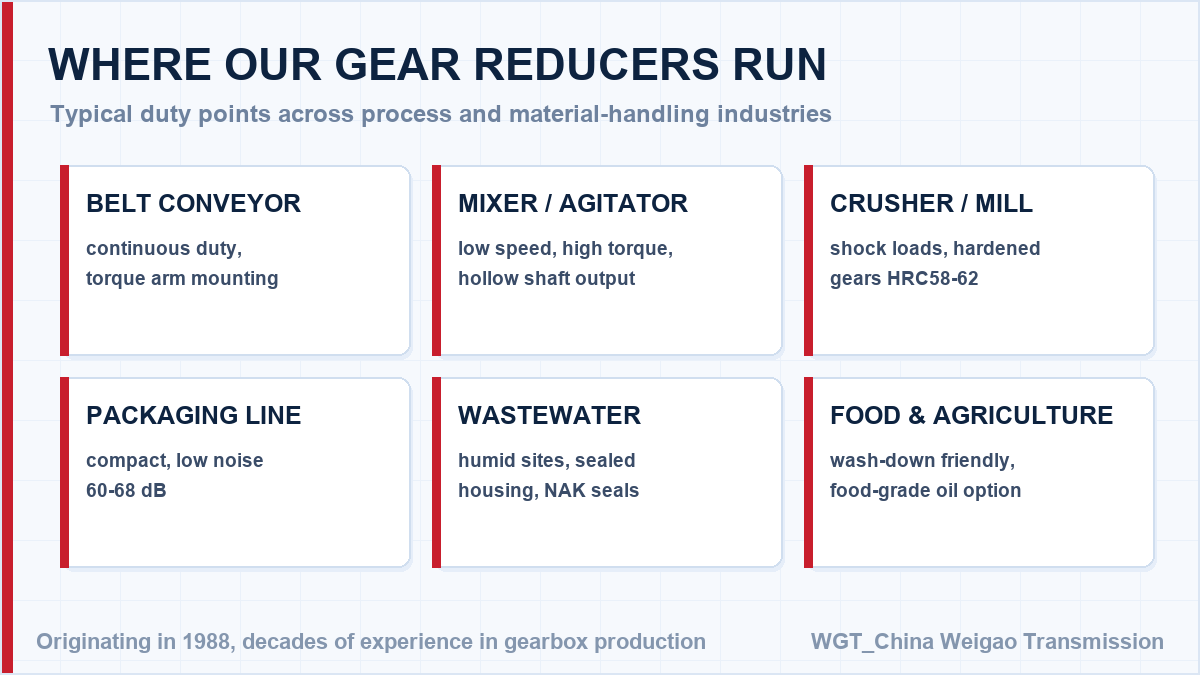
Conveyor, mixer, crusher and wastewater duties share the same gear family.
Selection Example: Typical duty point
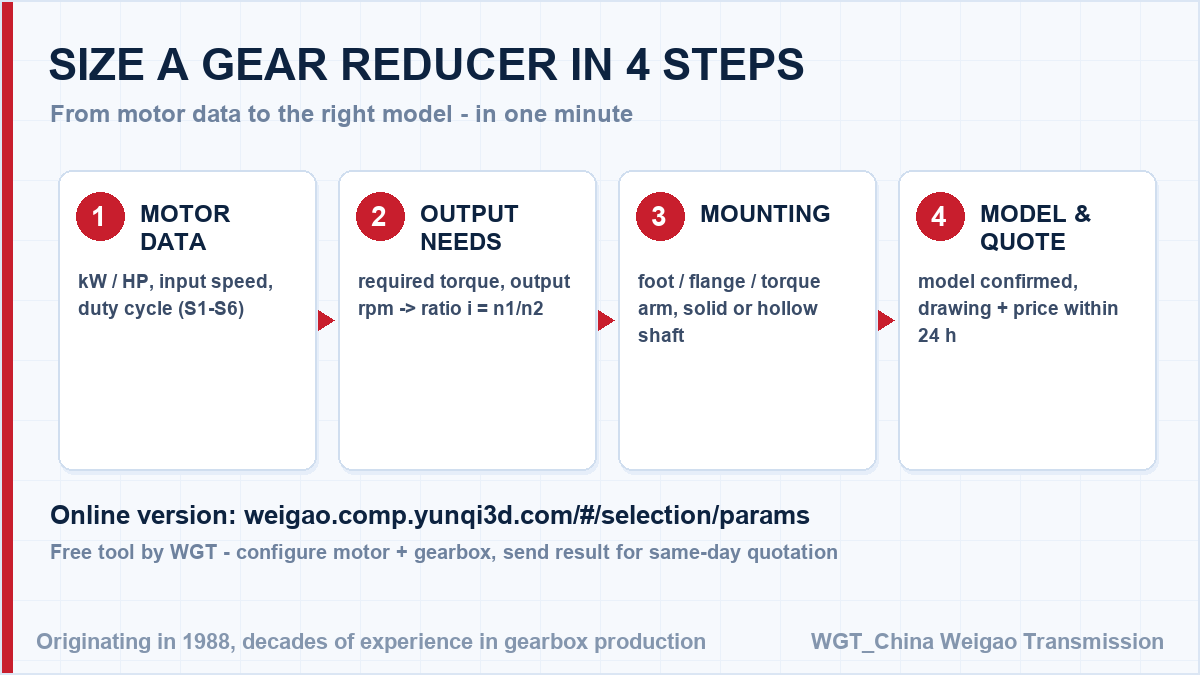
Here is how the selection is made for this frame size. Motor speed divided by the target output speed gives the ratio, rounded to the nearest available step, and the required torque with the service factor then fixes the frame size. Motor speed over target speed gives the ratio; the driven machine decides the service factor, and the two together decide the model.
![industrial gear unit sizing procedure diagram]()
The four inputs the online selector asks for.
Tell Us the Torque, We Confirm the Model
Not sure where to start? Work out the ratio, torque and frame size yourself with the WGT Motor & Gearbox Online Selection System, then send the result - we confirm it in writing.
A photo of the nameplate, the motor power and the output speed you need are enough to start. We confirm the frame size, ratio and mounting style and return a written quotation the same day. Looking for a gear reducer for textile machinery? Tell us the duty point and we will confirm the model in writing.
FAQ: Selection, Mounting and Maintenance
What is the difference between a keyed hollow shaft and a shrink-disc connection?
A keyed hollow shaft is the economical choice for normal torque and easy maintenance. A shrink-disc connection transmits higher torque with zero backlash and no keyway wear, and is preferred for reversing or high-torque duties.
Can I get a CAD drawing or 3D model for my design review?
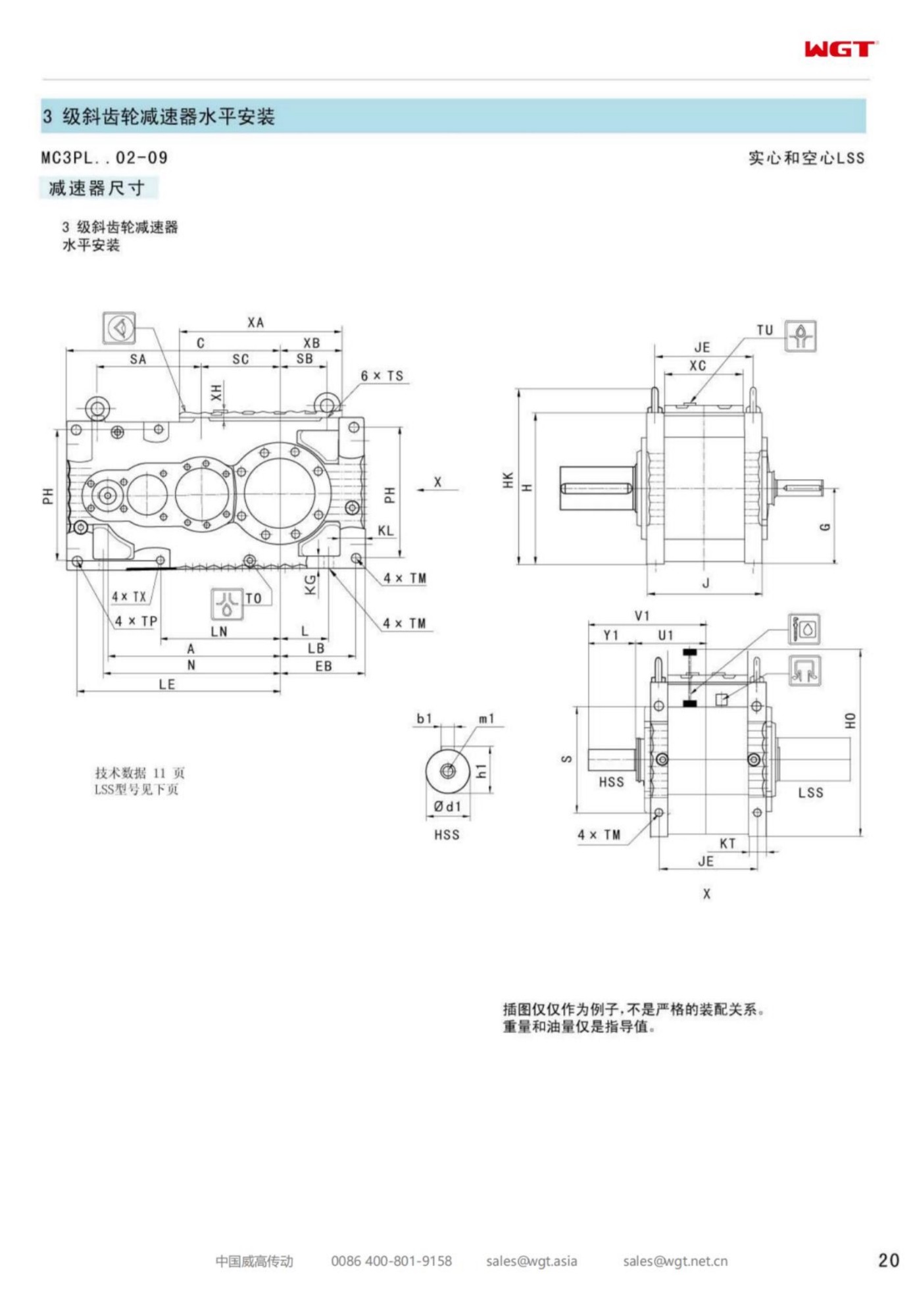
Yes. Send us the model and ratio and we provide a 2D dimension drawing and a 3D STEP model for your review, usually the same working day. Drawings follow the layout of the original series so they drop into your existing assembly.