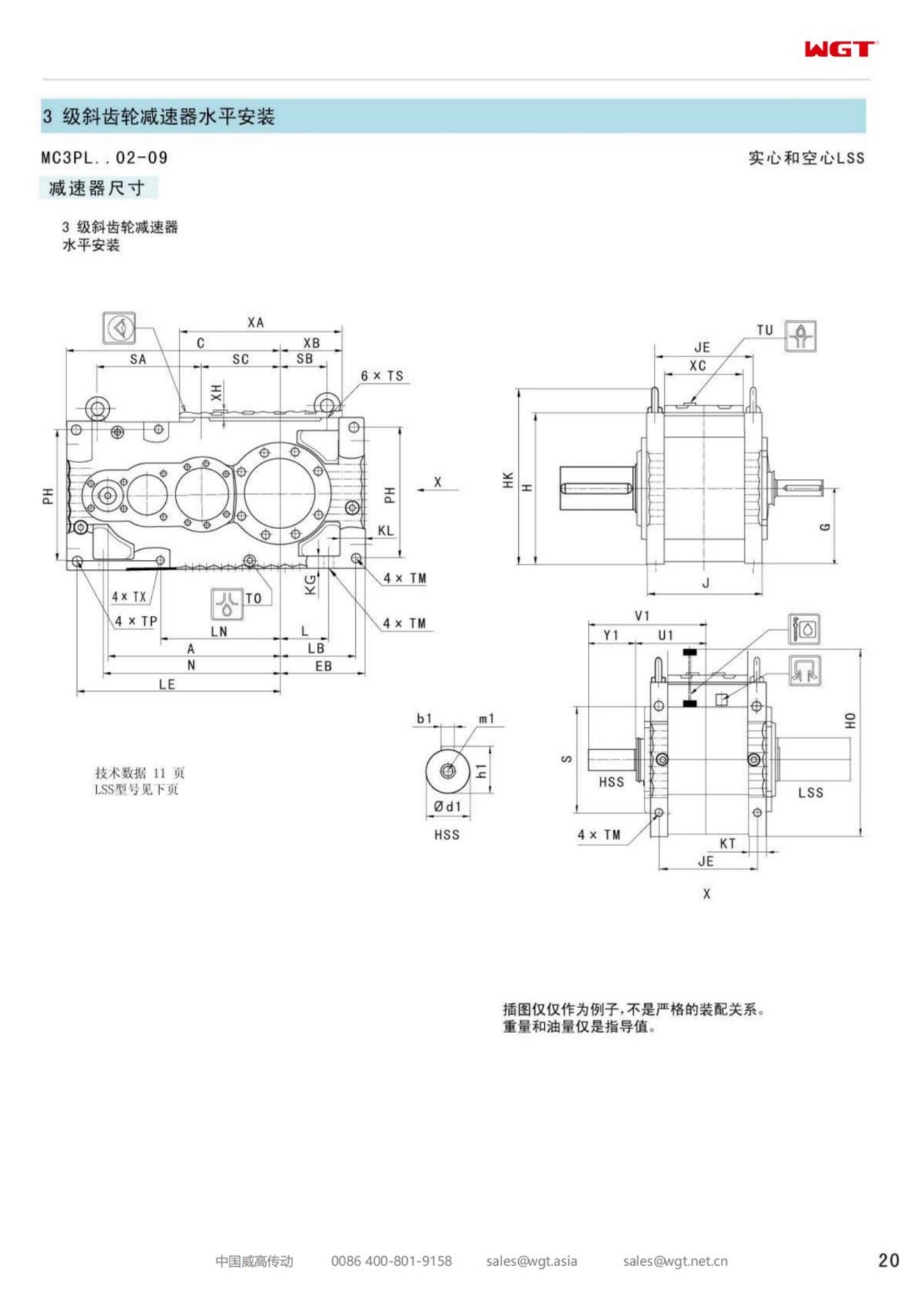
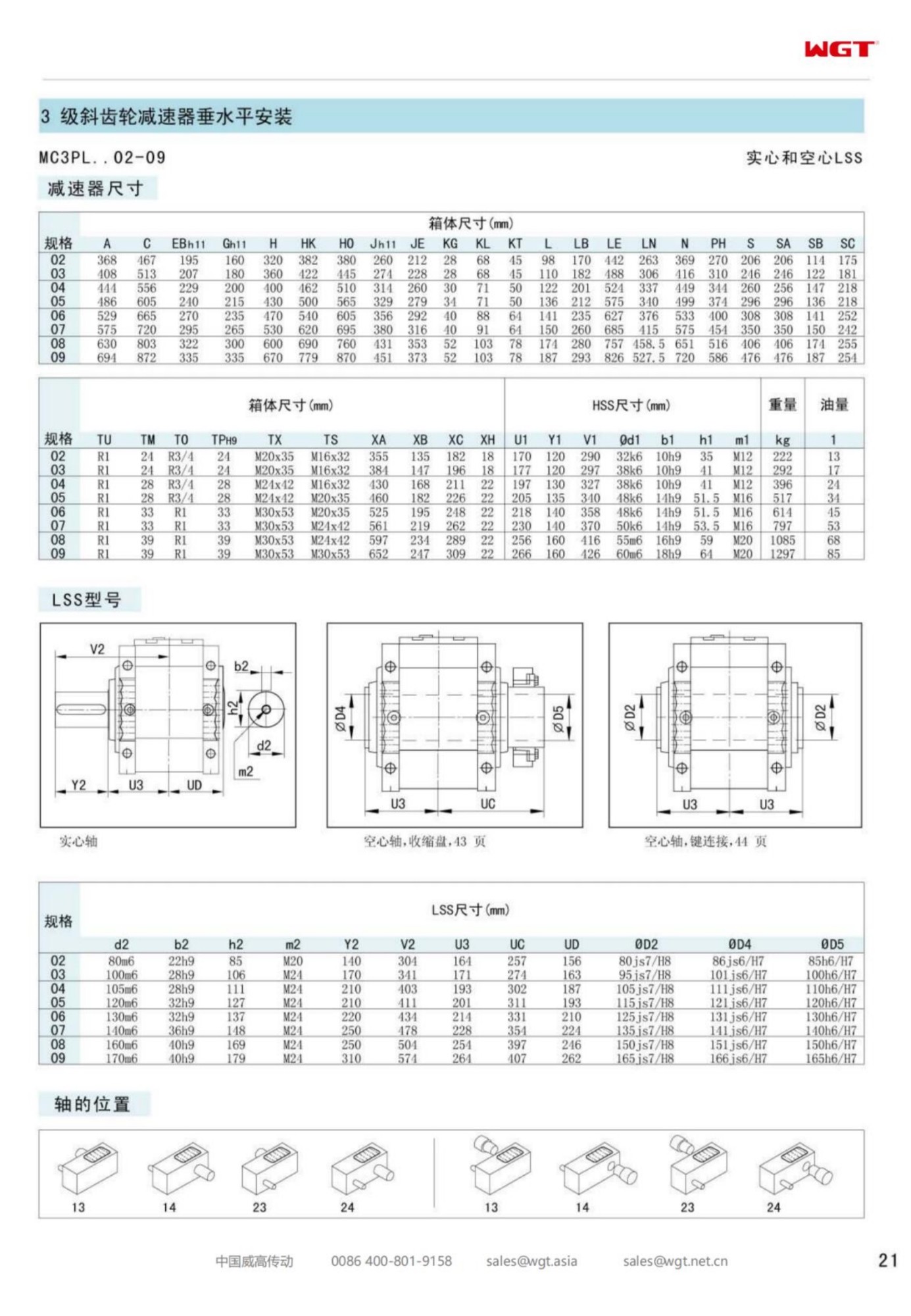
A coke screen is a machine designed to move, and everything bolted to it inherits the motion. The MC3PLST02 three-stage parallel shaft gearbox avoids that inheritance: a solid output shaft keyed to the screen head shaft, a torque arm taking the reaction into structure, and three helical stages holding motor speed down to screening pace.
Below is the code, the case for a torque arm over a foundation, and the enquiry content that keeps a screening drive from being re-specified after the first season.
Coke Screening Shakes a Drive Loose
Vibrating screens and roller screens both put cyclic load into their drives, and the fasteners are the first casualties. A drive rigidly bolted to a frame that flexes will loosen, then leak, then fail - in that order and faster than the maintenance schedule expects. Anything mounted on or beside a screen has to tolerate movement rather than fight it.
The MC3PLST02 Code Read Left to Right
The string is a mounting instruction in disguise.
| MC | Industrial gear unit family for continuous plant duty |
| 3 | Three stages of reduction in one housing |
| P | Parallel-shaft helical gearing, coaxial input and output |
| L | Level output axis into the head shaft |
| S | Solid output shaft, keyed to the driven shaft |
| T | Torque-arm reaction, no baseplate required |
| 02 | Second frame of the three-stage band |
Which reads as: three-stage industrial unit, parallel shafts, level axis, solid output shaft, torque-arm reaction, second frame of the band - the compact end, where screening drives usually sit.
Torque Arm Instead of a Foundation
A torque arm takes the reaction into a bracket on the structure, so the drive needs no baseplate of its own. On a screening station that is decisive: the steelwork already exists, a cast plinth does not, and a baseplate between a screen and its drive is one more thing that can work loose. The arm allows the shaft to define the position and the bracket to do nothing but resist rotation.
Solid Output Shaft on a Screen Head
A screen head shaft is short, stiff and usually ends in a flange or a keyed coupling right beside the bearing housing. A solid output suits that: it reaches the shaft with a standard coupling, the arm takes the reaction, and there is no bore to line up on a machine that is already shaking. Where the head shaft cannot be extended, a bore would be the answer - and that is a different model in the same family.
Abrasion From Coke Breeze
Coke arrives dry, black and full of fines, and the fines go wherever air goes. They settle on covers, work into breathers and stain every surface they touch. The answers are unglamorous: a breather positioned out of the dust plume, gaskets that survive being opened, and a wipe-down routine that actually happens. Specifying them at order time costs nothing; adding them later costs a shutdown.
Vibration and the Arm Bracket
The arm bracket has to be stiff enough to resist the reaction without ringing, and it has to be positioned so the arm sits square to the drive rather than at an angle that loads the arm pin in bending. A bracket welded to a flimsy handrail post is not a bracket - it is a fatigue test. Ask for the reaction figure and give it to whoever fabricates the steel.
Seal Faces in a Screening House
Screening houses are dusty, draughty and often cold, which is hard on lip seals that rely on a film of oil and a clean counterface. A protected input seal, a shaft surface that stays smooth, and an oil level that is checked rather than assumed keep the seal alive. On a drive that runs continuously, the seal is usually what decides bearing life.
Three Stages Behind a Screen
Screens run slowly and take real torque, especially on the coarse decks where the feed arrives in lumps. Three stages deliver that reduction in a case short enough to fit between the screen and the walkway, and the smooth output keeps the screen's own motion from being fed back into the gearing as shock.
Alignment Without a Baseplate
With a torque arm, the drive's position is set by the shaft it is coupled to and the arm's length, not by a machined pad. That makes installation quick and re-installation quicker, but it puts a premium on the arm's geometry: the arm must be at the designed angle at running torque, and the stop must be set so the drive cannot rotate past it in either direction. Two measurements and one check with the drive stalled by hand are enough.
Ratio From the Screen Speed
The screen maker states the shaft speed the deck needs, and the motor speed comes from the supply. Dividing one by the other gives the ratio, which fixes the stage count; the torque at the deck, with the screen's own duty factor, fixes the frame. Screening duty factors are usually generous, and rightly so - a screen that stalls under a lump is a production stop.
Enquiry Lines for a Screening Drive
State the head shaft diameter and coupling type, the deck speed, the feed size range and tonnage, the motor frame and speed, the mounting arrangement available for the arm, and the ambient dust and temperature conditions. A photograph of the screen end and the structure behind it removes the last ambiguity.
Frame Two at a Coke Plant
Frame two of the three-stage band is the compact end: enough case for a screening drive's continuous torque, small enough to hang beside a screen without crowding the walkway, and bored or keyed for the shaft the screen actually has. On coke plants, where the drive sits in a dusty corner and is expected to be forgotten, that combination is exactly the brief.
A screen that shakes everything bolted to it - a torque arm lets the drive ride it out:
- Coke breeze screen at a coke oven battery
- Coke sizing deck on a screening station
- Roller screen drive at a coke handling plant
- Screen feed conveyor at a blast furnace stockhouse
- Coke transfer point screen drive
- Screening house discharge conveyor
Available Frames and Their Typical Duty
| Model | Centre distance | Output | Typical duty |
|---|
| M3PSF50 | size 50 | solid shaft, foot | conveyors, feeders |
| M3PSF60 | size 60 | solid shaft, foot | crushers, mixers |
| M3PSF70 | size 70 | solid shaft, foot | ball mills, shredders |
| M3PSF80 | size 80 | solid shaft, foot | kilns, heavy conveyors |
| M3PSF90 | size 90 | solid shaft, foot | mill and kiln drives |
| M3RSF50 | size 50 | solid shaft, foot, right-angle | inclined conveyors, elevators |
| M3RSF60 | size 60 | solid shaft, foot, right-angle | screw classifiers, feeders |
| M3RHF70 | size 70 | hollow shaft, foot, right-angle | agitators, drum drives |
| M3PHT80 | size 80 | hollow shaft, torque arm, parallel | shaft-mounted conveyors |
| M3RHT90 | size 90 | hollow shaft, torque arm, right-angle | heavy shaft-mounted drives |
Note that PSF and RSF frames of the same size share the mounting footprint; the R build simply inserts a bevel stage, so switching layout rarely forces a foundation change.
Questions and Answers
What materials are used for the gears and shafts?
Gears are 20CrMnTi alloy steel, case-carburised to HRC58-62 over a tough HRC33-40 core. Input and output shafts are 42CrMo, quenched and tempered to HRC25-30. The housing is cast iron at HBS190-240.
Why does low backlash matter, and what is the limit?
Backlash is the small free rotation between input and output. We hold it within 20 arcmin - tight enough for indexing tables, positioning drives and reversing applications, without the cost of a precision servo gearbox.
Do you offer food-grade or washdown versions?
We can supply food-grade lubricant, FKM (Viton) oil seals and stainless fasteners for washdown areas. These units are common in bakeries, dairies and packaging halls where hygiene and moisture are daily concerns.
Installation Examples
Ship loader slew drive
A port terminal selected heavy-duty gear units for the travel drives of its ship loader. Salt-laden air is handled by the heavy-duty coating option, and spare seal kits are held on site for the annual service.
Sugarcane carrier drive
A sugar mill drives its cane carriers with industrial gear units sized for fully loaded starts. The generous torque margin covers cane jams, and the right-angle build keeps the motor clear of the carrier slat path.
![gear box application map for industry]()
From quarries to food plants - one right-angle drive concept.
Selection Example: Coke breeze screen at a coke oven battery
Take a 15 kW motor at 1470 rpm driving the screen head shaft at 22 rpm. The ratio follows directly: 1470 / 22 = 67, so a ratio near i=67 comes from the three-stage parallel band, and the frame is confirmed with the screen maker's duty factor against a lump arriving on a coarse deck rather than against the average screening rate. In this case frame two hangs its reaction on a torque arm bolted to the screening structure, keys a solid output to the head shaft, and keeps its seals alive in coke dust. The ratio is the easy part. The service factor for the shock level is what makes the selection safe, and we check that for you at no charge.
![how to choose a speed reducer model]()
Ratio first, then torque, then frame size: the standard selection route.
From RFQ to Dispatch - One Account Manager
Tired of chasing suppliers? The WGT Motor & Gearbox Online Selection System covers motor power, ratio and mounting on one screen - enter your numbers and see the model immediately.
One account manager follows your enquiry from selection to dispatch, with lead times and test dates confirmed in writing. Urgent unit needs and project volumes are handled on the same route. Looking for a gearbox for agricultural machine? Tell us the duty point and we will confirm the model in writing.