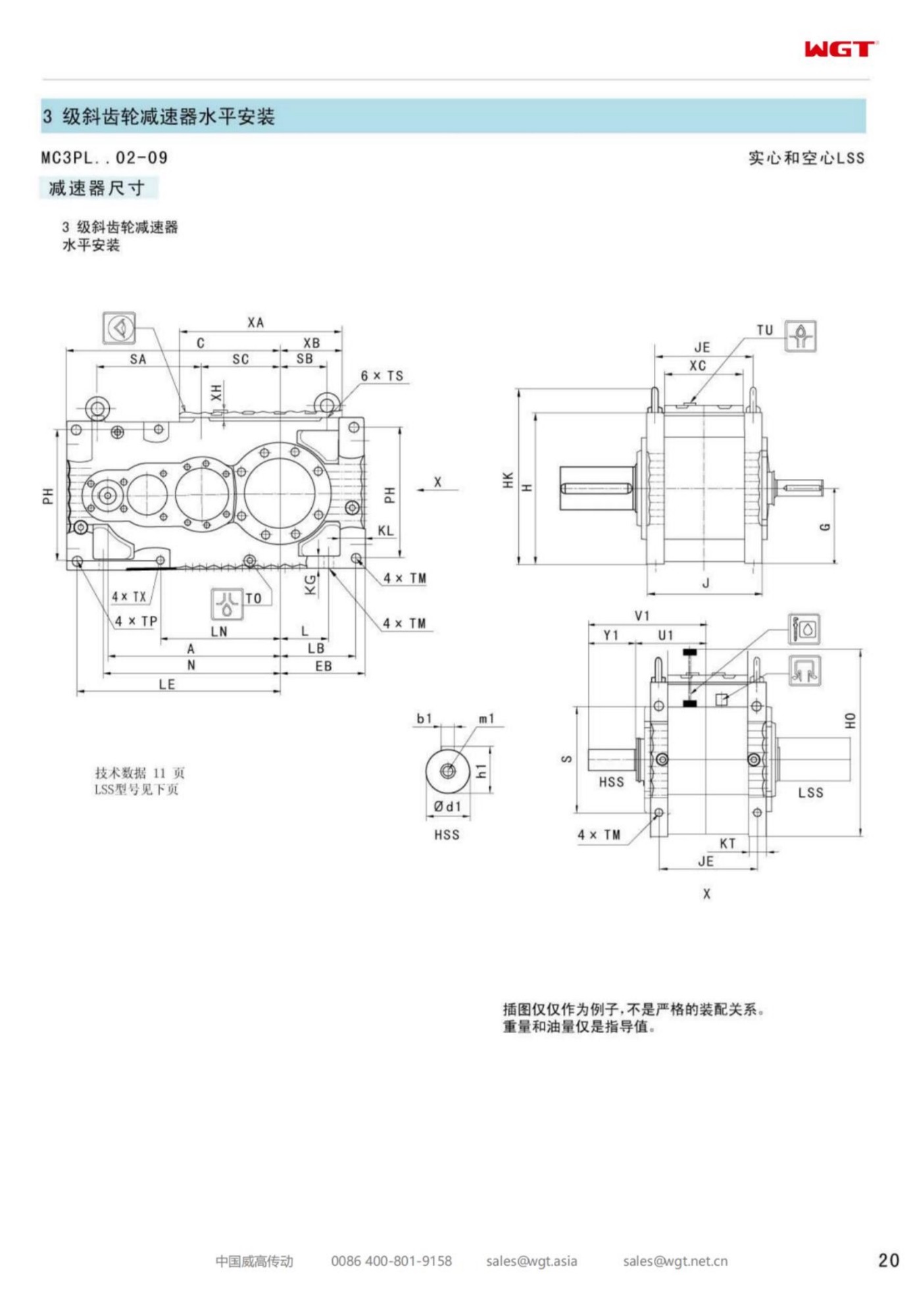
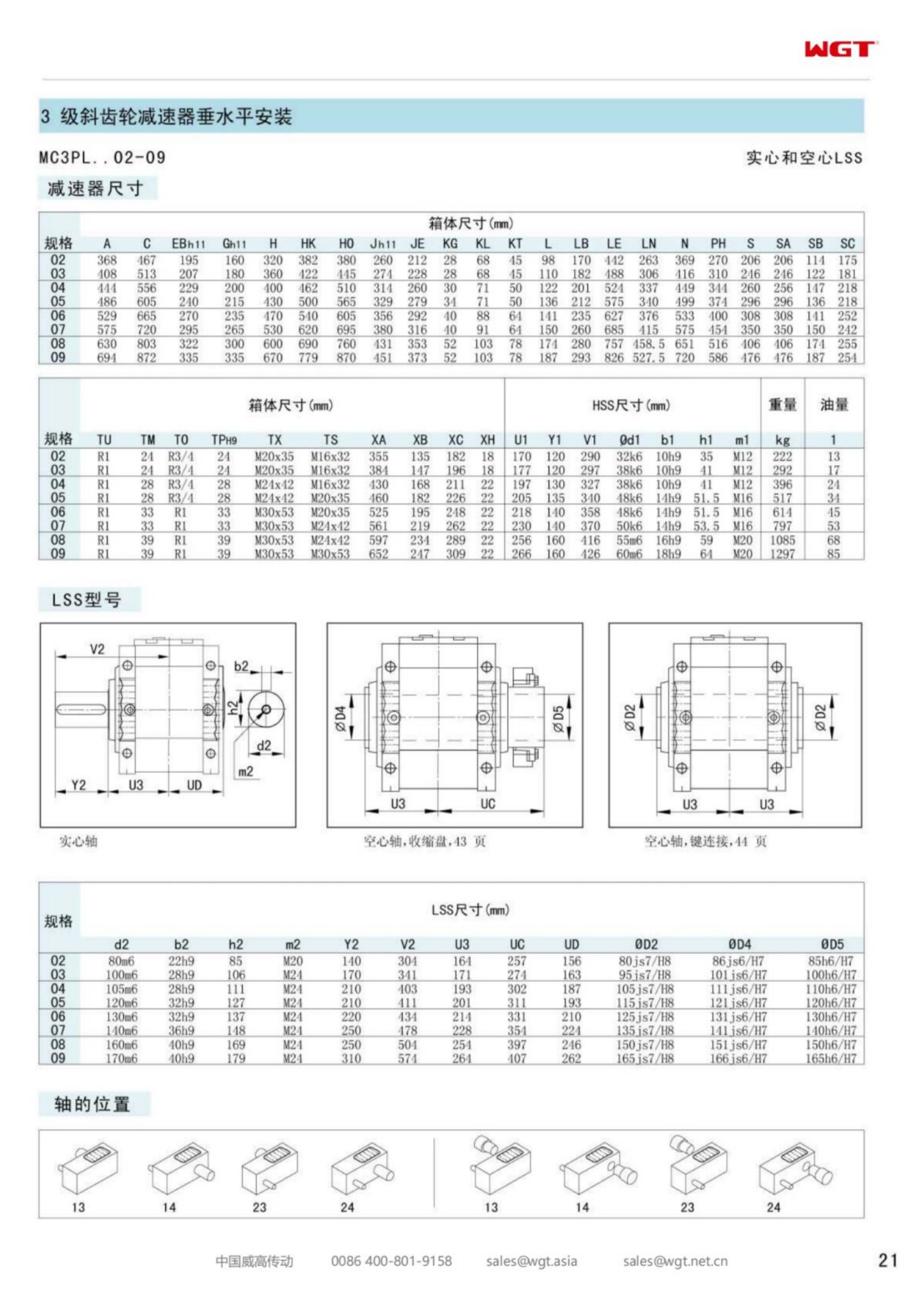
Rejects do not arrive politely. A pulper throws out wire, tape, wet board and the occasional glove in bursts, and the belt that carries them away runs in the wettest, steamiest corner of the mill. The MC3PLST06 three-stage parallel shaft gearbox drives that reject belt: a keyed output at the head shaft, a torque arm on the pulper's structural steel, and three helical stages holding a four-pole motor down to a crawl.
The sections below set out the code, the arm's logic against pulper steelwork, the jamming and wet-air conditions, and the enquiry content that keeps a rejects line from being re-driven after its first bad week.
Rejects Arrive in Bursts, Not in a Stream
A pulper discharges when its ragger or junk trap releases, and the release is sudden. Between bursts the belt may run nearly empty, then take a slug of wet board and wire that weighs more than the belt's rated rate. A drive sized on the average of those two states is sized wrong; the burst is the design case, and it repeats all shift.
The MC3PLST06 String and What It Fixes
Six characters, six decisions already taken.
| MC | Industrial gear unit family for continuous plant duty |
| 3 | Three stages of reduction in one housing |
| P | Parallel-shaft helical gearing, coaxial input and output |
| L | Level output axis into the driven shaft |
| S | Solid output shaft, keyed to the driven shaft |
| T | Torque-arm reaction, no baseplate required |
| 06 | Sixth frame of the three-stage band |
So: three-stage industrial unit, parallel shafts, level output, solid shaft keyed at the head end, torque-arm reaction, sixth frame. Nothing in that string has to be reinterpreted on site.
Torque Arm Against Pulper Structure
A rejects belt is usually short and its head end sits close to the pulper's own frame, which is heavy steel built to take the pulper's vibration. That frame is a far better anchor than a floor pad in a wet basement, and a torque arm can use it directly. The arm also keeps the drive off the floor, where the wash water runs.
Keyed Shaft at the Reject Belt Head
The head shaft on a short reject belt is stiff and accessible, and a keyed coupling is the simplest connection that will survive a jam. With a solid output the coupling is the fuse: it can be checked, shimmed and, if the mill prefers, fitted with a shear element. A bore over that shaft would remove the coupling and, with it, the cheapest protection in the train.
Wire, Tape and the Things That Jam a Reject Belt
Baling wire wraps a pulley in seconds, and a wrapped pulley turns a modest belt into a brake. The drive then sees a stall torque it was never meant to hold, and it holds it until someone notices. Specifying the stall case, providing a slip or shear element, and putting the arm stop where it can be inspected after a jam are all part of the same decision.
Wet Air, Steam and a Paper Machine Basement
Reject lines live where stock splashes and steam condenses, and the condensation is warm and slightly alkaline. Steel that was painted for a dry hall will rust from the bottom up; a breather that breathes that air will pull water into the oil. A sealed-for-washdown finish, a breather piped to a drier level, and a drain that can be reached without a ladder are the three details that matter most.
Three Stages on a Slow Reject Belt
Reject belts run slowly because the material will not travel faster without being thrown, so the ratio is deep and the three-stage band is where it sits. Three meshes keep the case compact enough to fit between the pulper and the wall, and they give the smooth output that a short belt with a heavy slug needs.
Stall, Reverse Jog and the Arm Stop
A jammed reject belt is often cleared by jogging it backwards, which loads the arm in the opposite direction. The stop must therefore be set on both sides of the working angle, with a visible gap, and the bracket must resist the reverse reaction as well as the forward one. A one-sided stop is a bracket waiting to be bent.
Sealing Where Stock Splashes
Stock at consistency is abrasive and it dries to a hard film on any warm surface. At the output seal it mixes with oil to make a grinding paste, which is why the seal arrangement rather than the seal alone decides life. A protected seal, a slinger to throw stock off the shaft, and a counterface that stays smooth are the practical specification.
From Pulper Throughput to Ratio
The mill knows its pulper's batch size and its reject rate, and the reject belt's speed follows from the belt width and the slug it must take. Head shaft revolutions from that speed, motor speed divided by revolutions gives the ratio, and the jam torque with a service factor gives the frame. Every figure comes from the mill's own records.
Enquiry Data for a Rejects Line
State the head shaft diameter and keyway, the belt width and speed, the largest slug the pulper can release, the motor frame and speed, the wash-down and steam conditions, and what structure is available for the arm. A photograph of the head end, taken from the aisle rather than from above, tells us more than a layout drawing.
Frame Six in a Recycled Fibre Plant
Frame six is the size that suits a mill running recovered fibre hard: enough case for jam torque without running hot in a warm basement, enough shaft for a head end that takes wire and slugs, and a footprint that fits the corner the pulper left free. It is the upper middle of the band, and on rejects duty the upper middle is where the honest answers land.
Wire, tape and wet board arriving in slugs - three stages keep the reject belt moving:
- Reject conveyor behind a low-consistency pulper
- Ragger tailings belt at a recycled fibre plant
- Heavy reject discharge conveyor at a stock preparation line
- Junk removal belt under a drum pulper
- Screen reject conveyor at a deinking plant
- Waste transfer belt from a pulper junk tower
Selection Example: Reject conveyor behind a low-consistency pulper
Take a 22 kW motor at 1470 rpm turning the reject belt head shaft at 26 rpm. The ratio follows directly: 1470 / 26 = 56.5, so a ratio near i=56 is drawn from the three-stage parallel band, and the frame is confirmed against the stall of a pulley wrapped in baling wire rather than against the normal reject rate. In this case frame six takes its reaction into the pulper structural steel through an arm stopped on both sides, keys a solid output to the head shaft, and carries a seal plan for splash and steam. The same three numbers - motor speed, target output speed, required torque - are all you need; our engineers (or the online selector below) cross-check the service factor for your duty cycle.
![gear reducer selection flow chart - ratio and frame size]()
Figure: from motor data to a confirmed gearbox model in four steps.
Common Models in the M3 Series
| Model | Centre distance | Output | Typical duty |
|---|
| M3PSF50 | size 50 | solid shaft, foot | conveyors, feeders |
| M3PSF60 | size 60 | solid shaft, foot | crushers, mixers |
| M3PSF70 | size 70 | solid shaft, foot | ball mills, shredders |
| M3PSF80 | size 80 | solid shaft, foot | kilns, heavy conveyors |
| M3PSF90 | size 90 | solid shaft, foot | mill and kiln drives |
| M3RSF50 | size 50 | solid shaft, foot, right-angle | inclined conveyors, elevators |
| M3RSF60 | size 60 | solid shaft, foot, right-angle | screw classifiers, feeders |
| M3RHF70 | size 70 | hollow shaft, foot, right-angle | agitators, drum drives |
| M3PHT80 | size 80 | hollow shaft, torque arm, parallel | shaft-mounted conveyors |
| M3RHT90 | size 90 | hollow shaft, torque arm, right-angle | heavy shaft-mounted drives |
The table below shows the M3 industrial range: P builds are all-helical on parallel axes, R builds add a bevel input stage for a right-angle drive; S / H describe the low-speed shaft and F / T the mounting.
Application Cases
Lime kiln auxiliary drive
A lime producer fits a smaller industrial gear unit as the auxiliary drive of its rotary kiln. Turning the kiln slowly during shutdowns and start-ups is exactly the low-speed, high-torque duty the frame was chosen for.
Tunnel boring backup drive
A tunnelling contractor uses industrial gear units on the backup gantry conveyors of its TBM. The units arrived dimensionally matched to the gantry interfaces, so installation took hours rather than days.
![industrial gearbox applications - conveyor mixer crusher wastewater]()
Figure: typical industries that use the WGT S-series gear reducers.
Frequently Asked Questions
Will the unit match my existing gearbox interface?
The series is manufactured to the standard centre distances, shaft dimensions and flange patterns of its frame family, so couplings, guards and foundations do not have to be redesigned. Send the nameplate details and we confirm the equivalent frame in writing.
What is the maximum overhung load on the output shaft?
The permissible overhung load depends on frame size, output speed and the distance from the shaft shoulder - all listed in the catalogue. If you drive a chain sprocket or V-belt pulley direct on the output shaft, send us the load and pitch diameter and we will confirm the limit.
Do you offer a version with an integrated gear motor?
We can supply the unit as a complete gear motor with an IEC motor bolted on and tested as one assembly. That saves you the alignment and coupling work, and the whole assembly carries the same one-year warranty.
Site Survey Data? We Size It for You
Have the machine data but not the model? Not sure which model fits? Try our online WGT Motor & Gearbox Online Selection System to match motor power, ratio and mounting in one minute.
Send the conveyor length, belt speed, drive pulley diameter or the machine duty description. We run the full selection - ratio, frame, service factor - and return the datasheet with the quote. Looking for a gearbox for mixer and agitator? Tell us the duty point and we will confirm the model in writing.