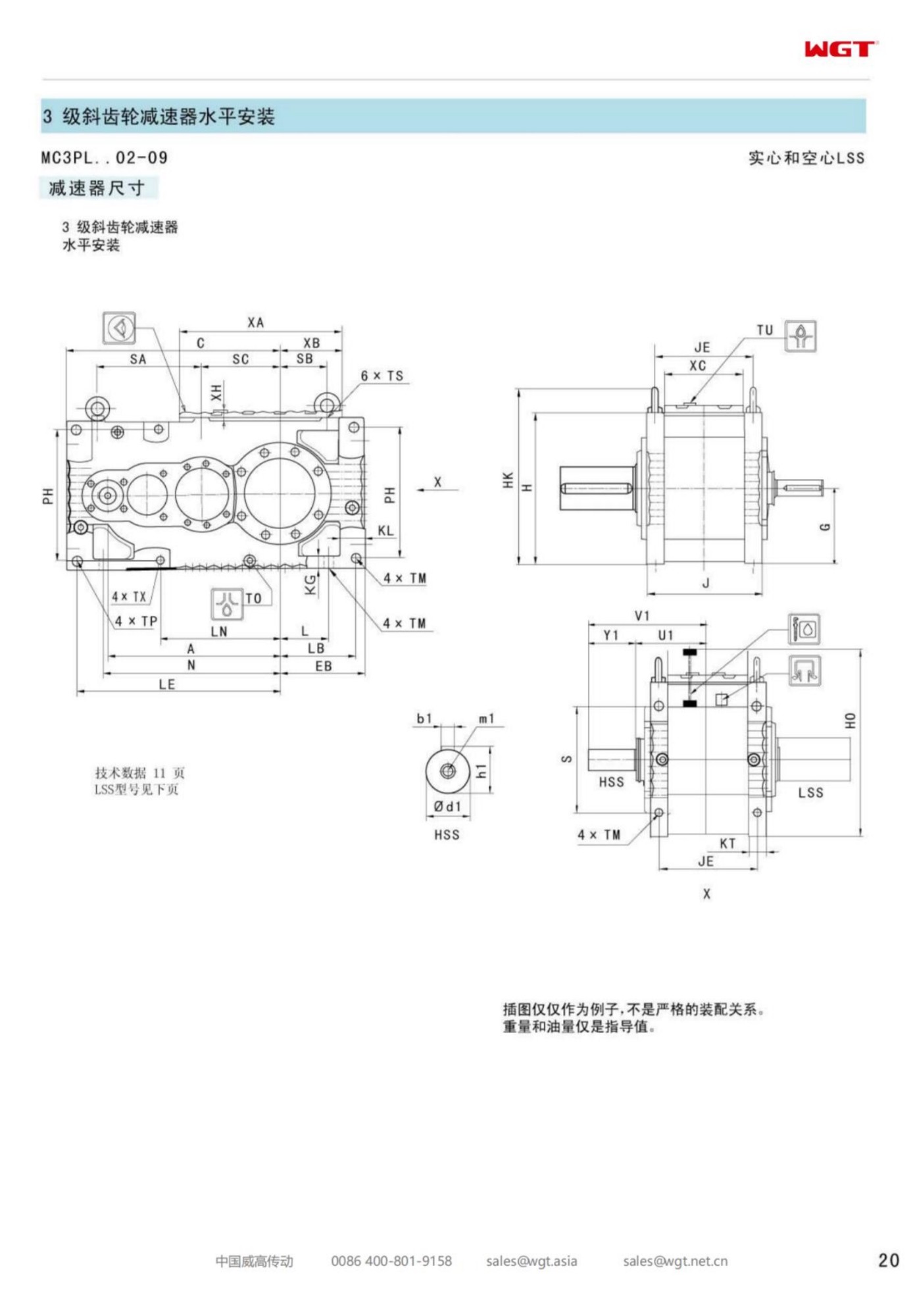
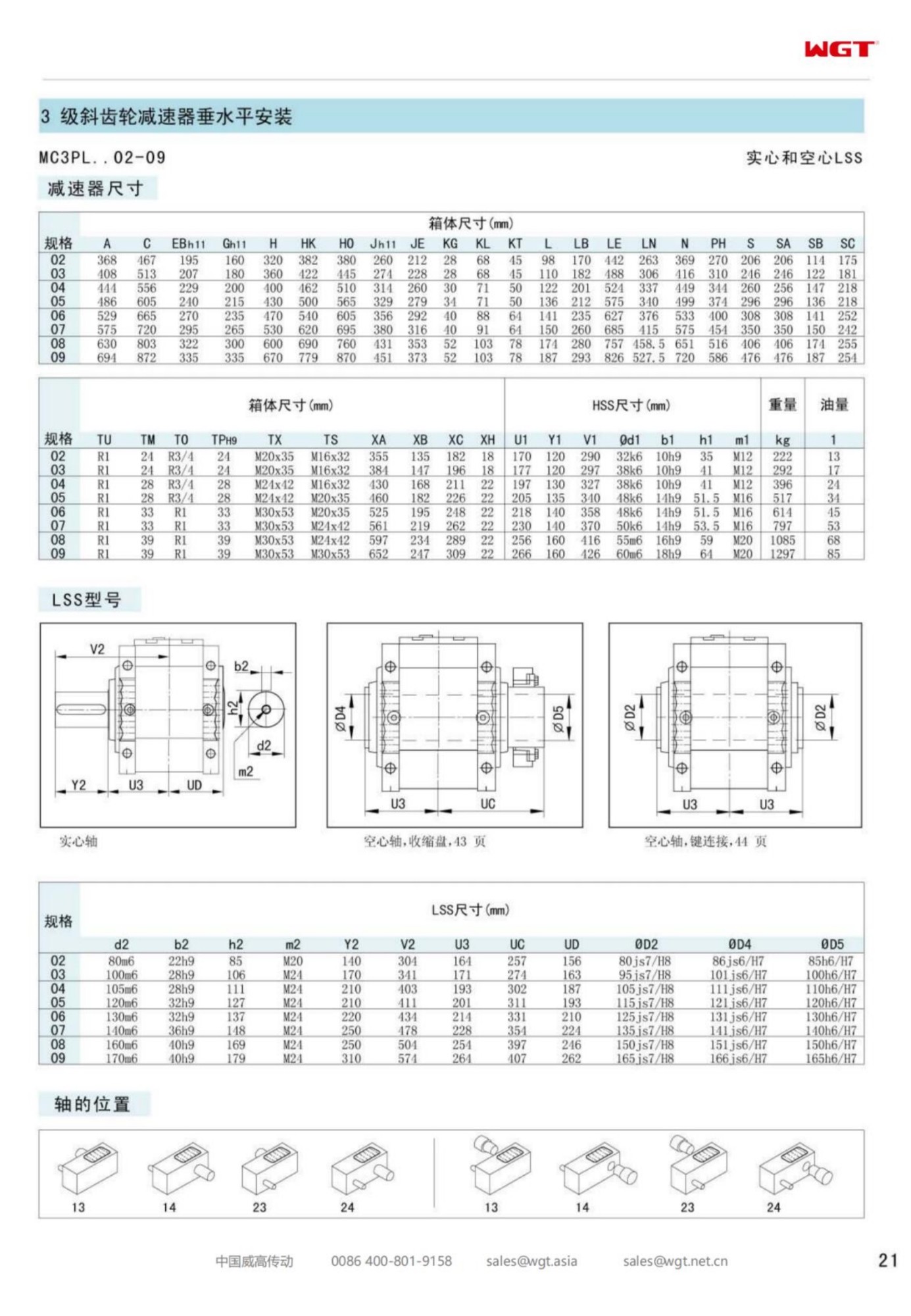
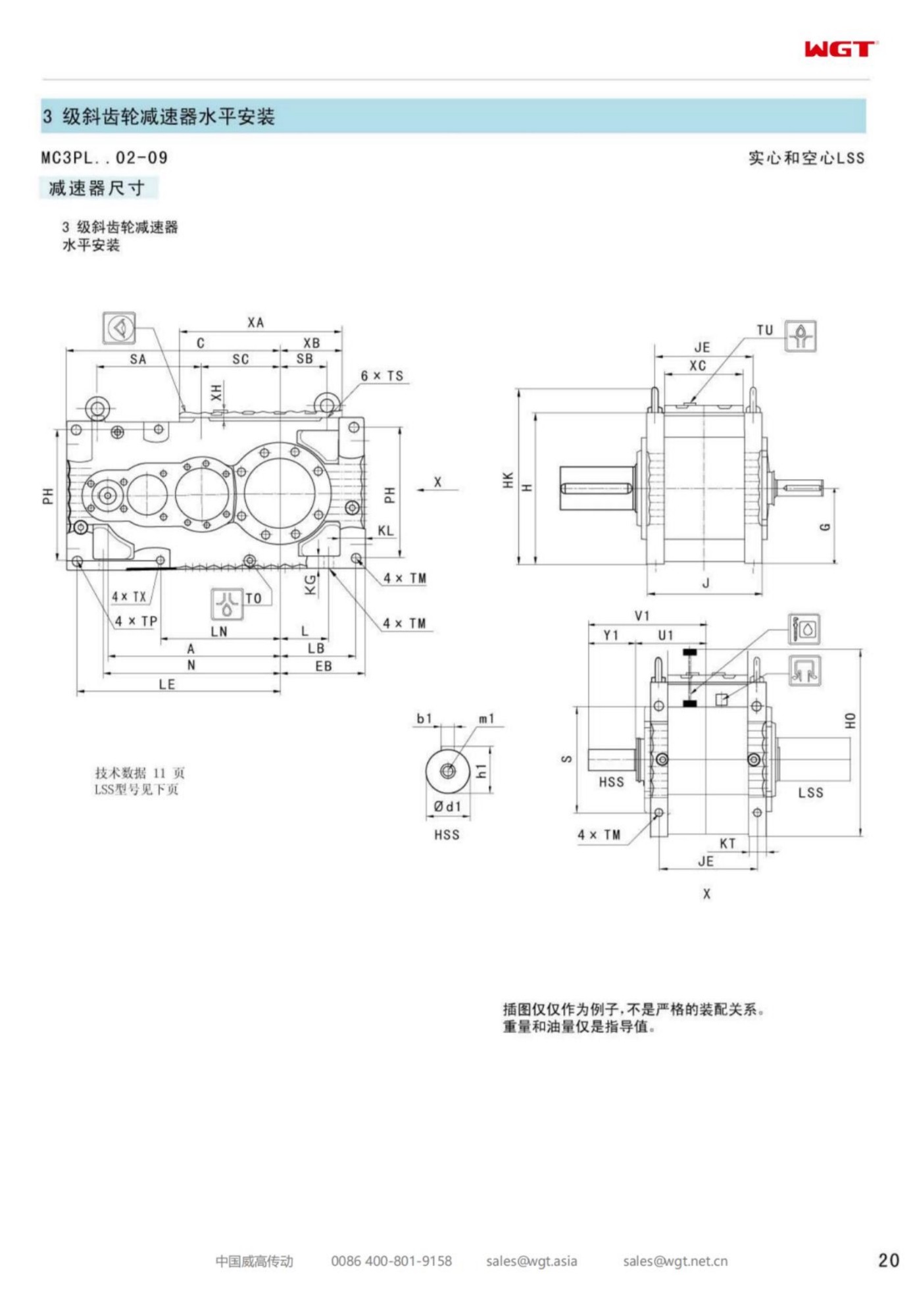
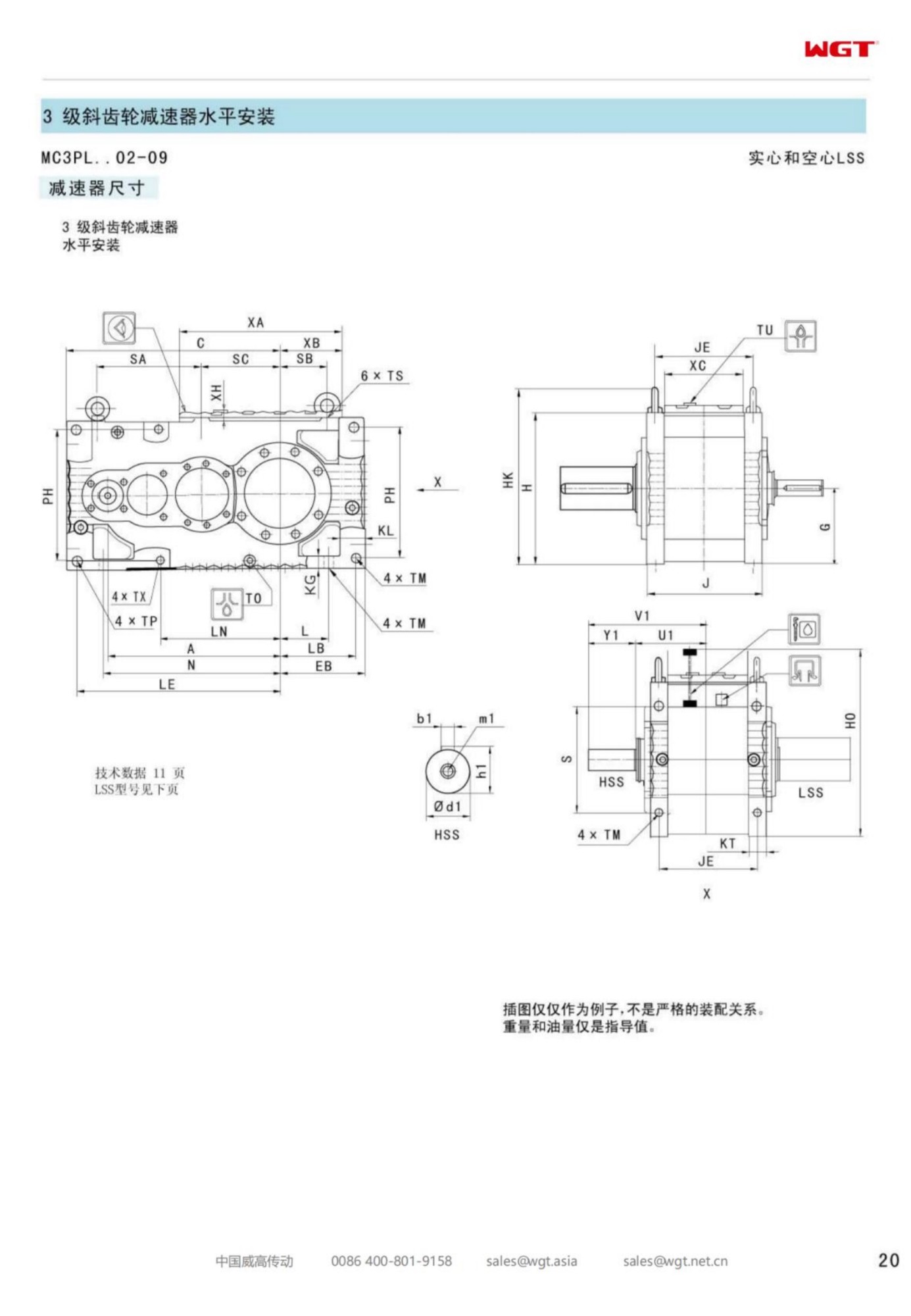
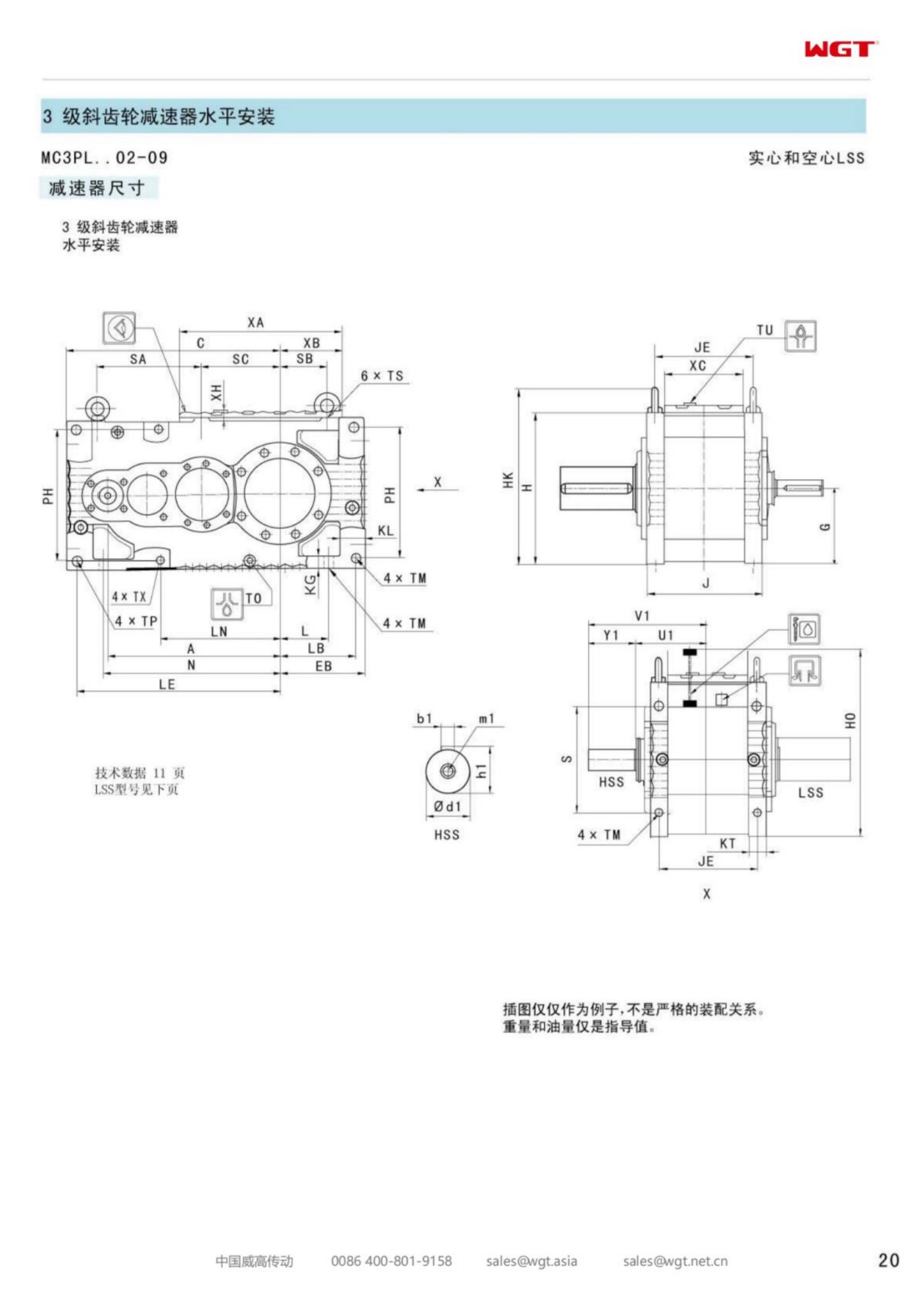
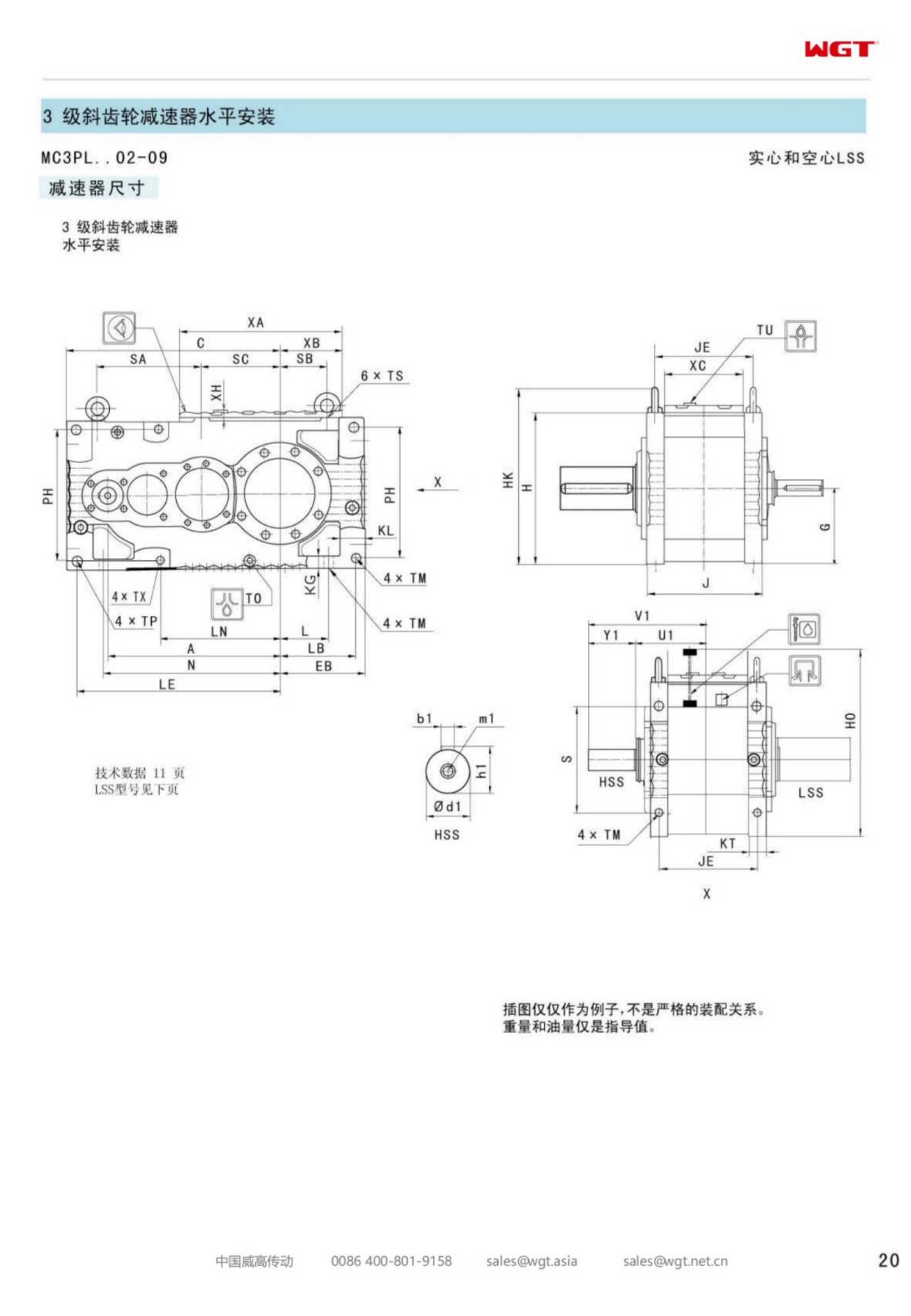
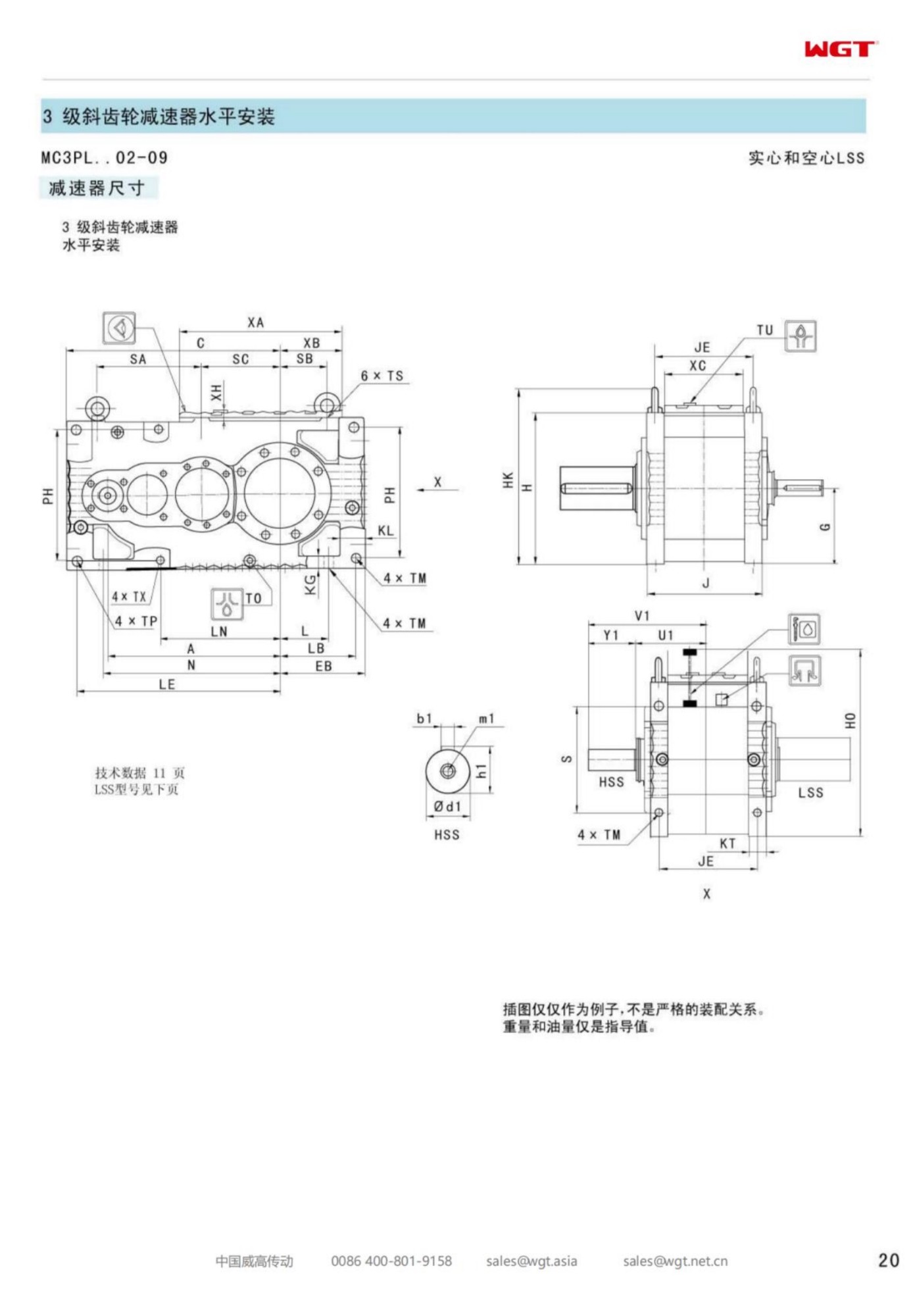
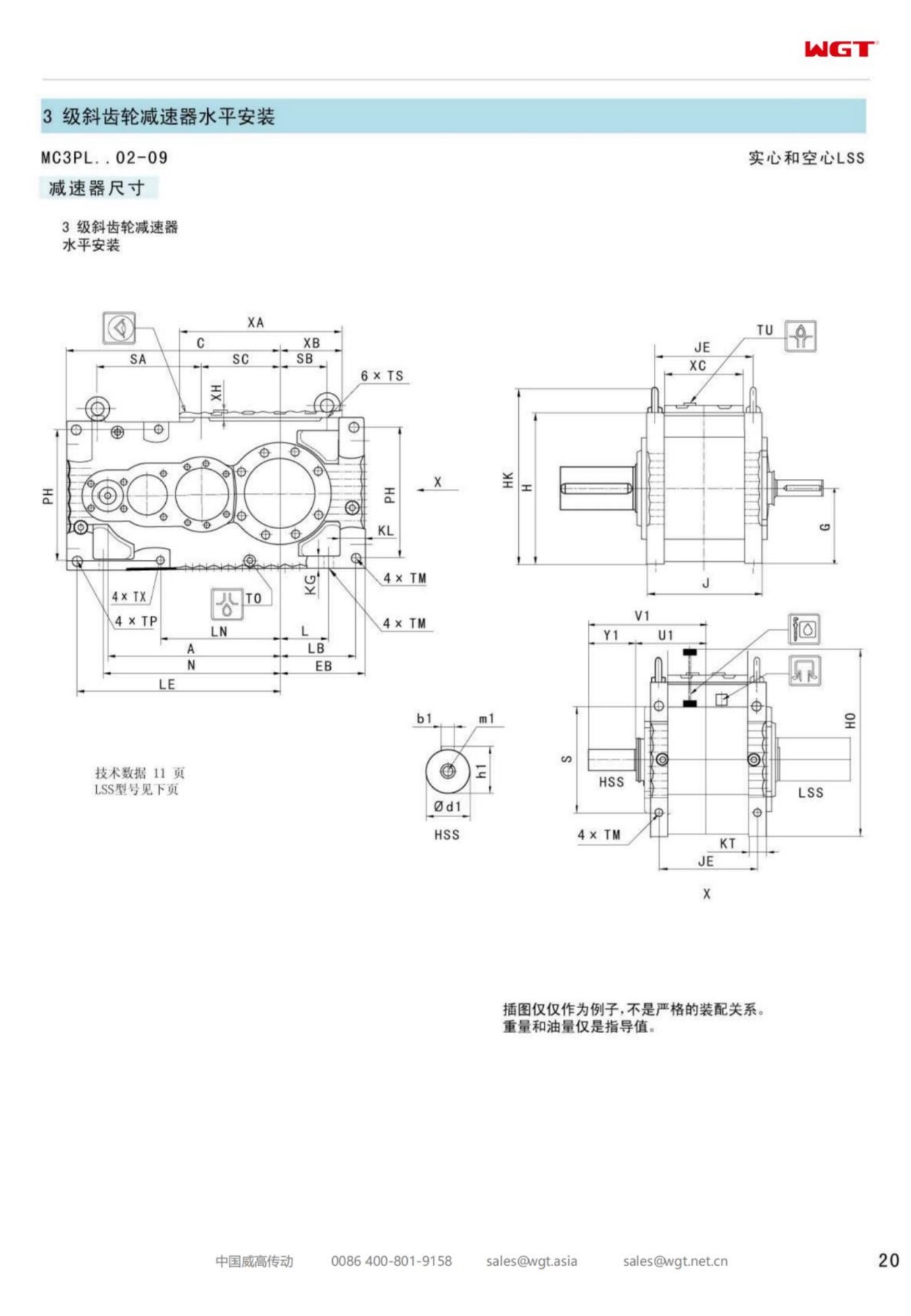
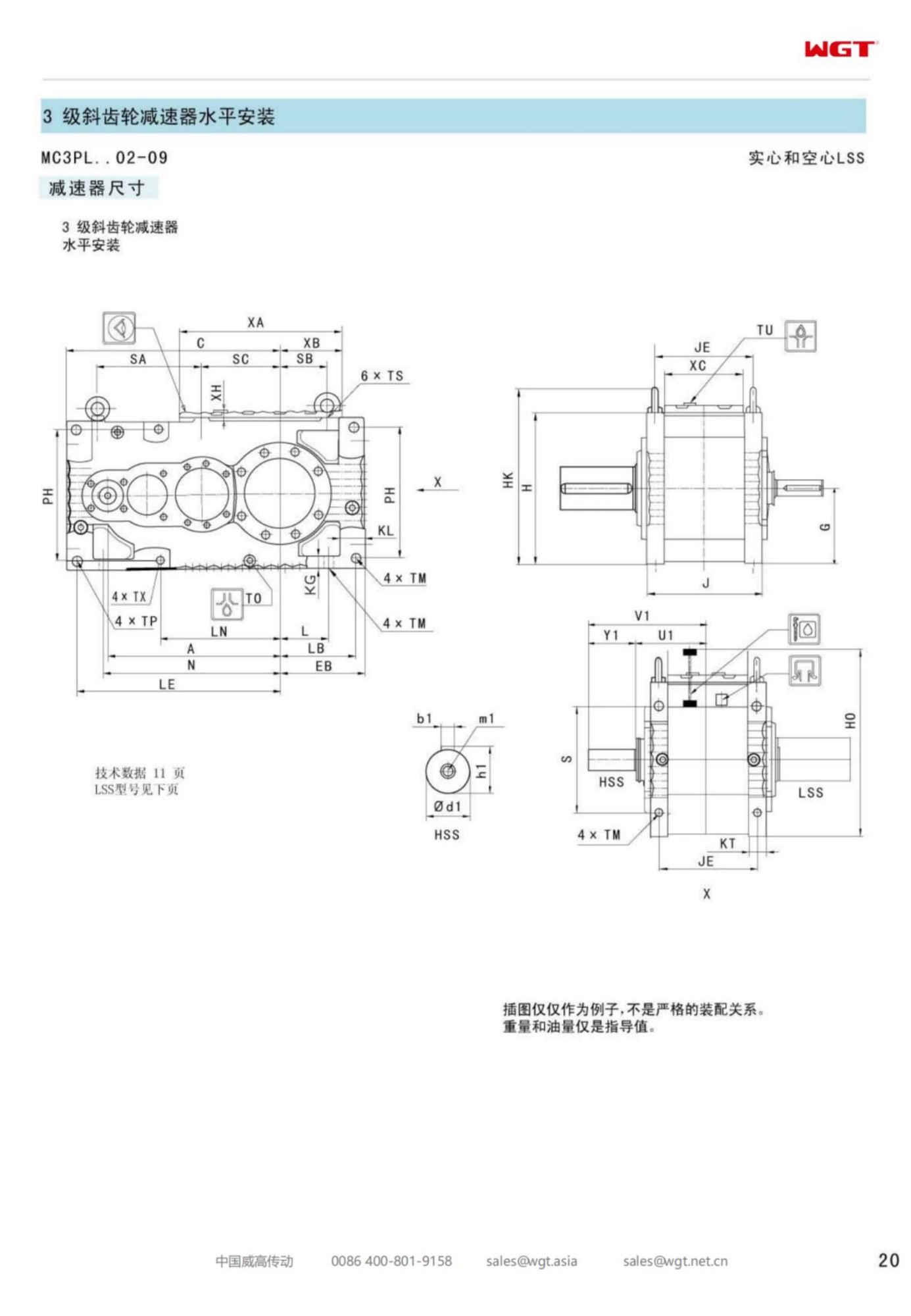
Spray-dried ceramic body leaves the tower at around eighty degrees, as hollow spheres that flow like sand and grind like emery. The belt under the tower takes it to the silo, and the drive at its head runs in air that is hot, dry and full of that dust. The MC3PLST07 parallel shaft gear unit is built for that position: three helical stages, a keyed output at the head shaft, and a torque arm on the tower's structural steel.
Below is the code, the thermal and abrasive case, the mounting logic on a tower that grows with heat, and the data a tile plant should give us before a frame is chosen.
Hot, Dry and Abrasive - Three Problems at Once
Most drives face one hostile condition. This one faces three: an ambient that can sit well above forty degrees, an atmosphere with almost no moisture to carry heat away, and a dust that is harder than the paint it lands on. Each is manageable; the combination is what makes the finish, the lubricant and the breather worth arguing about at order time.
Reading the MC3PLST07 Code
The designation is a mounting decision written in seven characters.
| MC | Industrial gear unit family for continuous plant duty |
| 3 | Three stages of reduction in one housing |
| P | Parallel-shaft helical gearing, coaxial input and output |
| L | Level output axis into the driven shaft |
| S | Solid output shaft, keyed to the driven shaft |
| T | Torque-arm reaction, no baseplate required |
| 07 | Seventh frame of the three-stage band |
In plain terms: three reductions, parallel shafts, level axis, solid output keyed at the head end, reaction through a torque arm, seventh frame of the band.
The Arm Sits on Dryer Steelwork
Under a spray dryer the floor is often a steel deck rather than a slab, and the tower's own columns are close by. A torque arm brackets to that steel and takes the reaction there, which avoids drilling a deck that was designed for access rather than for machinery. It also keeps the drive's weight on the shaft and off a pad that may be a grating.
Keyed Output on the Discharge Head Shaft
The discharge belt is short and its head shaft is supported close to the drive, so a keyed coupling on a solid output is the natural connection. The coupling absorbs the small movement the hot structure gives, and it can be inspected without lifting the guard. On a tower where everything is warm, an accessible coupling is worth more than a tidier arrangement.
Body Dust and the Grinding It Does
Spray-dried granule is abrasive enough to wear a mild steel chute in a season, and it does the same to anything it can reach on a gear case: paint, breather caps, shaft surfaces under a lip seal. The counterface at the output seal is the vulnerable point, and a shaft that has been allowed to run with dust against it will wear a groove that no new seal can follow.
Heat Soaking Through a Gear Case
A case standing in still, hot air loses heat by convection only, and the oil runs warmer than the same unit would in a cool hall. Mineral oil has a working ceiling, and every ten degrees above the design ambient takes years off its life. Choosing the lubricant for the actual ambient, and confirming the thermal rating rather than the mechanical rating, is the difference between a drive that lasts and one that is retired early on principle.
Three Stages Below a Slow Discharge Belt
Discharge belts run slowly to keep dust down, so the ratio is deep and the three-stage band is the right home for it. Three meshes hold the reduction in a case short enough to fit beneath the tower's discharge hopper, where headroom is decided by the silo height rather than by the drive.
Thermal Growth Between Tower and Drive
A tower that runs at temperature is taller than the one that was surveyed cold, and the steelwork under the drive moves with it. A torque arm tolerates that movement in every direction except rotation, which is exactly the freedom a hot structure needs. A bolted-down baseplate would fight it, and the fight would show up as a cracked foot or a leaking seal.
Lubricant Choice at Elevated Ambient
The standard fill is chosen for a normal industrial hall. In a tower basement the same oil runs hotter, oxidises faster and carries less margin. A synthetic or a higher-viscosity mineral grade, confirmed against the actual ambient and the duty cycle, is a small cost against a rebuild. Ask for the thermal rating at the ambient you really have, not the one in the catalogue footnote.
Sizing a Discharge Belt From Kiln Output
Tower output in tonnes per hour and the belt speed that keeps dust down give the belt load; the head shaft diameter converts load into torque, and motor speed divided by head shaft revolutions gives the ratio. The service factor carries the starts and the occasional blocked chute, and the frame follows from those two figures.
What a Tile Plant Should Specify Up Front
Send the head shaft diameter and keyway, the belt width and speed, the body throughput and bulk density, the motor frame and speed, the air temperature at the drive position, the dust loading, and the steel available for the arm bracket. Naming the ambient is the single most useful line, because it decides the lubricant and the thermal check.
Frame Seven at a Spray Dryer
Frame seven is the size a production tower tends to ask for: enough case to hold a continuous load in hot air without running at its thermal limit, enough shaft for a head end carrying body at speed, and a footprint that fits the space the tower left under the hopper. It is the upper middle of the band, and hot duty is where the upper middle earns its keep.
Hot air, no moisture and a dust that grinds - three stages run cool under the tower:
- Spray dryer discharge belt at a ceramic tile plant
- Body conveyor from a tower to a silo farm
- Granule transfer belt at a sanitaryware works
- Dry body collection conveyor at a press feed station
- Spray-dried glaze powder conveyor at a frit plant
- Tower underflow belt feeding a batch silo
The M3 Series at a Glance
| Model | Centre distance | Output | Typical duty |
|---|
| M3PSF50 | size 50 | solid shaft, foot | conveyors, feeders |
| M3PSF60 | size 60 | solid shaft, foot | crushers, mixers |
| M3PSF70 | size 70 | solid shaft, foot | ball mills, shredders |
| M3PSF80 | size 80 | solid shaft, foot | kilns, heavy conveyors |
| M3PSF90 | size 90 | solid shaft, foot | mill and kiln drives |
| M3RSF50 | size 50 | solid shaft, foot, right-angle | inclined conveyors, elevators |
| M3RSF60 | size 60 | solid shaft, foot, right-angle | screw classifiers, feeders |
| M3RHF70 | size 70 | hollow shaft, foot, right-angle | agitators, drum drives |
| M3PHT80 | size 80 | hollow shaft, torque arm, parallel | shaft-mounted conveyors |
| M3RHT90 | size 90 | hollow shaft, torque arm, right-angle | heavy shaft-mounted drives |
All frames in the table belong to one industrial family. P = helical parallel-shaft, R = bevel-helical right-angle; the low-speed shaft is solid (S) or hollow (H), mounted on feet (F) or a torque arm (T).
Selection Example: Spray dryer discharge belt at a ceramic tile plant
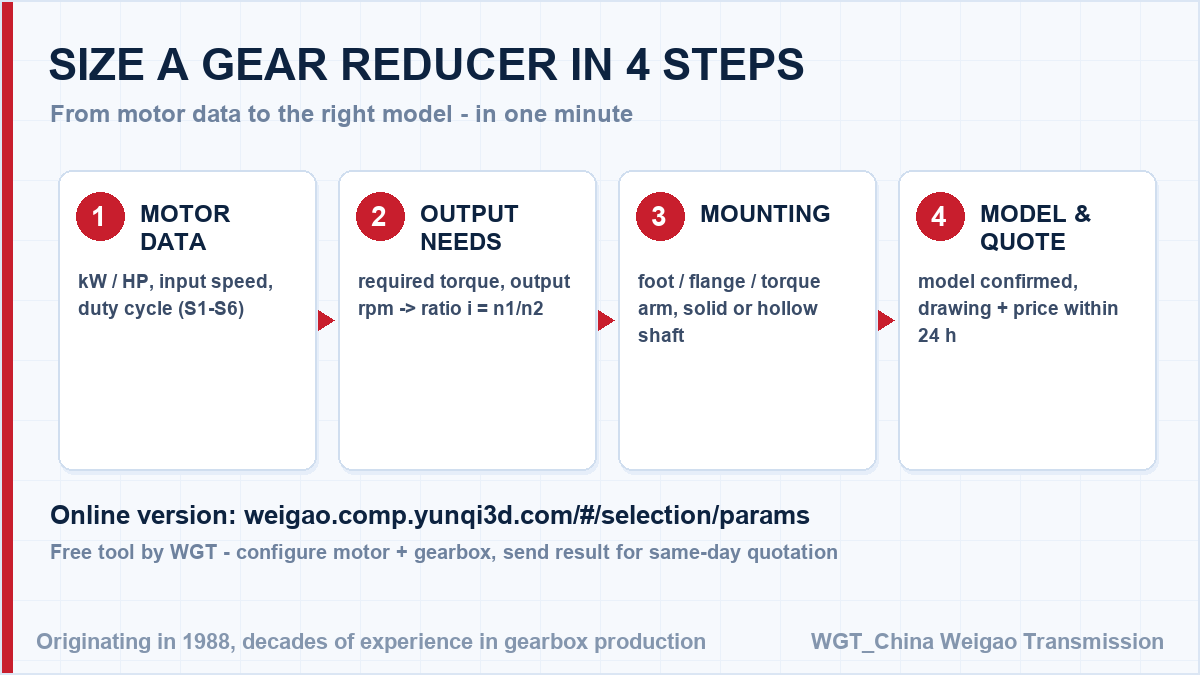
Take a 15 kW motor at 1465 rpm turning the head pulley at 19 rpm. The ratio follows directly: 1465 / 19 = 77, so a ratio near i=77 is taken from the three-stage parallel band, and the frame is checked on its thermal rating at the tower ambient rather than on the mechanical rating alone. In this case frame seven runs the discharge belt from a case held by an arm on the tower steelwork, keys a solid output to the head shaft, and specifies its lubricant and breather for hot dry air and abrasive body dust. That single division gives the catalogue ratio; the service factor for your duty class is then applied to the torque, and the frame size follows.
![how to size a industrial helical gearbox in four steps]()
Sizing flow: motor speed, target output speed, torque, service factor.
Where This Series Works in Practice
Stone quarry conveyor
A stone quarry runs reducers on its primary conveyor. Shock loads from oversized rock are absorbed by the case-hardened gears (surface HRC58-62), and after two years of continuous duty the units still run within their original 68 dB noise spec.
Flour mill screw conveyors
A flour mill standardised on gear reducers for its screw conveyor network. One spare-part pool now covers fifteen drives, and the smooth helical input stage keeps noise low in the packing hall.
Technical Questions, Answered
How do I know when the unit needs maintenance?
Beyond routine oil checks, watch for oil weeping at the seals, unusual noise or vibration, and any rise in housing temperature. A seal kit is inexpensive; catching a weeping seal early avoids damage to the bearings and gears.
Which mounting positions can be used?
The unit can be installed in M1 to M6 positions - floor, wall or ceiling. The oil level plug is repositioned for the position you order, so state it up front and the unit is filled and labelled correctly at the works.
![industrial helical gear reducer application fields]()
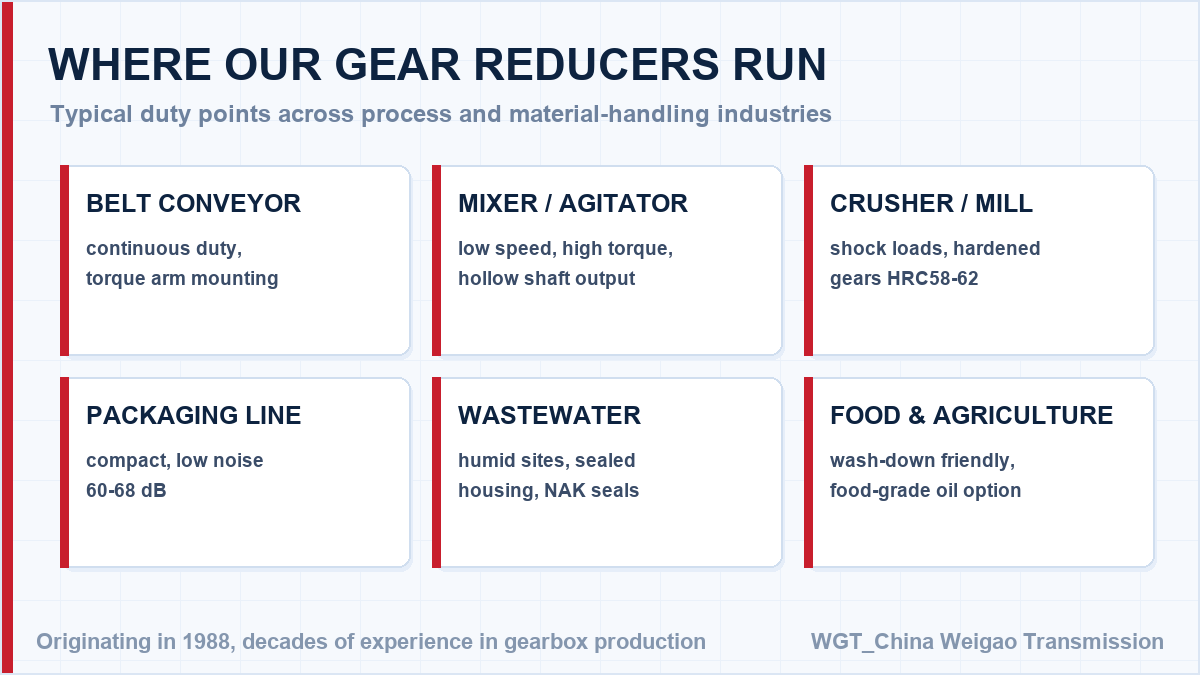
Common application areas for right-angle industrial helical drives.
Full Documentation for Project Tenders
Bidding a project? Skip the back-and-forth: configure your drive in the WGT Motor & Gearbox Online Selection System and send us the result for a same-day quotation.
We support tenders with complete technical files: dimension drawings, rating tables, material certificates and test record formats, in the format your client specifies. Looking for a speed reducer for bucket elevator? Tell us the duty point and we will confirm the model in writing.