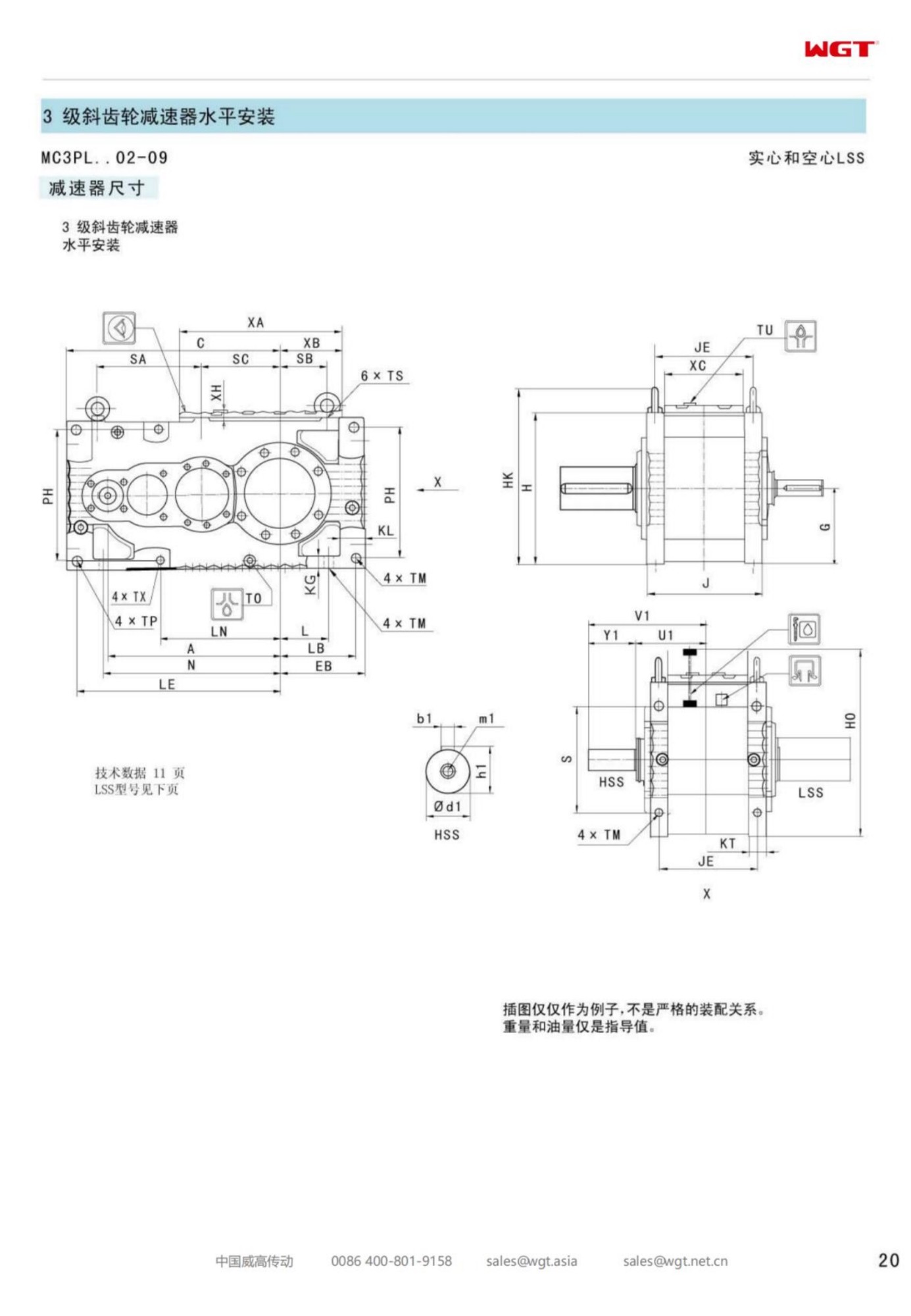
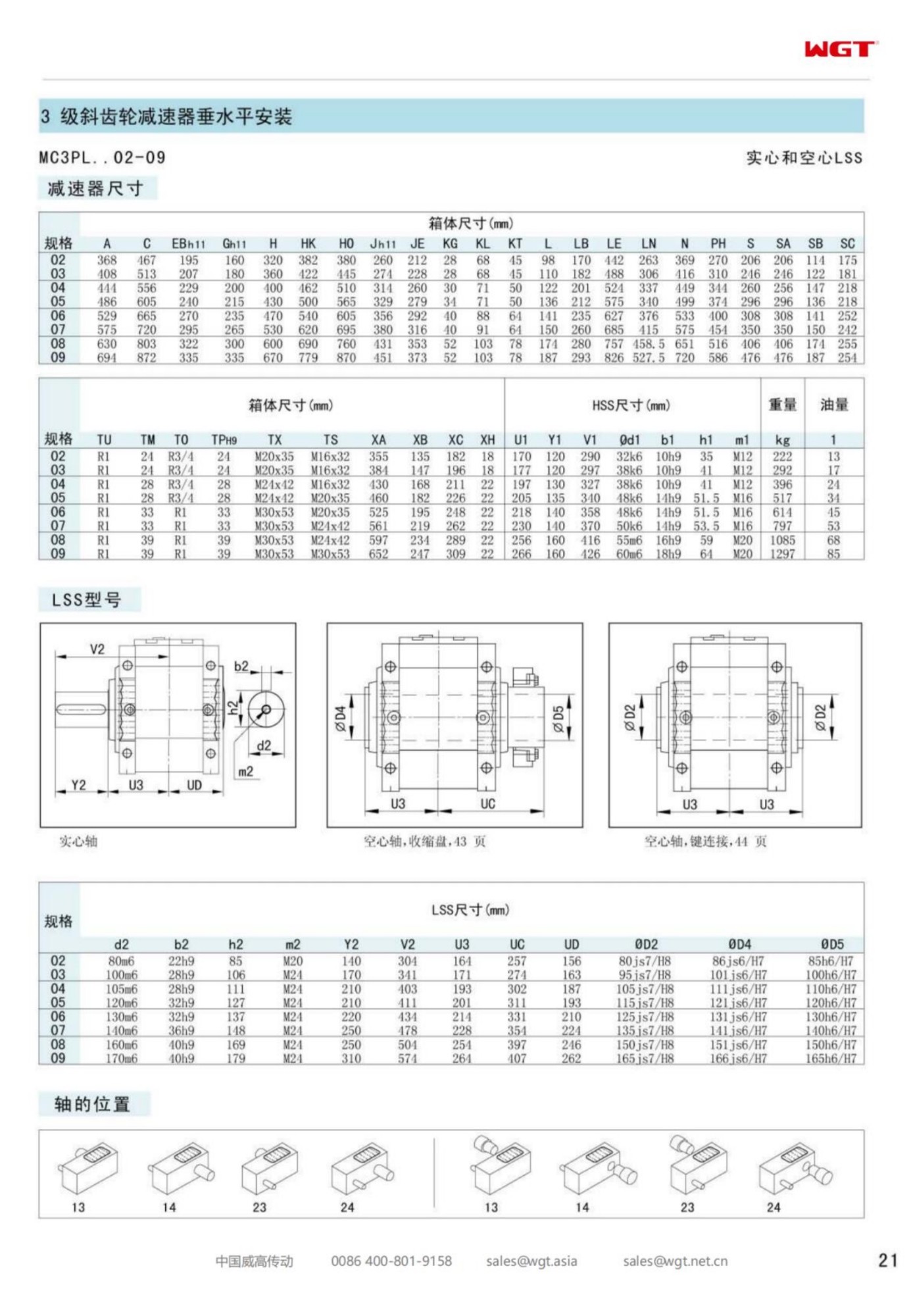
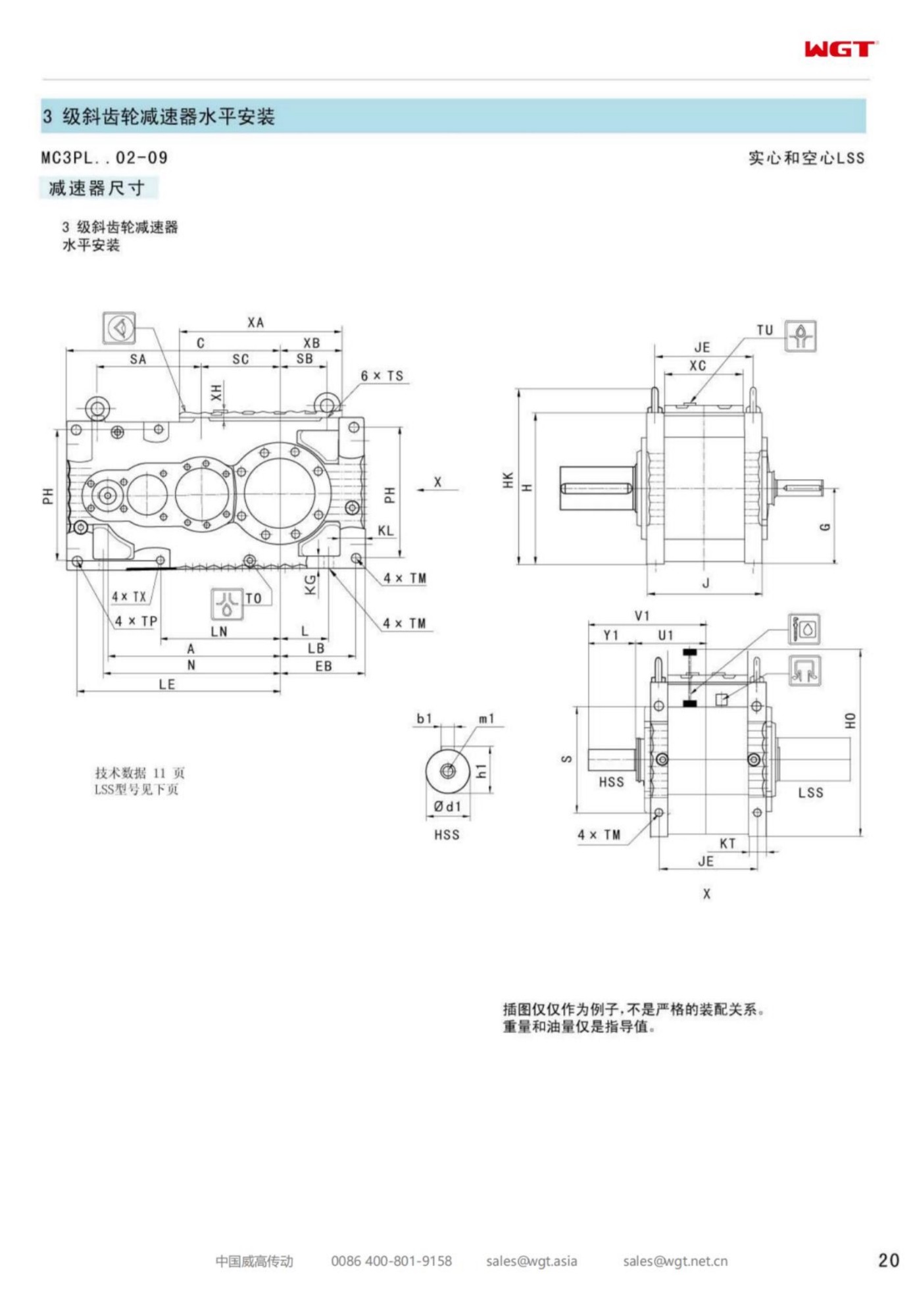
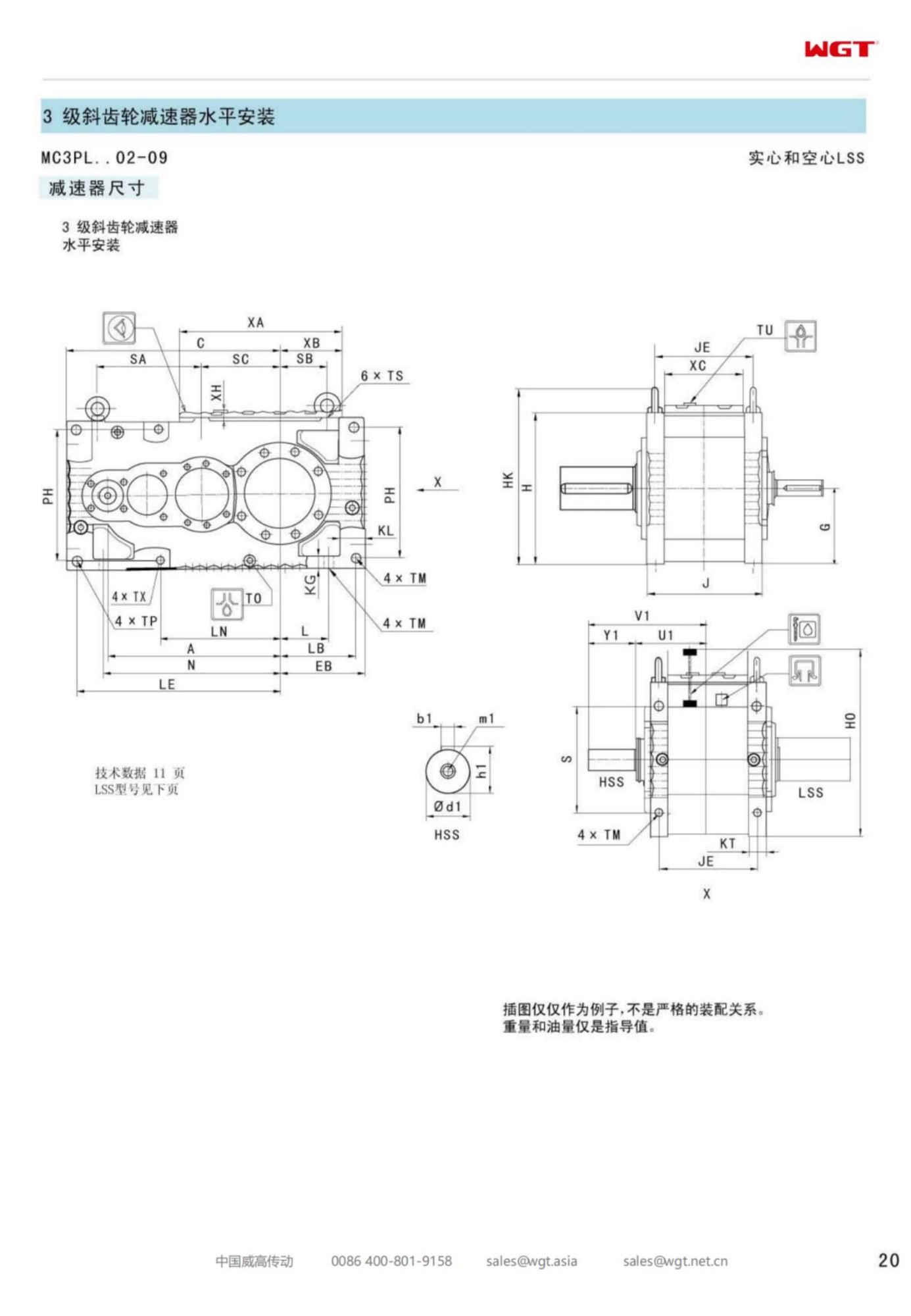
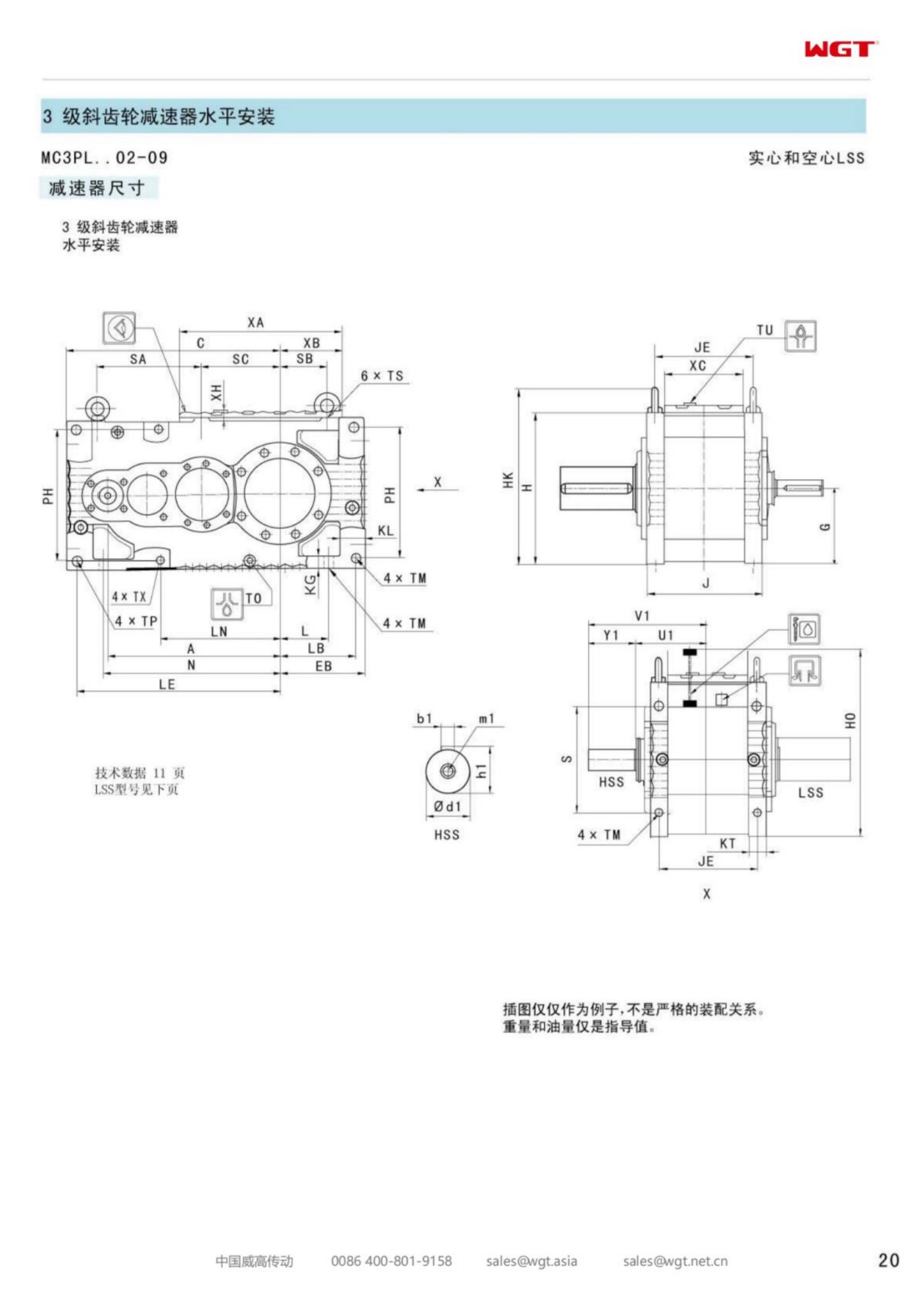
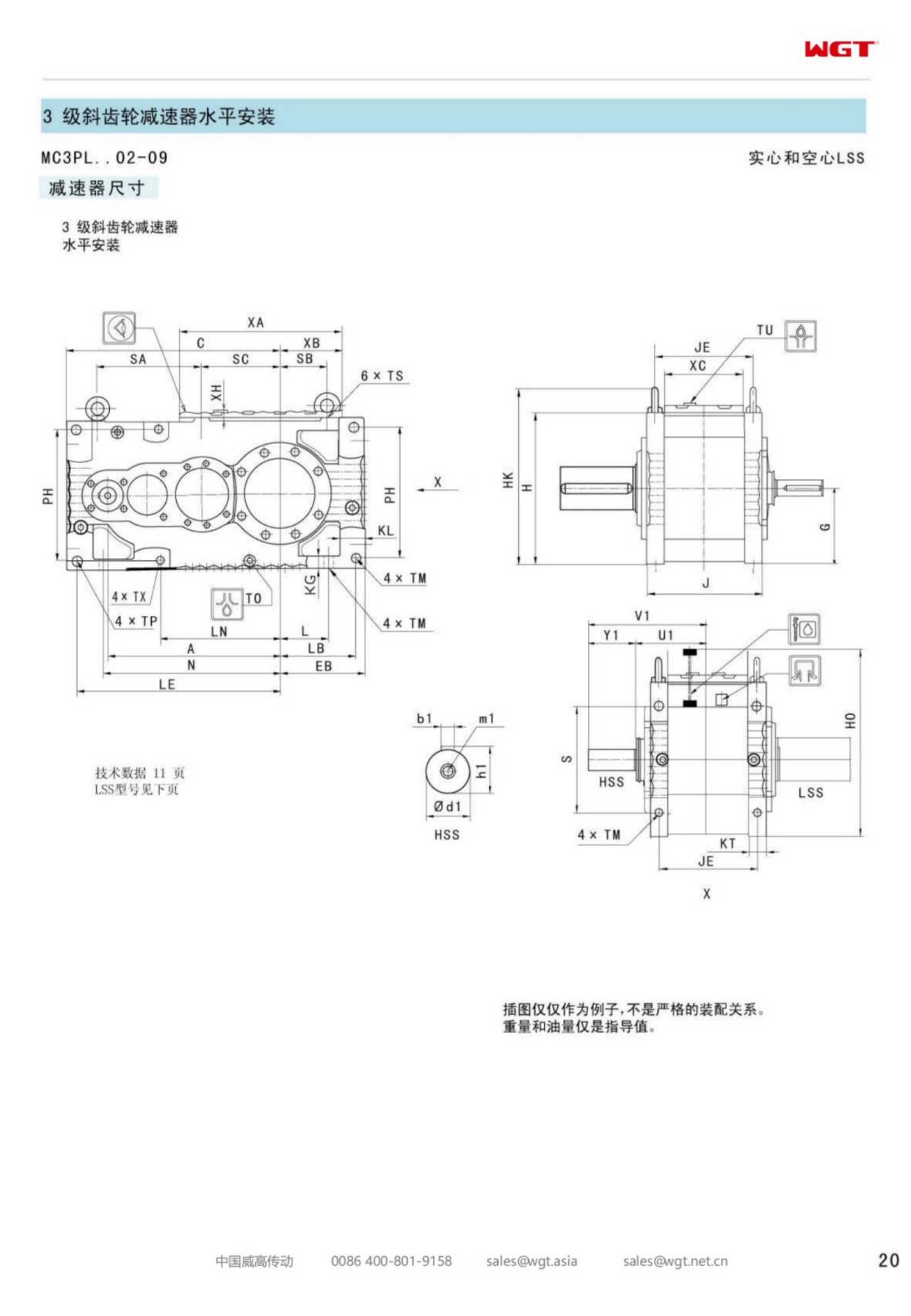
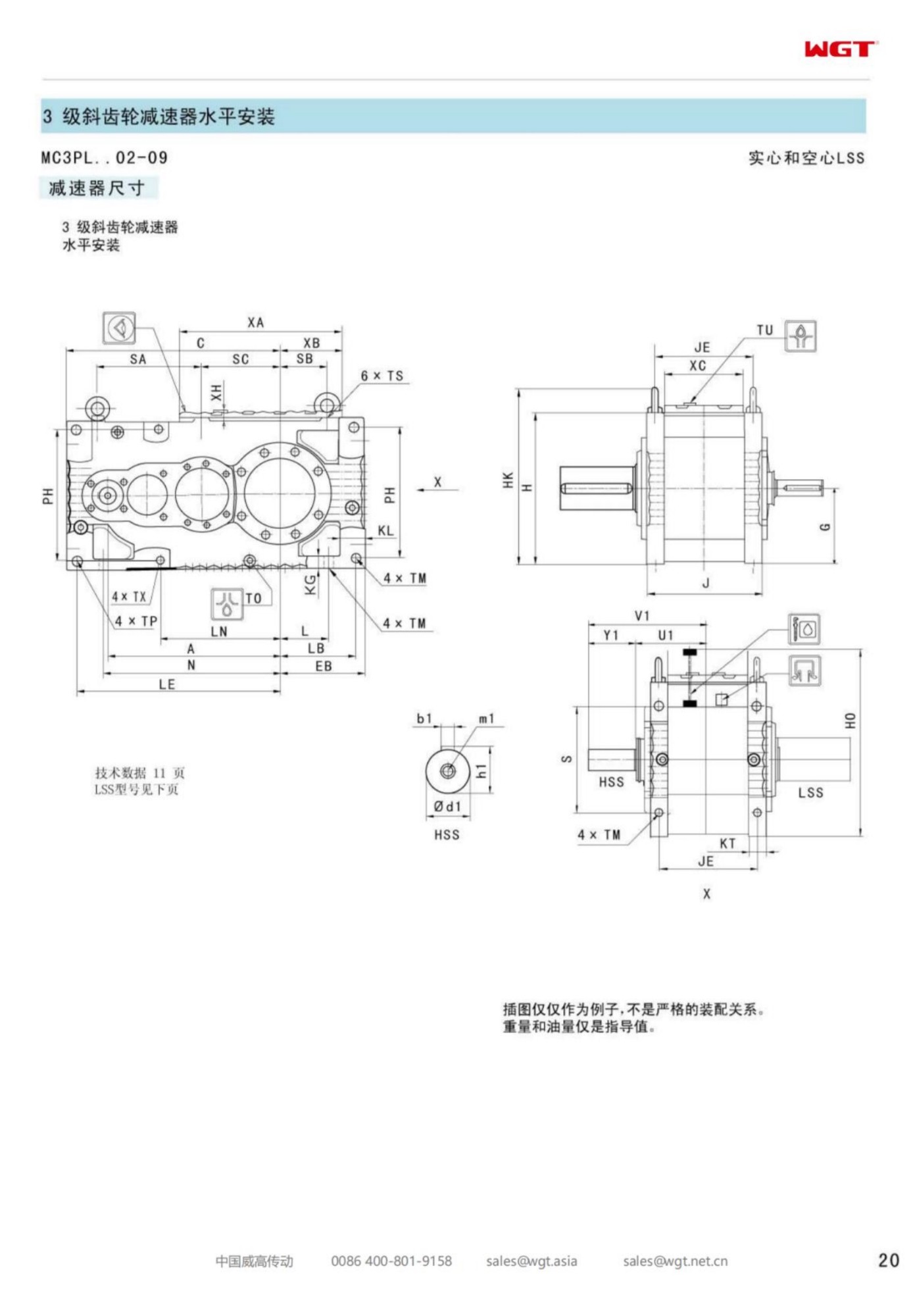
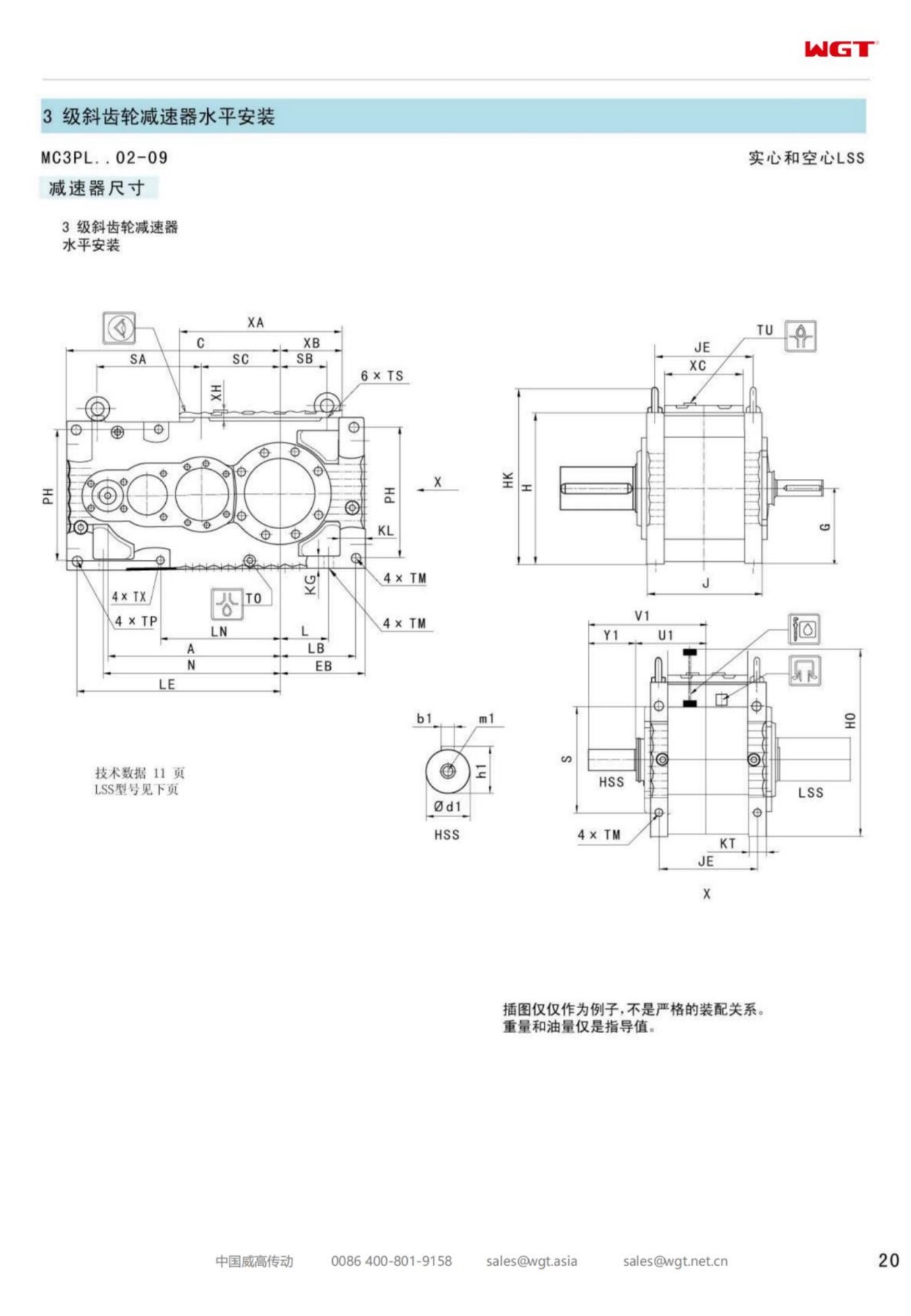
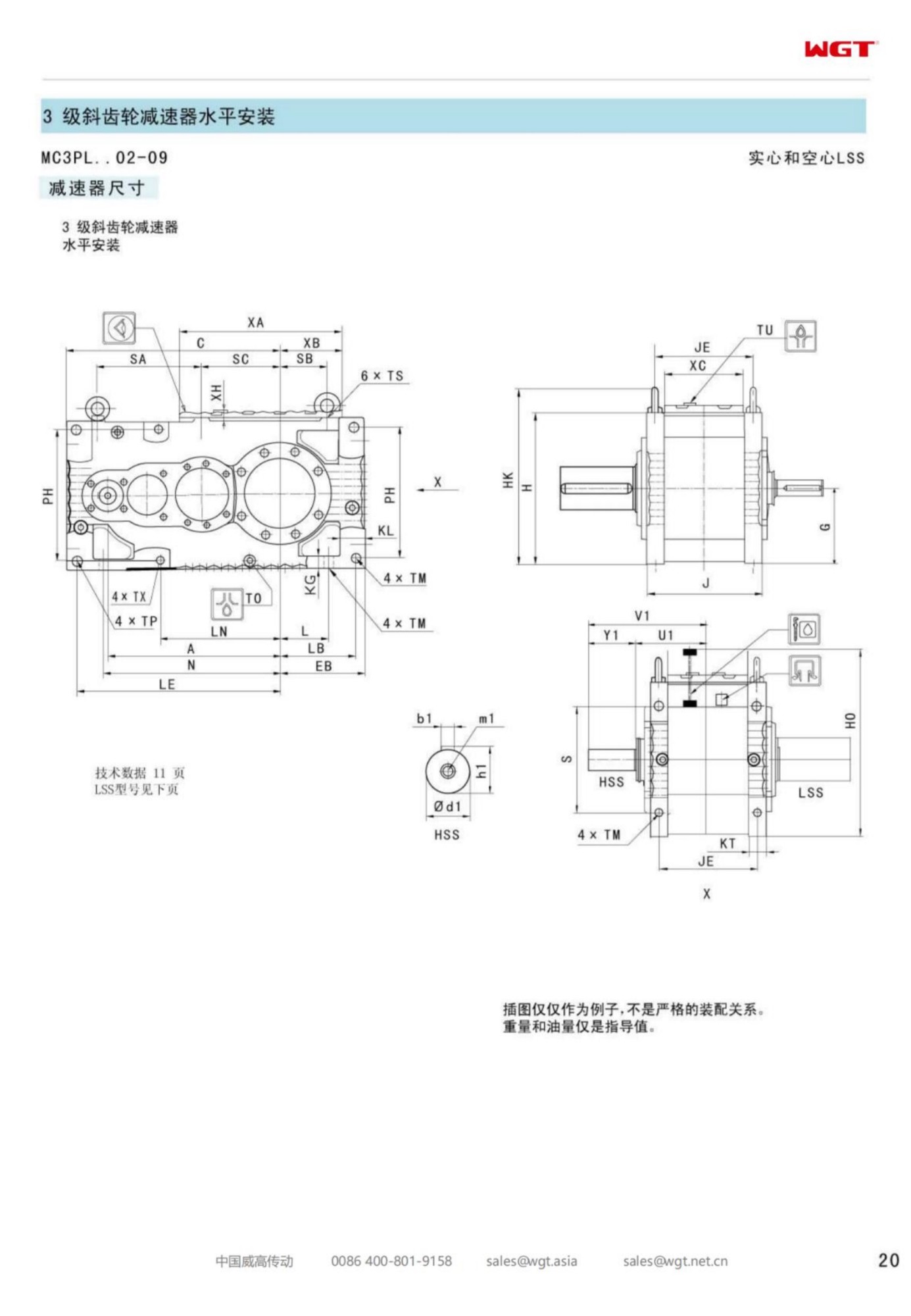
Crumb rubber is friendly while it is cold and moving and unfriendly the moment either changes. It sticks to belt covers, compacts in chutes and sets into a block if a line stops with material on it. The MC3PLST08 three-stage parallel shaft gearbox drives the conveyor that moves it: a keyed output at the head pulley, a torque arm into the conveyor frame, and three helical stages turning a four-pole motor down to belt speed.
The sections below cover the code, the restart case that governs the frame, the coagulant residue the drive lives with, and the information a rubber processing plant should send with its enquiry.
Crumb Rubber Sticks, Then Sets
Warm crumb has a tack that disappears as it cools, and a belt stopped with a load on it will hold that load against the pulley. Start again an hour later and the material has keyed itself into the belt surface. The drive does not care why the load is heavy; it only knows the breakaway torque it must produce, and that figure is several times the running figure.
The MC3PLST08 Name Decoded
Each character removes a question from the layout discussion.
| MC | Industrial gear unit family for continuous plant duty |
| 3 | Three stages of reduction in one housing |
| P | Parallel-shaft helical gearing, coaxial input and output |
| L | Level output axis into the driven shaft |
| S | Solid output shaft, keyed to the driven shaft |
| T | Torque-arm reaction, no baseplate required |
| 08 | Eighth frame of the three-stage band |
Read it as: three-stage industrial unit, parallel shafts, level axis, solid output shaft keyed to the pulley, torque-arm reaction, eighth frame - the largest practical size for a single conveyor drive in this band.
Reaction Into the Conveyor Frame
Rubber plants build conveyors on fabricated frames with the head pulley in plummer blocks, and those frames are usually anchored well enough to take a reaction. A torque arm uses them directly, so the drive needs no foundation of its own and can be lifted off with the pulley in place. On a line where drives are moved as the process changes, that matters more than it sounds.
Solid Output Keyed to the Head Pulley
A crumb belt's head pulley has a shaft with a keyway and a bearing on each side, which is exactly what a solid output expects. The coupling between them is accessible, can be renewed in place and is cheap, and on a duty where jams happen it is the part you want to be cheap. Hanging a bore over that shaft is possible in the same family; here the coupling earns its place.
Coagulant Residue and Mild Acid Attack
Latex processing leaves formic or acetic acid residues on the crumb and on everything the crumb touches. Dilute, but present every day, and it finds painted steel, unplated fasteners and shaft surfaces under seals. A finish specified for a chemical works, stainless or plated fasteners at the guard, and a wipe-down routine that includes the breather are cheap insurance against a slow, ugly corrosion pattern.
Blockage Restart Is the Real Design Case
The running torque of a crumb conveyor is modest. The restart torque of a conveyor that stopped with a set load on it is not. Sizing therefore starts from that restart, taken from the plant's own experience of how long a line is allowed to stand before it is restarted. A drive chosen on running torque alone will trip its motor protection on the first cold morning.
Three Stages at Slow Belt Speed
Crumb belts run slowly to avoid throwing material, so the ratio from a four-pole motor is deep. Three stages deliver it in a case that sits beside the head pulley without eating into the aisle, and the smooth output keeps the belt from snatching when the load releases.
Cleaning a Drive That Sees Wash Water
Rubber plants hose down floors, and a hose does not discriminate. A protected input seal, a drain plug that can be reached without dismantling anything, and covers with gaskets that survive being opened weekly are what make a drive cleanable. A unit that is hard to clean will not be cleaned, and a unit that is not cleaned will fail at its seals first.
Arm Geometry on a Moving Frame
Conveyor frames deflect under load, and a torque arm bracket welded to a light stringer will move with it. The bracket needs stiffness in the direction of the reaction, and the arm needs to be square to the drive at running torque rather than at rest. Two measurements, taken loaded and unloaded, tell you whether the bracket is doing its job.
From Crumb Tonnage to Pulley Speed
Line tonnage and belt speed give the load on the belt; the pulley diameter converts that into torque at the shaft; the pulley speed from belt speed and diameter gives the output revolutions. Motor speed over output revolutions is the ratio, and the restart torque with a service factor fixes the frame. The plant has every one of those numbers already.
Enquiry Content for a Rubber Line
Send the pulley shaft diameter and keyway, belt width and speed, tonnage and bulk density, the longest the line may stand loaded, the motor frame and speed, the wash-down practice and the acid exposure. A photograph of the head end and of the frame steel behind it completes the picture, and the quotation comes back with a mounting arrangement rather than a question.
Frame Eight in a Crumb Plant
Frame eight is the size a crumb line tends to settle on: enough case to break a set load loose without running at its limit, enough shaft for a pulley with real bearing centres, and a footprint that still fits beside a frame that was built for a belt rather than for a gearbox. Above this size the answer is a different arrangement, which is why eight is often the last stop.
Crumb that sets on a stopped belt - three stages break it loose again:
- Crumb rubber conveyor at a natural rubber processing plant
- Bale feed belt ahead of a crumb mill
- Wet crumb transfer conveyor after a shredder
- Dried crumb cooling belt at a block rubber line
- Rubber bale handling conveyor at a compound plant
- Crumb discharge belt under a granulator
Field Applications
Automatic car-wash line
A car-wash equipment builder fits hollow-shaft reducers to its conveyor chains. The compact frame hides inside the wash tunnel, and FKM seal options handle the constant moisture.
Textile dyeing drums
A dyeing machine maker uses speed reducers on its fabric-turning drums. Low vibration (under 20 microns) prevents streaks in the fabric, and the 94-96% efficiency keeps the heat load down in a warm workshop.
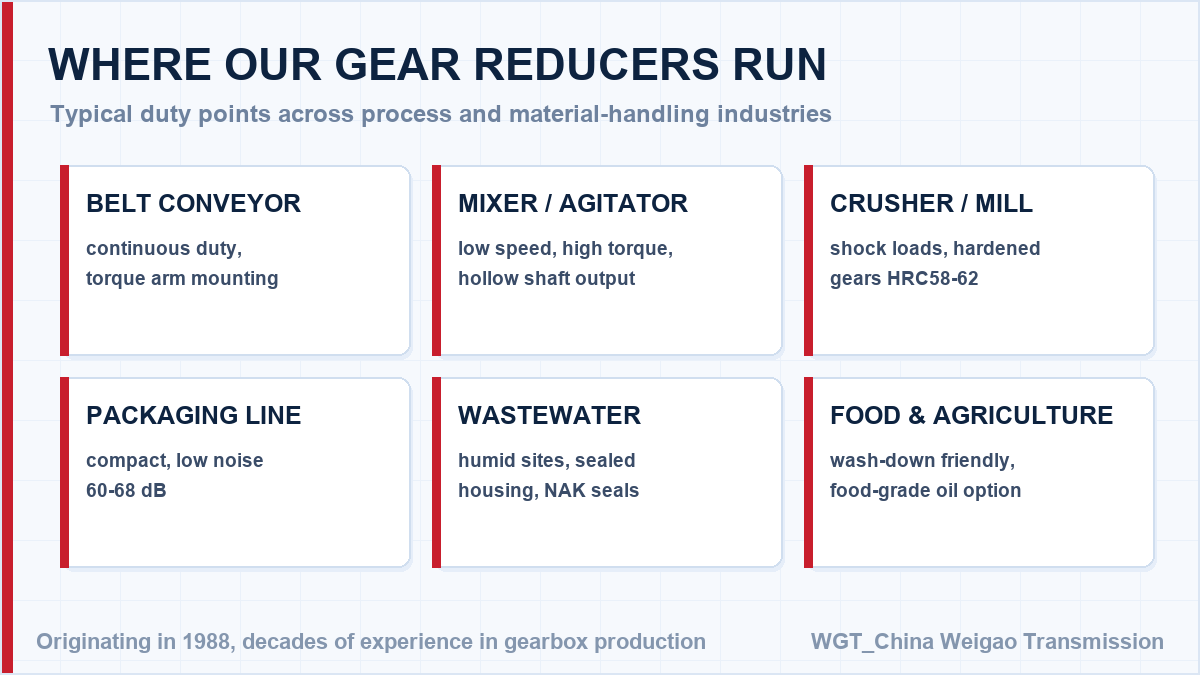
![where gear reducers are used in industry]()
Where these units are installed across industry.
Selection Example: Crumb rubber conveyor at a natural rubber processing plant
Take a 30 kW motor at 1480 rpm turning the head pulley at 13 rpm. The ratio follows directly: 1480 / 13 = 114, so a ratio near i=114 comes out of the three-stage parallel band, and the frame is confirmed against the restart of a belt that stood loaded until the crumb set, not against the running pull. In this case frame eight puts its reaction into the conveyor frame through a torque arm, keys a solid output onto the pulley shaft, and specifies its finish and fasteners for coagulant residue. Once the ratio is fixed, check the required output torque against the rating table with the service factor applied - that is what decides the frame, not the ratio alone.
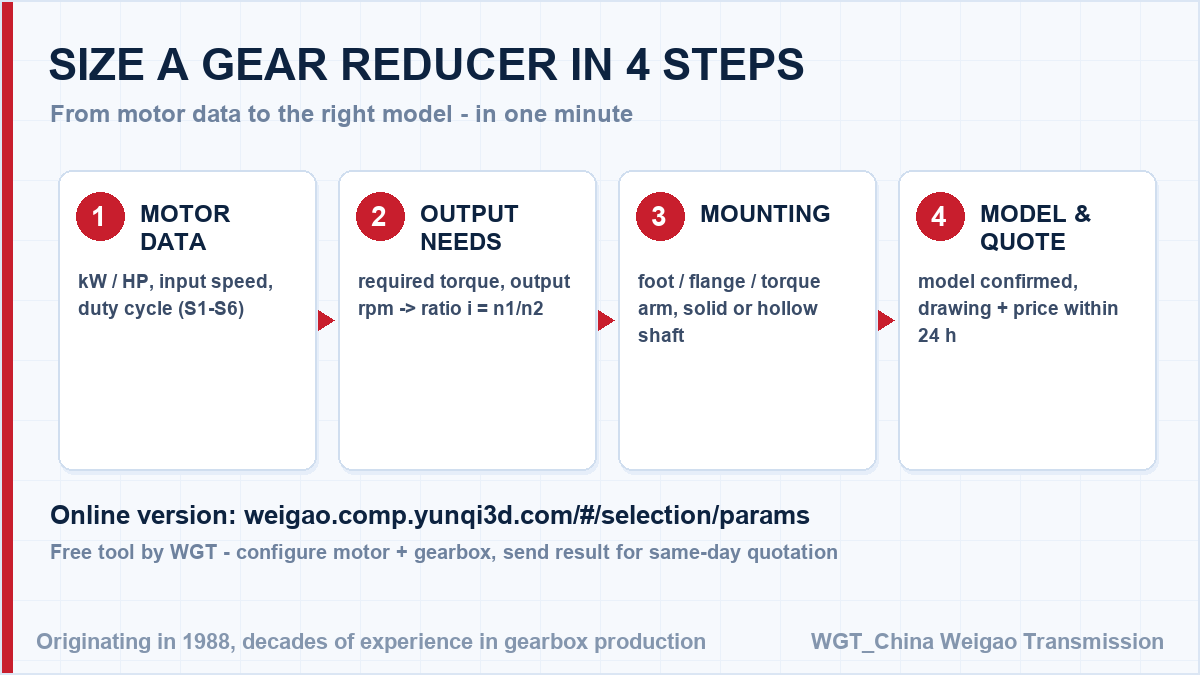
![gearbox selection guide: speed, torque, service factor]()
How a ratio and a frame size are determined, step by step.
Frame Sizes and Typical Duties
| Model | Centre distance | Output | Typical duty |
|---|
| M3PSF50 | size 50 | solid shaft, foot | conveyors, feeders |
| M3PSF60 | size 60 | solid shaft, foot | crushers, mixers |
| M3PSF70 | size 70 | solid shaft, foot | ball mills, shredders |
| M3PSF80 | size 80 | solid shaft, foot | kilns, heavy conveyors |
| M3PSF90 | size 90 | solid shaft, foot | mill and kiln drives |
| M3RSF50 | size 50 | solid shaft, foot, right-angle | inclined conveyors, elevators |
| M3RSF60 | size 60 | solid shaft, foot, right-angle | screw classifiers, feeders |
| M3RHF70 | size 70 | hollow shaft, foot, right-angle | agitators, drum drives |
| M3PHT80 | size 80 | hollow shaft, torque arm, parallel | shaft-mounted conveyors |
| M3RHT90 | size 90 | hollow shaft, torque arm, right-angle | heavy shaft-mounted drives |
The size number is the key dimension that steps up torque capacity through the range: 50 to 90 in horizontal builds, 10 to 90 in vertical builds. Gearing philosophy is shared across the family.
Talk to the Factory, Not a Catalogue
Questions before ordering? Engineers can size the unit themselves in the WGT Motor & Gearbox Online Selection System - input speed, torque and duty, get the model instantly.
Our technical team works beside the assembly line. Describe the application in your own words and you get a straight answer - including when a different frame or series would serve you better. Looking for a gearbox for wastewater treatment? Tell us the duty point and we will confirm the model in writing.
Common Questions from Buyers
Can the reducer be used outdoors or in a washdown area?
Standard paint and NAK seals suit sheltered outdoor duty. For washdown or coastal sites specify the heavy-duty coating, FKM seals and stainless fasteners; for humid rooms we recommend the breather and oil-check routine in the manual.
What if the ratio I need falls between two catalogue steps?
Choose the next available step and adjust the driven speed, or ask us for a special pair of gears. Trimming the driven machine is normally cheaper than ordering a special ratio, and a slightly higher ratio never hurts the drive.
How is the unit protected against dust and water ingress?
Housings are sealed to IP55 as standard with NAK oil seals and gasketed covers. Heavy dust, washdown chemicals or steam cleaning call for the higher protection option, which we specify together with the correct lubricant.