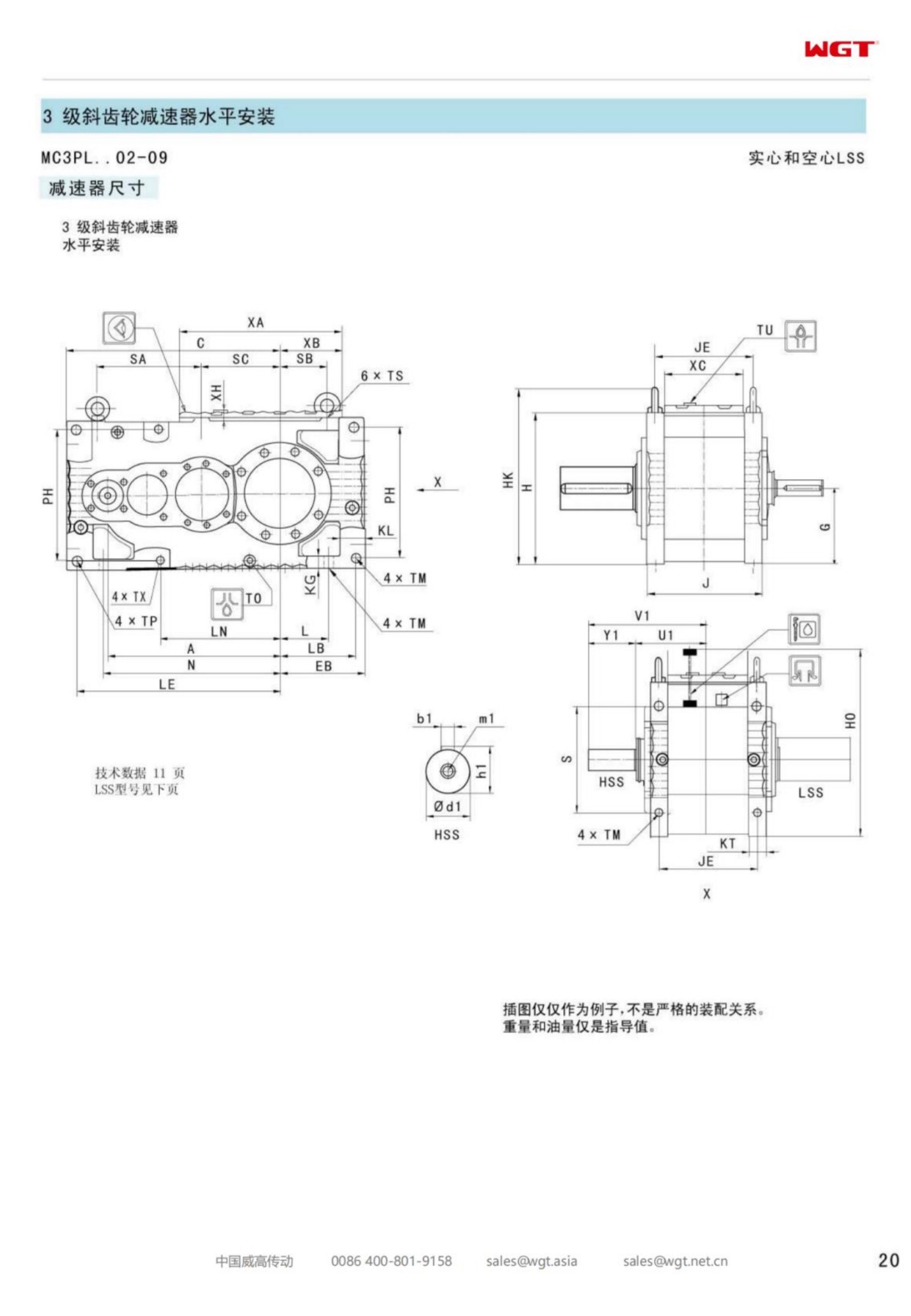
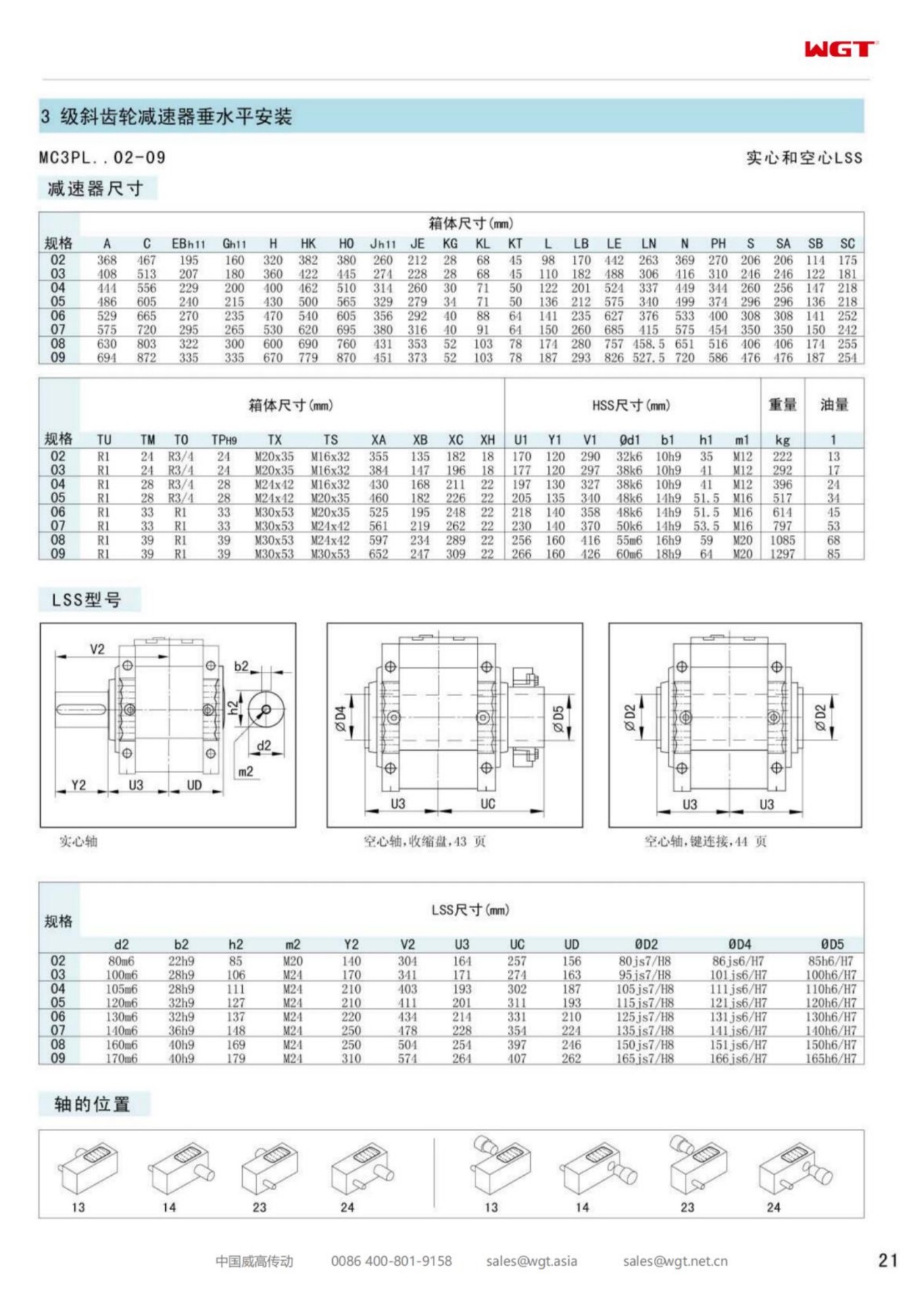
Digestate is what is left when a digester has taken what it can: warm, heavy, slightly alkaline, and carrying enough sulphide to eat the wrong grade of steel. The screw that feeds it into a press runs slowly and takes everything the digester sends. The MC3PLST09 parallel shaft gear unit drives that screw from a keyed shaft, with a torque arm holding the reaction on the press skid and three helical stages holding motor speed down to a few dozen revolutions.
The sections below take the code apart, explain the skid-mounted case, describe the condensate and sulphide conditions, and list what a plant operator should send so the drive arrives matched to the digester it serves.
Digestate Is Heavy, Warm and Slightly Corrosive
At seven to nine per cent dry solids, digestate behaves like a heavy slurry with a yield stress: it will not flow until it is pushed, and it resists the push. Warmth lowers that resistance a little and raises the corrosion rate a lot. A drive on this duty is specified for density and temperature as much as for tonnage, because both decide the torque it must produce every hour of every day.
The MC3PLST09 Designation in Plain Terms
Nothing in the string is decoration.
| MC | Industrial gear unit family for continuous plant duty |
| 3 | Three stages of reduction in one housing |
| P | Parallel-shaft helical gearing, coaxial input and output |
| L | Level output axis into the driven shaft |
| S | Solid output shaft, keyed to the driven shaft |
| T | Torque-arm reaction, no baseplate required |
| 09 | Ninth and largest frame of the three-stage band |
Which means: a three-stage industrial gear unit, parallel shafts, level output axis, solid shaft keyed to the screw, torque-arm reaction, ninth and largest frame of the band.
A Torque Arm on the Press Skid
Presses arrive on skids, and skids are designed to be moved. A drive bolted to a skid pad becomes part of a structure that may be re-levelled next season; a drive held by a torque arm is positioned by the screw and reacts against the skid's own steel without being built into it. When the skid is re-levelled or re-sited, the arm is loosened, the drive stays on the shaft, and nothing has to be re-shimmed from scratch.
Keyed Shaft Where the Feed Enters the Press
The feed screw's shaft ends close to the press inlet, where a coupling can be reached and a seal can be changed. A solid output with a keyed coupling suits that geometry better than a bore, because it leaves the screw's own bearing arrangement undisturbed and keeps the connection inspectable at every service interval.
Hydrogen Sulphide and Warm Condensate
Sulphide in warm, moist air attacks copper alloys, plated fasteners and painted steel in ways that a dry hall never shows. The practical specification is a finish that tolerates a biological plant's atmosphere, fasteners in a grade that does not corrode into a single lump, and a breather sited where condensate cannot run into it. None of it is exotic; all of it has to be asked for.
Feed That Varies With the Digester
A digester's output changes with feedstock, with retention time and with how much the plant is being pushed. Fibre content, dry solids and temperature all move, and the screw's torque moves with them. The frame is therefore chosen at the top of the observed range with a service factor, not at the average the designer wrote on the flowsheet.
Three Stages for a Slow Feed Screw
Feed screws turn at tens of revolutions per minute, and the ratio from a four-pole motor is deep enough that three stages are the natural choice. Three meshes hold the reduction in a single compact case on a crowded skid, and the smooth output keeps the press from seeing torque pulses that its own screw would otherwise transmit.
Access When the Skid Is Crowded
A press skid carries the press, the screw, the motor, pipework and a drain, and the drive has to fit somewhere in that without blocking any of them. Deciding the inspection side, the drain position and the lifting points before the order is placed is the difference between an oil change that takes half an hour and one that needs the pipework cut out.
Seals That Live With Condensate
Warm moist air condenses on a cool case overnight and finds the lowest point, which is usually the output seal. A protected seal arrangement, a drain that can be opened without tools, and a breather above the condensate line keep the oil dry. Oil that has taken on water stops protecting the bearings long before anyone notices a noise.
Sizing From Digester Throughput
Digester throughput and the press's cycle time give the screw speed the process needs; the motor speed divided by that gives the ratio. The torque comes from the heaviest digestate the plant can produce at the highest dry solids it has seen, multiplied by a service factor. Both numbers are in the plant's operating log, which is where a good enquiry starts.
What the Plant Operator Should Send
Send the screw shaft diameter and keyway, the required screw speed, the throughput and dry solids range, the digestate temperature, the motor frame and speed, the atmosphere at the skid, and the steel available for the arm. A photograph of the skid, taken from the aisle, settles the rest in one look.
Frame Nine at the Top of the Band
Frame nine closes the three-stage torque-arm line: the largest case, the heaviest shaft set, and the frame chosen when a press is big and the digestate is thick. Above this size the answer is a different arrangement rather than a larger frame, which makes nine the natural stop for plants pushing a digester hard and expecting the drive to keep up without being nursed.
Warm, heavy digestate with sulphide in the air - three stages keep the press fed:
- Digestate feed conveyor at an anaerobic digestion plant
- Screw press feed at a biogas plant outlet
- Dewatering press infeed conveyor at a waste treatment site
- Digestate transfer belt at a farm-scale digester
- Separator feed screw at a biofertiliser works
- Press cake transfer conveyor at a digestion plant
Model Range and Centre Distances
| Model | Centre distance | Output | Typical duty |
|---|
| M3PSF50 | size 50 | solid shaft, foot | conveyors, feeders |
| M3PSF60 | size 60 | solid shaft, foot | crushers, mixers |
| M3PSF70 | size 70 | solid shaft, foot | ball mills, shredders |
| M3PSF80 | size 80 | solid shaft, foot | kilns, heavy conveyors |
| M3PSF90 | size 90 | solid shaft, foot | mill and kiln drives |
| M3RSF50 | size 50 | solid shaft, foot, right-angle | inclined conveyors, elevators |
| M3RSF60 | size 60 | solid shaft, foot, right-angle | screw classifiers, feeders |
| M3RHF70 | size 70 | hollow shaft, foot, right-angle | agitators, drum drives |
| M3PHT80 | size 80 | hollow shaft, torque arm, parallel | shaft-mounted conveyors |
| M3RHT90 | size 90 | hollow shaft, torque arm, right-angle | heavy shaft-mounted drives |
Frame sizes in this series follow a widely used industrial dimension ladder: foundations, couplings and guards of the existing installation are reused as they are.
Proven Installations
Grain terminal elevators
A grain terminal powers its bucket elevators with gear reducers. The anti-run-back option holds the loaded buckets during power cuts, and standard interface dimensions meant the old foundations were reused as they were.
Pallet lift in a warehouse
A logistics integrator selected units for pallet lifts. The hollow output bore carries the lift screw directly, and one year of three-shift operation has passed without a single seal replacement.
![gearbox applications in quarry food and water plants]()
Conveyor, mixer, crusher and wastewater duties share the same gear family.
Selection Example: Digestate feed conveyor at an anaerobic digestion plant
Take a 22 kW motor at 1470 rpm turning the feed screw at 20 rpm. The ratio follows directly: 1470 / 20 = 73.5, so a ratio near i=73 is drawn from the three-stage parallel band, and the service factor is set on the heaviest digestate the digester can produce rather than on the design dry solids. In this case frame nine holds the press feed from a case reacted against the skid steel by an arm, keys a solid output to the screw shaft, and protects its seal and breather against warm condensate and sulphide. Motor speed over target speed gives the ratio; the driven machine decides the service factor, and the two together decide the model.
![industrial gear unit sizing procedure diagram]()
The four inputs the online selector asks for.
Framework Stock for Critical Spares
Can your plant afford downtime? Work out the ratio, torque and frame size yourself with the WGT Motor & Gearbox Online Selection System, then send the result - we confirm it in writing.
For critical drives we can hold finished units or long-lead internals against a framework agreement, ready to dispatch when your shutdown starts. Ask for the spares-coverage proposal. Looking for a gear reducer for food processing machine? Tell us the duty point and we will confirm the model in writing.
FAQ: Selection, Mounting and Maintenance
Do you support commissioning and after-sales service?
Every shipment includes an installation manual and a test record. Our engineers answer commissioning questions by e-mail or video call, and spare seals, bearings and shafts remain traceable to your original order for years afterwards.
What is a service factor and which value should I use?
The service factor multiplies your required torque to cover shock and duty class: around 1.0 for uniform conveyors, 1.25 for moderate shocks and 1.5 or higher for crushers, shredders and reversing drives. Tell us the driven machine and we apply the correct value before quoting.