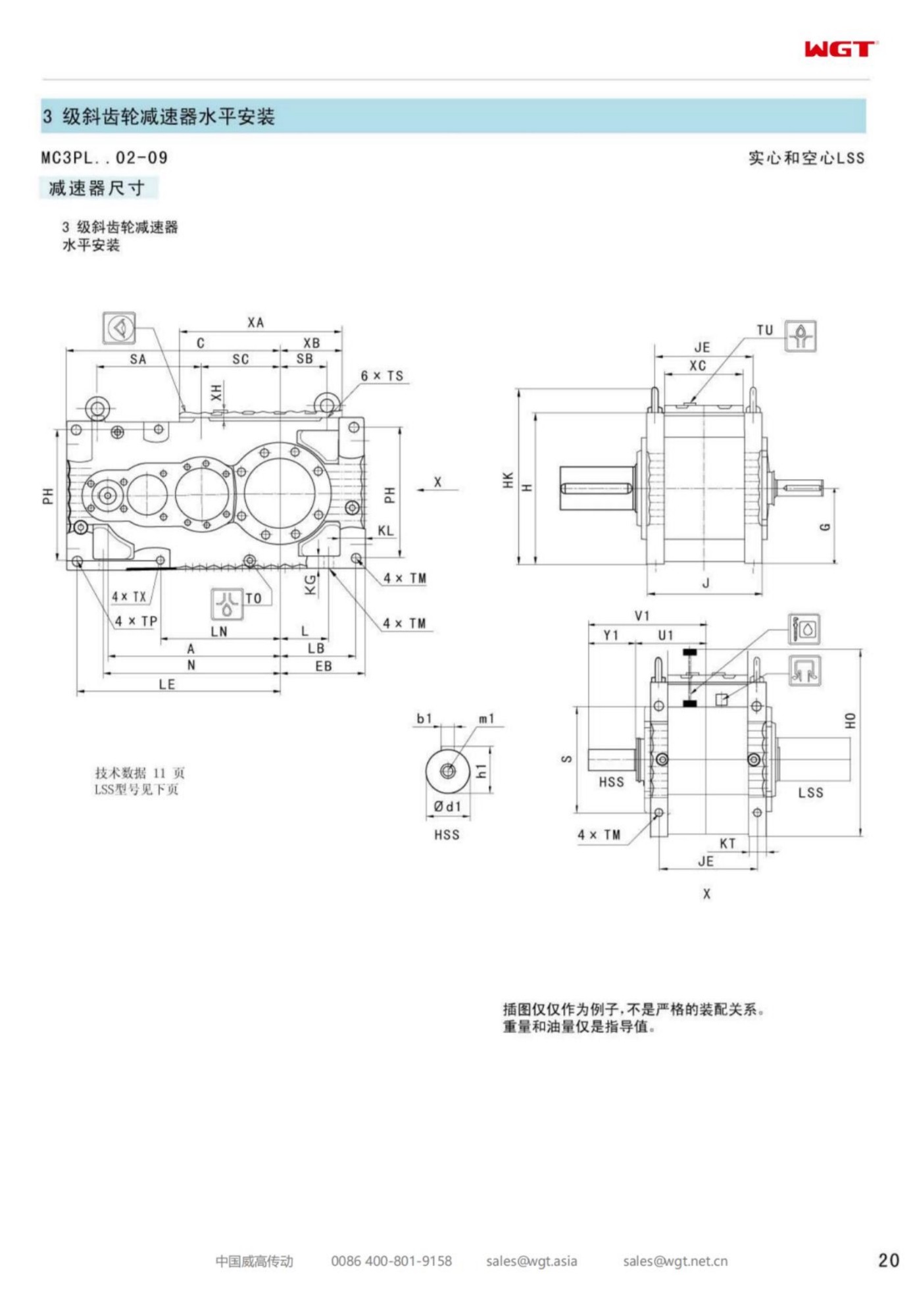
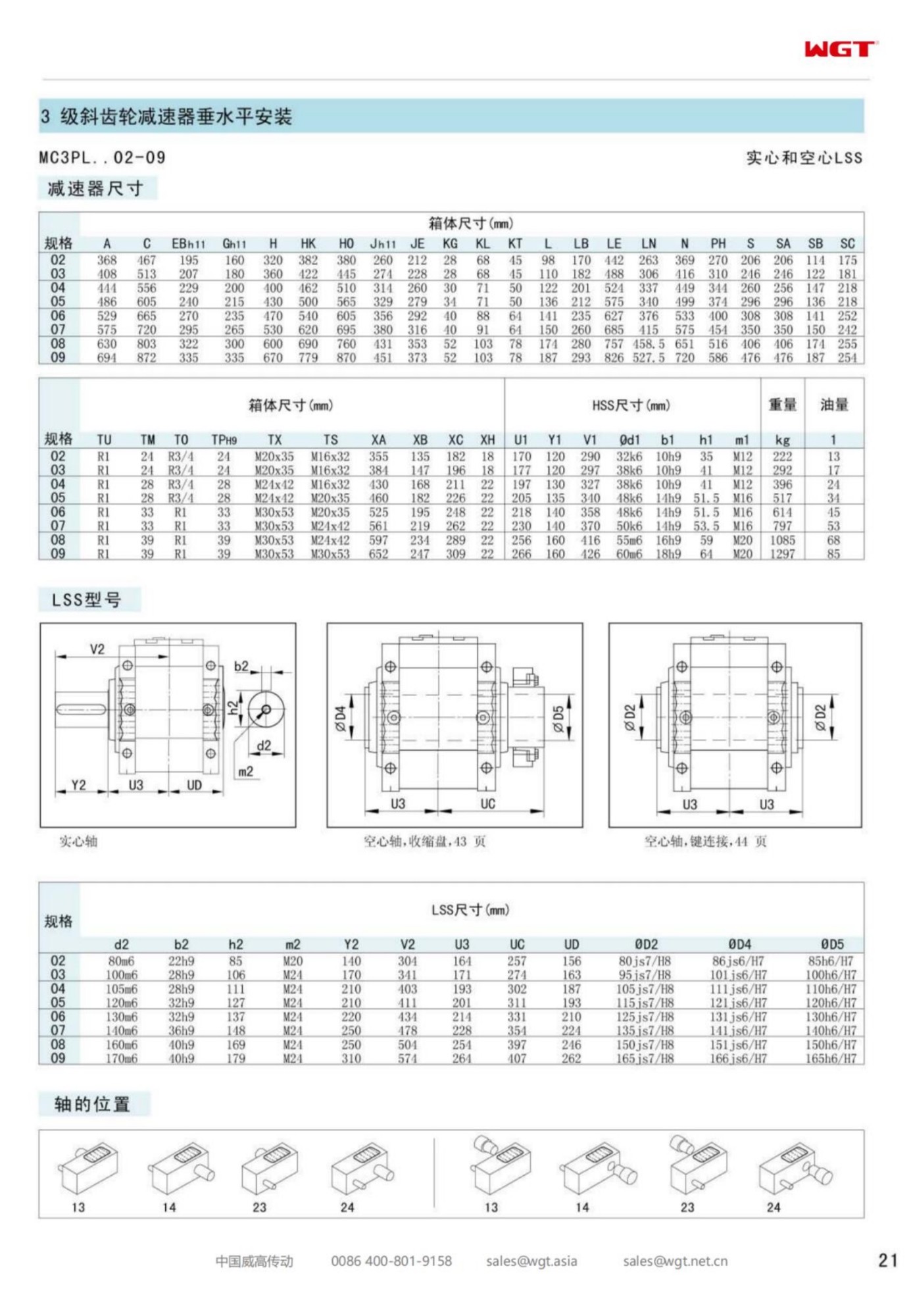
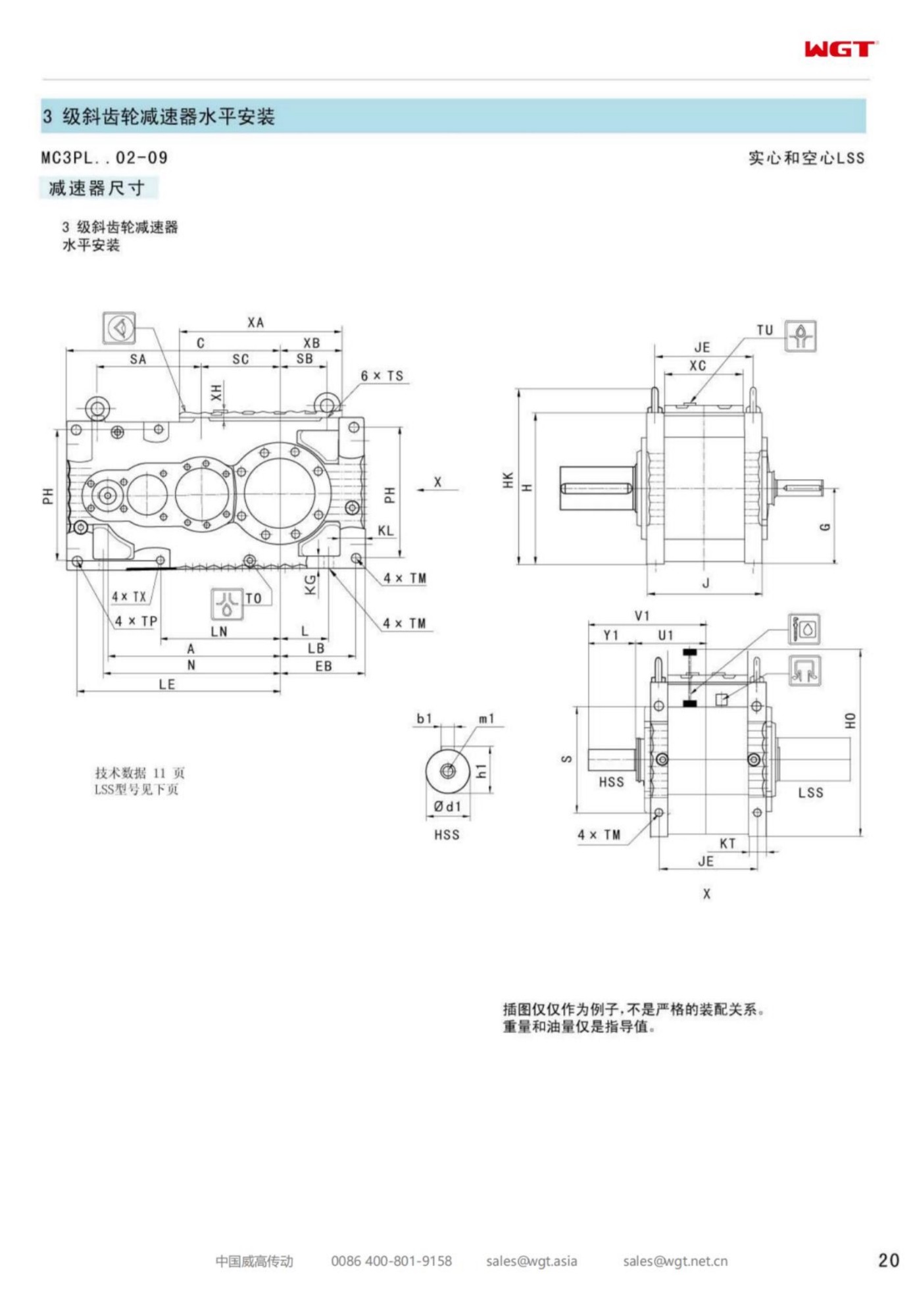
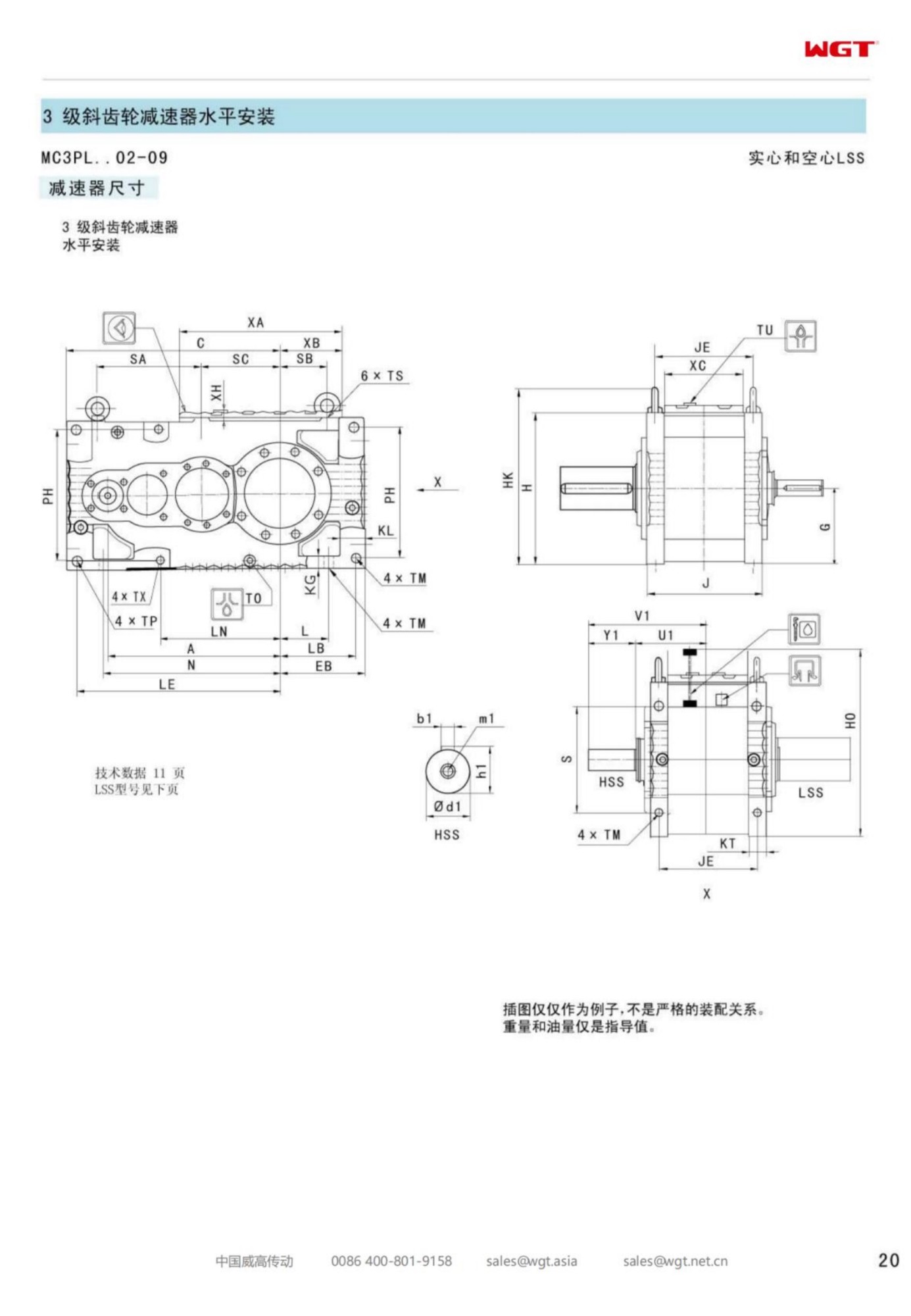
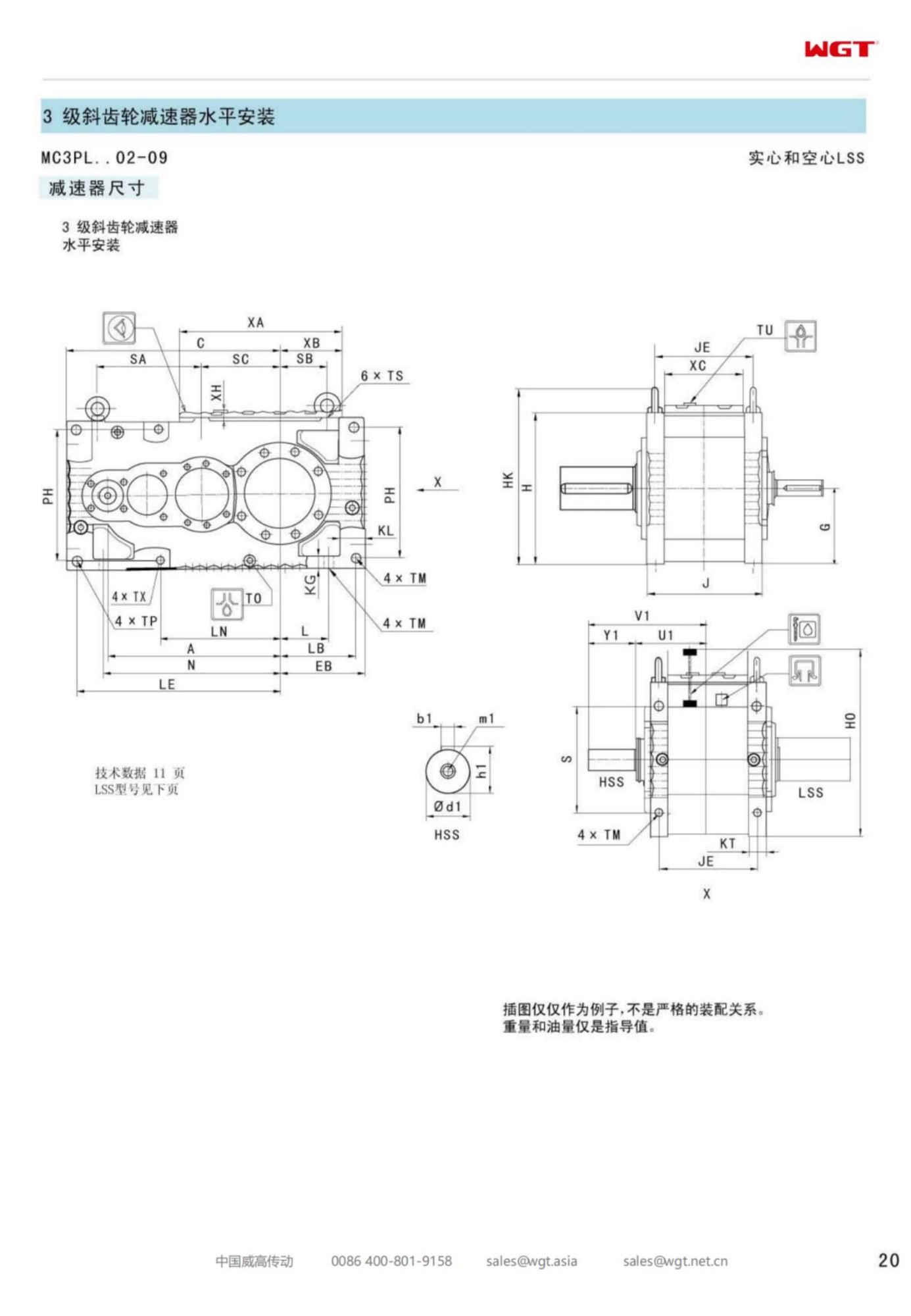
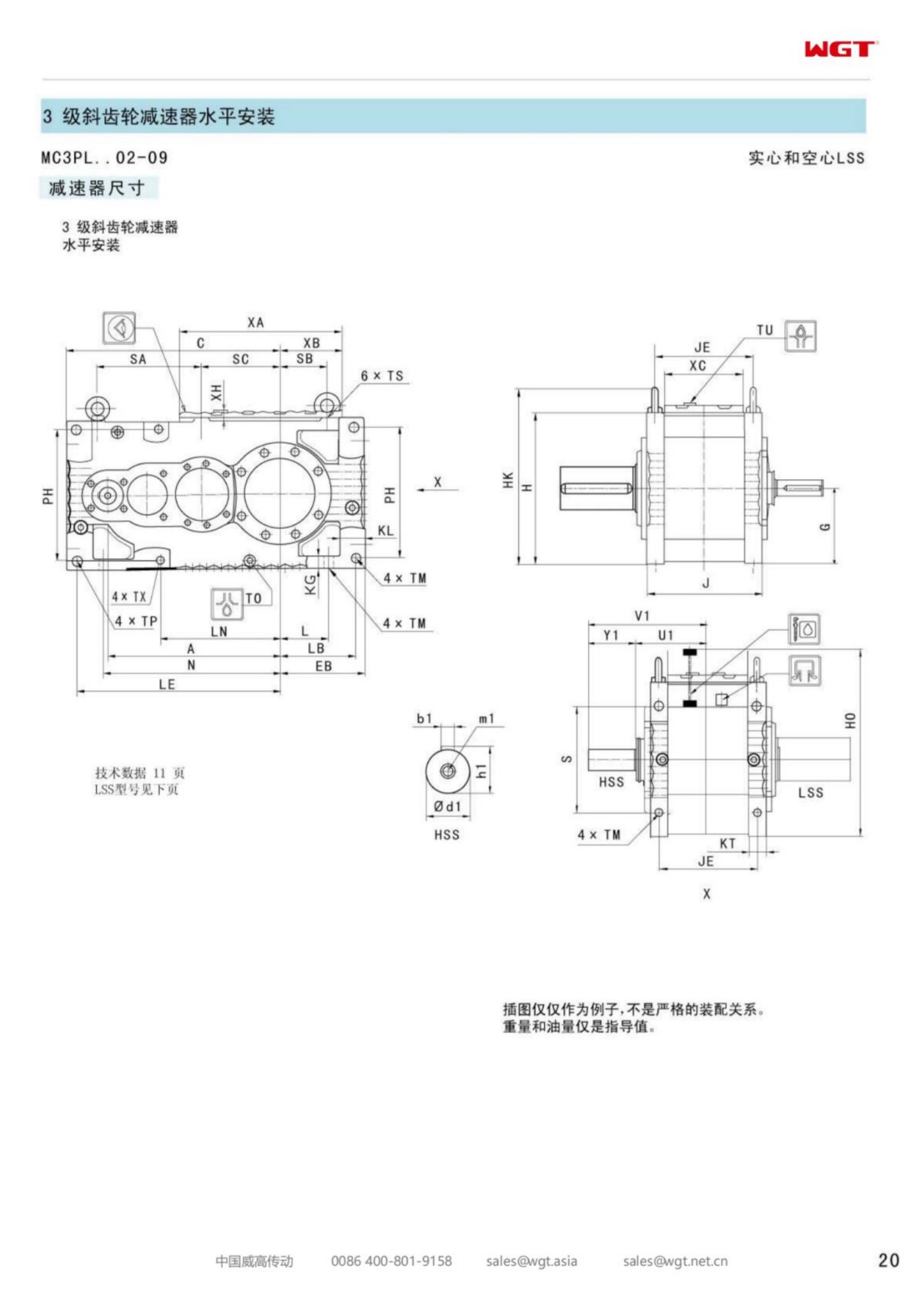
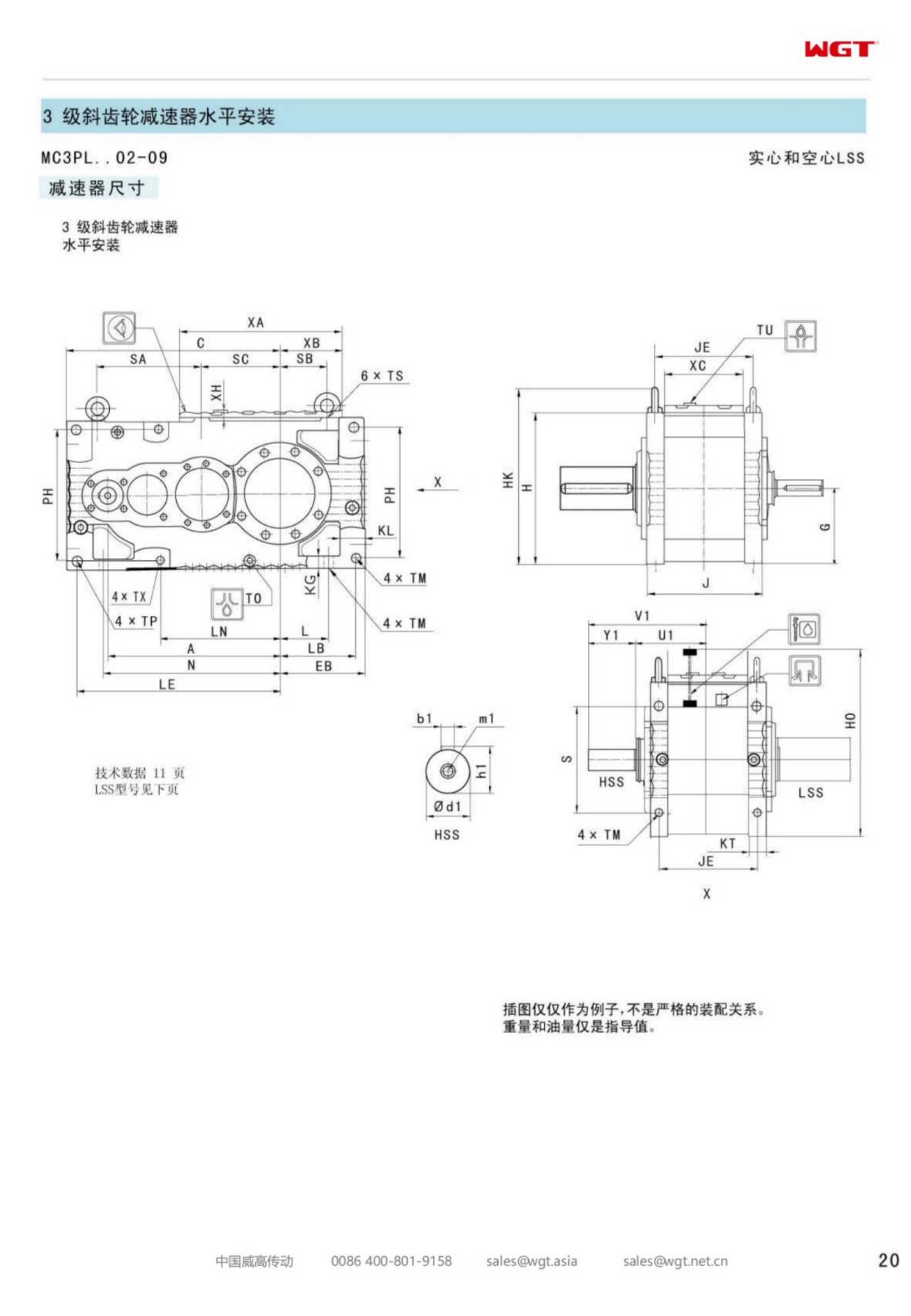
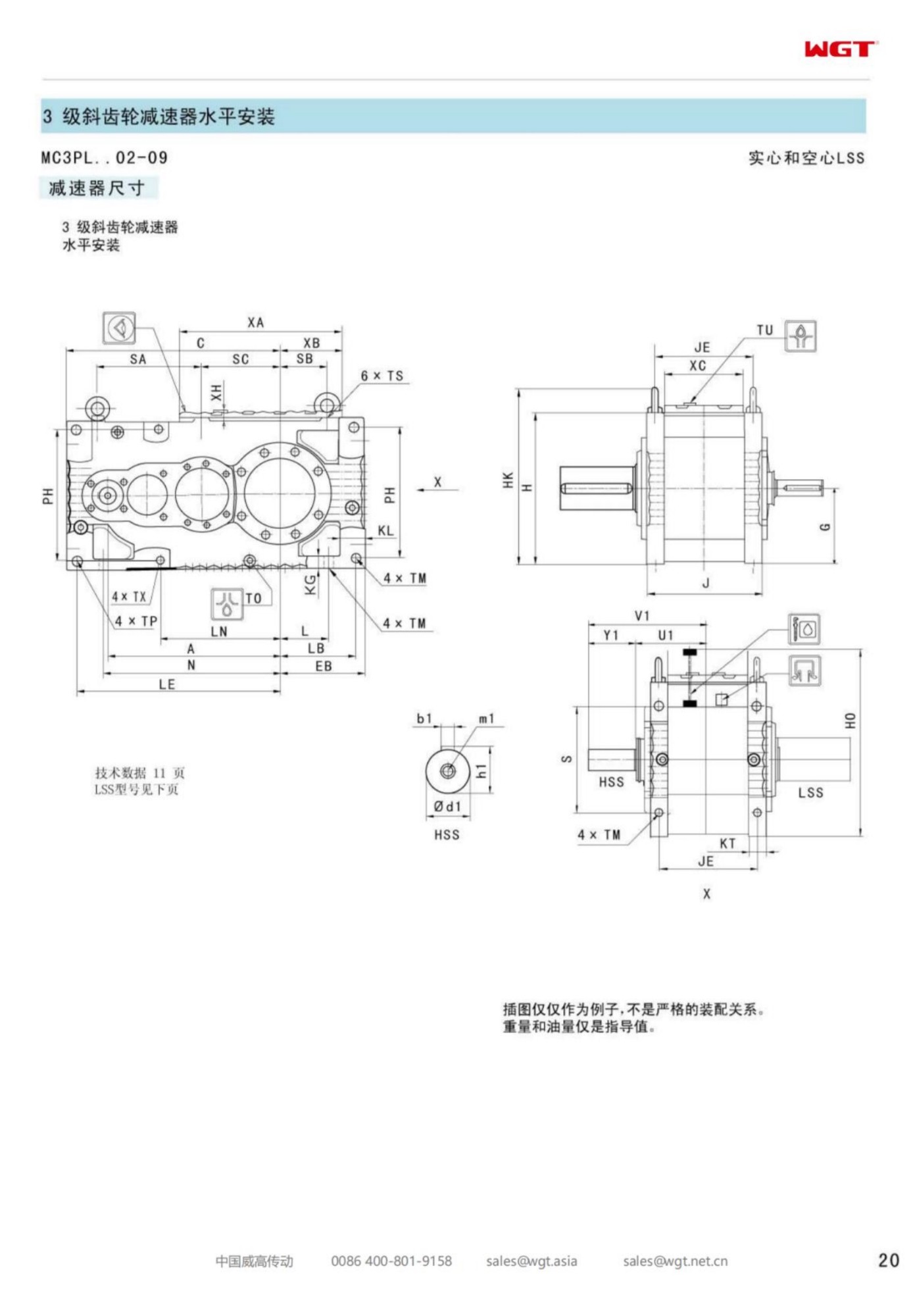
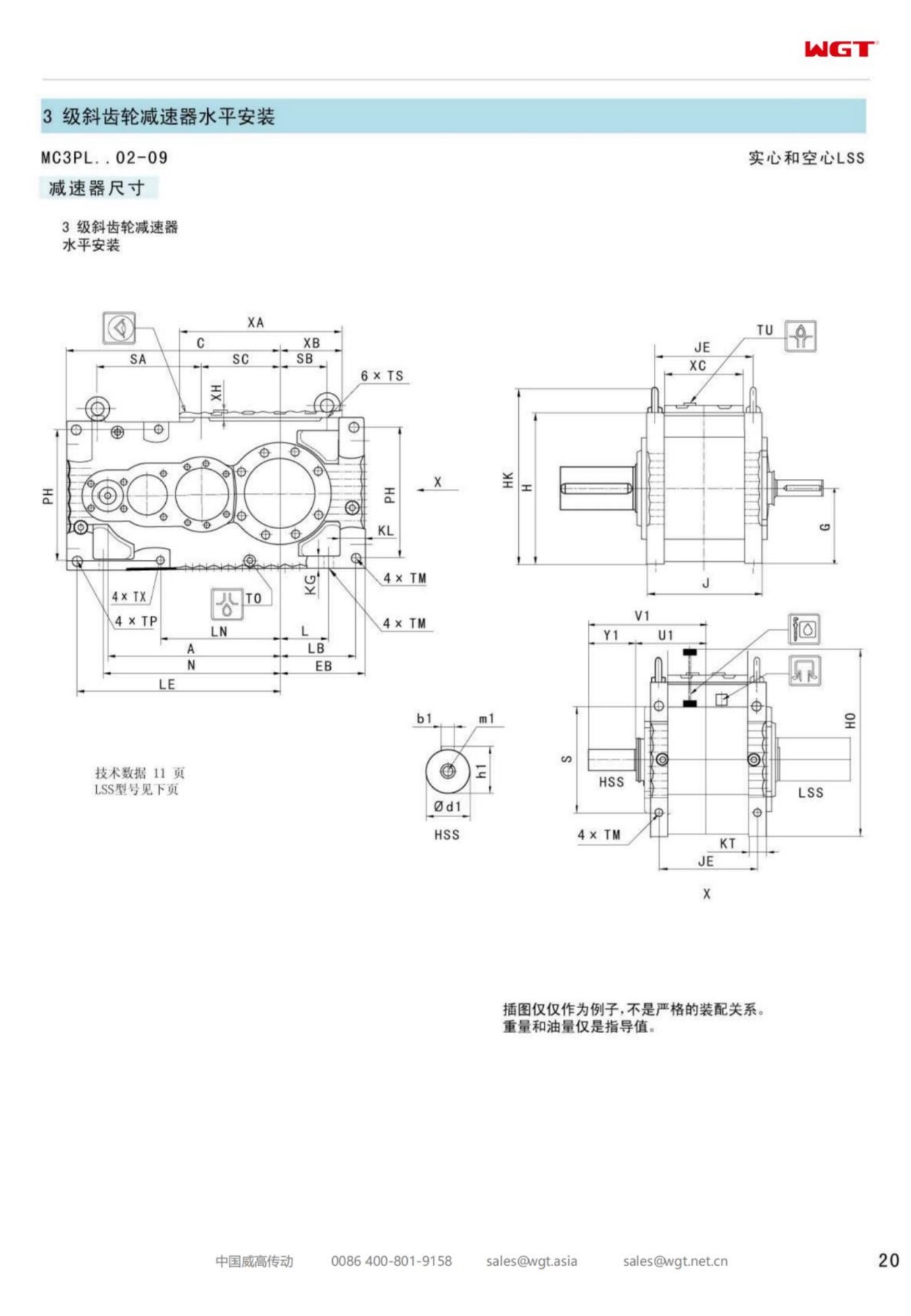
Side-entry agitators live where nobody wants to go: through the wall of a slurry tank, with the shaft in the pulp and the drive out on a bracket where the spray lands. The MC3PLHF09 parallel shaft gear unit is built for that bracket - the top frame of the three-stage, foot-mounted, hollow-bore band, sized for pulp that settles whenever the plant pauses.
The sections below take the code apart, explain why a bored output belongs on a tank wall, and list what a tailings plant should state so the drive and its bracket arrive as one assembly.
Tailings Duty Never Truly Stops
A tailings circuit runs around the clock and pauses only when something upstream breaks. The agitator is expected to keep the solids moving through that pause, and to restart a bed that has been sitting still for hours without a fitter standing by. That expectation - restart after a stop, unattended - is the whole specification in one sentence.
The MC3PLHF09 Name in Full
Each character is a decision already taken.
| MC | Industrial gear unit family for continuous plant duty |
| 3 | Three stages of reduction in one housing |
| P | Parallel-shaft helical gearing, coaxial input and output |
| L | Level output axis into the agitator shaft |
| H | Hollow output bore over the side-entry shaft |
| F | Foot mounting on the tank bracket |
| 09 | Ninth and largest frame of the three-stage band |
In a sentence: three helical reductions in one housing, parallel shafts, level axis, hollow output over the agitator shaft, foot plate on the tank bracket, ninth and largest frame of the band.
A Bore Through the Tank Wall
Side-entry geometry gives the bore its clearest case. The agitator shaft passes through a wall seal, then through the output bore, and the drive hangs on the shaft it turns, with the bracket carrying only the reaction. No coupling sits in the spray zone, no alignment session is needed after a seal change, and the whole assembly can be pulled back along the shaft for service.
A Foot Plate on a Tank Bracket
The bracket is usually fabricated from plate and welded to the tank shell, which means its pad is as flat as the fabricator made it. Shim it, do not pull it. A case distorted at four feet leaks at the output seal and runs its bearings on one edge, and neither fault shows up until the plant is already unhappy. A straightedge and a set of stainless shims settle it in an hour.
Slurry, Grit and Long Unattended Runs
Tailings carry quartz and whatever the mill did not grind fine enough. The grit does not attack the gearing - the housing keeps that clean - but it attacks everything outside it: seals, shaft surfaces, breathers, the paint on the bracket. A drive specified for this duty is specified on its external protection as much as on its rating.
Restarting a Settled Bed
Solids settle into a dense bed once the agitator stops, and the torque needed to break that bed loose can dwarf the running figure. The usual answer is a plant procedure - start the agitator before the feed returns - but the drive should still be chosen for the restart case, because procedures are followed by people and people are on shift change when the tank is fullest.
Seal and Bearing Protection Above a Slurry
The wall seal keeps pulp out of the tank, and the drive's own seal keeps the tank atmosphere out of the gearbox. Between them sits a shaft that must not be allowed to corrode into a step, or the next seal change becomes a shaft change. A protected input seal, a breather routed clear of the spray, and a drain that can be opened without reaching over the tank are the three details worth insisting on.
Three Stages for a Paddle That Turns Slowly
Slurry agitation needs slow rotation and high torque, which is the deep end of the three-stage band. Three meshes absorb that ratio in one compact case, and the ninth frame gives the shaft and bearing capacity that a heavy paddle on a long overhung shaft demands without resorting to a two-case arrangement on a crowded bracket.
Lifting and Rigging a Nine Frame
The ninth frame is a heavy component, and it usually has to be lifted into a position with the tank behind it and a handrail in front. Lifting points that suit the plant's actual rigging, a case that clears the handrail on the way in, and a bracket pad that can be reached with a torque wrench are layout questions, not luxuries. Settle them before the order, because they cannot be settled afterwards.
Sizing From the Rake and the Bed
The paddle diameter and the target peripheral speed give the output speed; the pulp density and the bed's settled condition give the torque. Motor speed over output speed fixes the ratio, and the restart torque with a service factor fixes the frame. Every one of those numbers comes from the plant's own operating data, which is why the enquiry has to carry them.
Enquiry Details for a Tank Drive
Send the agitator shaft diameter and keyway, the paddle geometry, tank volume and pulp density, the shutdown pattern and how long a bed is allowed to settle, the motor frame, the spray and washdown regime, and a photograph of the bracket. That list answers every question a quotation would otherwise raise.
Frame Nine Closes the Band
Ninth frame is where the three-stage foot-mounted line ends: the biggest case, the largest bore, the heaviest shaft set, and the model chosen when a tank is wide and the pulp is dense. Above this size the answer is a different arrangement rather than a bigger frame, so the ninth is the natural stop - and the natural pick for tailings work that has to keep turning without an operator in sight.
Pulp that settles the moment the plant pauses - three stages bring it back:
- Side-entry agitator on a tailings thickener tank
- Slurry holding tank agitator at a concentrator
- Pulp conditioner shaft in a flotation circuit
- Tailings transfer tank paddle drive
- Backfill plant mixing tank agitator
- Slimes dam return tank stirrer
Selection Example: Side-entry agitator on a tailings thickener tank
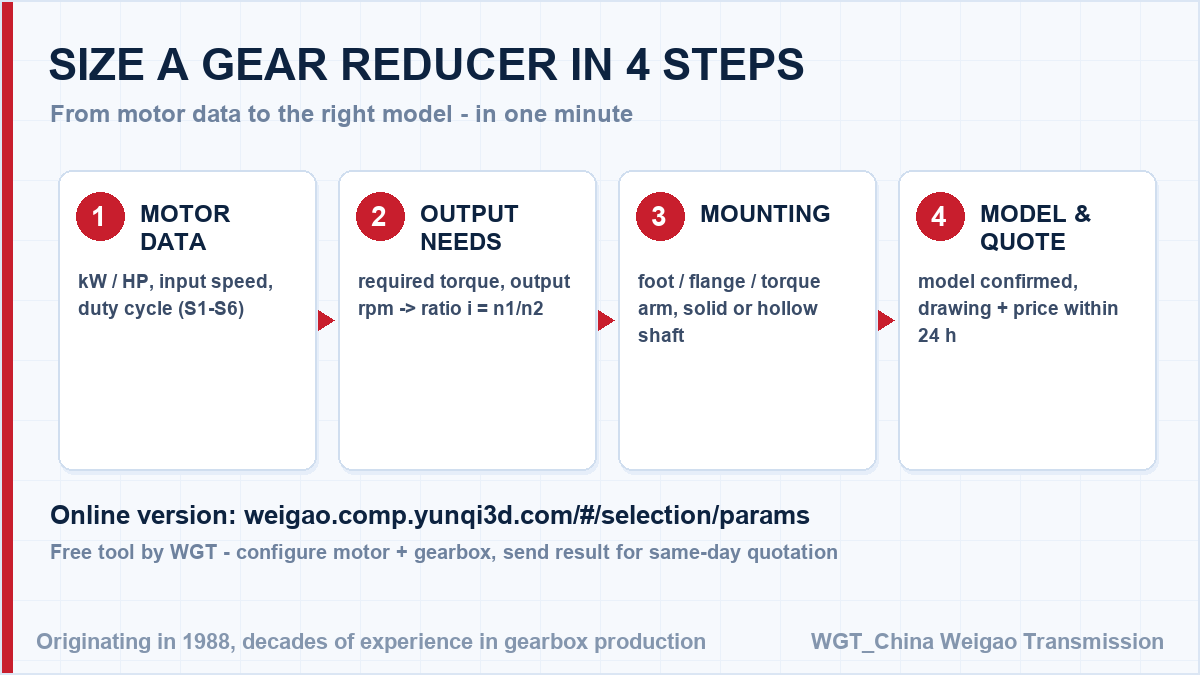
Take a 22 kW motor at 1480 rpm turning the paddle at 13 rpm. The ratio follows directly: 1480 / 13 = 114, so a ratio near i=114 is taken from the three-stage parallel band, and the frame is confirmed against the breakaway torque of a settled bed rather than against the agitated pulp. In this case frame nine holds the largest tank in the circuit from a foot plate on the wall bracket, drives the side-entry shaft through a bore, and protects its seal and breather against grit and spray. Work through the same three steps - speed, output speed, torque - and the model number falls out; we verify it against the duty class before quoting.
![gear reducer ratio calculation steps]()
From duty point to model number - the same four steps every time.
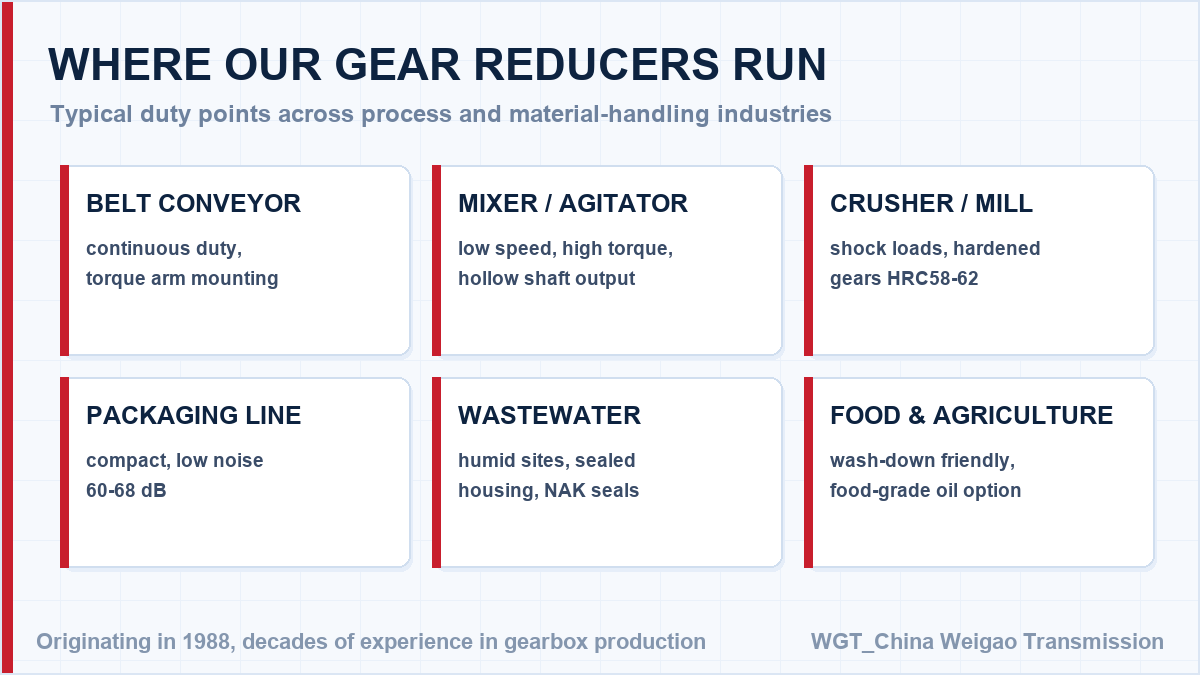
Applications in Industry
Steel mill transfer car
A rolling mill drives its slab transfer cars with industrial gear units mounted on torque arms. Reversing duty every few minutes is handled without complaint, and the hollow-shaft connection keeps the wheel axles free of couplings.
Rotary dryer drive
A minerals processor powers a rotary dryer with a large foot-mounted gear unit. Slow rotation with high torque is the natural duty band, and the housing stays within its temperature limits without auxiliary cooling.
![gear reducer industries served - WGT]()
Industry map: the sectors where the M3 series is most common.
Buyer Questions and Answers
What is the service factor and how is it applied?
The service factor is a multiplier applied to your required torque to cover shocks and duty class - typically 1.0 for uniform duty, 1.25 for moderate shocks, 1.5 or more for heavy shock loads. Send us the driven machine and duty and we will apply the correct factor.
What ambient temperature range can the unit work in?
Standard units suit -10 to +40 deg C ambient with the supplied mineral oil. For lower temperatures we fill with synthetic oil; for higher ambient or frequent starting we advise the next larger frame or an oil cooler.
M3 Series Model Overview
| Model | Centre distance | Output | Typical duty |
|---|
| M3PSF50 | size 50 | solid shaft, foot | conveyors, feeders |
| M3PSF60 | size 60 | solid shaft, foot | crushers, mixers |
| M3PSF70 | size 70 | solid shaft, foot | ball mills, shredders |
| M3PSF80 | size 80 | solid shaft, foot | kilns, heavy conveyors |
| M3PSF90 | size 90 | solid shaft, foot | mill and kiln drives |
| M3RSF50 | size 50 | solid shaft, foot, right-angle | inclined conveyors, elevators |
| M3RSF60 | size 60 | solid shaft, foot, right-angle | screw classifiers, feeders |
| M3RHF70 | size 70 | hollow shaft, foot, right-angle | agitators, drum drives |
| M3PHT80 | size 80 | hollow shaft, torque arm, parallel | shaft-mounted conveyors |
| M3RHT90 | size 90 | hollow shaft, torque arm, right-angle | heavy shaft-mounted drives |
The series is sized for continuous heavy duty rather than by motor power alone: the required torque with the service factor decides the frame, and the stage count (2 to 5) decides the ratio band.
Drawings, Ratings and Test Records on Request
Need the paperwork first? Run your duty point through the WGT Motor & Gearbox Online Selection System first: it saves a round of emails and gets you to a firm price faster.
We issue dimension drawings, rating tables and sample test records in English for your approval package, before the order is placed. Engineering and purchasing sign-off without delays. Looking for a gear reducer for textile machinery? Tell us the duty point and we will confirm the model in writing.