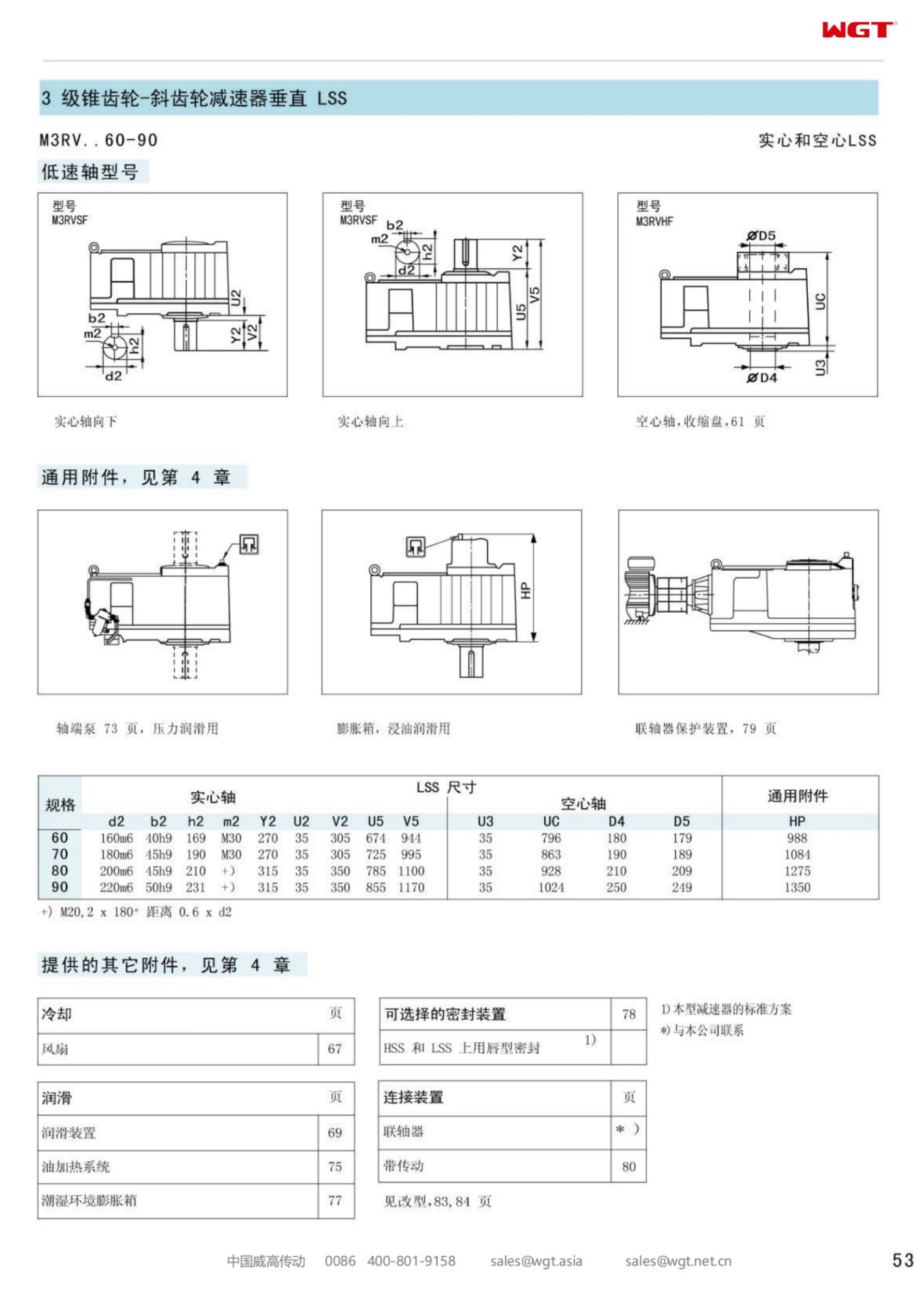
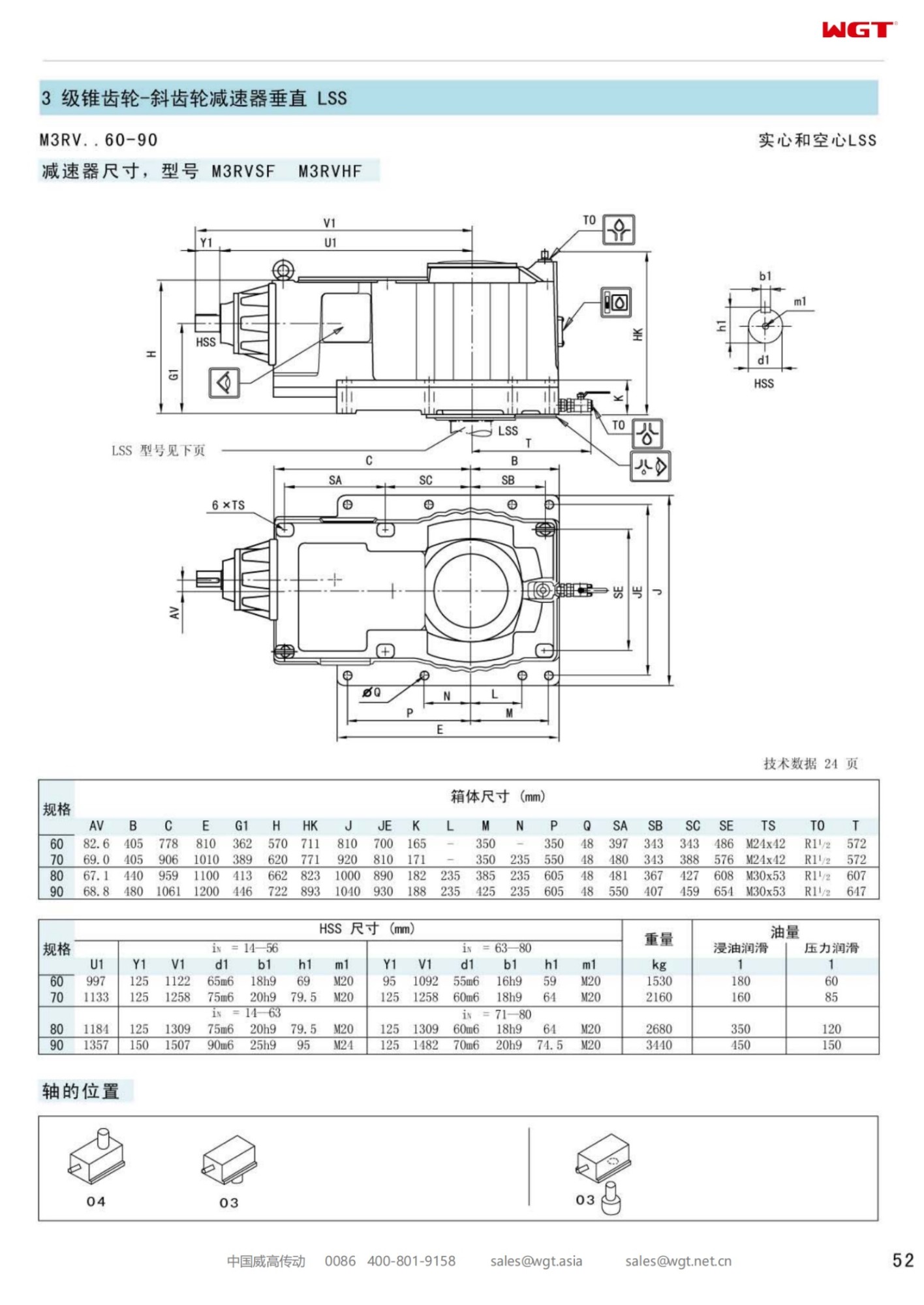
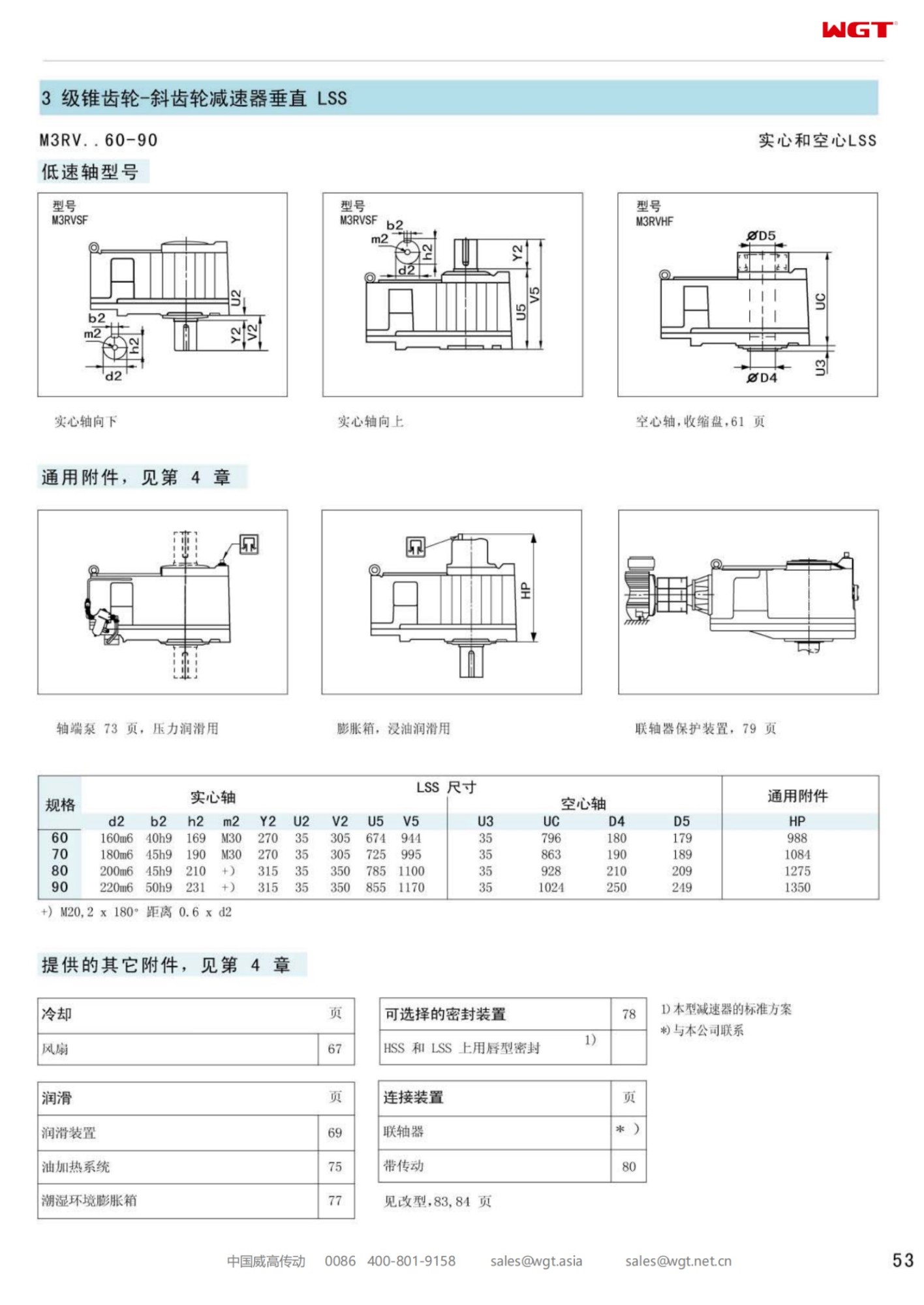
The M3RVHF60 vertical hollow shaft gear unit combines a right-angle bevel input with a bored output, so the motor stays at deck level while the process shaft passes straight through the gearbox. That pairing solves two independent site problems at once: no motor tower above the machine, and no long coupling line beneath it. On tanks, deep pump sumps and thickener drives the result is a drive train with one machined interface instead of three.
Why Bore and Bevel Travel Together
Each feature answers a load path. The bored output takes the process shaft into the housing and lets machined faces set alignment, while unit bearings carry both the radial whip and the axial thrust that a suspended shaft generates. The bevel input takes the motor off the vertical centreline, which frees headroom and moves the electrical work to a walkway. Together they shrink the stack of parts a maintenance planner has to keep - coupling halves, pedestal bearings, alignment shims - down to a housing and a key or shrink disc.
The 60 frame is where this arrangement starts to make economic sense for larger processes. Below it the bore handles small and light shafts; at 60 the bearing set is dimensioned for the moment arms that a real tank agitator or a forty-metre pump column produces, and the bevel pair is sized so the input stage does not become the limit on start-up torque.
What Each Letter Fixes
| M | Three-stage industrial gear unit family |
| R | Bevel first stage, motor fed from the side |
| V | Vertical build for a downward process axis |
| H | Hollow output shaft bored for the through-going shaft |
| F | Foot and flange mounting on headplate or support steel |
| 60 | Frame size in the vertical range |
Because the letters describe machining, the file that follows them is specific: bore diameter and tolerance, keyway or shrink-disc detail, seal grade, flange drilling and the position of the breather. Two units with the same ratio but a different final letter are not the same article, and no site fitter should have to discover that at the tank rim.
The Components That Decide Service Life
On a bored vertical drive the gear teeth rarely fail first. The shaft seal, sitting directly above whatever the vessel holds, and the lower bearing, absorbing every newton the shaft delivers, are the parts that set the maintenance calendar. A standard lip seal is fine over clean water; over brine, slurry mist or hot oil it is the wrong grade, and the resulting oil loss usually reads on the dipstick long before any vibration trend does. Stating vapour, solids and temperature in the enquiry is the cheapest reliability work available at design stage.
Ground helical stages keep noise and losses low, and the bevel pair is lapped as a set so backlash holds over time. None of that compensates for a seal chosen without looking at the process atmosphere. Where the vessel runs under vacuum or pressure, say so - the seal and venting change with it.
Machine groups this unit is specified into: Tank mixers on edible oil and glycerine storage Vertical lift pumps on river barrages and weirs Rake arms on sludge thickening tanks at treatment works Bore-fed agitators in fermentation seed vessels Vertical pumps in sugar mill juice clarification Dissolver shafts on resin and adhesive batch tanks Thickener drives at mineral concentrate plants Vertical circulation units on chilled water headers
Erection Sequence on a Live Plant
Machined headplate first: flat, square and bolted to structure that will not deflect under torque reaction. The process shaft goes up through the bore with the agreed fit, end float set to drawing so unit and process bearings share thrust as intended, then the key or shrink disc is made up to the specified torque with a record kept. The breather takes its vertical position, the oil level is read at rest, and the drive is rotated by hand before the first start. A hand turn that binds is either a bore fit that has been forced or a shaft that is not true - both are cheaper to fix now than at operating temperature.
Delivery, Spares and the Paper Trail
Each unit ships with a dimensional drawing, an oil chart for the declared posture and a nameplate that pins frame, ratio and arrangement for repeat orders. The bore is plugged against dust and the crate carries the commissioning spares a site needs on day one. Where a plant runs several vessels of the same pattern, ordering the same frame for each keeps spares, oil and training in one column - a dull advantage that shows up every time a weekend breakdown needs a fitting that is actually on the shelf.
Model Range and Centre Distances
| Model | Centre distance | Output | Typical duty |
|---|
| M3PSF50 | size 50 | solid shaft, foot | conveyors, feeders |
| M3PSF60 | size 60 | solid shaft, foot | crushers, mixers |
| M3PSF70 | size 70 | solid shaft, foot | ball mills, shredders |
| M3PSF80 | size 80 | solid shaft, foot | kilns, heavy conveyors |
| M3PSF90 | size 90 | solid shaft, foot | mill and kiln drives |
| M3RSF50 | size 50 | solid shaft, foot, right-angle | inclined conveyors, elevators |
| M3RSF60 | size 60 | solid shaft, foot, right-angle | screw classifiers, feeders |
| M3RHF70 | size 70 | hollow shaft, foot, right-angle | agitators, drum drives |
| M3PHT80 | size 80 | hollow shaft, torque arm, parallel | shaft-mounted conveyors |
| M3RHT90 | size 90 | hollow shaft, torque arm, right-angle | heavy shaft-mounted drives |
Frame sizes in this series follow a widely used industrial dimension ladder: foundations, couplings and guards of the existing installation are reused as they are.
Proven Installations
Mining slurry pump drive
At a mineral processing site, hollow-shaft reducers drive slurry pump agitators. The hollow bore takes the pump shaft with no coupling, so a pump change-out no longer means re-aligning a separate drive.
Palm oil mill fruit elevator
A palm oil mill powers its fruit elevator with reducers. The humid, oily atmosphere is handled by FKM seals, and the compact frame fits between the steriliser and the threshing drum.
![gearbox applications in quarry food and water plants]()
Conveyor, mixer, crusher and wastewater duties share the same gear family.
Selection Example: Typical duty point
Here is how the selection is made for this frame size. Motor speed divided by the target output speed gives the ratio, rounded to the nearest available step, and the required torque with the service factor then fixes the frame size. Motor speed over target speed gives the ratio; the driven machine decides the service factor, and the two together decide the model.
![industrial gear unit sizing procedure diagram]()
The four inputs the online selector asks for.
Drive Down? Ask About Priority Builds
A drive is down right now? Work out the ratio, torque and frame size yourself with the WGT Motor & Gearbox Online Selection System, then send the result - we confirm it in writing.
Priority builds slot into the next production run, and urgent units can be air-freighted within days of payment. Describe the failure and the machine - we tell you honestly what is possible. Looking for a gear reducer for screw conveyor? Tell us the duty point and we will confirm the model in writing.
FAQ: Selection, Mounting and Maintenance
Can the gear unit hold a load on an inclined conveyor?
For inclined belts a backstop prevents the loaded belt from driving the unit backwards when power is cut. Specify the incline angle when ordering so the backstop and the oil level are matched to the actual mounting position.
What is the difference between foot and torque-arm mounting?
Foot mounting bolts the housing to a foundation and suits most fixed installations. A torque-arm lets the housing swing on the driven shaft, so no base frame is needed - common on shaft-mounted conveyors where the reaction rod absorbs the torque.