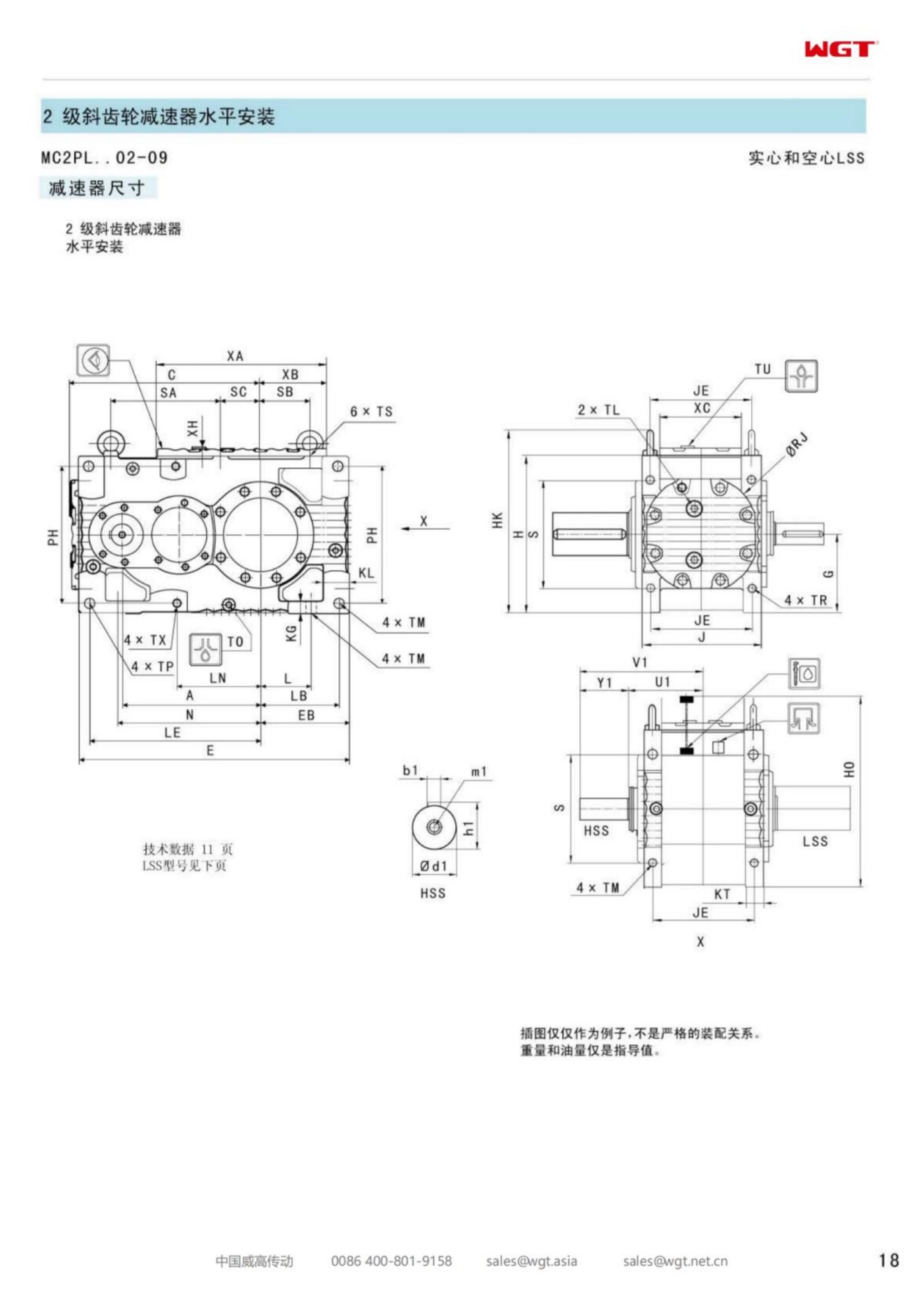
Every gear line ends somewhere, and the MC2PLHF09 parallel shaft gear unit is where the two-stage hollow-bore family draws its own boundary. It is the biggest case the two-stage layout is built in: the familiar arrangement - helical stages in one plane, feet on the plinth, motor alongside, the bore over the driven shaft - at the frame size reserved for the drives a plant genuinely cannot lose.
The ninth frame is bought rarely and remembered long. Its deliveries get their own crane plan, its foundations get their own drawings, and its commissioning gets an audience. None of that ceremony is decoration: at this size the unit is not a component but a small structure, and it repays the respect with decades of uneventful service.
The Last Frame and the Longest Hours
Units reach the ninth frame because the duty left them no smaller choice. Continuous tonnage, hostile starts and a shaft that must not grow a coupling are the signals. The frame answers with case sections that shrug off stall loads and a thermal mass that flattens the hottest shift, and it does so while keeping the installation a slide-and-bolt job rather than a coupling-machining project.
The buying logic at the top of a line differs from the middle. Price differences between the last two frames are small next to the cost of an hour of lost production, so the honest comparison is not unit price but total consequence: spares commonality with the frames below, the crane and foundation bill, and the value of headroom that lets the process grow for a decade without a re-selection.
Ratio Range at the End of the Line
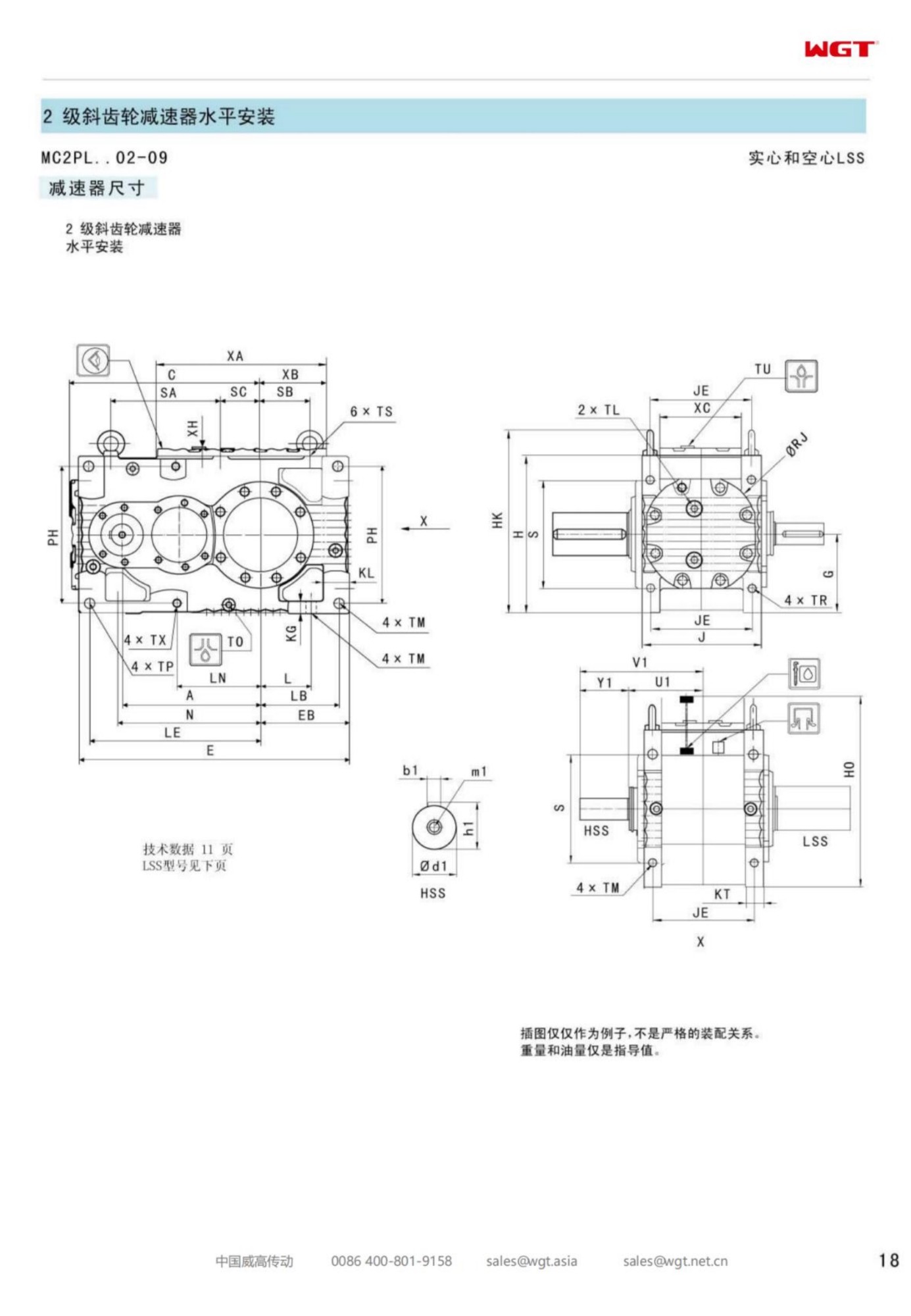
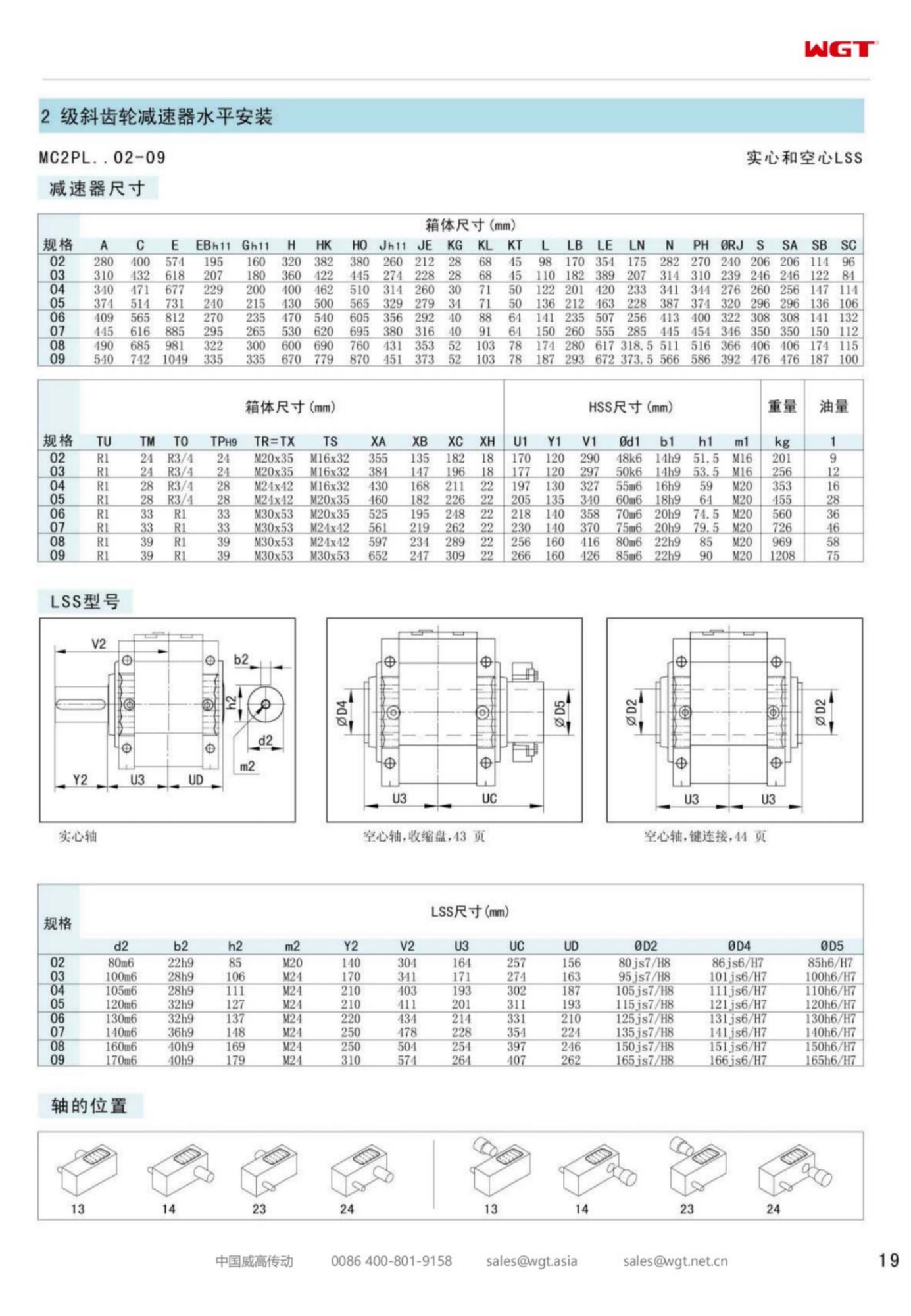
The ninth frame holds the lowest output speeds the two-stage build offers, and that is precisely its market: heavy, slow shafts - head pulleys, rake arms, apron pans - where a third stage would add mesh losses and a bearing set to watch for no duty benefit. The selection question is whether the required ratio sits inside the two-stage band at this torque; the outline drawing and the rating table answer it in minutes.
Where a duty drifts past that band, the family's three-stage relatives exist for a reason, and it is better work to move the enquiry sideways than to strain a two-stage frame into a band it was never drawn for. Good agents say so plainly, and plants remember the honesty longer than the price.
Speed matching at the low end is also a quiet quality decision. A heavy shaft turning twenty revolutions a minute shows every tooth error as a visible ripple in the product flow, so the gear quality grade and the backlash figures stop being catalogue fine print. Buyers who ask for the manufacturing grade in writing usually find the answer arrives with proud confidence - and units built to that written grade run quieter at the head pulley for their whole first decade than anything justified by the specification alone.
Reading the Plate Before the Crane Does
The designation decodes with the family's standard table; on this frame the final character is the one that schedules the cranes.
| MC | Industrial multi-stage gear unit family |
| C2 | Compact two-stage parallel-shaft series |
| P | Parallel stages - shafts in one horizontal plane |
| L | Horizontal build on feet |
| H | Hollow output bore, unit mounts over the shaft |
| F | Foot mounting, holding-down hardware |
| 09 | Ninth frame - the end of the two-stage line |
The H on a frame this size turns the driven shaft into a project item with its own drawing number, its own machining slot and its own inspection record. The F turns the foundation into civil works with a cure time. Both belong on the master schedule the day the order is placed, because both run on calendar weeks that no expediting phone call can compress.
Moving a Frame That Outgrows the Forklift
A ninth-frame unit does not travel by forklift, full stop. It travels by crane from the works to the trailer and by crane again from the trailer to the plinth, and the intermediate steps - skid tracks, rollers, a properly rated pallet truck under a spreader beam - are engineered, not improvised. The provided lifting lugs take the load in the orientation the instruction book shows, and slings are inspected before the first lift, not after the first alarm.
Storage on site deserves the same planning. A unit that waits a season waits filled or preserved to the book, bores greased and capped, breather plugged, and turned by hand monthly. The cheapest bearing failure in the plant is the one prevented for the price of a calendar reminder.
Duties Only the Final Frame Wants
The last frame of the line, and the longest hours it keeps:
- Overland conveyor drives along an open-pit haul road
- Sinter machine feed conveyors at an iron ore plant
- Kiln shell scraper drives at a lime works
- Transfer car drives in a steelworks slag yard
- Shuttle conveyor drives under a port shiploader
- Diffuser and bagasse carrier drives at a sugar mill
What these duties share is consequence: each is the one drive whose stoppage the whole site feels within the hour. The ninth frame suits them because it couples serious torque with the hollow-bore simplicity that keeps their shafts machinable, their guards honest and their alignment a routine rather than a project.
Cold Oil, Hot Gallery, and the Honest Rating
The rating a frame like this delivers is the rating at its own position, not the workshop's general ambient. A conveyor gallery in August can run far above the site average, and a winter start pushes thick oil through passages sized for it only after warm-up. Both facts belong in the order conversation: the summer ceiling decides between standard and assisted cooling, and the winter floor decides the viscosity grade and perhaps sump heaters.
Once running, the trend is the truth-teller. Temperature read at the same point each round, compared against the commissioning baseline, flags a choked breather or a drift in duty long before the oil sample does. The annual sample still gets taken - large slow cases usually die of contamination, not wear - but it confirms the trend rather than standing in for it.
The Bore Fit at Maximum Torque
At ninth-frame torque the bore fit is the most engineered joint on the machine. Surface finish, diameter tolerance, keyway squareness and shoulder squareness each carry an inspection line, and the fit is made once: clean, dry, cold, to the drawing. The reward for that care shows at the first planned withdrawal years later, when the contact pattern comes away evenly polished instead of scored at one edge.
Fretting is the failure mode to know. It begins invisibly at the bore mouth - a fine rust dust, a faint knock that grows by the month - and it always traces to a fit that was assembled hurriedly or a shoulder that let the unit tilt. Finding it at the first withdrawal is a cleaning job; finding it at the third is a shaft survey.
Guarding and Access on a Large Case
The rotating envelope of a hollow-bore drive includes the case itself, the end plate and the torque arm, so the guard must be drawn for the true geometry and fixed to the machine structure, never to the gearbox. A unit withdrawn for bench work must leave the shaft's protection standing, and that requirement shapes the guard's mounting points from the first sketch.
Access is the other half of safety. Hinged panels, captive fasteners and a clear view of the sight glass mean the guard is opened for readings without being stripped, and therefore stays fitted. A guard that fights the crew will lose, one bolt at a time, and the plant will discover the defeat on the worst possible day.
First Year Care and the Written Baseline
The first twelve months set the unit's fate. Oil changed at the running-in interval, fasteners re-torqued across the foundation and the torque-arm anchor, alignment verified hot and again after the first seasonal swing, and every reading - temperature, vibration, oil sample - written into one file with dates. That file is the baseline every future crew compares against, and its existence is the difference between trending and guessing.
The handover hour matters as much as the hardware. One page of rounds, one page of escalation rules, the sample bottle's home and the baseline taped inside the guard: crews change, shifts rotate, and the paper is what carries the unit's story across them.
The second year belongs to small observations. A breather that has migrated from upright to horizontal, a paint blister near a foot that might be a grout crack weeping, a torque-arm pin whose grease nipple has stopped taking grease - none of these is urgent on the day anyone notices, and each is cheap to correct in a planned stop. Large units rarely fail suddenly; they accumulate small unanswered notes until the notes become a shutdown agenda. The habit of closing those notes within the week is what keeps a ninth frame boring, in the best sense of the word.
Closing the Enquiry at the Top of the Range
A top-of-line enquiry earns its one-pass reply by completeness: driven machine and load pattern with stall, jam and runback named; motor data and starting method; output speed and tolerance; true duty hours and the summer ambient at the drive; bore, keyway, usable length and shoulder; torque-arm side and anchor structure; rotation direction; holdback and brake answers in writing; and the documents the project file expects.
Complete, it returns a firm quotation, an outline drawing the machine shop can schedule from and a delivery date the shutdown can be planned around. The ninth frame is heavy machinery, not complicated machinery, and the projects that run smoothest are the ones whose enquiries never stopped halfway.
Model Range and Centre Distances
| Model | Centre distance | Output | Typical duty |
|---|
| M3PSF50 | size 50 | solid shaft, foot | conveyors, feeders |
| M3PSF60 | size 60 | solid shaft, foot | crushers, mixers |
| M3PSF70 | size 70 | solid shaft, foot | ball mills, shredders |
| M3PSF80 | size 80 | solid shaft, foot | kilns, heavy conveyors |
| M3PSF90 | size 90 | solid shaft, foot | mill and kiln drives |
| M3RSF50 | size 50 | solid shaft, foot, right-angle | inclined conveyors, elevators |
| M3RSF60 | size 60 | solid shaft, foot, right-angle | screw classifiers, feeders |
| M3RHF70 | size 70 | hollow shaft, foot, right-angle | agitators, drum drives |
| M3PHT80 | size 80 | hollow shaft, torque arm, parallel | shaft-mounted conveyors |
| M3RHT90 | size 90 | hollow shaft, torque arm, right-angle | heavy shaft-mounted drives |
Frame sizes in this series follow a widely used industrial dimension ladder: foundations, couplings and guards of the existing installation are reused as they are.
Proven Installations
Sugar mill bagasse conveyor
A sugar mill moves wet bagasse on conveyors driven by industrial gear units. High moisture, fibrous material and sticky residue are the daily conditions, and the sealed housings have kept lubricant clean between oil changes.
Slag handling crane
A steelworks drives the long-travel motion of a slag-handling crane with industrial gear units on torque arms. Heat radiation from the slag pot is handled by the increased clearance and standard high-temperature paint.
![gearbox applications in quarry food and water plants]()
Conveyor, mixer, crusher and wastewater duties share the same gear family.
Selection Example: Overland conveyor drive along an open-pit haul road
Take a 132 kW motor at 1485 rpm driving the head pulley at 26 rpm. The ratio follows directly: 1485 / 26 = 57.1, so a ratio near i=57 sits at the lowest output speeds the two-stage build offers, and the frame is sized by the tonnage a stalled, loaded gallery would ask of it. In this case the final frame carries that stall arithmetic with the headroom a plant cannot lose drive deserves, and the hollow bore mounts over the head shaft so the shaft itself is machined to the bore drawing while the unit travels. Motor speed over target speed gives the ratio; the driven machine decides the service factor, and the two together decide the model.
![industrial gear unit sizing procedure diagram]()
The four inputs the online selector asks for.
Drive Down? Ask About Priority Builds
A drive is down right now? Work out the ratio, torque and frame size yourself with the WGT Motor & Gearbox Online Selection System, then send the result - we confirm it in writing.
Priority builds slot into the next production run, and urgent units can be air-freighted within days of payment. Describe the failure and the machine - we tell you honestly what is possible. Looking for a gear motor for car wash system? Tell us the duty point and we will confirm the model in writing.
FAQ: Selection, Mounting and Maintenance
How do I match the gear unit to my existing foundation?
Send the nameplate or the outline drawing of the unit being replaced. Frame dimensions follow the common industry dimension ladder, so foot holes, shaft heights and flange bolt circles normally match without redrilling foundations.
What ratio range does an industrial gear unit cover?
The range spans from low single-digit reductions to very high ratios by combining stage counts: two-stage builds for the lower band and up to five-stage builds for the highest reductions, with intermediate ratios available between catalogue steps on request.