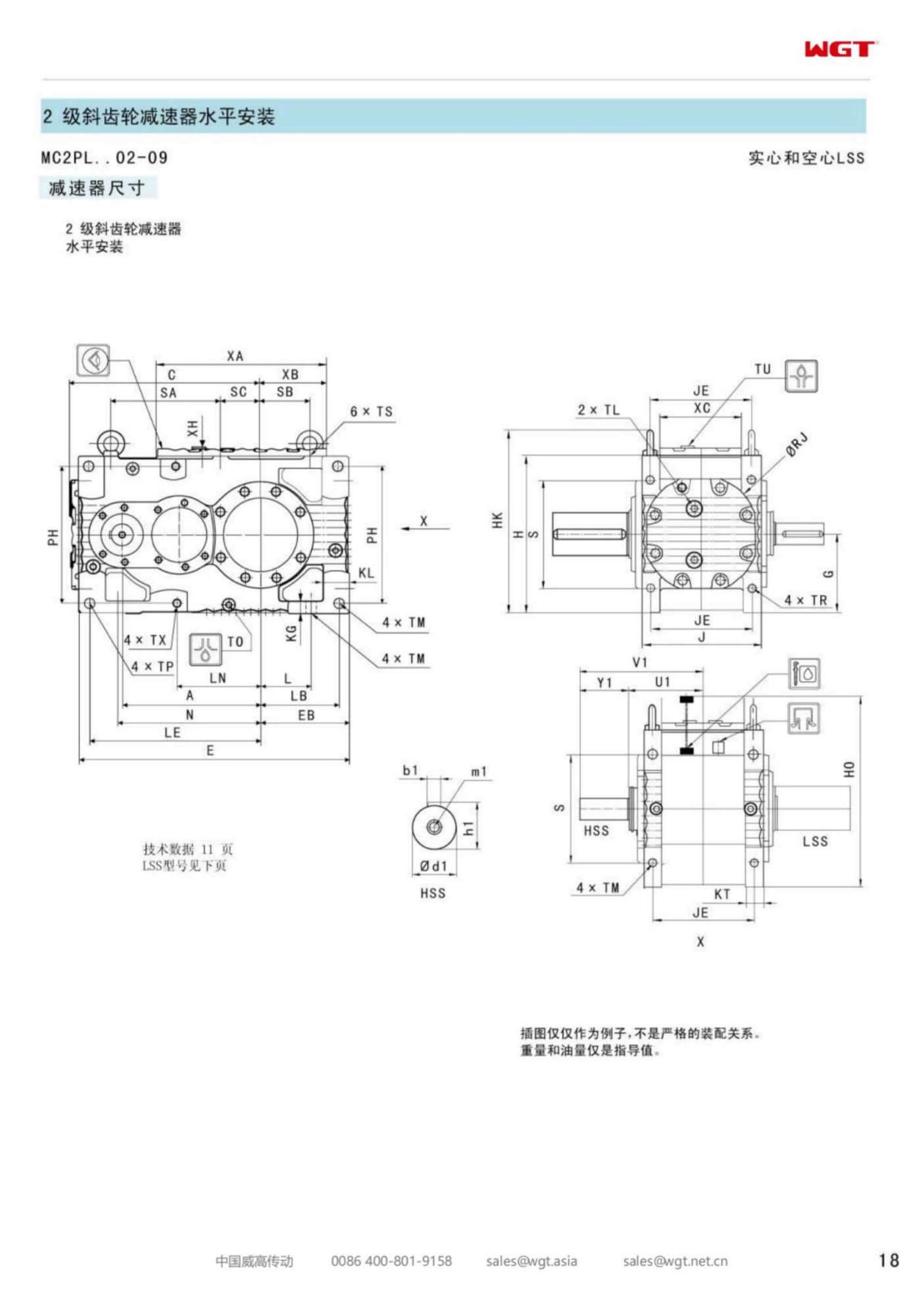
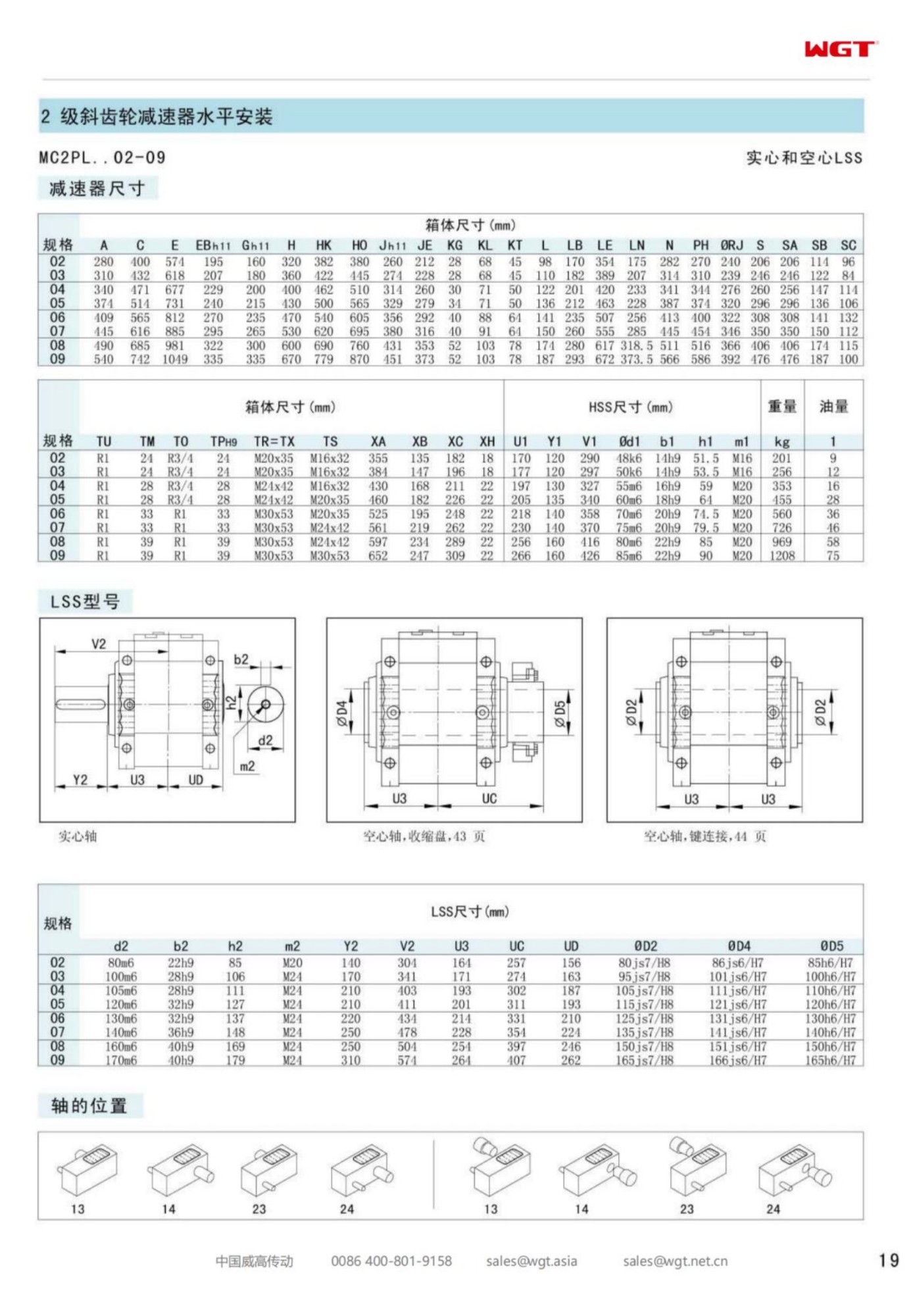
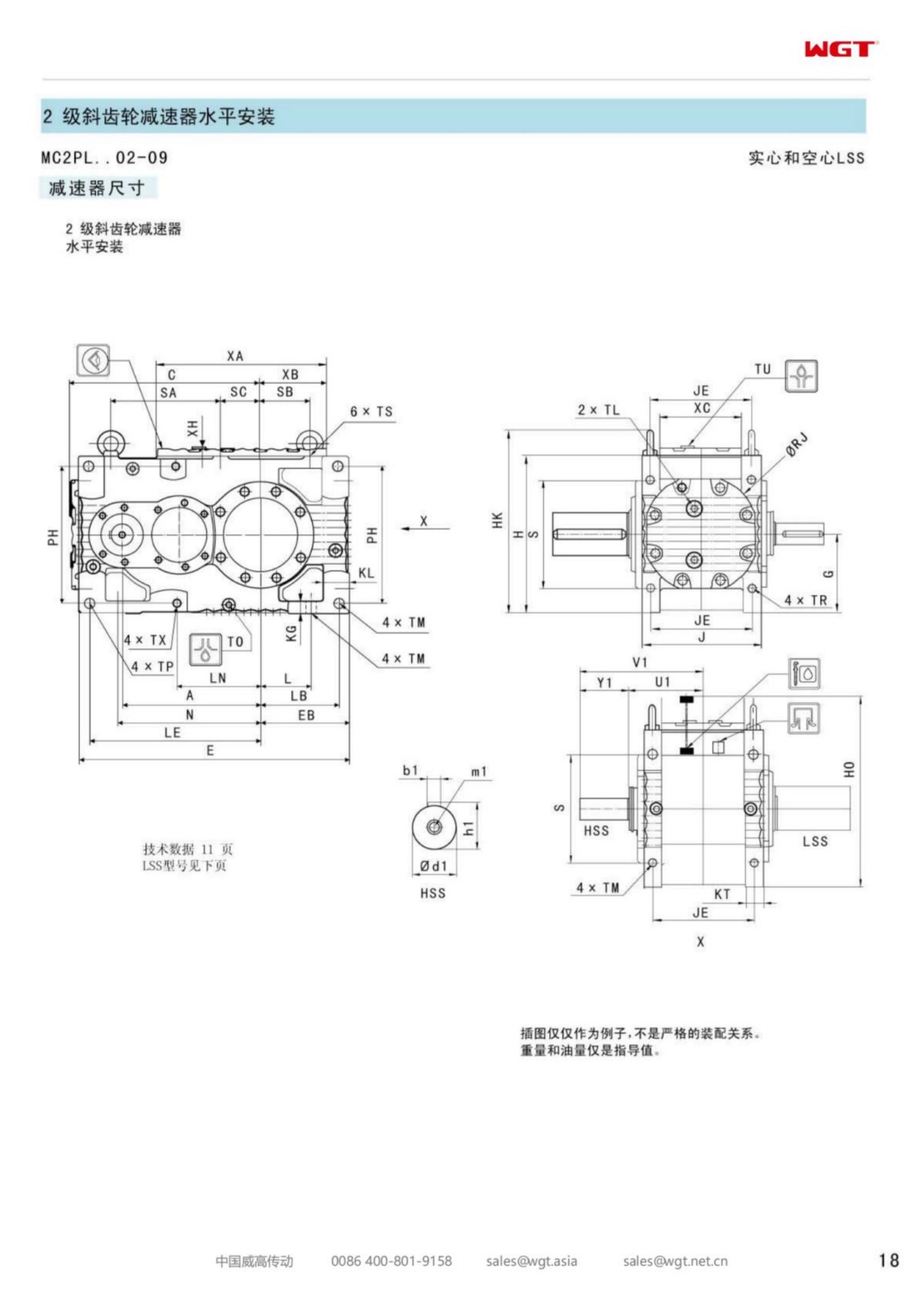
Every family of shaft-mounted frames has a top step, and the duties that arrive there are the ones the whole band exists for: head shafts of long overland conveyors, primary gathering belts at terminals, the drives that move a plant's entire output in one direction for most hours of the day. The MC2PLHT07 torque arm gearbox is that step - the frame specified when the tonnage is serious, the gallery is long, and the cost of stopping is measured in everything downstream.
The arrangement is unchanged from its stablemates: two helical stages, a level case, a hollow bore over the driven shaft and an arm that carries the reaction into the machine structure. What changes at the top of the band is the consequence of every decision. The frame is heavier to lift, slower to swap, and expected to run for years of loaded hours without drama - which makes the ordering, the installation plan and the first weeks of record-keeping more deliberate here than anywhere below.
Primary Conveyors and the Arithmetic of Long Galleries
A long conveyor is a simple machine with an unforgiving ledger. Belt weight, carried material, lift and friction all add up along the length, and the head shaft sees the sum of all of it. Small changes arrive big: a percent of moisture in the material, a degree of temperature on the rubber, a detour the route gained during a plant extension - each lands on the head shaft as real torque, and the drive on that shaft carries the total every hour the belt runs.
This is why primary-duty selections are made from the plant's own numbers rather than the designer's originals. The conveyor as built is rarely the conveyor as drawn: capacity has usually crept up, material has changed, and idlers have been renewed with whatever was in the stores. Sending the enquiry with the measured truth - actual motor rating, actual belt speed, actual hours - returns a frame sized for the conveyor that exists, which is the only one the gearbox will ever meet.
Decoding MC2PLHT07
The type string carries the family arrangement as before, and the final digit marks the top of the frame band.
| MC | Industrial gear unit family built for continuous plant service |
| 2 | Two helical reductions carried in a single gear plane |
| P | Parallel-shaft arrangement, input and output shafts parallel |
| L | Level build with both shafts horizontal in one case |
| H | Hollow output bore that slips over the driven shaft |
| T | Torque arm anchoring, no feet and no foundation required |
| 07 | Seventh frame: the top of the band, where primary and long-haul duties land |
Read as an ordering document, the string fixes the geometry and leaves the engineering to the text around it: the ratio, the factor, the thermal margin, the holdback question, the sealing and hardware for the gallery's particular air. At this frame size those items are no longer fine print. They are most of the value in the order.
Belt Tension, Take-Up and What They Ask of the Drive
A long belt manages its own tension through its take-up, and the state of that take-up writes itself into the drive's load. A take-up running near the end of its travel means the belt has stretched and the head shaft is carrying a different tension than the drawing assumed. Counterweight systems gain mass over the years as crews chase slip; screw take-ups gain turns. Either way, the torque at the head shaft moves, and the gearbox on it pays silently.
Before a frame of this size is selected, the take-up deserves a look and the enquiry deserves a line about it: what type, where it sits in its travel, when it was last adjusted. A selection made against the true tension is a quieter drive from the first day. The same line also protects the swap - a belt whose tension habits are known is a belt that behaves when the new case goes on and the first start is made.
Starting a Long Belt Without Disturbing the Plant
A loaded primary belt asks for a multiple of its running torque at start, and it asks across several seconds rather than an instant. The electrical scheme - soft start, VSD, or a loaded restart policy - shapes what the mechanical side sees. A ramped start lets the belt tension travel its length gently; a hard across-the-line start sends a shock wave down the belt that arrives at the head shaft as a load spike the gear train then absorbs.
The enquiry should say which scheme the drive will live with, because the same kilowatts are two different duties under the two regimes. A VSD at gentle ramp is kind to everything. A loaded across-the-line restart after a weekend of settlement is the hardest moment the drive will ever see, and it may happen twice a week for twenty years. Frames are chosen against such moments here, not against the nameplate average.
Thermal Margin on a Duty That Rarely Rests
The largest loads in a band usually run the longest hours, and thermal rating becomes a first-order check. A case running a primary duty at height, inside a cladded gallery in summer, sees an ambient no catalogue assumed, and the heat it generates has fewer hours of quiet in which to drain. The check costs a thermometer and a working week in the worst month, and it settles arguments that would otherwise be settled by the oil.
Where the margin comes back thin, the remedies are ordinary and cheap at specification time: a larger sump ordered with the frame, a synthetic grade held in sealed containers, airflow across the case, the breather moved off the hot face. A gap that will not close with fittings is a frame conversation, and it is far better held before the order than in the second summer, when the paint has marked and the sample bottle has opinions.
Coming to a Shaft-Mounted Frame From a Footed Drive
Plants reach the top of this band from two directions. Some have always been shaft-mounted and simply step up. Others arrive from footed units, drawn by the same arithmetic that sells the smaller frames: no bedplate, no coupling, no alignment programme, and an installation that fits a shutdown instead of a maintenance week. The move is genuine, but at frame seven it deserves its checks taken seriously.
The head shaft must be verified for the new case's bore, key and weight, and for the bracket that will receive a larger reaction than the old bedplate ever handed it. The guarding is redrawn for the new case's sweep. The withdrawal path - plain shaft beyond the bore, a pulling provision, space for the chain block - is planned while the old drive is still turning. None of it is difficult, and all of it is cheaper on a drawing than on a head shaft forty metres up a gallery.
The Torque Arm Reaction at Frame Seven
Reaction grows with torque, and at this frame the arm is a structural element in its own right. Its bracket pushes against the machine frame with every loaded metre of belt, its bushings take the small angular travel of the shaft under load, and its bolts hold a load path that never fully rests. A bracket built to hang a guard will not do; the mounting must be built to take a torque, checked for stiffness rather than just strength.
The practical routine is short. Bushings at mid-travel with the machine at rest. Bolts torqued to figure and re-checked after the first loaded weeks. The bracket line inspected for flex or fretting at every planned stop. A torque arm system that is tight and stiff passes its load silently into the structure; one that has loosened announces itself as vibration that no amount of balancing will remove, because the problem was never balance.
Duties That Land on Frame Seven
Head shafts and primary drives where the band tops out:
- Head shaft drive on the main overland conveyor at a coal handling plant
- Yard conveyor head drive at an iron ore export terminal
- Long-gallery conveyor from quarry to plant crossing two site roads
- Clinker store extraction conveyor head at a cement plant
- Concentrate handling conveyor at a copper mine preparation line
- Jetty conveyor head drive at a bulk grain export terminal
The common thread is consequence: each of these positions carries a flow that everything else depends on, and each is sized by people who know exactly what an unplanned stop costs per hour. That number, more than any catalogue column, is why the top frame is specified with margin rather than to the line.
Lifting, Access and the Installation Plan
A frame of this size changes the logistics of the swap. Its weight needs a lifting plan and an access route that a gallery may not have offered since it was built. The installation sequence is written before the old unit comes off: support the old case's weight, release the arm, draw the case back along the planned path, slide the new frame on with the bore protected, fit key and retaining hardware, torque the bracket, check rotation, fill to the level plug for the real attitude with the breather at the high point.
Every one of those steps is easier decided at a desk than improvised at height. The enquiry that says where the drive sits - elevation, access, lifting provision, shutdown length - returns a delivery and a documentation pack that fit the plan. The one that says only the duty returns a crate and a crane question, and the shutdown pays for the difference.
Commissioning the Largest Frame
Commissioning a primary drive is the same short list as below, taken more seriously because the consequences are larger. Oil level at the correct plug for the installed attitude. Rotation checked before the guard goes back. Arm bushings free and at mid-travel. Bore mouth clean after the first loaded hours. Temperature recorded after the first shift, at a day, at a week - and the readings kept, because the baseline they set is what every reading for the next decade will be compared against.
The first loaded starts deserve watching regardless of the starting scheme: belt tensioning behaviour, any sign the case moves on its bore under peak torque, noise at the moment of peak load rather than at steady state. A drive that passes its first fortnight of loaded starts cleanly has demonstrated the thing a selection cannot prove on paper - that the events of this particular conveyor live inside the frame that was chosen for them.
A Spares Plan at the Top of the Band
At frame seven the spare-case economy shifts. A whole frame held on the shelf is a serious asset, and plants usually hold it only where the position truly is the plant's throat. More often the plan is built from consumables and interfaces: seals, breathers, arm bushings, keys and retaining hardware in a box labelled for the frame, and the bore-and-ratio compatibility of neighbouring drives decided years in advance so that one case could serve two positions if it ever had to.
That decision costs a conversation between maintenance and procurement, and it is worth having while everything is running. The alternative is discovering, during an unplanned stop, whether the drive next in line shares its interface with the one that failed - a question that takes a week to answer badly and five minutes to answer well, years early.
Writing the Enquiry for the Top Frame
An enquiry for this duty carries the full story: the conveyor as it now runs - motor, speed, hours, tonnage, material and its changes through the year. The starting scheme and the worst restart in words. The holdback question, if the route inclines. The measured shaft, key and bracket. The ambient the gallery really reaches, the dust and washdown reality, the elevation and access for lifting, and the shutdown window the swap must fit.
Sent complete, it comes back as a frame with a factor, a thermal position and a delivery plan that fit the plant rather than the warehouse. Sent short, it comes back as questions, and each round costs a week of a window that was tight to begin with. At the top of the band, the enquiry is the engineering - and the frame that follows it is the easy part.
How Customers Use This Unit
Overland conveyor system
A mining company drives a two-kilometre overland conveyor with heavy-duty helical gear units at the head station. Continuous 24-hour duty, frequent starts under full load and minimal maintenance windows were all part of the specification.
Cement plant bucket elevator
A cement works renewed the gear units on its bucket elevators during a kiln shutdown. The new units bolted onto the old foundations without modification, and the elevator was back in service within the planned window.
What Engineers Ask Us
What if the ratio I need falls between two catalogue steps?
Choose the next available step and adjust the driven speed, or ask us for a special pair of gears. Trimming the driven machine is normally cheaper than ordering a special ratio, and a slightly higher ratio never hurts the drive.
How is the unit protected against dust and water ingress?
Housings are sealed to IP55 as standard with NAK oil seals and gasketed covers. Heavy dust, washdown chemicals or steam cleaning call for the higher protection option, which we specify together with the correct lubricant.
Model Table: Frames, Shafts and Duty
| Model | Centre distance | Output | Typical duty |
|---|
| M3PSF50 | size 50 | solid shaft, foot | conveyors, feeders |
| M3PSF60 | size 60 | solid shaft, foot | crushers, mixers |
| M3PSF70 | size 70 | solid shaft, foot | ball mills, shredders |
| M3PSF80 | size 80 | solid shaft, foot | kilns, heavy conveyors |
| M3PSF90 | size 90 | solid shaft, foot | mill and kiln drives |
| M3RSF50 | size 50 | solid shaft, foot, right-angle | inclined conveyors, elevators |
| M3RSF60 | size 60 | solid shaft, foot, right-angle | screw classifiers, feeders |
| M3RHF70 | size 70 | hollow shaft, foot, right-angle | agitators, drum drives |
| M3PHT80 | size 80 | hollow shaft, torque arm, parallel | shaft-mounted conveyors |
| M3RHT90 | size 90 | hollow shaft, torque arm, right-angle | heavy shaft-mounted drives |
Larger size numbers mean higher torque capacity and larger shafts. Because interfaces follow the common industrial dimensions, a size-for-size change is the normal upgrade route for these industrial units.
Selection Example: Head shaft drive on the main overland conveyor at a coal handling plant
Take a 75 kW motor at 1485 rpm turning the head shaft at 22 rpm. The ratio follows directly: 1485 / 22 = 67.5, so a ratio near i=68 is drawn from the two-stage band, and the frame is checked for thermal margin on a duty that runs loaded most hours of the day. In this case frame seven sits at the top of the band with room for the starts, the holdback and the long continuous runs the duty asks for. Note that the ratio comes from speeds alone, while the frame size depends on torque and service factor - never size a unit on ratio only.
![industrial helical gearbox selection chart]()
A quick visual of the selection sequence for a industrial helical unit.
![M3 series gear reducer installation examples]()
Application coverage of the the M3 series.
Gearbox Selection Support from the Factory Floor
Talk to the people who build it. Prefer to check the figures yourself? The WGT Motor & Gearbox Online Selection System gives you the model, torque margin and ratio before you ask us.
Our technical team sits beside the assembly line, not in a call centre. Describe the application in your own words - we will tell you honestly whether this series is right, or point you to a better frame or a different series. Looking for a gear motor for car wash system? Tell us the duty point and we will confirm the model in writing.