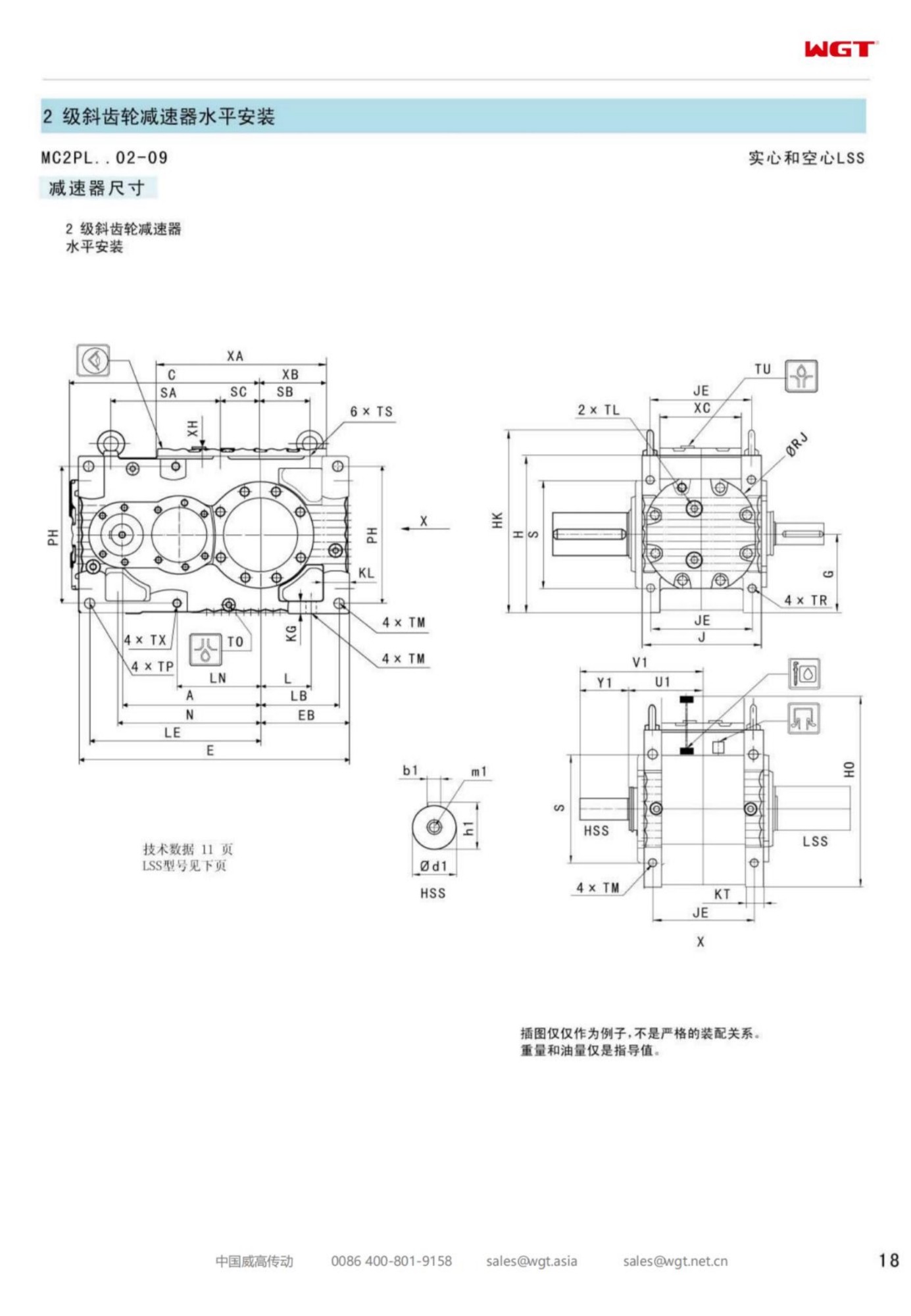
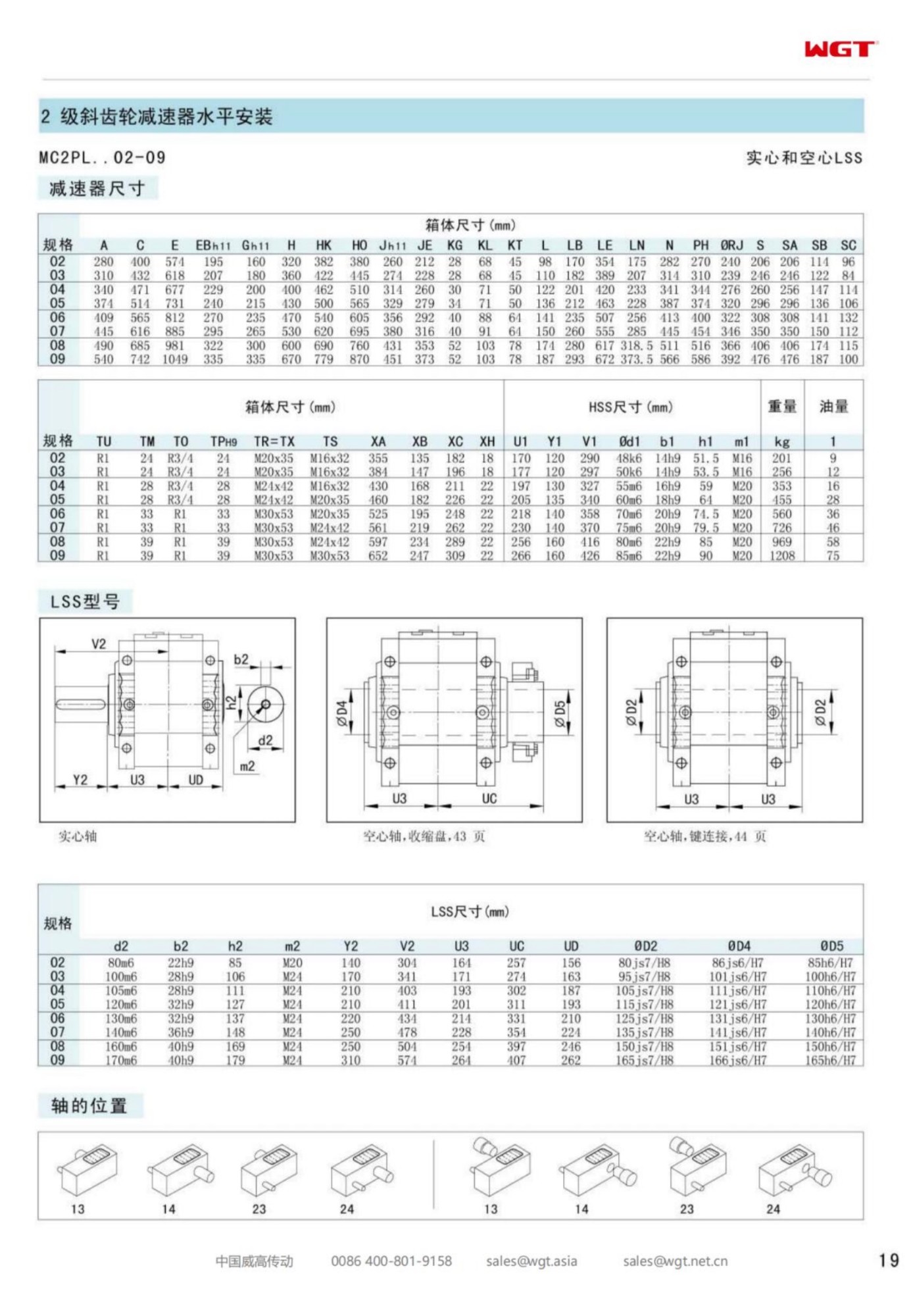
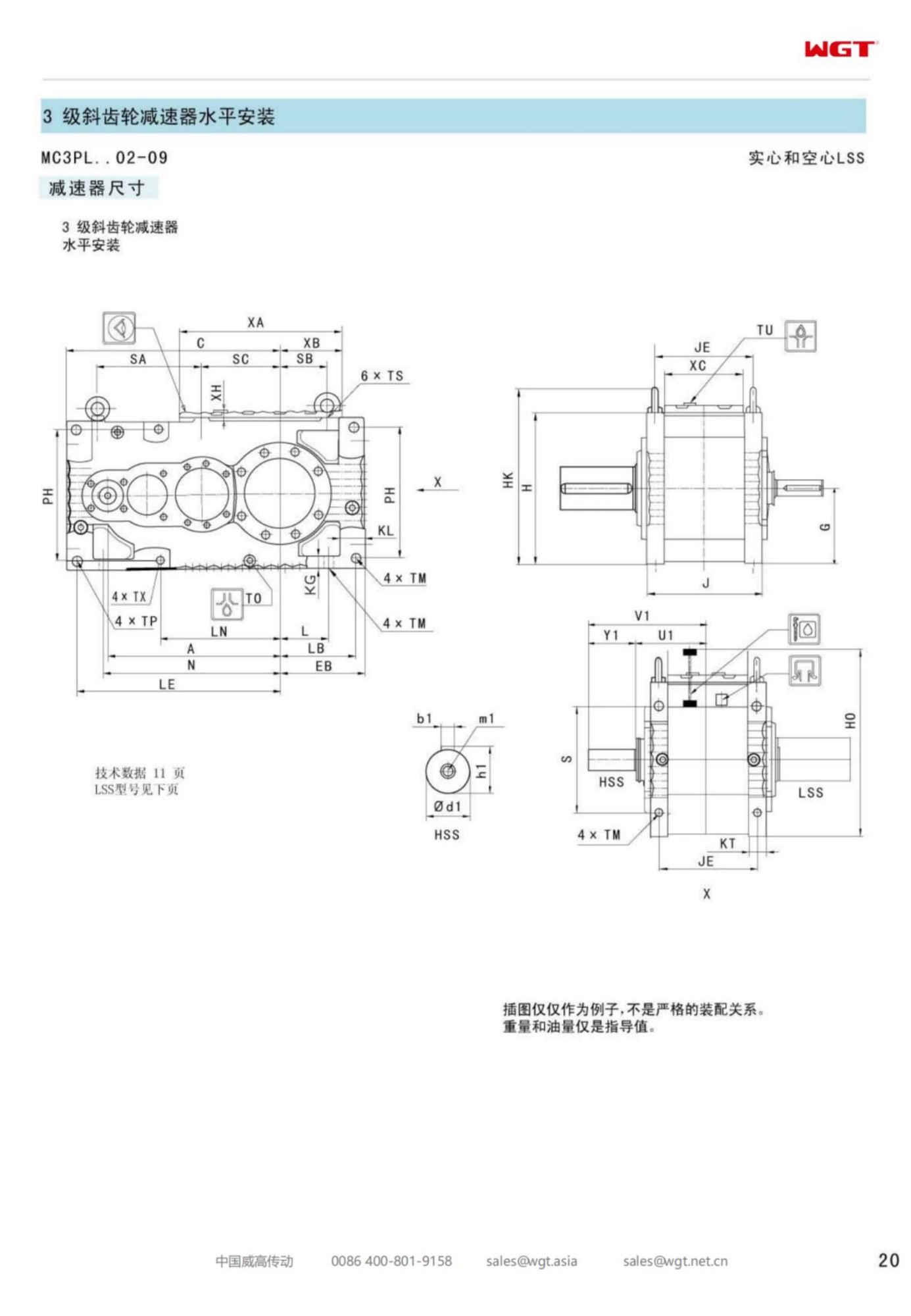
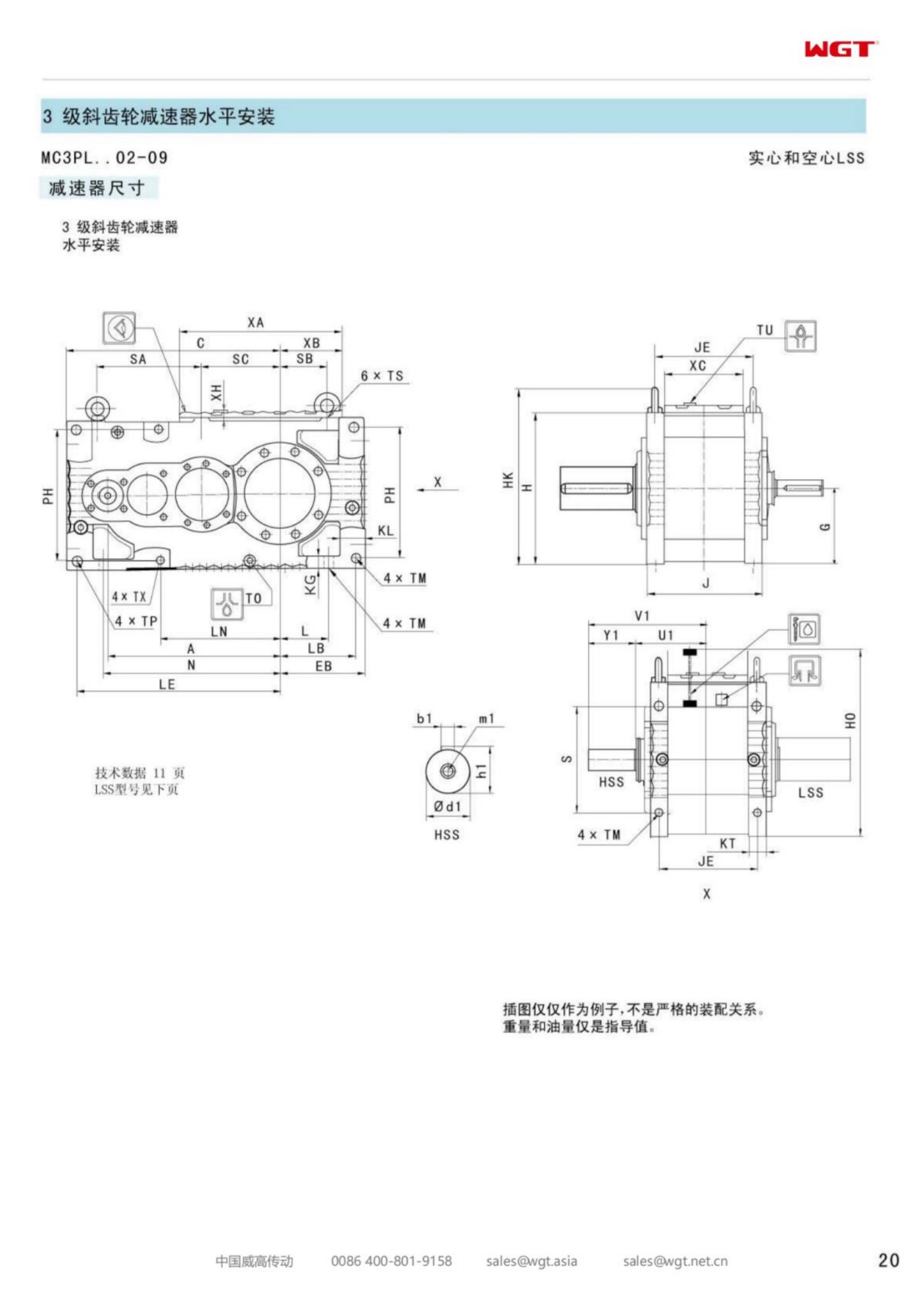
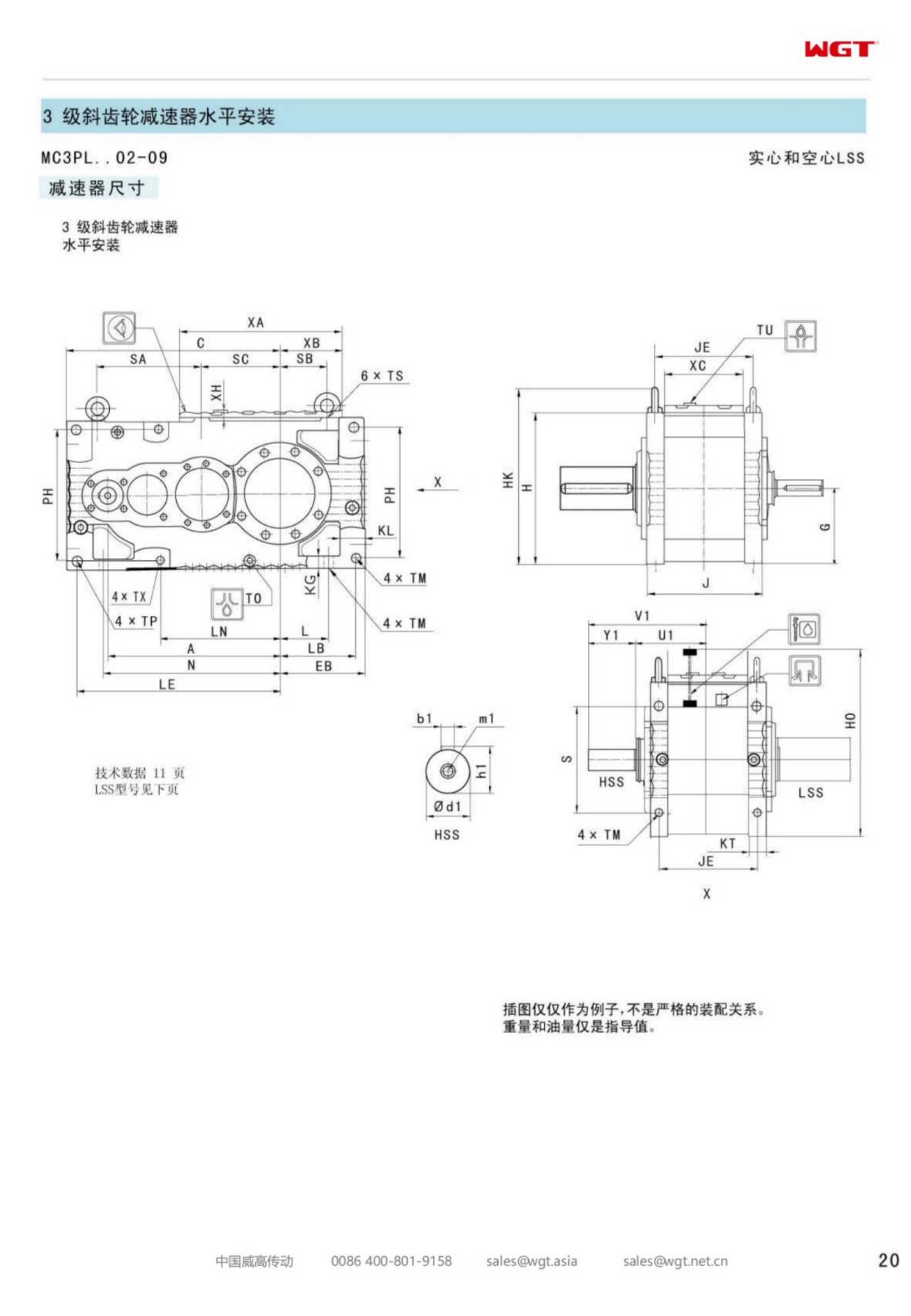
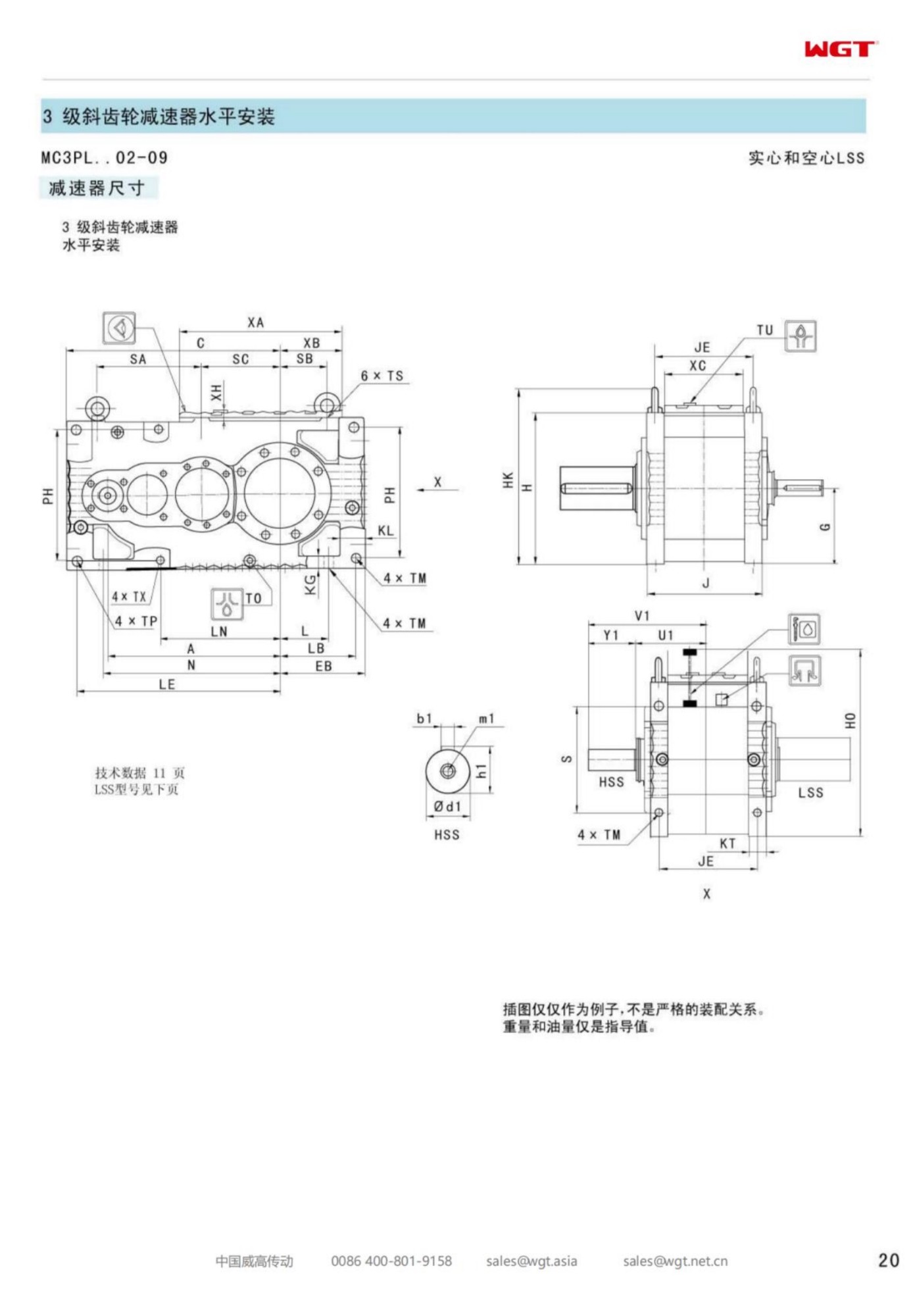
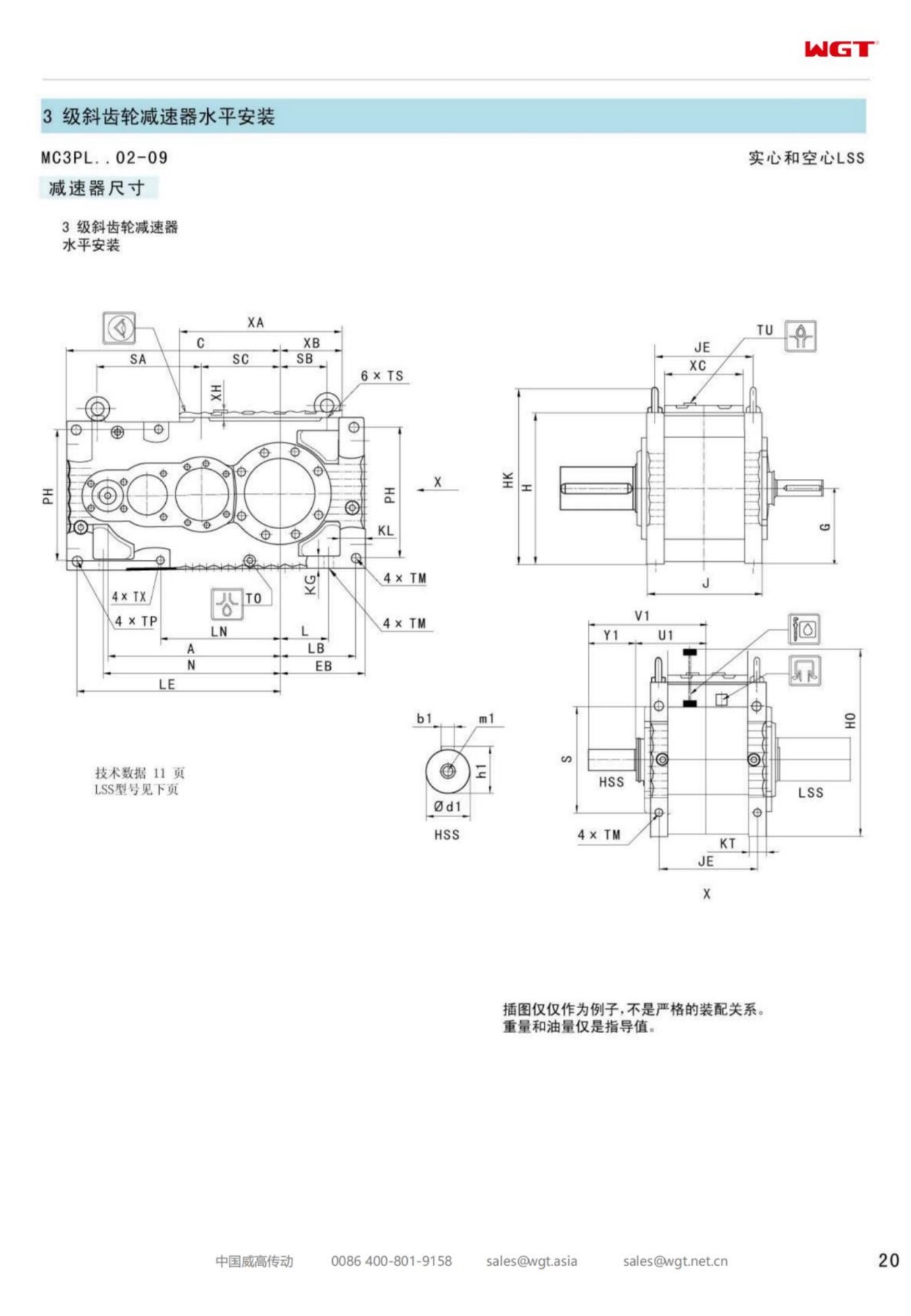
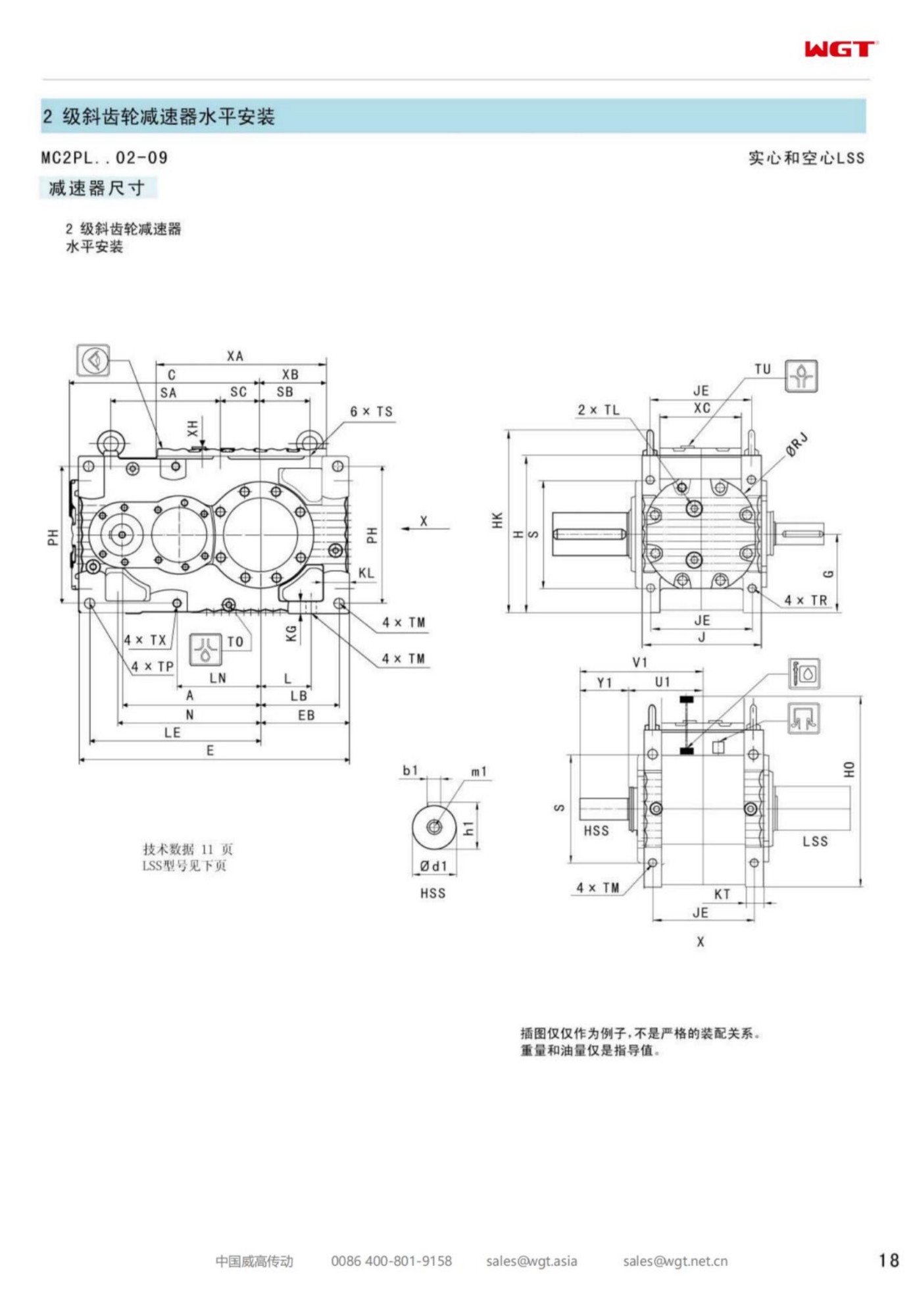
The MC2PLSF03 parallel shaft helical gear unit moves one frame up the compact two-stage line. The layout is the same low, footed box with input and output in one plane, but the 03 casting carries more torque at the same ratio band, takes a larger output shaft, and holds a deeper oil sump - which is what makes it the natural step when a conveyor line gets longer, a screw gets wider, or a duty that ran intermittently moves onto a continuous schedule.
One Frame Up, the Same Footprint Logic
What the 03 frame buys is margin. Where the 02 sits comfortably at the top of its torque band on a medium conveyor, the 03 runs the same duty with room to spare, and that margin is what absorbs the start-up peaks, the occasional jam, and the slow torque creep that comes when a process adds throughput over the years. The footprint grows only modestly, so many plants standardise on the 03 across their conveying lines and use one set of spares - seals, breathers, oil grades - everywhere.
The deeper sump also changes the thermal picture. More oil mass means the temperature climb on a continuous duty is slower and levels off lower, which extends both the oil life and the seal life on hot or dusty sites.
Designation Letters in Practice
| M | Industrial multi-stage gear unit family |
| C2 | Compact two-stage parallel-shaft series |
| P | Parallel stages - shafts in one horizontal plane |
| L | Long-centre build with room for the motor alongside |
| S | Solid ground output shaft, parallel key drive |
| F | Footed housing bolted to the plinth |
| 03 | Frame size, one step above the 02 |
Every letter becomes an order line: output hand, shaft extension, seal grade, breather position. Quoting the duty sheet with the marking keeps the conversation at order level instead of at commissioning level, where changes are expensive.
Thermal Rating and Continuous Duty
On paper a frame may carry a torque; on a plant it also has to carry it all day without the oil going past the seal's comfortable temperature. The 03 sump helps, but the honest check is still empirical: log the sump temperature after the first full shift of real load, in the same spot, with the same method each time. A stable number well below the alarm band says the frame is right for the duty. A number that keeps creeping says the duty has outgrown the frame or that the breather is choked with dust - both are findings worth having early.
Duty points this construction was engineered for: Pan and drum thickener drives in mining concentrators Screw and paddle conveyor runs in chemical terminals Paper machine auxiliary drives: pulpers, agitators, wire returns Cooling drum and trommel drives in aggregate screening plants Boiler fuel feeders and ash handling conveyors at power stations Bale and bale-conveyor drives in recycling yards
Alignment and Coupling Care
A parallel-shaft box transmits its torque through the coupling, and the coupling transmits every alignment error straight into the bearings. Set the coupling with a dial gauge rather than by eye, keep the gap to the figure on the drawing, and re-check after the first warm run - housings move slightly as they come up to temperature. On sites that fit elastomer couplings, keep the element spares with the gearbox file; an element change at the first sign of wear costs minutes, while a run-out element hammers the input bearing until the damage is visible on the log.
Noise, Vibration and What They Tell You
The unit's own sound changes meaningfully over its life. A quiet mesh that develops a periodic tone usually points to the coupling or the driven machine, not the gears; a rise in the overall level under steady load points toward the bearings; a knock at shaft frequency is a loose key or a worn coupling element. Because the same housing runs many different duties, the useful baseline is the sound of the unit after its first month in service - note it, and any later inspection becomes a comparison instead of a guess.
Ordering Without Gaps
The enquiry sheet for this frame needs six entries: absorbed torque or power, output speed, running pattern, output shaft direction and extension, coupling detail on both shafts, and any environmental notes - dust, washdown, ambient heat. A nameplate photograph closes the historical questions. Sites that file that packet with the drive's record can reorder a matched unit years later from one message, which is the practical argument for writing the duty down properly the first time.
Selection Example: Typical duty point
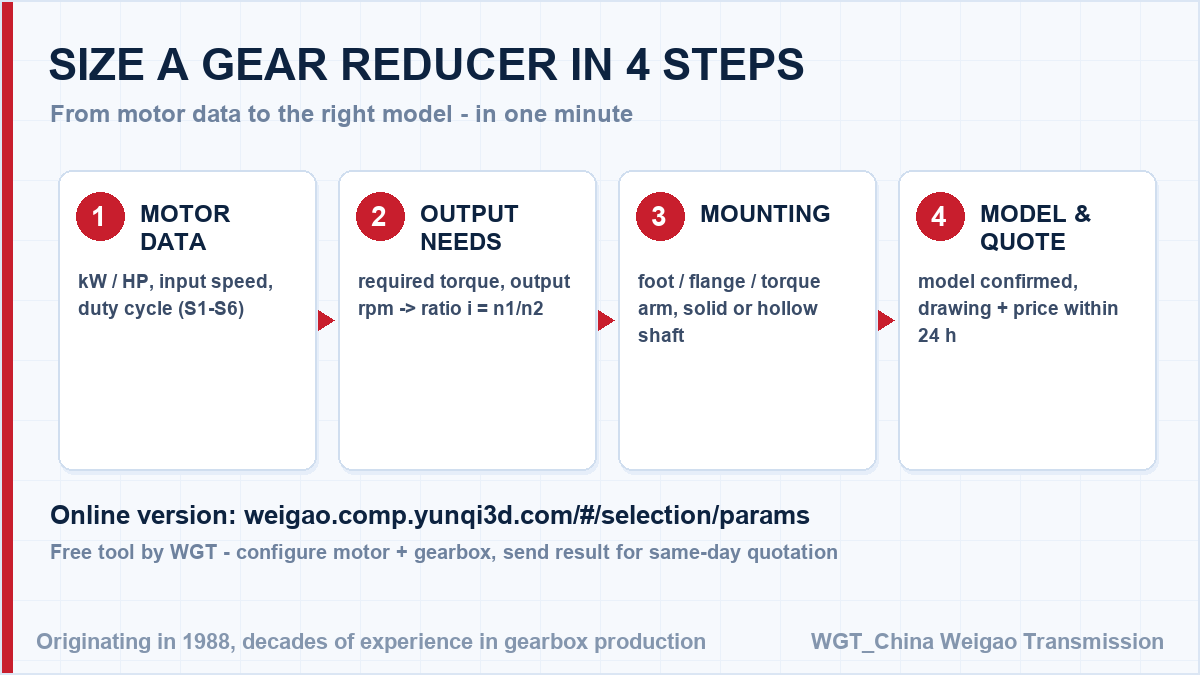
Say the customer needs a slow, steady output from a standard four-pole motor. Motor speed divided by the target output speed gives the ratio, rounded to the nearest available step, and the required torque with the service factor then fixes the frame size. Work through the same three steps - speed, output speed, torque - and the model number falls out; we verify it against the duty class before quoting.
![gear reducer ratio calculation steps]()
From duty point to model number - the same four steps every time.
Applications in Industry
Pet-food extruder feeder
A pet-food plant chose reducers for the feeder screws ahead of its extruders. Steady torque at variable output speed keeps the kibble size consistent, and washdown sealing protects the unit during sanitation shifts.
Ceramic tile press feeder
A ceramic tile producer fitted reducers to press feeders. The dusty environment is handled by sealed housings, and the stable low-speed output stops the tile blanks shifting before pressing.
![gear reducer industries served - WGT]()
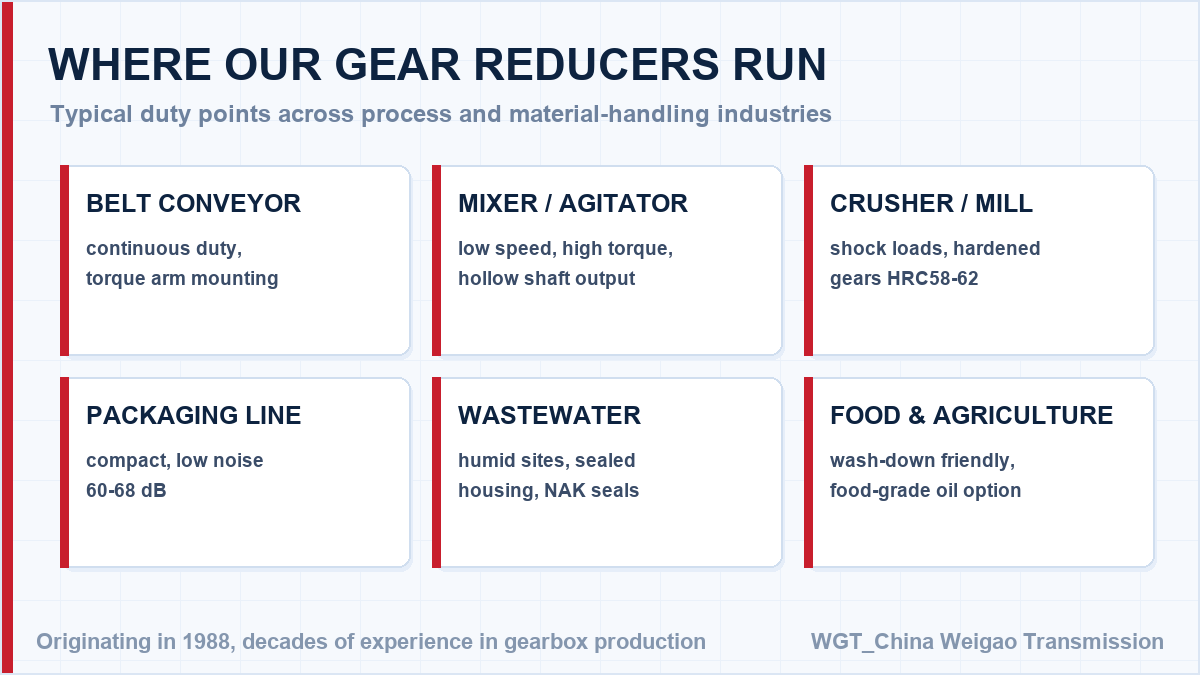
Industry map: the sectors where the S series is most common.
Buyer Questions and Answers
How efficient is a helical worm gear reducer?
The two-stage design reaches 94%~96% efficiency depending on the transmission stage - well above a single-stage worm unit, because the helical input stage handles the first reduction with less sliding loss.
What is the difference between SF, S, SA, SAF and SAZ versions?
They share one gear set: SF is foot-mounted with solid shaft, S is shaft-mounted, SA has a hollow output shaft, SAF adds a flange, and SAZ is the torque-arm version. Pick by mounting, not by performance.
SF Series Model Overview
Every frame in this series shares the same design philosophy - case-hardened gearing, cast-iron housing, lifetime lubrication under normal duty - so choosing a model is mainly a question of torque, ratio and mounting.
Fast Quotation for OEM and Repeat Orders
Buying one unit or one hundred? Run your duty point through the WGT Motor & Gearbox Online Selection System first: it saves a round of emails and gets you to a firm price faster.
Single units ship on the same production route as batch orders, with no minimum-order surcharge. For OEM programmes we hold framework pricing and reserve capacity for your scheduled call-offs. Looking for a speed reducer for cement plant? Tell us the duty point and we will confirm the model in writing.