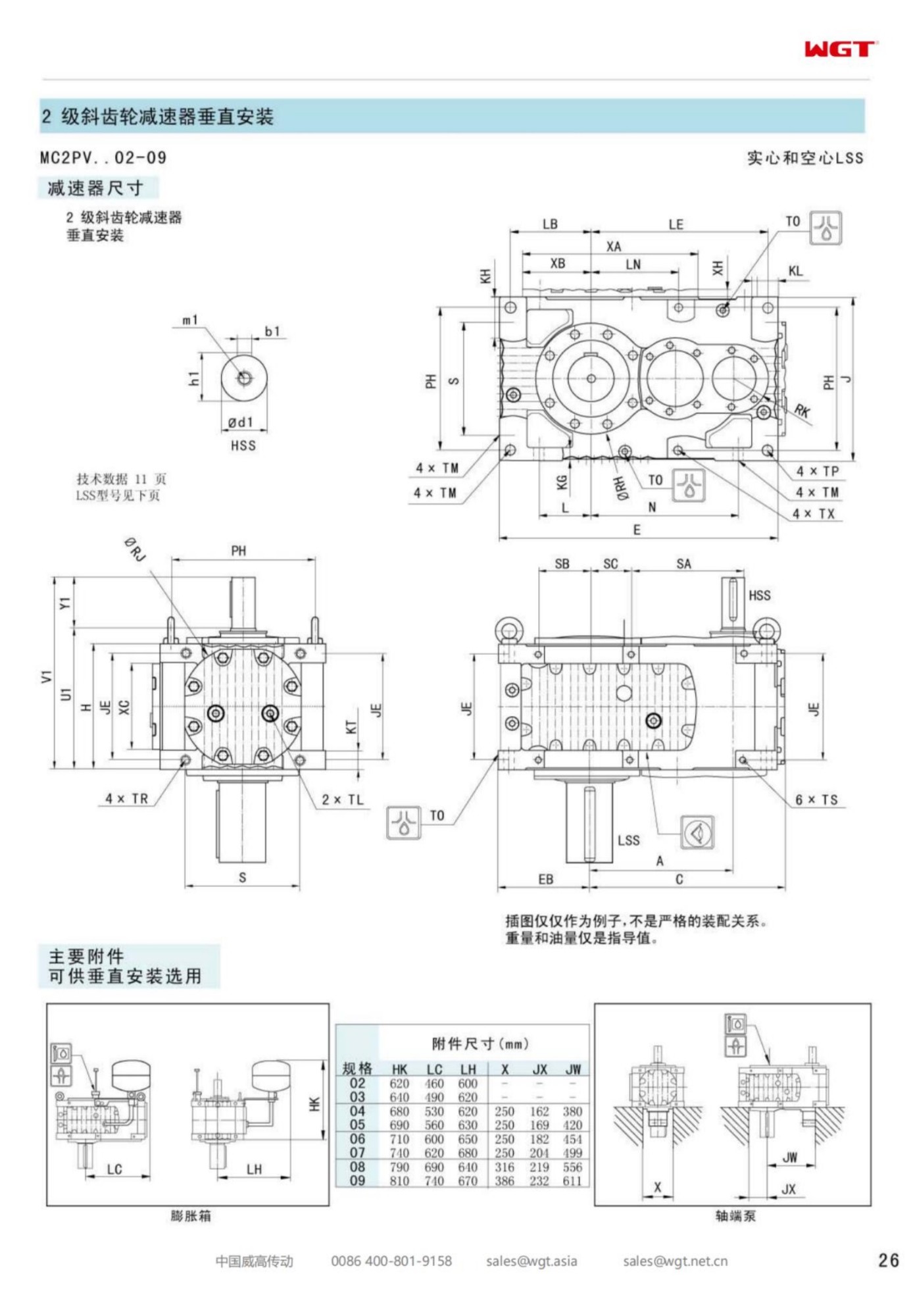
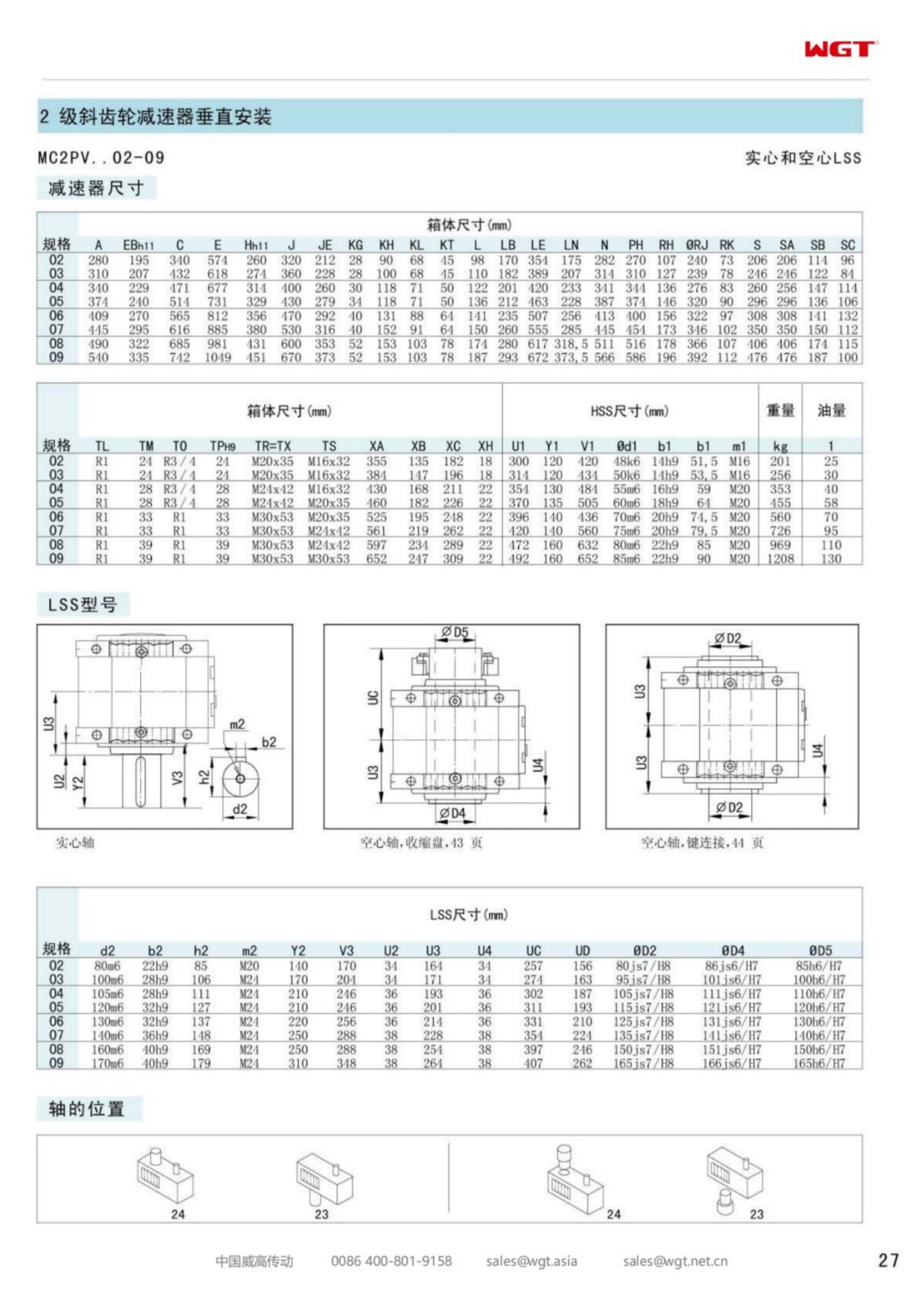
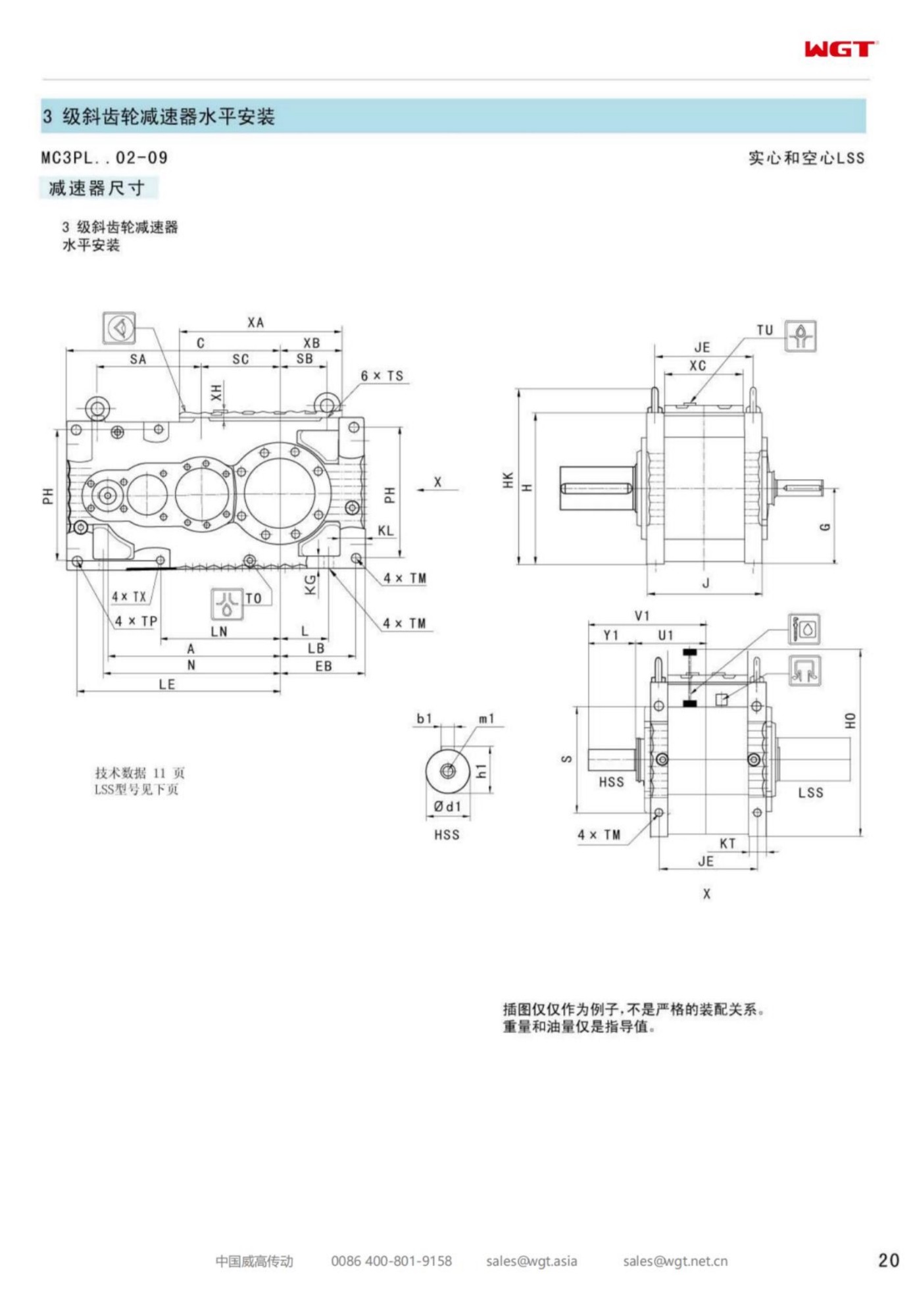
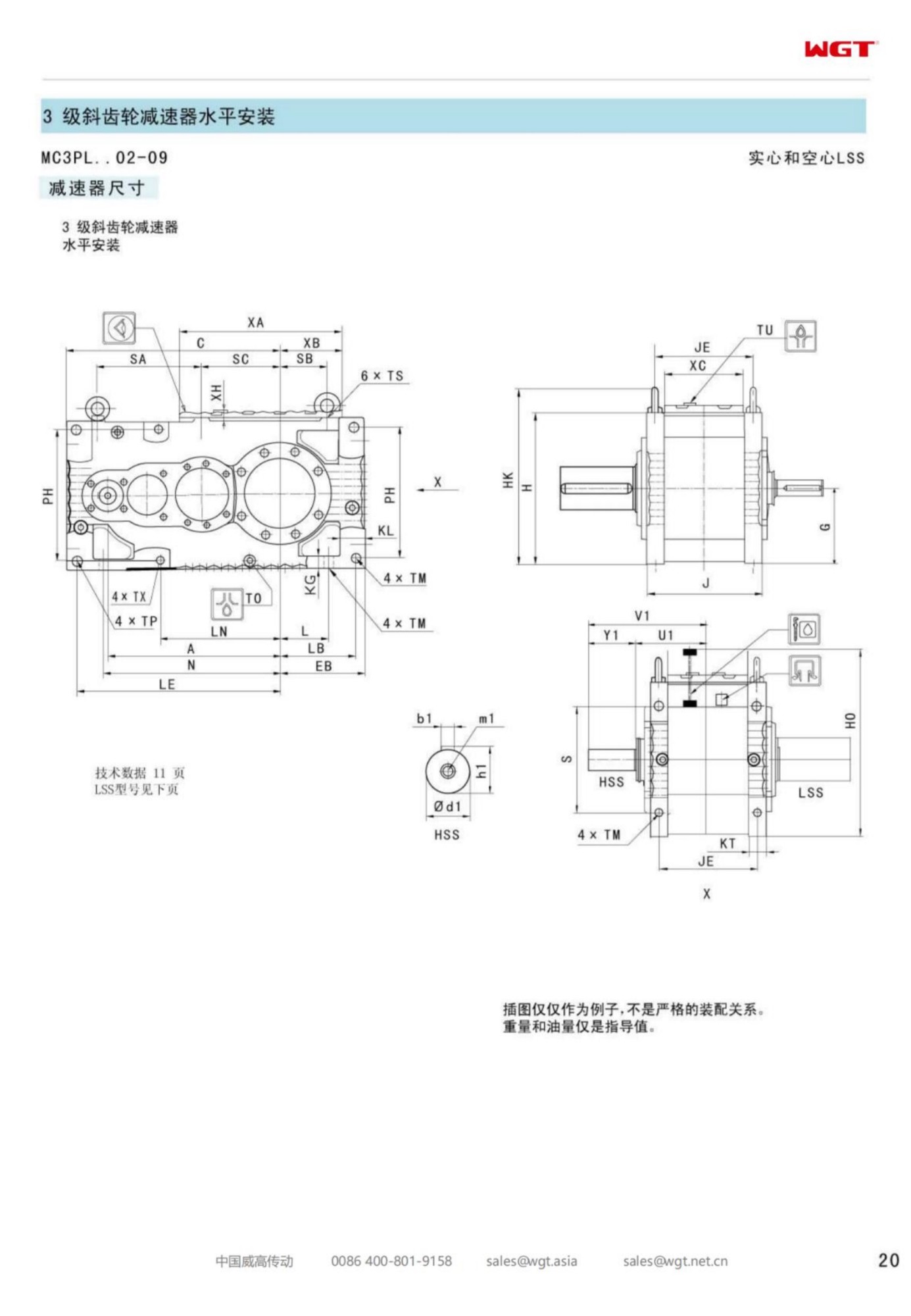
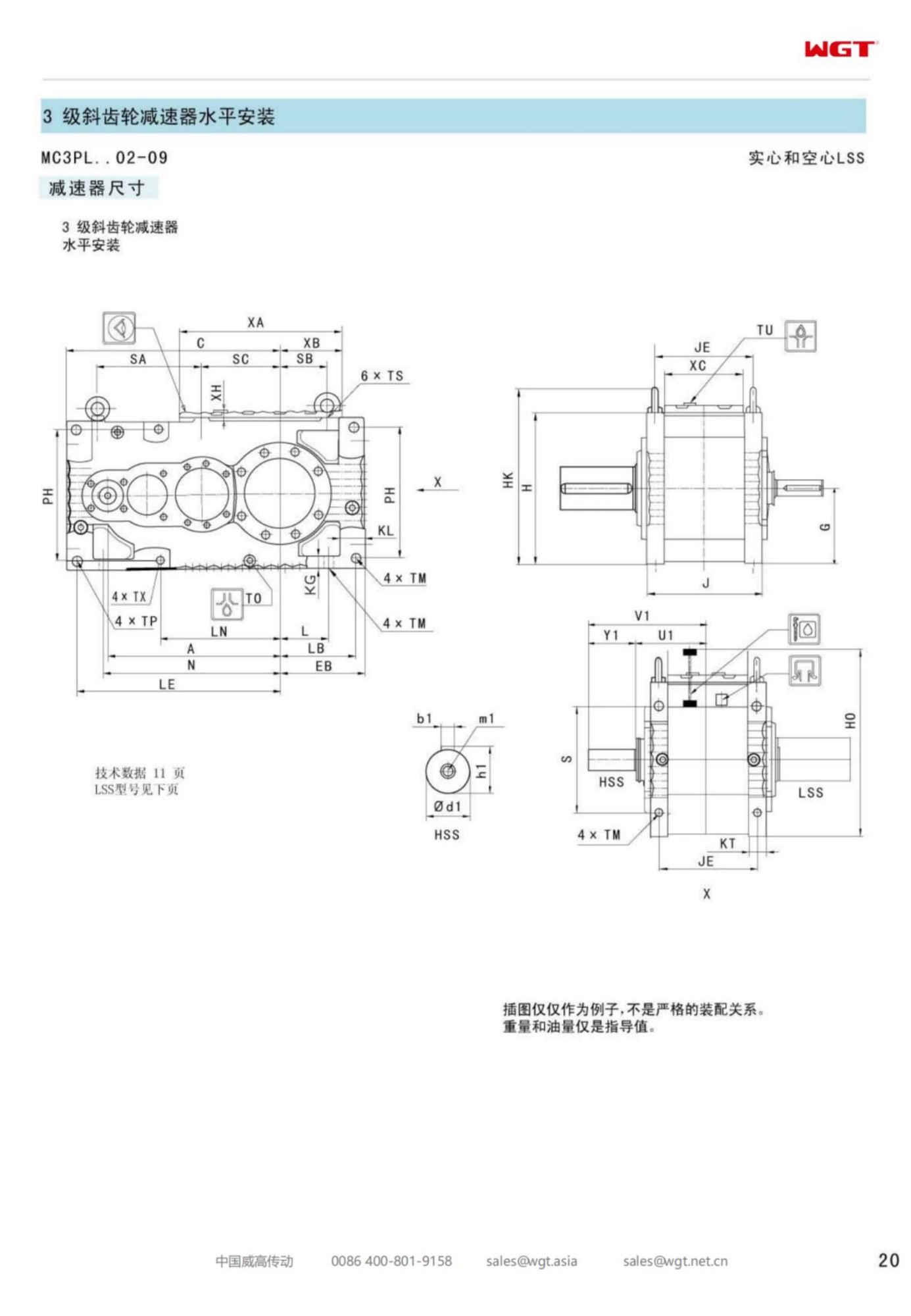
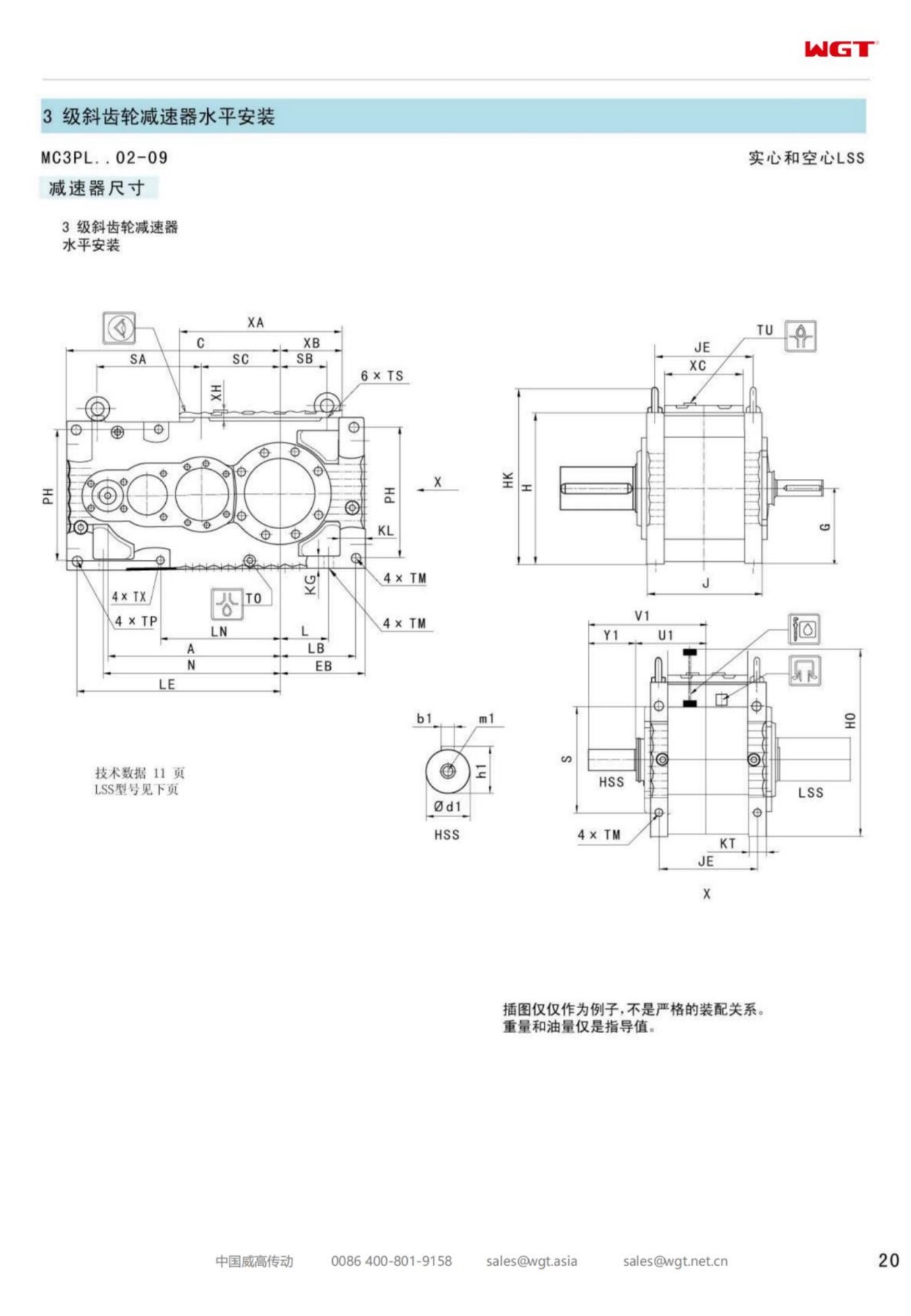
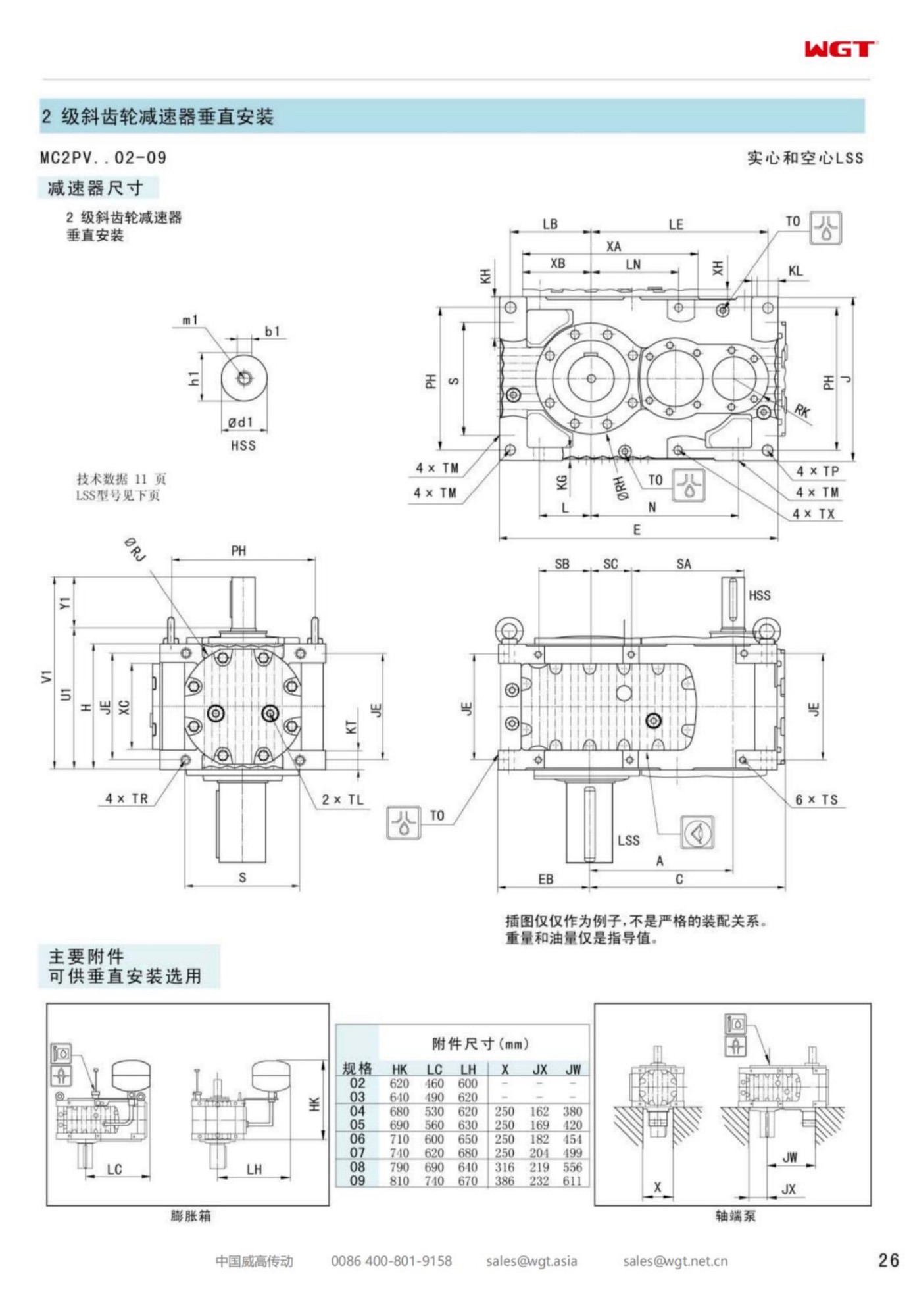
Frames two and three of the vertical hollow band carry duties that are, mechanically speaking, well mannered: broths and slurries that forgive a start and never spike far beyond their running torque. Frame four is where the band meets chemistry that pushes back. Paints, resins, adhesives, inks and polymer solutions thicken as they mix, jump in consistency the moment powders hit the vortex, and hold their drag on the shaft long after the batch looks finished. The MC2PVHF04 vertical hollow shaft gearbox is the frame this family quotes when the recipe, not merely the vessel, decides the load.
The construction tells the same story the band has told since frame two - a hanging case, a bore instead of a coupling, reaction pads on the bridge - but the duty around that construction changes character. This page follows the frame through a viscous campaign: how torque climbs with consistency, what a disperser stage hands to a hanging case, why baffles and vortex behaviour belong in a gearbox conversation, and how the oil and the seals experience a product that creeps into everything.
Frame Four Takes on Viscous Products
A viscous batch is a moving target. At charge-in the tank may hold thin solvent; forty minutes later the same volume is a paste that drags on the shaft like wet concrete drying. A drive sized on the starting condition starves mid-batch, and one sized on the finished consistency overhangs everything before it. Frame four exists for that gap: it carries the swell without the buyer paying for a frame five they do not need.
Plants usually arrive at this frame after a smaller unit has taught them the lesson - an agitator that bogged down as the batch thickened, a motor tripping on overload at the powder addition, a seal weeping under pressure it was never asked to hold. The frame upgrade solves the torque half of that story. The rest of the page deals with the half the frame number cannot fix: the loads, the fittings and the discipline around the bore.
Decoding MC2PVHF04
The type string fixes the geometry a viscous-duty buyer cares about, letter by letter.
| MC | Industrial gear unit family built for continuous plant duty |
| 2 | Two helical reductions inside one upright case |
| P | Parallel-shaft layout, input and output on parallel axes |
| V | Vertical build, output axis pointing down into the vessel |
| H | Hollow output bore, the machine shaft passes through it |
| F | Footed reaction pads bolted to the vessel bridge or deck |
| 04 | Fourth frame, the tier where viscous duties are quoted |
Read as an order document, the string tells the factory what to build and tells the site what to brace for: a bridge that carries a heavier hanging case than the band below, a bore matched to the mixer shaft's drawing, and motor power sized for the end-of-batch condition rather than the charge-in. What the string leaves open is the fit at the bore and the discipline of the bridge - and on a frame that hangs over a thickening batch, both are working parts, not details.
Torque That Swells With Viscosity
Mixing torque does not arrive as a single number. In a dilution stage the shaft sees a fraction of its worst case; as resin cooks down or solvent flashes off, the same impeller sweeps a product that clings to every surface and drags with it. The power curve of a batch therefore climbs in steps - each powder addition, each cooling ramp, each pH change rewrites it. A drive quoted against the nameplate motor alone can be honest and still wrong, because the motor was chosen for the same end-state the gearbox must survive.
The practical habit is to ask the plant for the batch card: viscosity at charge, at mid-cook and at discharge, with the mixer speed at each point. Frame four sized from three points instead of one rarely surprises anyone. Sized from one, it either coasts through campaigns it could have run harder, or sits an overheat away from the trip button on the one recipe nobody thought to mention.
Disperser Stages and Anchor Stirrers
Viscous halls rarely run one shaft. The common pairing is a fast disperser disc that does the shear work and a slow anchor stirrer that sweeps the wall and folds the batch back toward the centre. The anchor is where this frame earns its keep: slow, torque-heavy, and hung on a shaft long enough that its weight and drag both land on the gearbox's bore. The disperser, spinning near motor speed on its own bearing assembly, is usually somebody else's drive - and confusing the two is how orders end up mis-sized.
When the enquiry names a disperser vessel, the useful question is which shaft the unit will hang on. If it is the anchor, frame four with its deeper ratio is the natural seat. If the plant intends to hang a gearbox under a disperser head, the ratio conversation changes entirely and the hollow bore becomes a clamping exercise at speed - a different product with different balancing expectations. Sorting this on the order sheet costs one email; sorting it after delivery costs a lift and a week.
Service Factors for Sticky Starts
A viscous product attacks at start-up. Overnight the batch near the wall sets; the first revolution of the morning tears the stirrer free of that set layer, and for a few seconds the torque on the shaft can double its running value. Starts per shift therefore matter as much as running torque. A hall that stops the stirrer between every hopper charge hammers its drives in a way a continuously stirred hall never sees.
Frame four answers with torque reserve, but the reserve is only sized if the duty class was stated. The enquiry should say how many starts, how long the stalls, whether the product gels on standing or merely thickens with temperature. A unit picked for gentle continuous duty and then asked to break a gelled batch every forty minutes will spend its years shortening; the same frame, specified honestly, treats those starts as routine.
Baffles, Vortexing and Product Quality
Vortex behaviour looks like a process question and lands on the machinery. An unbaffled tank with a wall-sweeping anchor rarely spins its contents into a cone; a vessel where the anchor turns fast in a thin batch can, and the swirling load then precesses - the shaft rope-skips around the tank axis instead of spinning about its own. Precession loads the bore, the key and the output bearings in a rotating pattern that plain radial-load maths understates.
Baffles calm all of it, which is why the gearbox order and the vessel drawing should be read together. Where the process forbids baffles - food and some coating lines - the drive order should say so, because the unit will live its whole life seeing a wobbling load. Frame four carries that duty when it is declared; it merely ages faster when it is not.
Radial Loads a Hanging Case Must Carry
On this build the gearbox's output bearings see the world through the bore. Shaft weight, product drag, precession from an unbaffled tank, the pull of a slightly bent shaft - all of it arrives as radial load on bearings the buyer never sees, carried through a fit that was specified on a drawing months earlier. The heavier the product and the longer the shaft, the less forgiveness those bearings keep in reserve.
This is why the shaft drawing deserves the same attention as the torque table. Diameter, runout, surface finish at the seat, keyway width and depth, and the position of any bottom steady bearing all belong in the enquiry. A bore specified to the real shaft distributes load the way the designer intended; a bore guessed from a model number concentrates it at the keyway and lets vibration narrate the rest.
Oil, Seals and a Product That Creeps
Viscous products climb. They wick along a warm shaft, past a tired seal lip, and set inside the seal groove where the next product lift tears at it. A hanging gearbox over such a batch wants its lower seal treated as a consumable and its breather kept clean, because product fouling on the breather turns the case into a pressure vessel every time the hall washes down around it.
Inside, the upright position keeps the oil in contact with every lower seal and bearing, which is kind to the parts and demanding of the oil. The batch schedule - hot recipes, washdowns, long holds at temperature - argues for shorter oil intervals than the catalogue prints. Halls that tie the oil change to the campaign calendar, rather than the calendar alone, keep the same unit hanging for decades.
Changeovers Between Batches
A viscous hall empties, washes, and charges again - and the gearbox sits through all of it. Washdown chemicals find the lowest seals; steam cleaning finds the breather; hot discharge finds the oil. The changeover is therefore part of the drive's duty cycle, and the units that age well are the ones whose crews treat it that way: breather swapped or cleaned on the schedule, seal lips inspected at every campaign end, drain pulled while the product of the last batch is still warm and honest about its condition.
Frame four asks nothing exotic here. It asks that the inspection be written down and repeated. The halls with twenty-year-old vertical drives did not buy better iron; they kept the same two-page checklist by the tank and made the campaign change the trigger for opening it.
Heat in the Tank, Heat in the Case
Hot recipes move heat into the hanging case from the top. A unit over a 120-degree product is warmer than the hall around it, and its oil film thins accordingly. Frame four's case and sump have the surface to shed that heat in ordinary campaigns; the risk arrives when a hot recipe, a full sump and a warm hall stack on the same summer week. That is when a drive sized on paper alone runs its warmest hour.
The honest specification mentions the product temperature and the hall's worst ambient together. Where both run high, the fix is rarely a bigger frame - it is the right oil, a clean heat-shedding surface and a crew that knows the gearbox skin temperature is a number worth writing down. Frame four hangs in halls like that for decades when the numbers were on the order sheet; the same iron sulks when they were not.
Sizing From the Recipe Outward
The tidy way to order this frame runs from the recipe outward: viscosity at its worst, impeller diameter and speed, shaft length and drawing, starts per shift, product temperature, washdown regime. Three of those numbers fix the ratio and the frame; the rest decide the seals, the breather, the oil and the inspection interval. None of them is optional, and all of them are cheaper on an email than after delivery.
Plants that send the recipe out get a reply they can hold the factory to. Plants that send a model number get iron that matches the number. The difference shows up two years later as either a drive nobody remembers or a work order nobody scheduled for.
Running the Campaign to Its End
End of campaign is when a hanging drive is at its most exposed: tank empty or near it, shaft swept clean, seals between products, hall hot from the cleaning crew. It is also when a few minutes of attention buy the next campaign's reliability. Lift the breather and look at it; wipe the lower seal area and check for product tracks; note the oil level against the mark; listen at the next start for the character the crew knows as normal.
Frame four rewards that rhythm without drama. The bore fit holds if the shaft was honest, the pads hold if the bridge was stiff, the seals hold if the product was declared, and the oil holds if the heat was admitted. A viscous hall is a demanding address for machinery - and a predictable one, for the buyer who wrote the address down.
Viscous products, disperser vessels and sticky starts - frame four is where the recipe decides the drive:
- High-shear disperser vessel anchor drive in a coatings plant
- Adhesive blending kettle in an engineered-chemicals works
- Ink premix agitation at a printing-inks production hall
- Polymer solution holding tank in a resins complex
- Pigment dispersion vat in a colorants plant
- Gel and paste mixing kettle in a sealants works
Selection Example: Anchor stirrer on a high-viscosity disperser vessel at a coatings plant
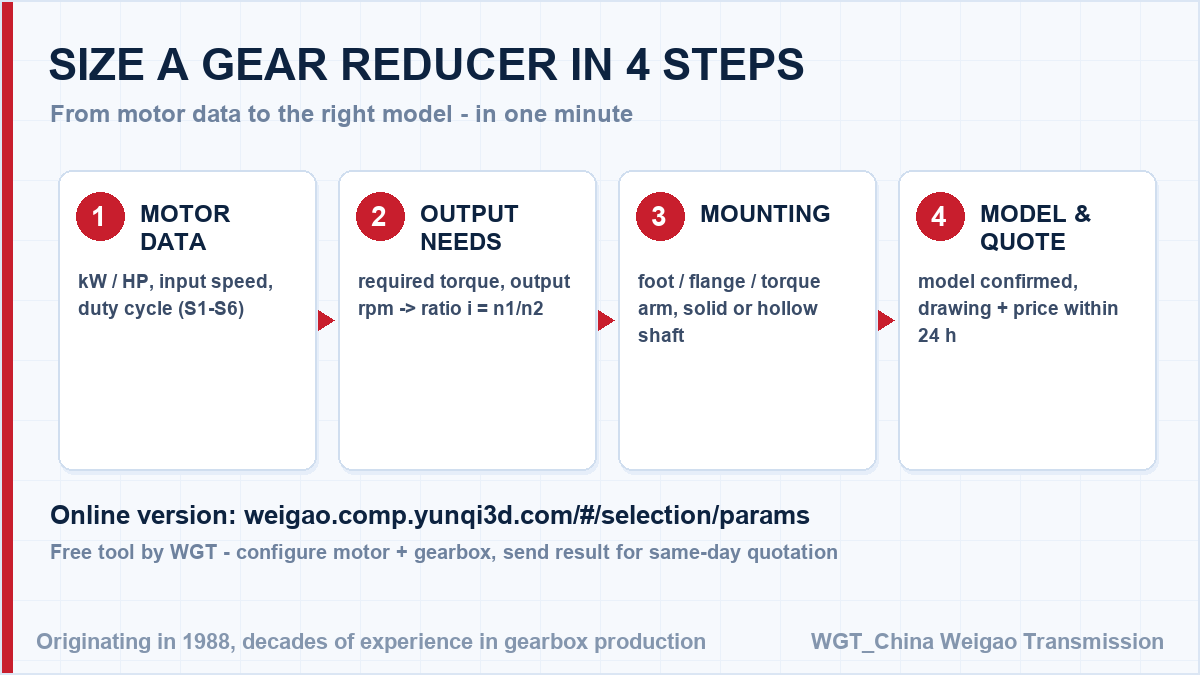
Take a 30 kW motor at 1465 rpm turning the anchor stirrer at 42 rpm. The ratio follows directly: 1465 / 42 = 34.9, so a ratio near i=35 is selected from the two-stage band, and the frame is confirmed against the end-of-batch viscosity rather than the charge-in condition, since the thickened product governs every start. In this case frame four carries the swelling torque with reserve, the bore is fitted to the anchor shaft drawing, and the seal set is specified for a product that climbs a warm shaft. The same three numbers - motor speed, target output speed, required torque - are all you need; our engineers (or the online selector below) cross-check the service factor for your duty cycle.
![gear reducer selection flow chart - ratio and frame size]()
Figure: from motor data to a confirmed gearbox model in four steps.
Common Models in the M3 Series
| Model | Centre distance | Output | Typical duty |
|---|
| M3PSF50 | size 50 | solid shaft, foot | conveyors, feeders |
| M3PSF60 | size 60 | solid shaft, foot | crushers, mixers |
| M3PSF70 | size 70 | solid shaft, foot | ball mills, shredders |
| M3PSF80 | size 80 | solid shaft, foot | kilns, heavy conveyors |
| M3PSF90 | size 90 | solid shaft, foot | mill and kiln drives |
| M3RSF50 | size 50 | solid shaft, foot, right-angle | inclined conveyors, elevators |
| M3RSF60 | size 60 | solid shaft, foot, right-angle | screw classifiers, feeders |
| M3RHF70 | size 70 | hollow shaft, foot, right-angle | agitators, drum drives |
| M3PHT80 | size 80 | hollow shaft, torque arm, parallel | shaft-mounted conveyors |
| M3RHT90 | size 90 | hollow shaft, torque arm, right-angle | heavy shaft-mounted drives |
The table below shows the M3 industrial range: P builds are all-helical on parallel axes, R builds add a bevel input stage for a right-angle drive; S / H describe the low-speed shaft and F / T the mounting.
Application Cases
Stacker-reclaimer travel drive
A bulk terminal drives the travel gear of a stacker-reclaimer with units. Long-travel duty with frequent direction changes is smoothed by the ground gearing, and backlash stays within 20 arcmin over the full rail length.
Automatic parking system
A parking equipment manufacturer uses reducers on its puzzle-type car stackers. The hollow shaft takes the drive axle directly, and the quiet 60-68 dB operation suits installations inside residential buildings.
![industrial gearbox applications - conveyor mixer crusher wastewater]()
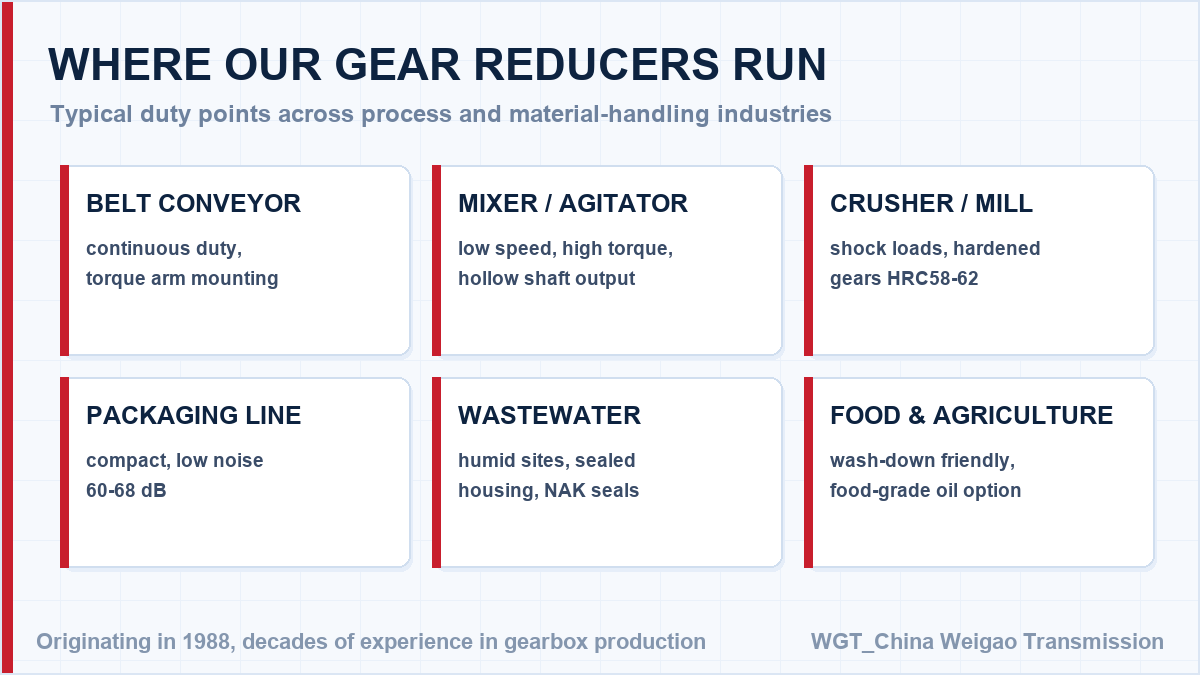
Figure: typical industries that use the WGT S-series gear reducers.
Frequently Asked Questions
How is each unit tested before shipment?
Every unit is run in on the bench before packing. Noise, temperature rise and backlash are recorded and the test sheet travels with the shipment, so you can file it with your incoming-inspection records.
What payment terms do you accept?
We normally work on 30% deposit and 70% against the bill-of-lading copy for sea freight, or 100% before dispatch for small orders. Other terms can be discussed for framework or repeat business.
Can you manufacture a custom ratio or a special shaft?
Beyond the catalogue ratios we can quote special ratios and custom output shafts - splined, extended, special keyways or drilled - for OEM volumes. Tooling is amortised across the order, so unit cost falls as quantity rises.
Site Survey Data? We Size It for You
Have the machine data but not the model? Not sure which model fits? Try our online WGT Motor & Gearbox Online Selection System to match motor power, ratio and mounting in one minute.
Send the conveyor length, belt speed, drive pulley diameter or the machine duty description. We run the full selection - ratio, frame, service factor - and return the datasheet with the quote. Looking for a gearbox for packaging machine? Tell us the duty point and we will confirm the model in writing.