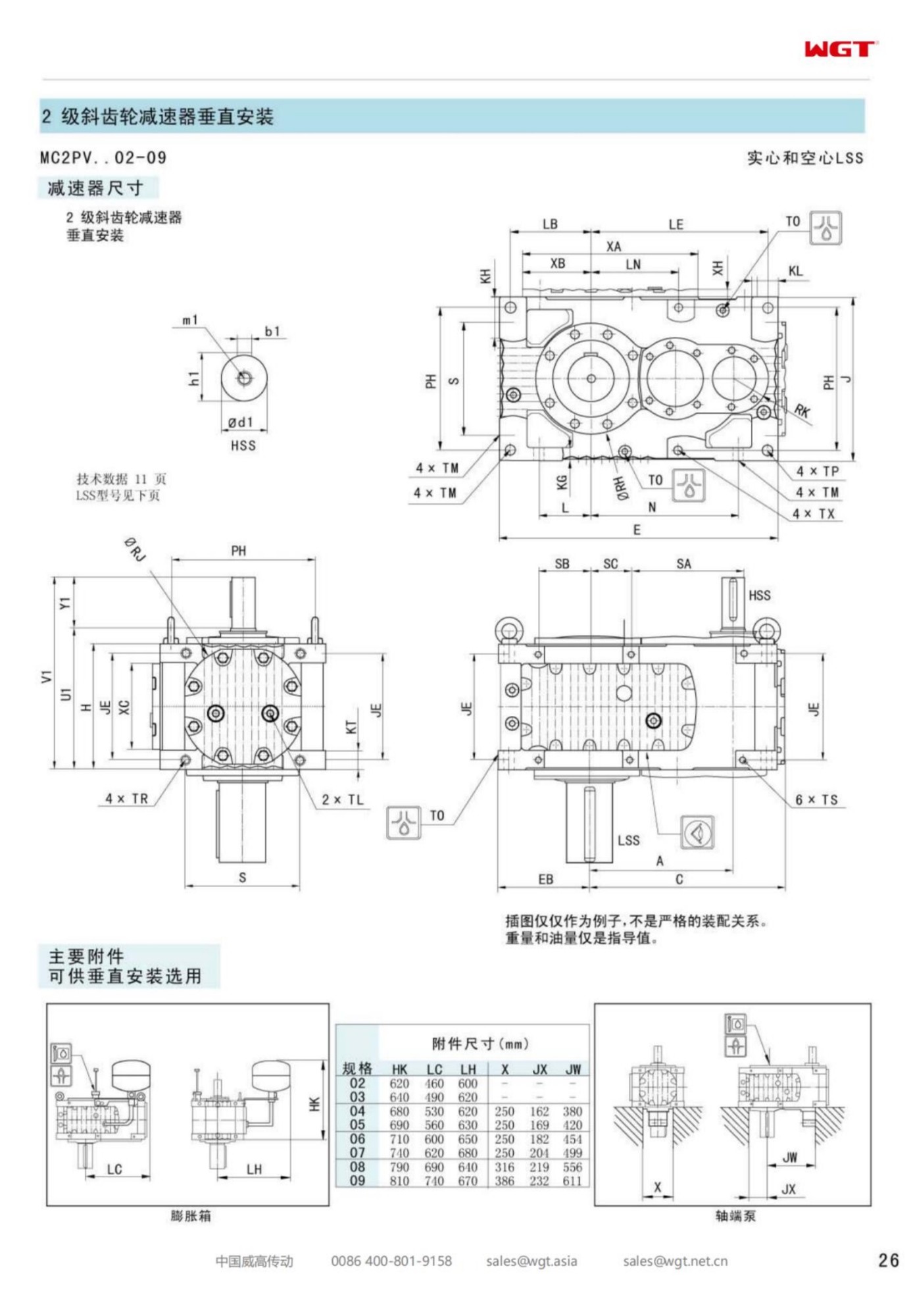
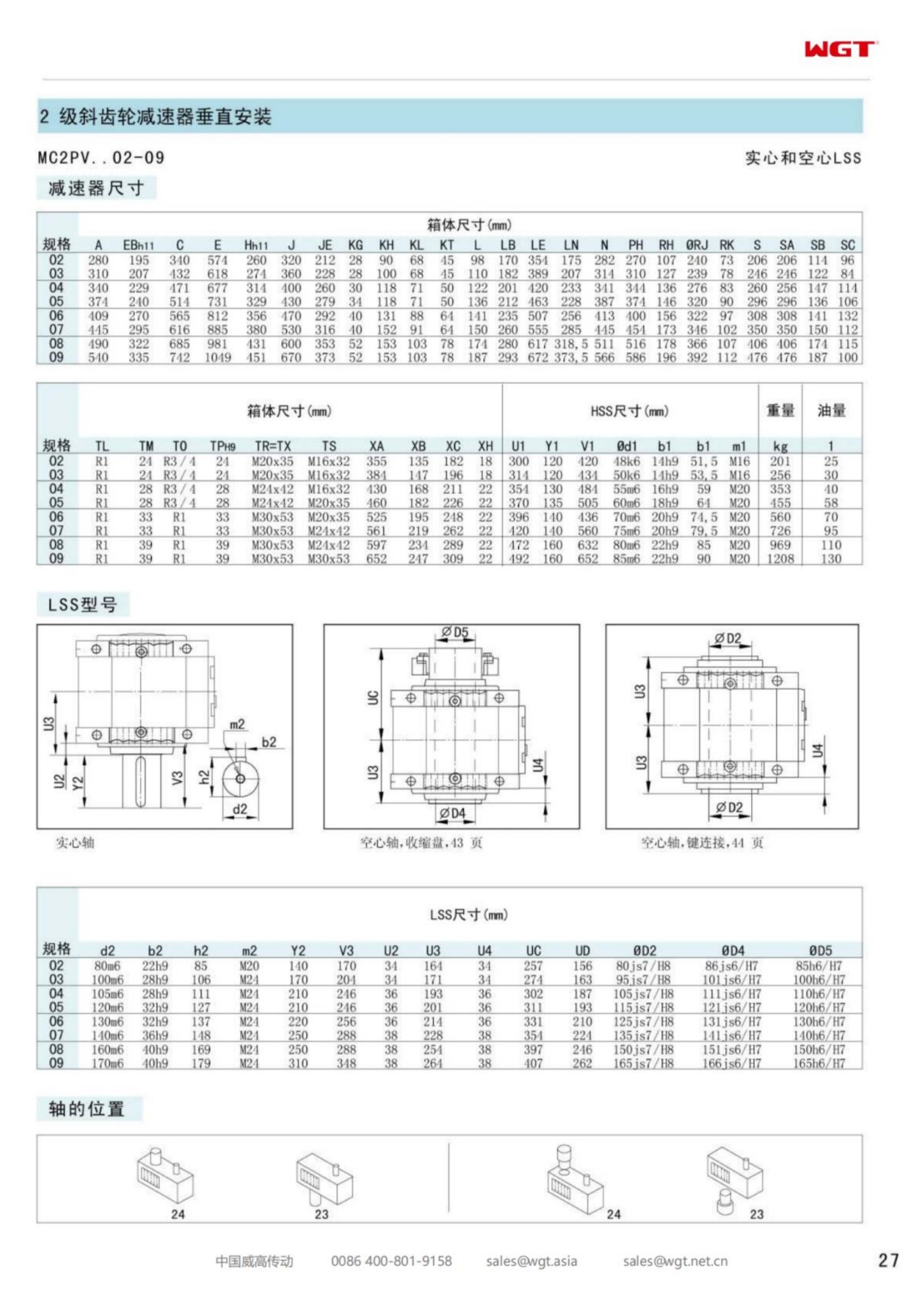
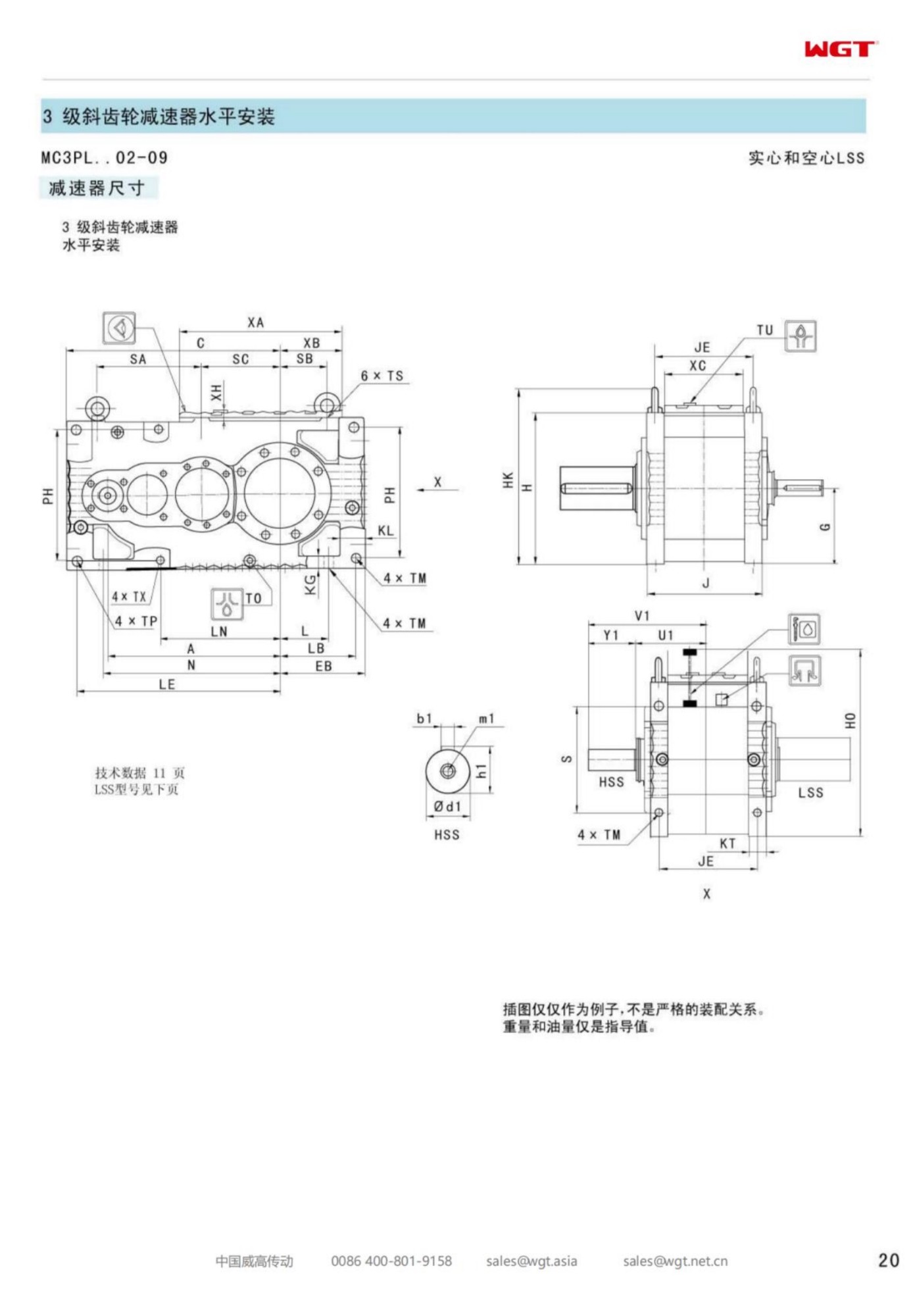
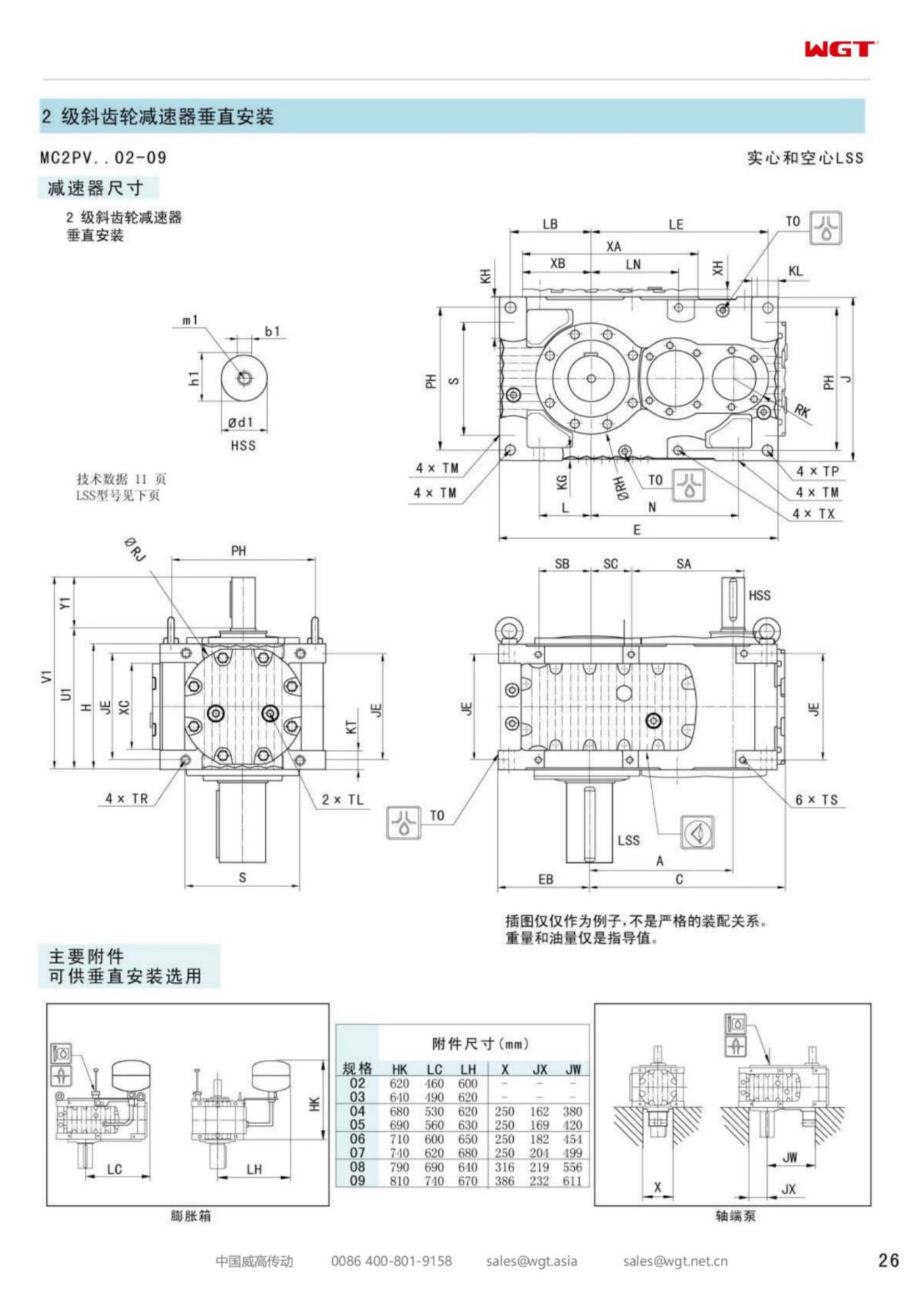
Somewhere in every food plant there is a gearbox that lives harder than its mill cousins: hosed down twice a shift, washed in caustic between products, hung over vats in a room that alternates between steam and cold. The MC2PVHF06 vertical hollow shaft gearbox is the frame this family quotes for those halls - the same hanging construction the band has used since frame two, now specified as much for its seals and surface as for its torque.
This page follows the frame through a hygienic campaign: what caustic and acid washes actually do to a hanging case, how a drive survives a hose pointed anywhere near its shafts, why a cold room changes the oil conversation, and what a bore has to do when the process shaft is lifted out for cleaning every night. None of it is exotic. All of it is the difference between a unit that runs for twenty years and one that looks tired at five.
Frame Six and the Hosed-Down Hall
A food-side hall is not gentle because it is clean. It is aggressive in a way mining halls never are: water at pressure, chemistry at temperature, and a schedule that washes every surface the inspector can see - including the ones under the gearbox. A hanging case sits directly in the wash path, its lower seal below the tank rim, its breather pointing at the ceiling of the wettest room on site.
Plants reach frame six when torque grows past what the frames below carry, or when a new vessel is added and the campaign maths says a bigger motor. The mechanical step is routine. The specification step is where the care goes: a drive for this hall is ordered with its washdown regime written down, not assumed, because two plants with identical vessels can run wash programmes that age seals five times differently.
Decoding MC2PVHF06
The type string fixes the geometry a hygienic-duty buyer cares about.
| MC | Industrial gear unit family built for continuous plant duty |
| 2 | Two helical reductions inside one upright case |
| P | Parallel-shaft layout, input and output on parallel axes |
| V | Vertical build, output axis pointing down into the vessel |
| H | Hollow output bore, the process shaft passes through it |
| F | Footed reaction pads bolted to the vessel bridge or deck |
| 06 | Sixth frame, the tier quoted for heavier hygienic agitators |
Read as an order document, the string tells the factory what to build and reminds the site that the bridge, the bore and the wash zone are all part of the purchase. What the string leaves open is the environment package - seal material, breather type, surface finish and the motor's enclosure - and in a food plant that package decides the service life as surely as the gear teeth do.
What Caustic and Acid Wash Do to a Case
A caustic wash is a solvent for the things a drive is made of. Paint that shrugs at water for years lifts at a caustic splash line; cast iron grows a bloom of corrosion where the film breaks; and any spot where product dries between washes becomes a chemistry lesson twice a shift. The parts that suffer first are the ones lowest on the case, because gravity parks the wash there.
The honest specification answers this with surface and drainage, not heroics. A case whose paint system is specified for the actual chemistry, whose pads land on stands that drain rather than puddle, and whose lower region can be wiped clean in one pass will outlive a larger unit specified by torque alone. Buyers who send the wash programme with the enquiry get a package chosen for it; buyers who send a model number get the default, and the default was written for a dry hall.
Sealing a Hanging Drive Against a Hose
On a vertical build the lowest seal lives below the waterline of every washdown. A directed hose finds the gap between the rotating shaft and the case in seconds, and water does not need a large opening - it needs a pressure difference and a minute. The seal set on this frame is therefore specified as part of the washdown duty: lip material matched to the chemistry, a labyrinth or slinger ahead of the lip where hoses are routine, and a renewal interval written on the wall rather than guessed at.
The breather is the second door. A sealed-for-life breather suited to a dry hall becomes a vacuum device in a cold room and a sponge in a steamy one; a washdown-rated breather or a remote vent line that ends outside the wash zone solves both. It is a small part with a large vote in whether the oil stays clean, and it is the first thing a competent hygienic-duty order mentions.
Cold Rooms, Condensation and Breathing
A vessel in a chilled hall breathes in a way a warm one does not. Every door cycle draws humid air into the case; every cooling period condenses it on the inside of the top plate. The result, on an unattended drive, is water in the oil long before any seal has failed - and water in the oil is a bearing decision somebody will pay for later.
The fixes are ordinary and they work: a breather that handles condensate, oil checked for milkiness on a fixed calendar, and where duty is severe a small case heater that keeps the sump above the dew point. None of this appears on a torque table, which is precisely why the order has to ask for it. Halls that treat their vertical drives as dry-iron because the catalogue says industrial spend their maintenance budget on the lesson.
Cleaning-in-Place Around the Drive
A modern food line cleans itself more than it is scrubbed, and the drive sits at the edge of that automation. CIP circuits flood vessels with chemistry that never touches the gearbox directly - until a gasket weeps, a spray ball over-reaches, or a technician points a lance where the manual said not to. The drive that survives is the one whose vulnerable parts were placed with the cleaning map in mind: breather high and shielded, motor terminal box oriented away from the spray, drain plugs accessible without a ladder over an open vessel.
It is worth saying in the enquiry where the drive will actually sit relative to the cleaning pattern. A photograph of the vessel top, taken before ordering, has settled more arguments than any datasheet. The unit is hung for a decade over a specific tank; specifying it against the real geometry of that tank costs nothing and saves the awkward retrofit.
Bore, Key and a Shaft That Gets Lifted Out
Hygienic agitator shafts are often removed - for cleaning below the bottom bearing, for seal service, for product changeovers in shared vessels. That habit changes what the bore must be. A fit that was correct on installation but has been assembled and disassembled weekly for years wears its keyway, and a worn keyway turns into runout, and runout on a hung shaft becomes vibration the crew blames on the gearbox.
The practical answers are a fit specified generously enough for the real assembly frequency, keyway edges kept true by crews who use the proper pullers instead of a pry bar, and a bore surface inspected whenever the shaft is out anyway. Frame six carries the torque for years; the fit is the part the site's own habits will decide, and the halls that know this keep the shaft drawing taped inside the motor cabinet.
Motors and Electronics Above a Wet Floor
The motor on top of the case shares the washdown, and in a food hall its enclosure and connection box deserve the same sentence as the gearbox seals. Water tracks into terminal boxes that face the spray; insulation that tests fine in October fails by March on a condensing surface. Variable speed drives add their own question, because a drive unit mounted in the wet room versus the dry room changes what its enclosure must be.
Sorting the electrical geography at order time is a five-minute email. The motor enclosure, the terminal box orientation, the cable gland route and where the speed control lives are all fixed by that email. Faced later, they are each a work order with a shutdown attached - and shutdowns in a food plant are rationed by the production calendar.
Inspection Rhythm in a Food Plant
The inspection loop for this frame is short and it fits the washdown schedule: oil condition looked at when the production plan already opens the hall, seal area wiped during the same visit, breather cleared, pads checked tight. The skill is attaching the loop to something the plant already does - the sanitation calendar, the PM line for the vessel - because a separate gearbox ritual never survives a busy season.
Trends are worth more than readings. A seal that weeps a little more each wash, an oil sample whose water content climbs batch by batch, a case that runs warmer than the same frame across the hall - each is cheap when first noticed and expensive when undeniable. Plants that log four numbers a month on a hanging drive never meet a surprise worth naming.
Choosing the Frame for a Hygienic Line
Frame selection in a food plant is torque first and washdown second - but the second half is where the choices differ. Two candidates with the same rating separate on seal package, breather type, surface treatment and the service access the hall allows. The bigger unit is not automatically the durable one; the correctly specified unit is, and the specification is written by the wash programme more than by the recipe.
A useful habit is to write the duty sentence before quoting: product, viscosity at its worst, starts per shift, wash chemistry, hall temperature band, shaft handling per week. Six clauses. The frame that answers all six honestly is usually the one that is still hanging when the hall is modernised around it.
What to Declare on the Order
A frame six enquiry carries the usual mechanical data - shaft drawing, torque, speeds, duty class - plus the hygienic half that gets left off too often: wash chemistry and frequency, hose pressure near the case, ambient and cold-room extremes, cleaning methods allowed near the unit, and how often the agitator shaft comes out. Each line costs one row in an email; each omission costs a service visit inside a production window nobody wanted to spend.
The reply worth holding a factory to covers both halves: a frame and ratio with margin shown, a seal and breather package named for the chemistry, motor enclosure matched to the zone, and an oil and inspection interval that admits the hall is washed. That document, one page, is the whole difference between buying iron and buying a drive for this hall.
A Long Life in a Washdown Hall
The frame six units that run for decades in food plants are not lucky. They hang on bridges that were checked level, over shafts that were drawn and kept true, sealed by packages chosen for the actual hose, and inspected on a loop small enough to survive busy seasons. Their oil is changed when the schedule says, their breathers are treated as consumables, and their keyways are respected by crews with the right tools.
None of that is costly. All of it is easy to leave off an order that mentions only a model number - which is why the number alone is the most expensive way to buy this frame. Written down properly, a frame six is unremarkable for twenty years, and in a washdown hall unremarkable is the prize.
Caustic washdown, cold rooms and hygiene rules - frame six works the food-side world:
- Culture tank agitation at a dairy processing plant
- Fermentation vessel drive in a brewery cellars block
- Syrup and crumb blending kettle at a confectionery works
- Yeast storage tank agitation at a baker's yeast plant
- Brine and syrup mixing tank at a fruit-packing hall
- CIP solution dosing tank agitation at a food plant
Field Applications
Glass batch charger
A float-glass line drives its batch charger with units. Abrasive raw material demands a robust drive, and the case-hardened gears show minimal wear after years of continuous operation.
Battery slurry mixer
A battery materials plant uses reducers on slurry mixers. High shear loads are absorbed by the 42CrMo shafts, and the 94-96% efficiency keeps motor sizing and running cost down.
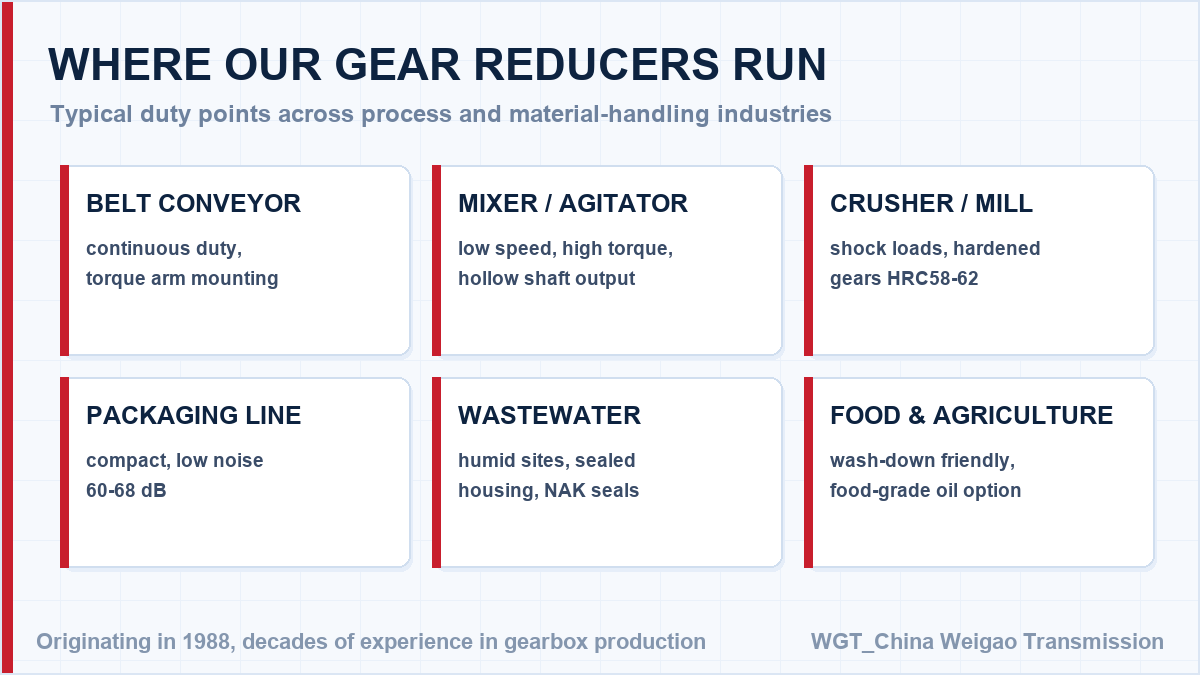
![where gear reducers are used in industry]()
Where these units are installed across industry.
Selection Example: Culture tank agitation at a dairy processing plant
Take a 45 kW motor at 1485 rpm turning the agitator shaft at 31 rpm. The ratio follows directly: 1485 / 31 = 47.9, so a ratio near i=48 comes out of the two-stage band, and the frame is confirmed against the washdown regime as well as the running torque, with the seal set, breather and motor enclosure chosen for caustic cleaning. In this case frame six carries the duty with reserve while the hygiene package is written into the order - washdown-rated seals, a breather outside the spray, and a case surface the sanitation crew can rinse clean. Once the ratio is fixed, check the required output torque against the rating table with the service factor applied - that is what decides the frame, not the ratio alone.
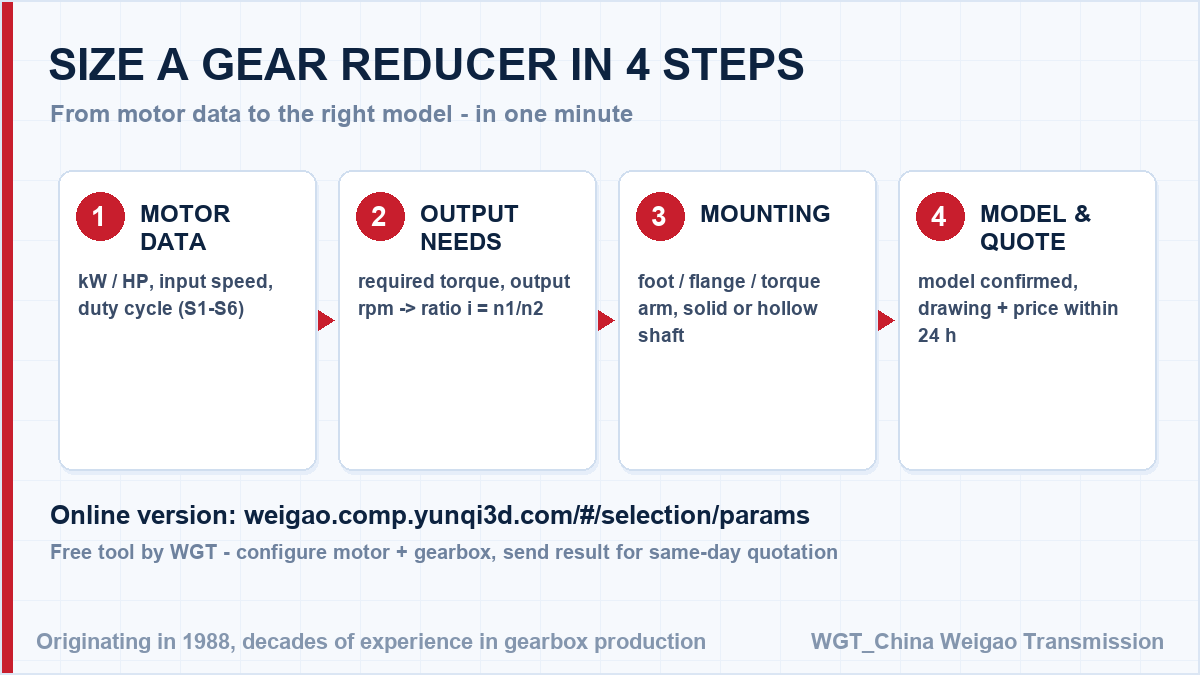
![gearbox selection guide: speed, torque, service factor]()
How a ratio and a frame size are determined, step by step.
Frame Sizes and Typical Duties
| Model | Centre distance | Output | Typical duty |
|---|
| M3PSF50 | size 50 | solid shaft, foot | conveyors, feeders |
| M3PSF60 | size 60 | solid shaft, foot | crushers, mixers |
| M3PSF70 | size 70 | solid shaft, foot | ball mills, shredders |
| M3PSF80 | size 80 | solid shaft, foot | kilns, heavy conveyors |
| M3PSF90 | size 90 | solid shaft, foot | mill and kiln drives |
| M3RSF50 | size 50 | solid shaft, foot, right-angle | inclined conveyors, elevators |
| M3RSF60 | size 60 | solid shaft, foot, right-angle | screw classifiers, feeders |
| M3RHF70 | size 70 | hollow shaft, foot, right-angle | agitators, drum drives |
| M3PHT80 | size 80 | hollow shaft, torque arm, parallel | shaft-mounted conveyors |
| M3RHT90 | size 90 | hollow shaft, torque arm, right-angle | heavy shaft-mounted drives |
The size number is the key dimension that steps up torque capacity through the range: 50 to 90 in horizontal builds, 10 to 90 in vertical builds. Gearing philosophy is shared across the family.
Talk to the Factory, Not a Catalogue
Questions before ordering? Engineers can size the unit themselves in the WGT Motor & Gearbox Online Selection System - input speed, torque and duty, get the model instantly.
Our technical team works beside the assembly line. Describe the application in your own words and you get a straight answer - including when a different frame or series would serve you better. Looking for a gearbox for steel mill? Tell us the duty point and we will confirm the model in writing.
Common Questions from Buyers
How do I know when the unit needs maintenance?
Beyond routine oil checks, watch for oil weeping at the seals, unusual noise or vibration, and any rise in housing temperature. A seal kit is inexpensive; catching a weeping seal early avoids damage to the bearings and gears.
Which mounting positions can be used?
The unit can be installed in M1 to M6 positions - floor, wall or ceiling. The oil level plug is repositioned for the position you order, so state it up front and the unit is filled and labelled correctly at the works.
Can I reuse my existing couplings and foundations?
Yes. Centre distances, shaft dimensions and flange bolt patterns follow the common industry standards, so couplings, guards and foundations do not have to be redesigned. Send the nameplate details and we confirm the equivalent frame in writing.