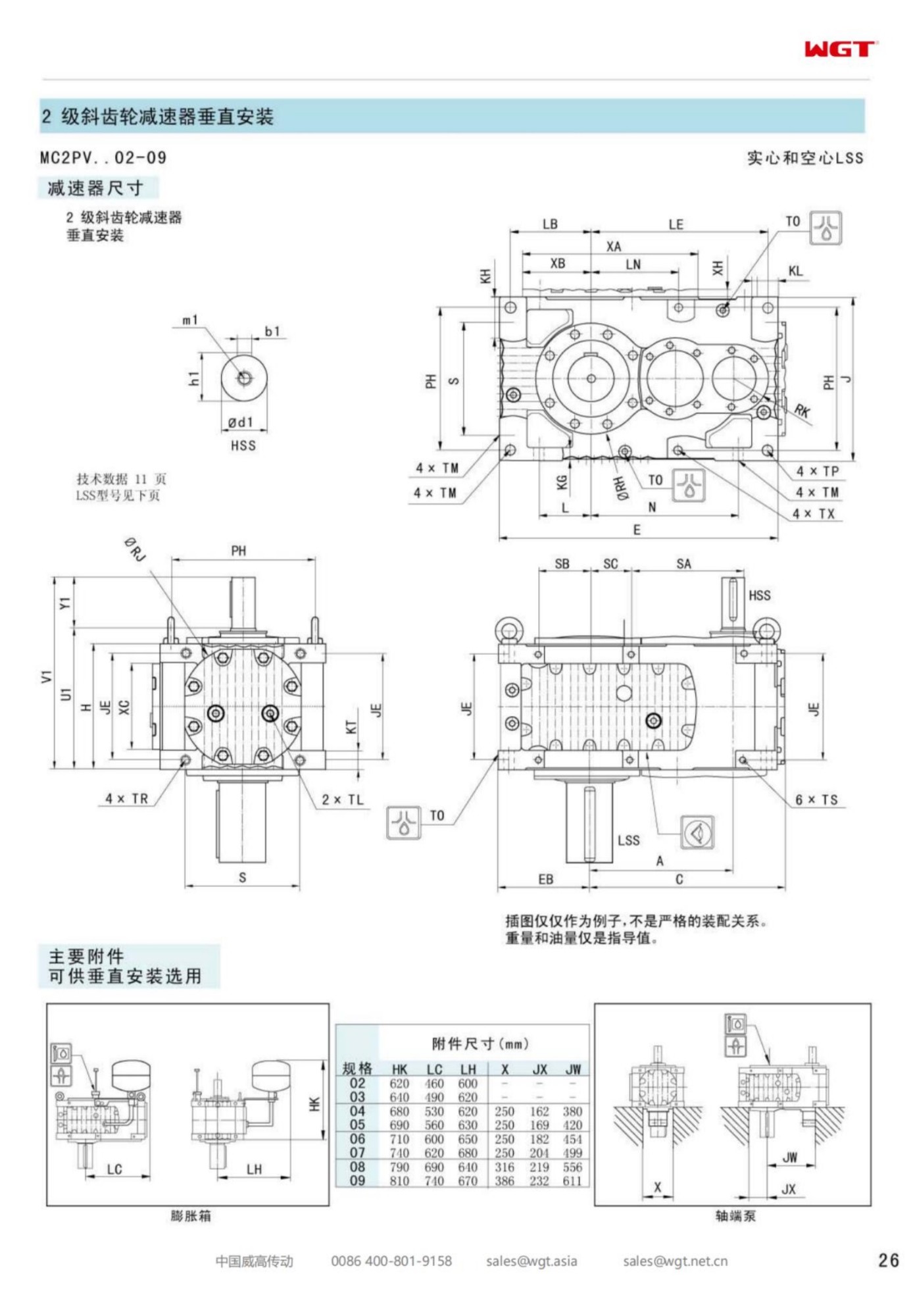
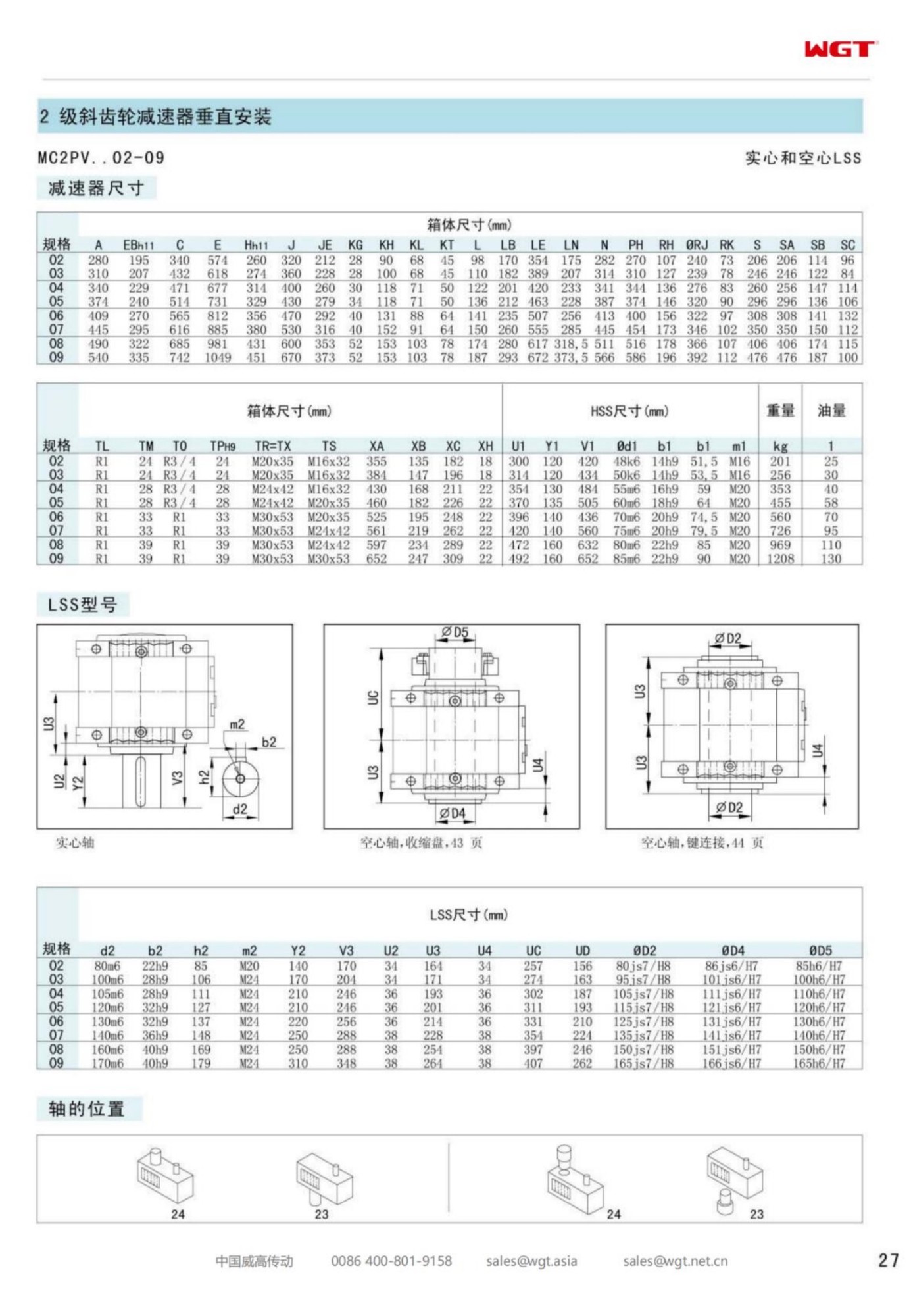
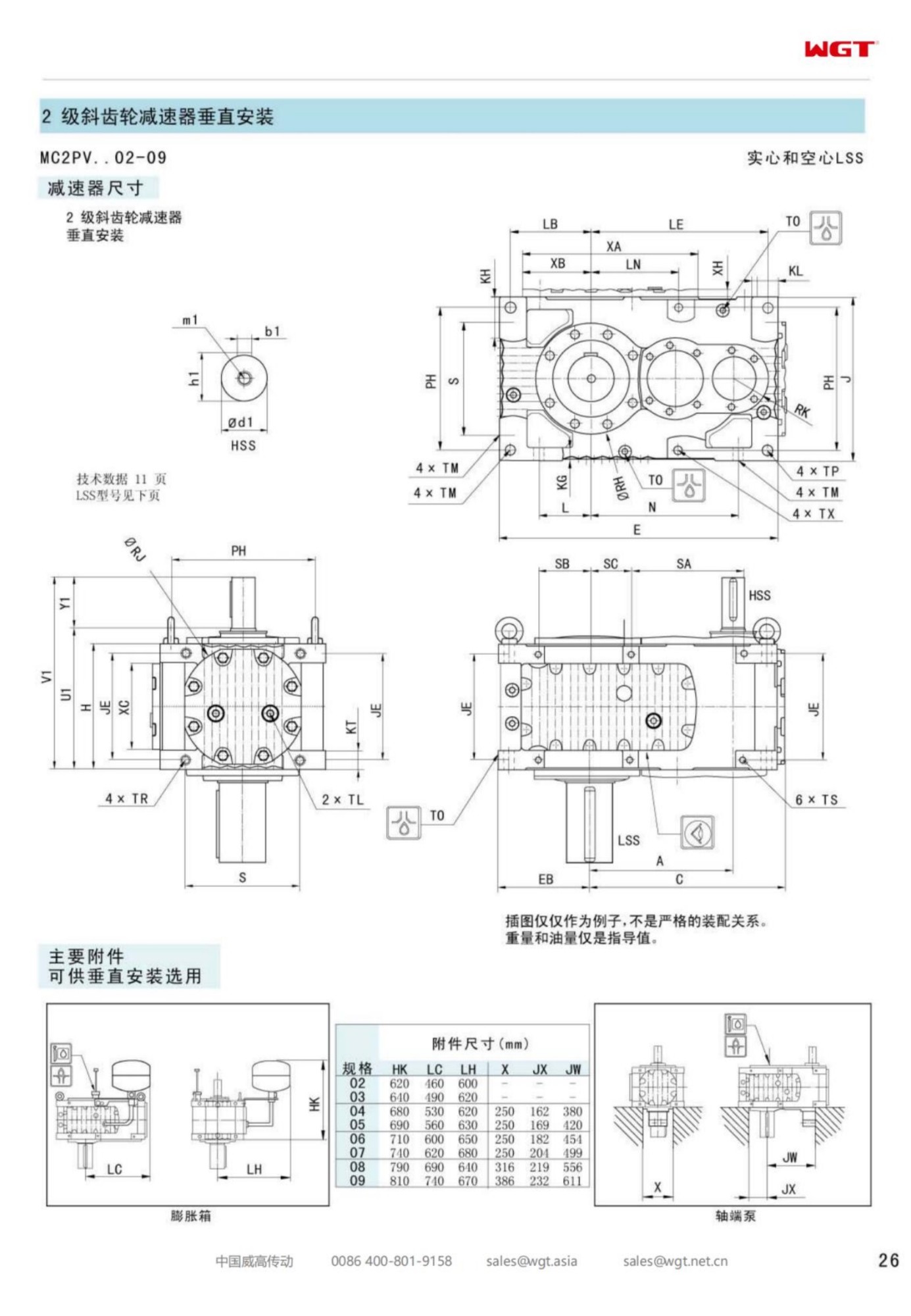
Some plants do not wash their gearboxes - they pickle them, slowly, with the air itself. Acid vapours drift from open vessels, chloride mist settles on every painted surface, and a splash of strong caustic lands where nobody was looking. The MC2PVHF08 vertical hollow shaft gearbox is the frame this family quotes into that world: the same hanging construction as the frames below it, sized for the torque tier a chemical train reaches, and ordered as much for its materials as for its rating.
This page walks through a chemical-plant specification: what corrosive air actually attacks first, how coatings and case materials are chosen against a real chemistry list, where seals fail against aggressive media, and why the breather, the motor enclosure and the paperwork matter as much as the gear teeth. None of it is optional in a hall like this. All of it is ordinary once it is written down.
Frame Eight and the Chemical Train
A chemical train stacks its drives the way it stacks its vessels: bigger duty higher up, harsher duty wherever the chemistry is concentrated. Frame eight serves the tier where agitators grow past the mid-band - neutralisation tanks, scrubber sumps, solvent recovery pots and the storage side of a plant that never stops moving liquor.
What makes the tier different is not the torque. It is that every failure mode is accelerated by the atmosphere: a coating rated for years outdoors lasts months over an acid tank, and a seal that would run a decade in water is consumed in a season by the wrong medium. The buyers who do well here send the chemistry with the enquiry - media, concentration, temperature, vapour - because the drive is specified against the list, not against the catalogue.
Decoding MC2PVHF08
The type string fixes the geometry a chemical-duty buyer starts from.
| MC | Industrial gear unit family built for continuous plant duty |
| 2 | Two helical reductions inside one upright case |
| P | Parallel-shaft layout, input and output on parallel axes |
| V | Vertical build, output axis pointing down into the vessel |
| H | Hollow output bore, the process shaft passes through it |
| F | Footed reaction pads bolted to the vessel bridge or deck |
| 08 | Eighth frame, the tier quoted for heavy chemical-tank agitation |
Read as an order document, the string promises the torque tier and the hanging construction. The chemistry is the buyer's half: medium list, splash zones, wash-down chemistry if the hall has it, and the outdoor or indoor band the case will live in. Two plants with identical tanks can order entirely different packages from the same frame, and both be right.
Corrosive Air and What It Attacks
Corrosion starts where water and chemistry meet metal, and on a hanging drive the entry points are predictable. Paint edges and fastener heads go first; the pad-to-bridge joint holds moisture in a capillary gap; the lower seal area collects condensate and splash in one place. None of these shows on a datasheet, and all of them decide how the case looks in year five.
The countermeasure is to spec for the wettest corner, not the average one. Coating systems chosen for the actual vapour, fasteners in a material that survives the mist, pads seated on stand-offs that drain instead of trap, and every gap that can hold liquid sealed or sloped. Plants that walk their drives once a month with a torch catch the first bloom of rust while it is still a paint touch-up; plants that wait for the annual inspection meet it as a structural conversation.
Materials, Coatings and the Case
The case itself is cast iron, and cast iron in a chemical hall is a coating decision before it is a metallurgy one. Multi-coat epoxy systems matched to the medium - with the film thickness written into the order - outlast generic shop paint by years. Where the duty is extreme, details go further: stainless nameplates and fasteners, a shaft sleeve in a resistant alloy, drain plugs positioned so a flush does not pool against a bolt head.
The honest way to buy this is a one-page environment sheet: media the case will see as vapour, as splash and as accidental spill; the temperature band; the cleaning chemistry; whether the hall is hosed. A factory that receives that sheet returns a package with every choice traceable to a line on it. A factory that receives a model number returns the standard paint, and the standard paint was never asked about acids.
Seals Against Aggressive Media
The lower seal on a vertical drive lives in the worst seat in the plant: it turns on the process shaft, it hangs below the tank rim, and it sees splash, vapour and wash water in the same shift. Against benign duty a standard lip seal runs for years; against acids, solvents or hot caustic the lip material and the seal's protection both become specification items.
What works is a package: lip material matched to the medium, a slinger or labyrinth in front of the lip to throw splash away, a renewal interval set by the plant's own experience rather than a generic chart, and a spare set stored in the cabinet before the first one is needed. Chemical plants that treat seals as consumables on the turnaround list never meet them as emergency work; the ones that assume the seal will tell them when it is tired meet it during a batch that cannot be stopped.
Breathers and Venting in a Chemical Hall
A gearbox breathes thousands of times a day, and in a chemical hall every breath carries the atmosphere. Vapour drawn into the case condenses on the cool top plate and runs into the oil; a blocked breather turns thermal cycles into pressure that hunts for the weakest lip. On this frame the breather is not an accessory - it is part of the corrosion defence.
The specification that works names the air: a breather type suited to vapour and humidity, a vent line routed away from the worst plume where the hall has a defined hot spot, and a check of the breather on the same calendar as the seal. It costs little and it is the difference between oil that stays oil and oil that becomes a chemistry experiment with bearings inside.
Motors, Enclosures and the Electrical Side
The motor on top of the case inhales the same hall, and a chemical plant adds its own rules: enclosure class matched to the zone, terminal boxes oriented away from splash, cable glands rated for the environment, and where the medium demands it, anti-condensation heaters on the winding. None of this is exotic; all of it is fixed in one email at order time and expensive to retrofit after.
Where speed control sits matters too. A variable speed panel in the wet room needs an enclosure argument; the same panel in the control room needs only a longer cable. Sorting the electrical geography before the order - motor enclosure, terminal direction, gland route, where the drive lives - is the five minutes that saves a shutdown later.
Spills, Splashes and the Area Around the Drive
No coating survives everything a plant can spill on it, so the area plan matters as much as the paint. Bunds and drip trays under the lowest joint, stands that let a technician rinse the pad area without soaking the motor, and a rule that product spills near the drive get cleaned the same shift - these habits add years that no datasheet can promise.
The walk-around habit completes it. A monthly five-minute look - paint, pads, breather, seal area, fasteners - recorded in four numbers, catches drift long before it becomes a project. Plants that own this habit run their hanging drives to natural retirement; plants without it fund their corrosion lessons twice.
Oil Discipline Where Chemistry Is Nearby
Oil in this hall does its usual jobs and one more: it is the first place contamination shows. A sample pulled on a fixed calendar reports water, acid number and particle counts - and in a hall with vapour around, the trend of those numbers is the early warning for the whole sealing system.
The programme is the same shape as everywhere else and stricter in its calendar: level against the mark, sample on the interval, change on condition, breather treated as a consumable. Synthetic grades earn their cost where sumps run warm; shortening the first interval earns its cost everywhere a new installation is still finding its condensation rhythm.
Documentation and the Chemical Enquiry
A frame eight enquiry carries the mechanical core - shaft drawing, torque, speeds, duty class - plus the environment sheet that decides the package: media and concentrations, splash and spill zones, wash chemistry, temperature band, outdoor exposure, and any zone rules the electrical side must meet. Each line is one row in an email; each omission is a service visit inside a turnaround nobody wanted to spend.
The reply worth holding a factory to mirrors the sheet: coating system named for the media, seal package with renewal interval, breather type against the hall air, motor enclosure matched to the zone, and an inspection and oil programme written for the plant's calendar. One page each way is the whole craft of buying this frame well.
Spares and Turnaround Planning
A chemical train is maintained on turnarounds, and a hanging drive should enter that plan by name: seal sets on the shelf, breather elements as consumables, coating touch-up kits matched to the case, and the lifting gear inspected before the window opens. A drive prepared this way consumes two planned hours; a drive left to improvise spends its failure inside the same window, plus the ones after it.
The crews who do this well keep a one-page card per unit - what was done, what was measured, what is due next - so the next turnaround inherits a history instead of a mystery. The card costs nothing and it is why some frame eight units pass decade marks without ever stopping the train.
A Frame Eight Decade in the Chemical Hall
The drives that last in chemical plants are not the biggest ones. They are the ones whose coatings were chosen against a real chemistry list, whose seals were treated as consumables, whose breathers were checked as routinely as the oil, and whose environment sheet was written before the order rather than reconstructed after the first failure.
Frame eight carries the torque for that decade as a matter of course. What the buyer adds - the sheet, the spares, the walk-around, the calendar - decides whether the decade is quiet. Written down properly, this frame is unremarkable for twenty years, and in a chemical hall unremarkable is the prize.
Acid vapours, splash zones and aggressive chemistry - frame eight is built for the chemical train:
- Acid circulation tank agitation at a copper hydrometallurgy plant
- Solvent recovery vessel drive at a pharmaceutical intermediates plant
- Caustic storage and blending tank at a chlor-alkali plant
- Neutralisation tank agitation at a chemical effluent plant
- Polymerisation vessel drive at a resins plant
- Scrubber liquor tank agitation at a flue-gas treatment unit
Questions We Hear Most Often
Do you support commissioning and after-sales service?
Every shipment includes an installation manual and a test record. Our engineers answer commissioning questions by e-mail or video call, and spare seals, bearings and shafts remain traceable to your original order for years afterwards.
What is a service factor and which value should I use?
The service factor multiplies your required torque to cover shock and duty class: around 1.0 for uniform conveyors, 1.25 for moderate shocks and 1.5 or higher for crushers, shredders and reversing drives. Tell us the driven machine and we apply the correct value before quoting.
Can the gear unit hold a load on an inclined conveyor?
For inclined belts a backstop prevents the loaded belt from driving the unit backwards when power is cut. Specify the incline angle when ordering so the backstop and the oil level are matched to the actual mounting position.
Choosing the Right Frame Size
| Model | Centre distance | Output | Typical duty |
|---|
| M3PSF50 | size 50 | solid shaft, foot | conveyors, feeders |
| M3PSF60 | size 60 | solid shaft, foot | crushers, mixers |
| M3PSF70 | size 70 | solid shaft, foot | ball mills, shredders |
| M3PSF80 | size 80 | solid shaft, foot | kilns, heavy conveyors |
| M3PSF90 | size 90 | solid shaft, foot | mill and kiln drives |
| M3RSF50 | size 50 | solid shaft, foot, right-angle | inclined conveyors, elevators |
| M3RSF60 | size 60 | solid shaft, foot, right-angle | screw classifiers, feeders |
| M3RHF70 | size 70 | hollow shaft, foot, right-angle | agitators, drum drives |
| M3PHT80 | size 80 | hollow shaft, torque arm, parallel | shaft-mounted conveyors |
| M3RHT90 | size 90 | hollow shaft, torque arm, right-angle | heavy shaft-mounted drives |
One family, two layouts. Choose P for a coaxial-in / parallel-out drive train, R when the motor must turn 90 degrees; then pick the shaft type and mounting style that the machine interface needs.
Selection Example: Acid circulation tank agitation at a hydrometallurgy plant
Take a 55 kW motor at 1485 rpm turning the circulation agitator at 26 rpm. The ratio follows directly: 1485 / 26 = 57.1, so a ratio near i=57 comes out of the two-stage band, and the frame is confirmed against the duty sheet as much as the torque, with the coating system, seal lip material and breather type each chosen against the named media and their vapours. In this case frame eight carries the chemistry on a written environment sheet - media and splash zones declared, seals held as consumables on the turnaround list, and a monthly walk-around catching the first bloom of corrosion while it is still a touch-up. It always comes down to those three figures. Send them over and we confirm the frame, ratio and service factor in writing.
![online gearbox selection system workflow]()
Selection workflow used by our engineers for every quotation.
Real-World Duty Points
Cold-store conveyor
A cold-store operator uses reducers on freezer-room conveyors. Low-temperature synthetic oil and moisture-resistant seals keep the units running below -20 deg C ambient.
Bakery spiral cooler
A bakery equipment builder fits units to spiral cooler drives. The compact right-angle layout fits under the spiral cage, and food-grade lubrication was specified for the hygienic area.
![right angle gearbox duty points overview]()
An overview of the duty points this series is built for.
Get the Selection Checked - Free of Charge
Already picked a model? Use the WGT Motor & Gearbox Online Selection System to turn your motor data into a model number, and we will quote that exact unit within the day.
Send us your calculated model and duty point. We cross-check the ratio, torque and service factor independently and confirm or flag the difference - a free second pair of engineer eyes. Looking for a gearbox for agricultural machine? Tell us the duty point and we will confirm the model in writing.