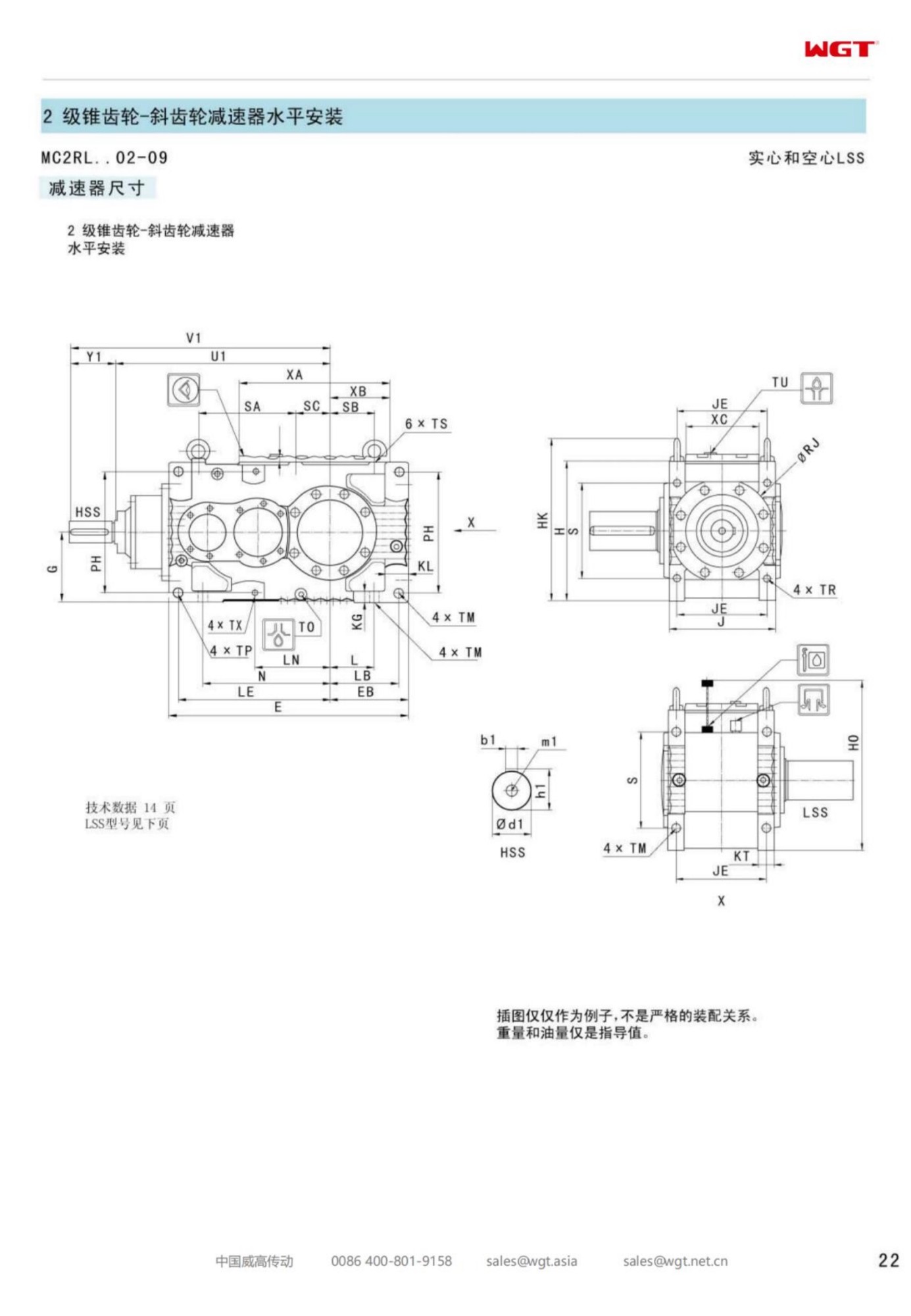
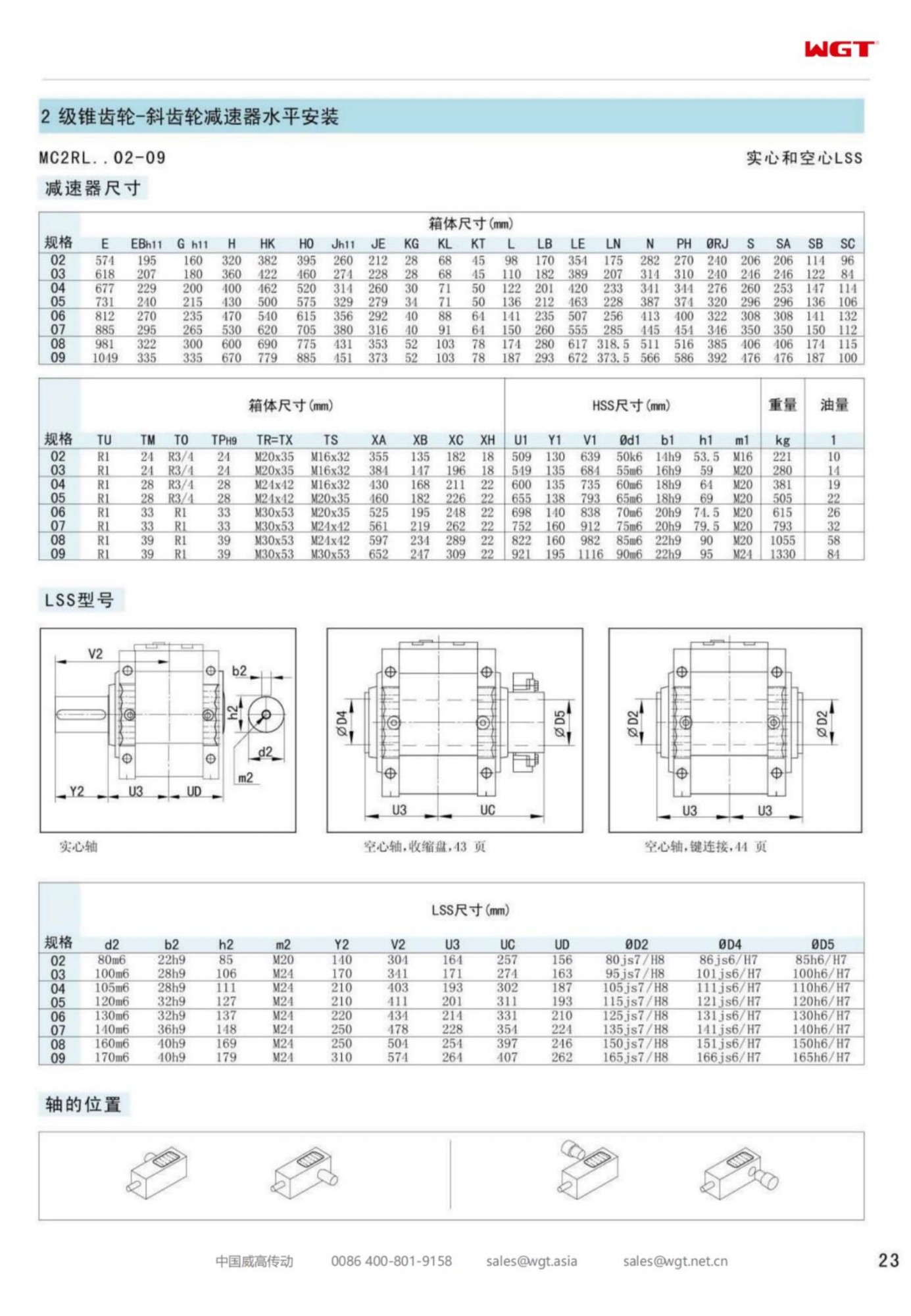
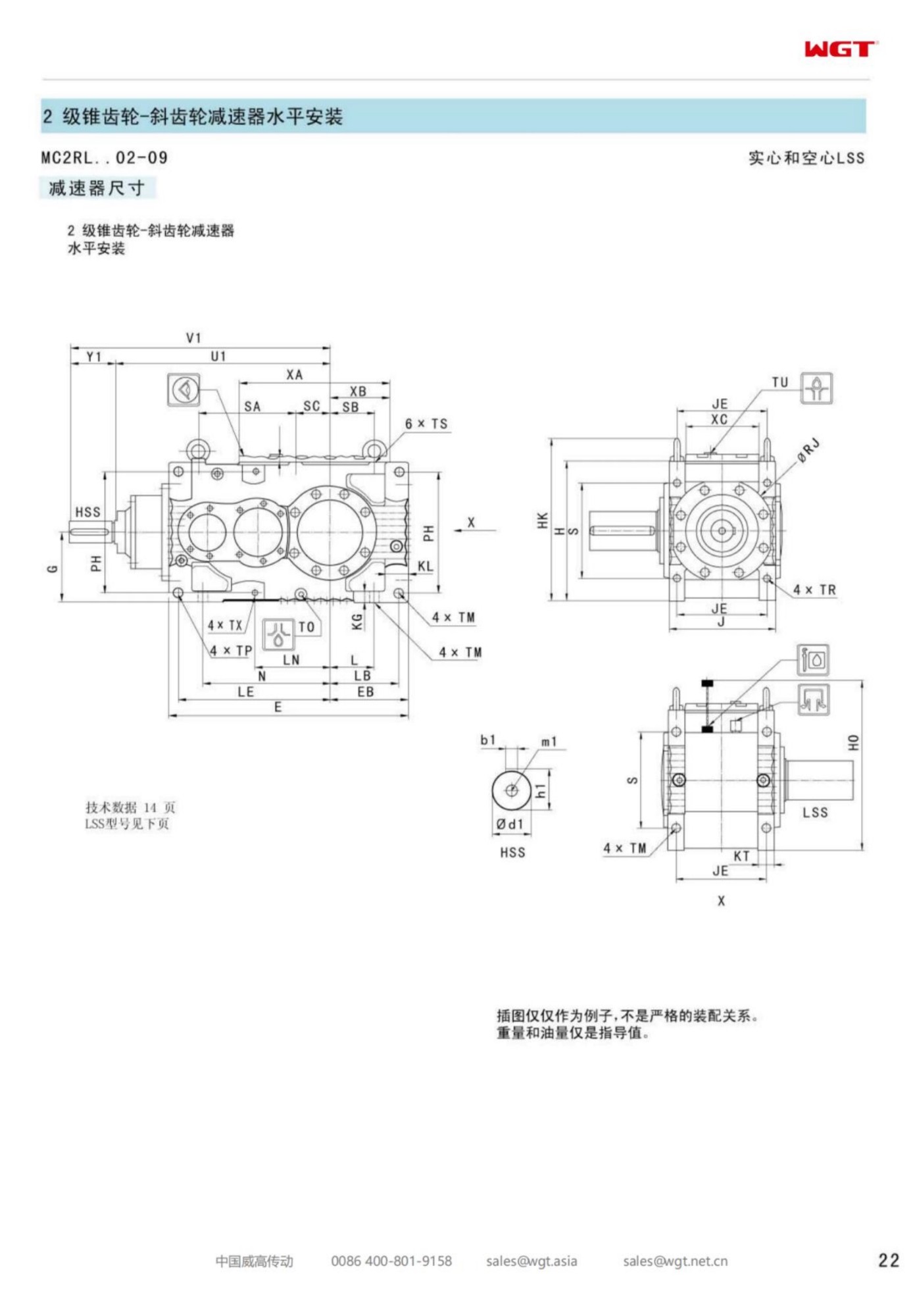
A feed mill runs on a rhythm the market sets: intake trucks queue at harvest, the pellet line runs hot all week, and the finished-goods bay empties by the truckload. Between the cooler and the loading spout sit a handful of conveyors that nobody thinks about until one stops - and when one stops, the press behind it stops too. The MC2RLHT02 right-angle hollow shaft gearbox is the frame this family quotes for those runs: cooler discharge belts, take-away conveyors and the intake screws that keep the weighing hoppers fed.
This page is written for mill managers and maintenance fitters: what hot pellets do to a drive that sits too close, why ingredient dust punishes the wrong seal, how a medicated-batch cleanout shapes the mounting choice, and where the torque-arm arrangement earns its keep on mill steelwork. It closes with the enquiry sheet that turns a good frame into the right one.
Ingredient Dust and the Housekeeping Clock
Flour-grade particles, cracked soybean hulls, vitamin premix and lime flour all share one property: they are fine, they are dry, and they are looking for a warm moving surface to settle on. A gearbox case is exactly that surface, and a breather that inhales mill air turns the inside of the housing into a settling chamber.
The defence is specified at order time rather than swept on the shift: a breather that filters what the mill breathes, a dust lip riding ahead of the output seal so the lip itself never runs in grit, and case joints treated as sealed surfaces instead of ledges. Mills that wipe the case top on the walk keep their paint for years; mills that wait buy paint, seals and a bearing set instead.
Reading the MC2RLHT02 String
The type code looks dense, but each position answers a question a mill engineer asks during the first walk-round.
| MC | Industrial gear unit family sized for continuous plant duty |
| 2 | Two stages inside the case, a helical set and a bevel set |
| R | Right-angle arrangement, the motor turned across the belt line |
| L | Level output axis, laid parallel to the floor it serves |
| H | Hollow output bore that keys straight onto the driven shaft |
| T | Torque-arm bracket, reaction carried by an adjustable stay |
| 02 | Second frame, the light rung of the bore ladder |
The code settles the geometry; the order must settle the duty. Hot discharge temperature, dust loading by product, cleanout chemistry, start frequency through the harvest peak, the stay length available for the arm, and the shaft dimensions at the belt - these decide seals, paint, oil and bracket far more than the kilowatt figure does.
Frame Two at the Light End of the Line
Frame two serves the conveyors that sit between the big machines: the take-away under the crumbler, the discharge off the counterflow cooler, the short lifts into the finished-goods bins. Torque demands are moderate, but the duty is long - the belt rarely runs for less than a full shift, and the harvest weeks never give it a rest.
What the frame offers here is calm. Two slow stages turn a modest shaft at belt speed without drama, the bearings carry a loaded belt across a full shift without warming, and the small oil sump reaches working temperature quickly enough to shed the condensation a cool corner of the mill produces overnight.
Heat and Humidity Off the Cooler
Pellets leave the press hot and carry that heat into the cooler, and the air that leaves the cooler carries moisture. A discharge conveyor bolted too close lives in that plume: the case runs warm, the paint blisters first where the airflow concentrates, and the oil ages faster than the ambient temperature chart admits.
Distance is the cheapest fix, but the order still has to allow for the plume the layout permits. Declare the air temperature at the drive position, not the hall average, and pick the oil grade and seal material against that figure. A drive that runs ten degrees warmer than assumed doubles its oil wear quietly, over months nobody logs.
Torque-Arm Mounting on Mill Steelwork
Old mills have concrete; new lines have steel. Casting foundations beside a take-away belt is rarely practical, and a footed case needs a level pad that the steelwork does not offer. The torque-arm arrangement answers both: the unit hangs on the driven shaft by its bore, and the arm passes the reaction into an adjustable stay pinned to a bracket.
The arrangement asks for honesty in two places. The stay must be long enough that small adjustments do not steepen the angle and overload the pin, and the bracket must be checked for a running load plus a stall, not for a nameplate figure. Arms set up square and pinned through bushed holes stay quiet for years; arms improvised from bracing angle find every looseness the structure owns.
Harvest Weeks and the Start Count
For ten weeks a year the mill runs at a rate the rest of the schedule never sees. Intake conveyors start and stop with truck arrivals, discharge belts follow the cooler's cycling, and every start puts the gearing to work before the oil film has fully recovered.
Start frequency deserves a line in the enquiry, not a guess. Twenty gentle starts a day cost less than five loaded restarts after a blocked chute, and the controls decide which one the drive actually sees. Declaring the real pattern - starts per shift, restart-after-jam practice, whether the belt clears before restart - lets the frame be sized for the season that will test it rather than the one that flatters it.
Medicated Batches and the Cleanout Rule
Feed safety rules turn cleaning into a scheduled event: sequenced flushes, physical cleanouts between medicated runs, and inspection dates written by the mill's own quality plan. A drive in the splash path of that work gets wet on a schedule, and the wet is not always water - flushes can carry oil, fat and enzyme dust in suspension.
The mounting choice either helps or hinders. A hollow-bore unit hung on the shaft presents less ledge to collect residue than a footed case on a plinth, and a paint system chosen for alkaline cleanout survives the wipes that a quality inspector will eventually order. Specify the cleanout chemistry alongside the dust package; they arrive together whether or not the order admits it.
Screws and Take-Away Belts Under the Coolers
The conveyor under a cooler does two jobs at once: it carries hot pellets and it meters them. Starve the belt and the cooler backs up; flood it and the crumbler chokes. The drive therefore lives with a torque trace that follows the pellet curtain - steadier than a crusher, rougher than a bagging line, and sensitive to how the curtain is adjusted.
It is worth walking that adjustment with the drive in mind: curtain height, discharge chute angle, and where fines collect. A discharge tuned once a season keeps the gearbox smooth; one left to drift hands the drive a torque ripple that looks like wear and is really airflow.
Bridging and Choking at the Intake End
Intake screws are honest about one thing: eventually something bridges. A wet load of pulp or a lumpy delivery of broad bran hangs in the hopper, the screw runs empty for a moment and then bites, and the drive meets a torque step that arrives with no warning and no rhythm. Operators call it catching up; the gearbox calls it a shock load.
The order can absorb this without drama. Declare the materials that bridge, how the site clears them, and whether the screw restarts under load or after the hopper is raked down. A frame with margin reserved for the bite runs the same intake for years; a frame sized on the flowing case adds its service factor back the hard way.
Oil Care in a Dry, Dusty Building
Mill air is dry for most of the year, which helps the sump, but the dust is relentless and the building runs warm near the press line. Level checks on the walk, samples on a calendar rather than on suspicion, and a magnet read at every change - three habits that cost minutes and settle arguments.
The one thing a mill sump punishes is neglect during the peak. Harvest weeks are exactly when sampling gets skipped, and exactly when the belt runs hardest. Fix the sample dates to the calendar before the season starts, and the oil will tell the truth about the duty while there is still time to act on it.
Writing the Enquiry for a Feed-Mill Drive
The enquiry that gets this frame right reads like the line it serves: shaft diameter, keyway and seat length at the belt; output speed and the tonnage the discharge actually runs; air temperature at the drive position in August; product list and dust loading; the cleanout chemistry and its frequency; starts per shift at harvest; and the bracket steel available for the arm.
The reply should answer item by item: bore and keyway against the drawing, ratio and belt speed, service factor argued from the curtain surge and the restart practice, seals and breather named for the dust, paint and fasteners chosen for the cleanout, and the arm geometry confirmed against the stay length. One page each way, and the frame arrives matched to the mill rather than to the catalogue.
A Frame Two Through a Harvest Season
The verdict on a mill drive is written in the quiet week after the peak: seals that held through the dust, an oil sample with nothing new in it, arm pins without play, and a cleanout log with no drive-related findings on it. Frames that earn that report were hung on measured shafts, pinned through bushed brackets, and sized against the season's real start count.
Frame two carries its share with slow-turning patience, a filtered breather and a seal package built for ingredient dust. The mill's share is the walk, the calendar and the honest enquiry. Mills that pay both halves run the next harvest on the same drives - and in a business of thin margins, that continuity is worth more than any catalogue figure.
Warm pellets, fine dust and a harvest that will not wait - frame two works the feed line:
- Pellet cooler discharge belt at a poultry feed mill
- Take-away conveyor under a crumbler and grading sieve
- Ingredient intake screw feeding a batch weighing hopper
- Finished-goods transfer belt to the bulk outloading bay
- Premix and micro-ingredient dosing conveyor in the supplement room
- Bagging line feed conveyor at a compound feed plant
Questions We Hear Most Often
Do you offer food-grade or washdown versions?
We can supply food-grade lubricant, FKM (Viton) oil seals and stainless fasteners for washdown areas. These units are common in bakeries, dairies and packaging halls where hygiene and moisture are daily concerns.
How do I install the unit on an inclined conveyor?
Mount the unit with the output shaft horizontal or as recommended for your mounting position, and choose the anti-run-back option so the loaded belt cannot drive the gearbox backwards when power is cut. Tell us the incline angle when you order.
What is the difference between a keyed hollow shaft and a shrink-disc connection?
A keyed hollow shaft is the economical choice for normal torque and easy maintenance. A shrink-disc connection transmits higher torque with zero backlash and no keyway wear, and is preferred for reversing or high-torque duties.
Choosing the Right Frame Size
| Model | Centre distance | Output | Typical duty |
|---|
| M3PSF50 | size 50 | solid shaft, foot | conveyors, feeders |
| M3PSF60 | size 60 | solid shaft, foot | crushers, mixers |
| M3PSF70 | size 70 | solid shaft, foot | ball mills, shredders |
| M3PSF80 | size 80 | solid shaft, foot | kilns, heavy conveyors |
| M3PSF90 | size 90 | solid shaft, foot | mill and kiln drives |
| M3RSF50 | size 50 | solid shaft, foot, right-angle | inclined conveyors, elevators |
| M3RSF60 | size 60 | solid shaft, foot, right-angle | screw classifiers, feeders |
| M3RHF70 | size 70 | hollow shaft, foot, right-angle | agitators, drum drives |
| M3PHT80 | size 80 | hollow shaft, torque arm, parallel | shaft-mounted conveyors |
| M3RHT90 | size 90 | hollow shaft, torque arm, right-angle | heavy shaft-mounted drives |
One family, two layouts. Choose P for a coaxial-in / parallel-out drive train, R when the motor must turn 90 degrees; then pick the shaft type and mounting style that the machine interface needs.
Selection Example: Pellet cooler discharge belt at a poultry feed mill
Take a 15 kW motor at 1465 rpm turning the discharge belt at 55 rpm. The ratio follows directly: 1465 / 55 = 26.6, so a ratio near i=27 comes out of the two-stage right-angle band, and the frame is confirmed against the surge of hot pellets leaving the cooler rather than the steady running rate, with the torque-arm pin and the ingredient-dust package written into the same order line. In this case frame two carries feed-mill duty on a bore keyed to the head shaft, a torque arm pinning reaction into mill steelwork, and seals and paint chosen for ingredient dust and scheduled cleanout. It always comes down to those three figures. Send them over and we confirm the frame, ratio and service factor in writing.
![online gearbox selection system workflow]()
Selection workflow used by our engineers for every quotation.
Real-World Duty Points
Automatic car-wash line
A car-wash equipment builder fits hollow-shaft reducers to its conveyor chains. The compact frame hides inside the wash tunnel, and FKM seal options handle the constant moisture.
Textile dyeing drums
A dyeing machine maker uses speed reducers on its fabric-turning drums. Low vibration (under 20 microns) prevents streaks in the fabric, and the 94-96% efficiency keeps the heat load down in a warm workshop.
![right angle gearbox duty points overview]()
An overview of the duty points this series is built for.
Sample Units Available for Performance Testing
Validating before you commit? Use the WGT Motor & Gearbox Online Selection System to turn your motor data into a model number, and we will quote that exact unit within the day.
Sample units can be supplied for bench or field testing so your team can confirm noise, temperature rise and backlash before a production order. Tell us the test conditions and we will prepare the documentation. Looking for a gearbox for packaging machine? Tell us the duty point and we will confirm the model in writing.