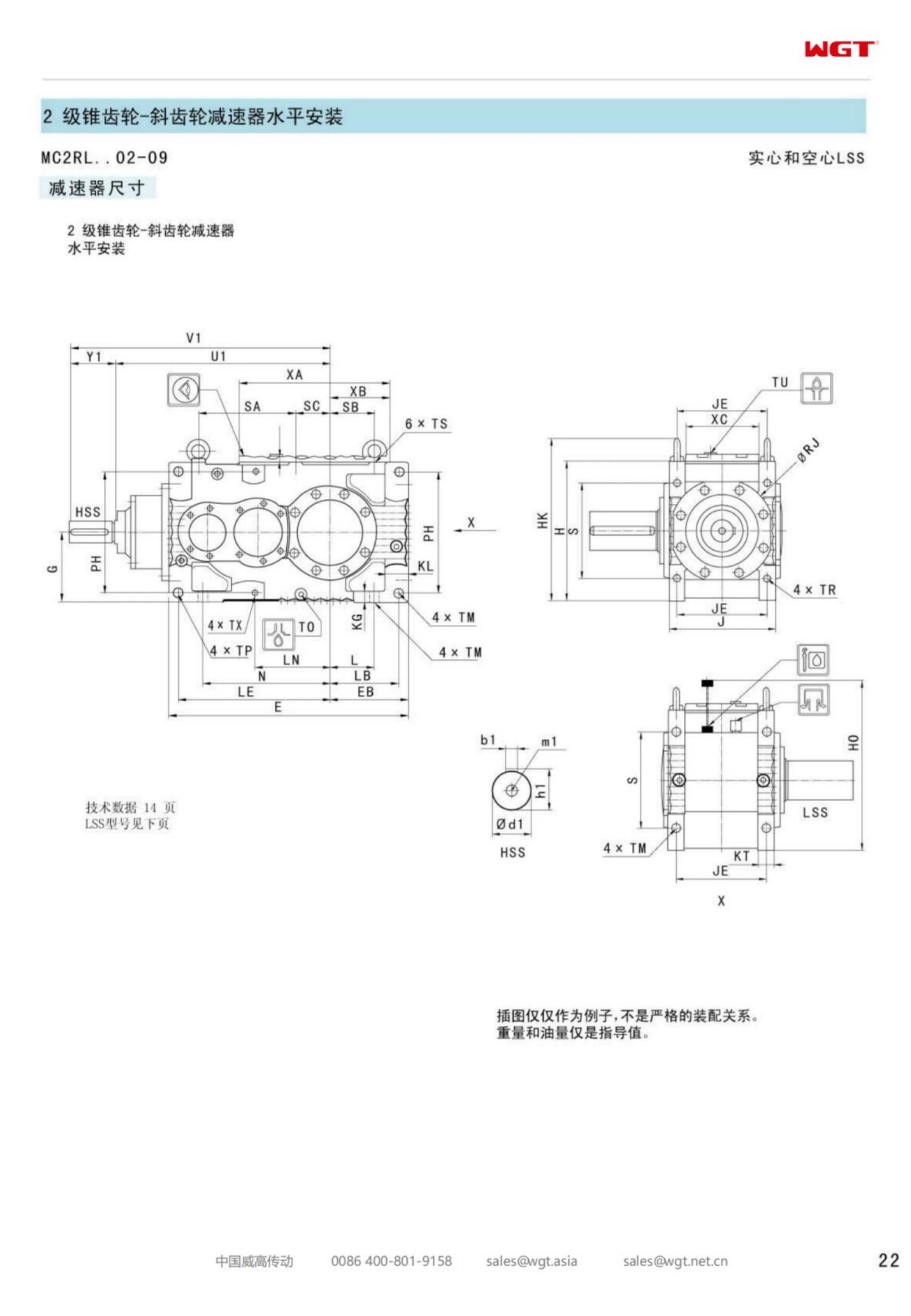
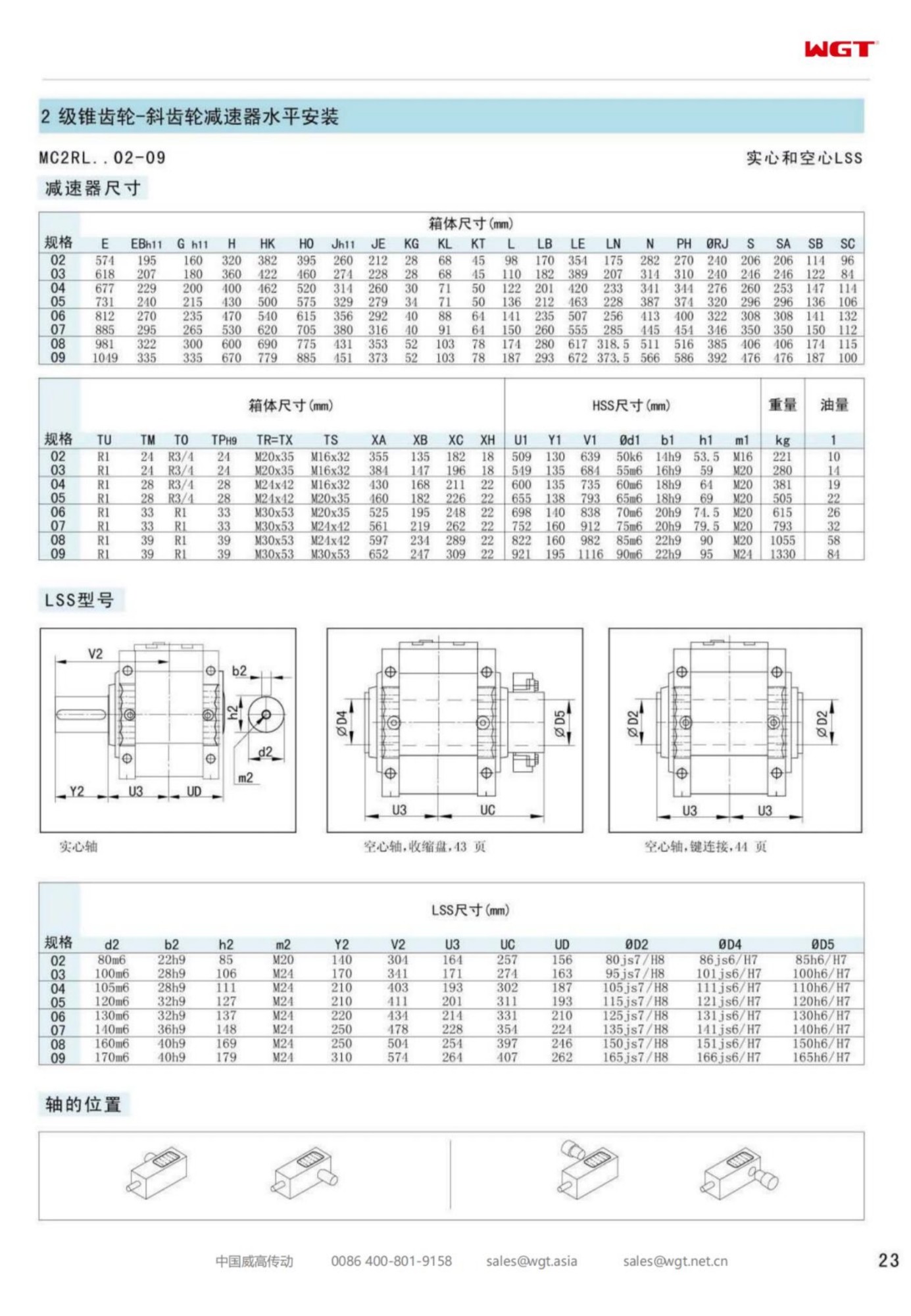
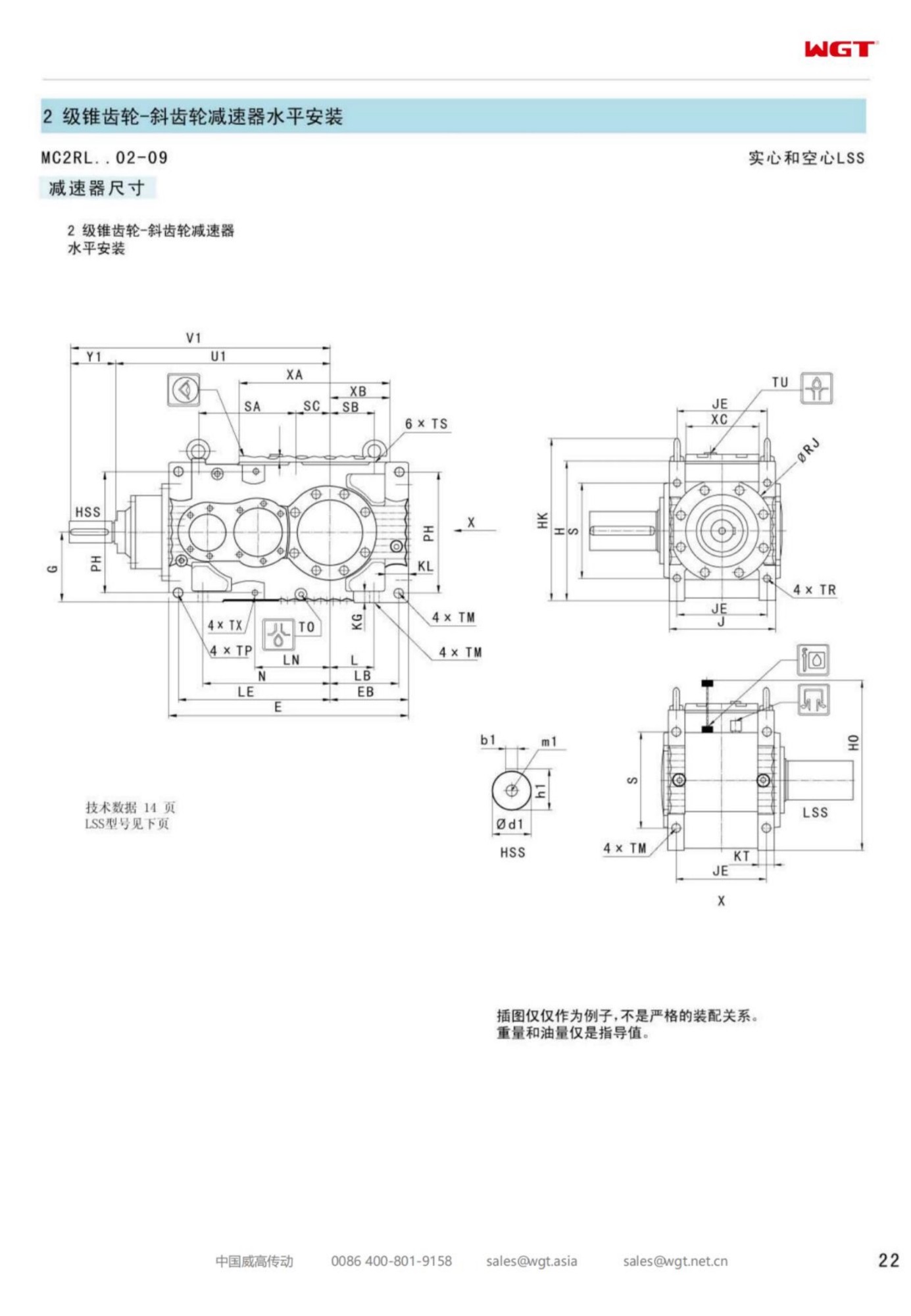
Lime runs hot and it stays hot for a while. Clinker leaving a kiln carries heat that no ambient figure describes, and the belts that take it away live in that glow until the stone cools. The MC2RLHT08 right-angle hollow shaft gearbox is the frame quoted for kiln discharge, cooler take-away and the bulk outloading runs beneath the silos, where a right-angle input keeps the motor clear of the hot side.
These notes are for the engineers who weigh a kiln-side installation: what radiant heat does to an oil chart, how clinker abrasion ends a bore fit early, why a torque arm suits a steel silo structure, and what the enquiry has to say before a frame that size is confirmed.
Heat That Arrives With the Load
Radiant heat is the part of a kiln-side installation that drawings leave out. The case does not need to touch anything hot; it only needs to sit in the line of sight of a discharge chute for the paint to chalk and the seals to age from the outside in.
Treat the drive position as a measurement, not an assumption. Air temperature at the case, radiant load from the chute, and dwell time during a stoppage decide the oil grade and the seal compound. A heat shield of polished sheet, mounted to stand off from the case, is often the cheapest single improvement on the whole installation.
Reading the MC2RLHT08 String
The type code is a specification in shorthand, read left to right.
| MC | Industrial gear unit family for continuous plant duty |
| 2 | Two stages in the case - a helical set working into a bevel set |
| R | Right-angle build, the motor set away from the hot side |
| L | Level output axis along the conveyor or feeder frame |
| H | Hollow output bore keyed onto the head shaft |
| T | Torque-arm bracket reacting into structural steel |
| 08 | Eighth frame, the upper band of the bore ladder |
Letters fix geometry; the order fixes exposure. Clinker temperature, dust character, radiant dwell, silo structure, loading hours and the cold-morning start pattern are all order-stage questions, and all of them change what gets built.
Frame Eight Beside the Kiln
Frame eight is chosen where the tonnage stops being polite: kiln discharge, cooler in-feed, the long belt to the clinker silo, the reclaim run under the pile. Torque is substantial and it arrives in pulses, because a discharge grate delivers material in surges rather than a stream.
The frame answers with a case stiff enough to keep the bevel pattern under load, a bore sized for a head shaft that may already be dressed, and bearings with the capacity to run hot for years rather than comfortably for a season. On a kiln that only stops for refractory work, that is the whole argument.
Clinker Abrasion and the Bore Fit
Clinker is hard, angular and slightly warm, and it finds every gap in a conveyor. The bore fit is where abrasion quietly wins: grit works between bore and shaft, fretting starts, and the assembly that was tight at installation develops a rock that no amount of keying will fix.
Specify a sealed bore with a dust lip on the output side, keep the shaft shoulder clean and dry at assembly, and check the fit at every major service rather than waiting for the noise. Where the shaft has already been dressed, the bore can be sized to suit - a conversation worth having at the enquiry stage rather than at the fitting stage.
Bulk Loading Under a Silo
Outloading is a stop-start duty with a long idle tail. The belt runs for four minutes, the truck moves, the belt runs again. Between trucks the drive sits in cold air under a silo, and in winter that air is the coldest place on site.
Condensation is the quiet risk here, not torque. A breather that filters and a case that reaches working temperature quickly are the practical answers; an oil that stays fluid at the coldest loading morning is the third. Declare the winter figure on the enquiry, and the oil grade stops being a guess made by whoever is on shift when the drum runs out.
Radiant Heat and the Oil Chart
Oil life does not fall in a straight line with temperature. Every additional ten degrees above the reference band roughly halves the oxidation life, which means a drive running twenty degrees hotter than the chart assumes is not slightly worse off - it is a quarter of the way through its oil by the calendar.
Two responses are honest. Move the heat away: shield, stand off, or re-site the drive a metre along the frame. Or accept the temperature and change the oil on condition rather than on hours. What does not work is specifying a standard oil and hoping the kiln is kinder than it is.
Torque Arm on a Steel Silo Structure
Silo structures are designed for vertical load and wind, not for a torsional reaction at mid-height. A torque arm solves the problem by putting the reaction where a member can take it, but the member still has to be picked deliberately.
Choose a main column or a ring beam, keep the stay as short and as square to the reaction as the layout permits, and give the bracket a plate that spreads the load rather than a weld bead on a stiffener. Check the pin and bush at the annual inspection: they are wear items, and they are cheap compared with the crack that starts when a stay is tied to a handrail post.
Dust Collection and the Breather
Lime dust is fine, alkaline and relentless. It blocks a breather faster than aggregate dust because it packs rather than settles, and once the vent is closed the case pressurises on every warm-up.
Route the breather to the clean side of the dust extraction, fit a serviceable filter element, and put it on the walk-round as a named item. In a plant where the extraction hood is the only clean air for metres around, that routing decision is worth more than any seal upgrade.
Winter Loading and Cold Starts
A cold start under a silo loads the drive before the oil has moved. Grease in the pulley bearings is stiff, the belt is short from contraction, and the material in the chute may have frozen into a plug that the belt has to break.
Sequence helps: bring the belt up empty where the control system allows, open the gate after the belt is turning, and let the drive warm before the first loaded run of the day. Where the sequence cannot be changed, the service factor has to carry it - and that is decided on the enquiry sheet, not at the panel.
Wear Checks That Pay
Three checks pay for themselves on a kiln-side drive: bore fit at the shaft, oil condition at the sample point, and arm pin clearance at the bracket. Each takes minutes; each predicts a failure that would otherwise arrive during a campaign.
Add a look at the seal lip and the breather at the same visit. The pattern across a plant is usually consistent: drives that are checked have oil in them and drives that are not have dust. The difference in outcome over five years is not subtle.
Writing the Enquiry for a Kiln-Side Drive
The enquiry that gets this frame right describes the exposure: clinker temperature at the discharge, measured air temperature at the drive, radiant dwell during stoppages, dust loading, belt speed and centres, shaft condition, silo structure available for the stay, loading hours and the coldest morning the site records.
The reply should answer as a system: bore and key against the drawing, ratio and belt speed, service factor defended on the surge case, seals and breather for alkaline fines, oil grade for the measured temperature, arm geometry drawn against the structure, and paint chosen for the radiant load. Then the unit arrives as part of the kiln line.
A Frame Eight Through the Refractory Cycle
Kilns are judged between relines. A drive that lasts the campaign is one whose oil was sampled, whose bore stayed tight, and whose bracket did not crack - plain maintenance, applied consistently, on a frame that was specified honestly in the first place.
Frame eight carries its share with a stiff case, a bore that tolerates a dressed shaft and bearings that treat heat as normal. The rest is the plant's half of the bargain: measure the temperature, clean the vent, and tell the supplier what the kiln actually does.
Radiant heat, alkaline dust and a shaft that may be worn - frame eight works the kiln side:
- Kiln discharge belt at a lime and clinker works
- Cooler in-feed conveyor behind a rotary kiln
- Clinker transfer belt running to the storage silo
- Reclaim belt under a clinker stockpile
- Bulk outloading belt beneath finished product silos
- Additive feed conveyor at the raw meal proportioning station
Selection Example: Clinker transfer belt under a kiln discharge
Take a 45 kW motor at 1485 rpm turning the belt at 38 rpm. The ratio follows directly: 1485 / 38 = 39.1, so a ratio near i=39 is selected from the two-stage right-angle band, and the frame is confirmed against the delivered clinker temperature and the surge pattern of the discharge grate rather than the mean tonnage. In this case frame eight works the kiln side on a sealed bore, a breather routed to clean air, an oil grade chosen for the measured case temperature, and a stay taken into a silo column. The same three numbers - motor speed, target output speed, required torque - are all you need; our engineers (or the online selector below) cross-check the service factor for your duty cycle.
![gear reducer selection flow chart - ratio and frame size]()
Figure: from motor data to a confirmed gearbox model in four steps.
Common Models in the M3 Series
| Model | Centre distance | Output | Typical duty |
|---|
| M3PSF50 | size 50 | solid shaft, foot | conveyors, feeders |
| M3PSF60 | size 60 | solid shaft, foot | crushers, mixers |
| M3PSF70 | size 70 | solid shaft, foot | ball mills, shredders |
| M3PSF80 | size 80 | solid shaft, foot | kilns, heavy conveyors |
| M3PSF90 | size 90 | solid shaft, foot | mill and kiln drives |
| M3RSF50 | size 50 | solid shaft, foot, right-angle | inclined conveyors, elevators |
| M3RSF60 | size 60 | solid shaft, foot, right-angle | screw classifiers, feeders |
| M3RHF70 | size 70 | hollow shaft, foot, right-angle | agitators, drum drives |
| M3PHT80 | size 80 | hollow shaft, torque arm, parallel | shaft-mounted conveyors |
| M3RHT90 | size 90 | hollow shaft, torque arm, right-angle | heavy shaft-mounted drives |
The table below shows the M3 industrial range: P builds are all-helical on parallel axes, R builds add a bevel input stage for a right-angle drive; S / H describe the low-speed shaft and F / T the mounting.
Application Cases
Pet-food extruder feeder
A pet-food plant chose reducers for the feeder screws ahead of its extruders. Steady torque at variable output speed keeps the kibble size consistent, and washdown sealing protects the unit during sanitation shifts.
Ceramic tile press feeder
A ceramic tile producer fitted reducers to press feeders. The dusty environment is handled by sealed housings, and the stable low-speed output stops the tile blanks shifting before pressing.
![industrial gearbox applications - conveyor mixer crusher wastewater]()
Figure: typical industries that use the WGT S-series gear reducers.
Frequently Asked Questions
How is the unit protected against dust and water ingress?
Housings are sealed to IP55 as standard with NAK oil seals and gasketed covers. Heavy dust, washdown chemicals or steam cleaning call for the higher protection option, which we specify together with the correct lubricant.
Do you support commissioning and after-sales service?
Every shipment includes an installation manual and a test record. Our engineers answer commissioning questions by e-mail or video call, and spare seals, bearings and shafts remain traceable to your original order for years afterwards.
What is a service factor and which value should I use?
The service factor multiplies your required torque to cover shock and duty class: around 1.0 for uniform conveyors, 1.25 for moderate shocks and 1.5 or higher for crushers, shredders and reversing drives. Tell us the driven machine and we apply the correct value before quoting.
Drawings, Ratings and Test Records on Request
Need the paperwork first? Not sure which model fits? Try our online WGT Motor & Gearbox Online Selection System to match motor power, ratio and mounting in one minute.
We issue dimension drawings, rating tables and sample test records in English for your approval package, before the order is placed. Engineering and purchasing sign-off without delays. Looking for a gearbox for belt conveyor? Tell us the duty point and we will confirm the model in writing.