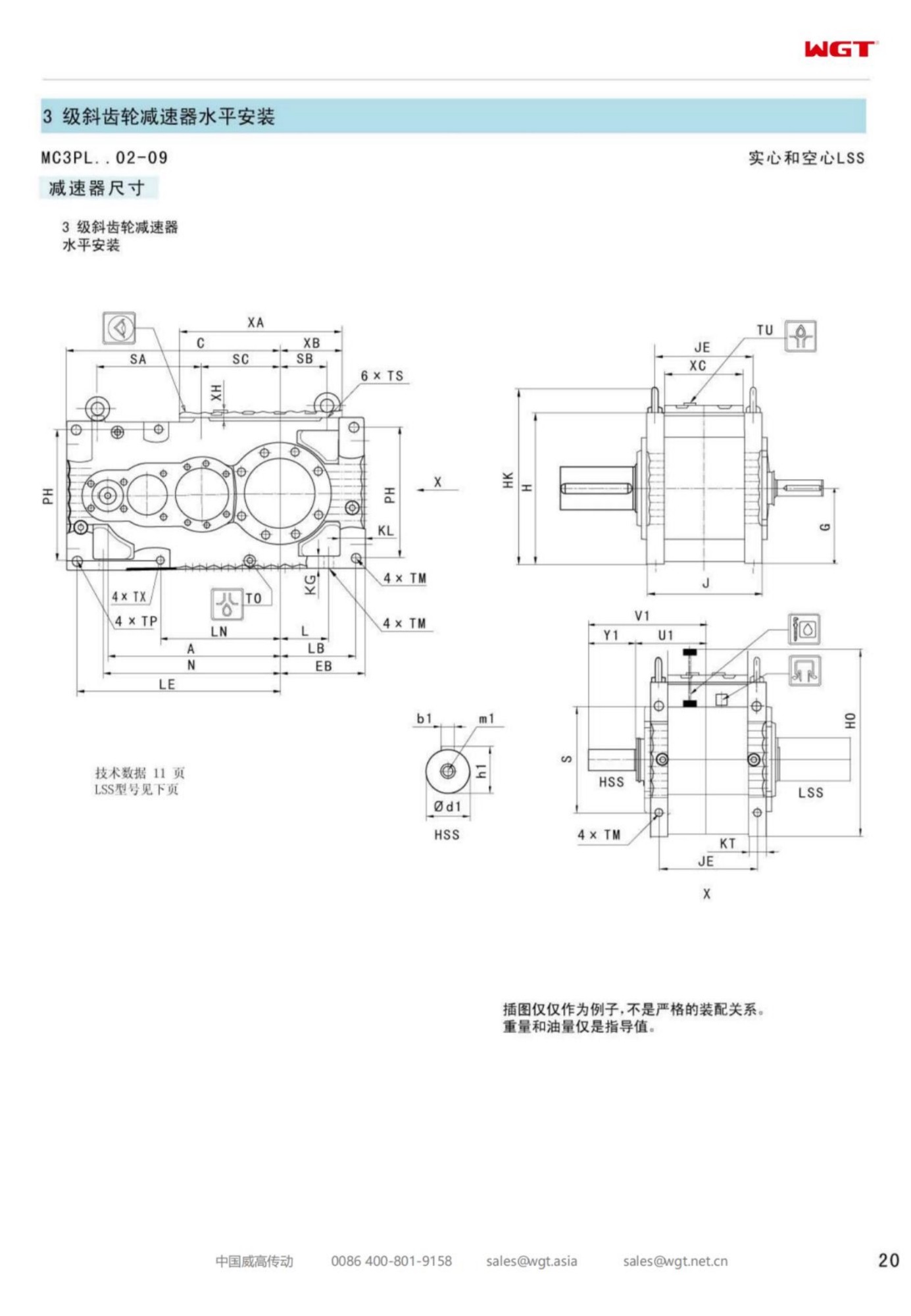
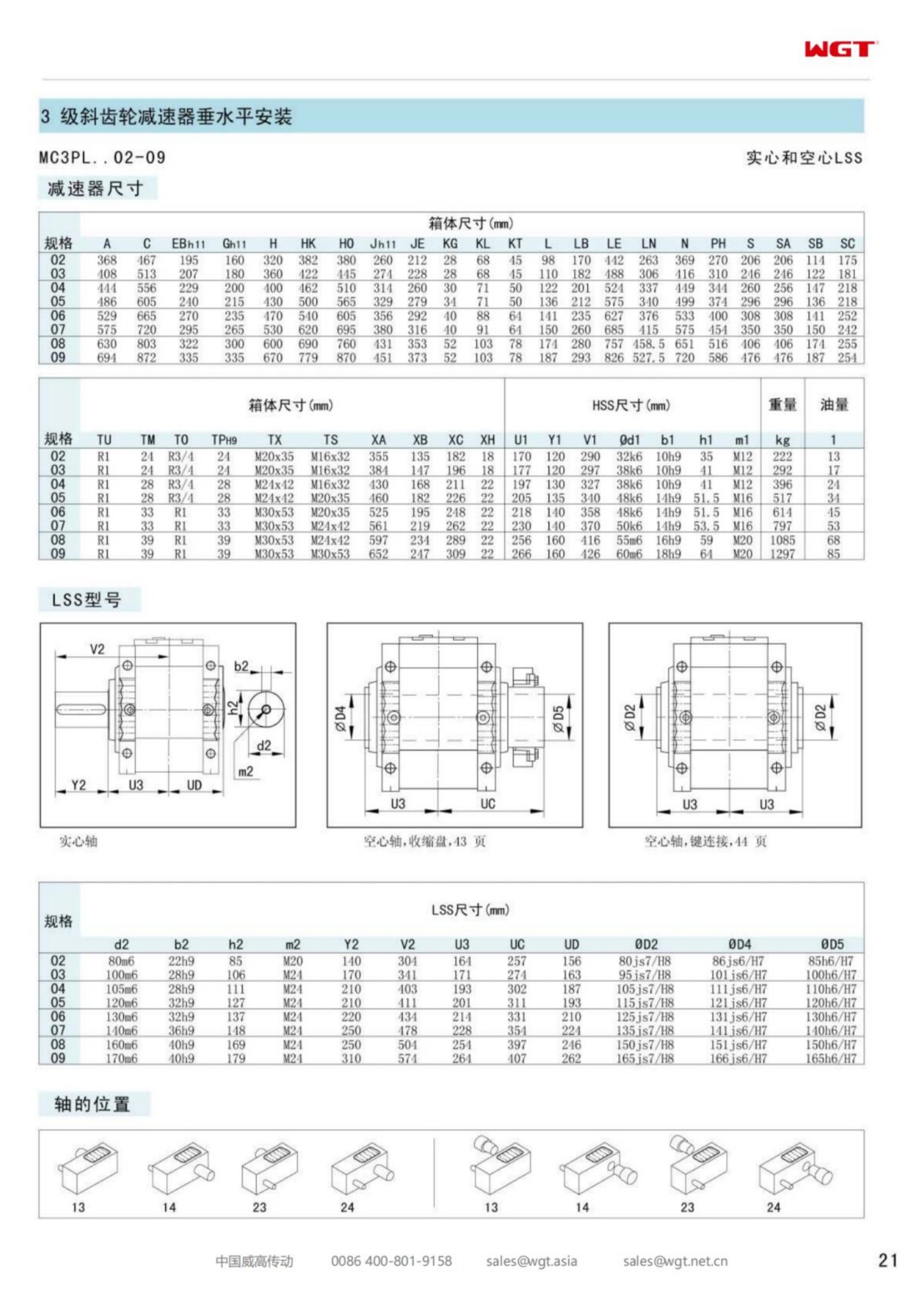
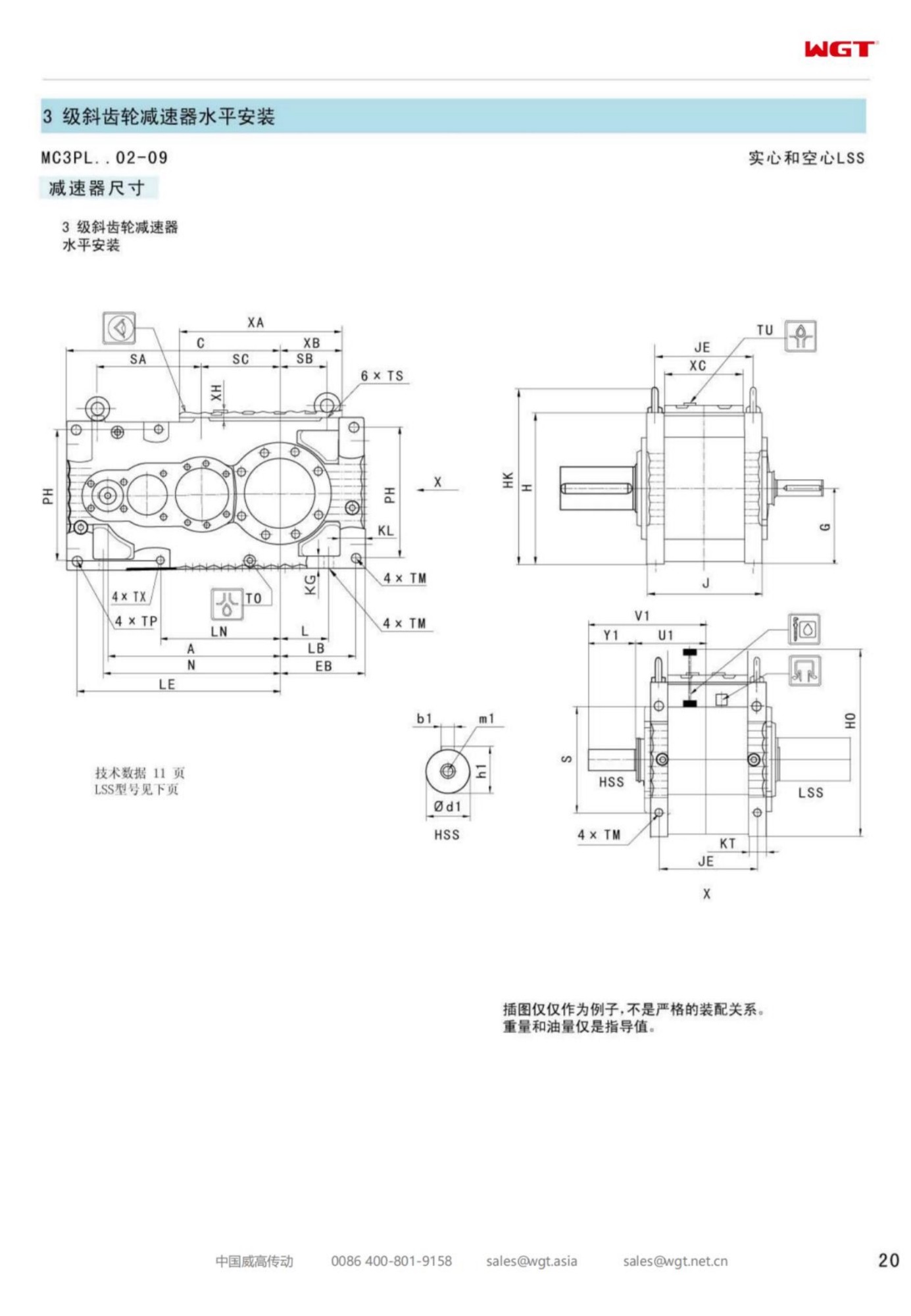
A pellet line has a rhythm: the press runs, the cooler breathes, the discharge belt carries warm pellets out in measured surges, and every pause in that chain backs up a press that will not wait long. The cooler discharge belt turns slowly under a stream of fines and warm dust, and its drive sits at the head end in air that never quite cools. The MC3PLHF04 three-stage parallel shaft gearbox takes that seat: a foot-mounted case, a hollow output bore over the head shaft, and three helical stages between the motor and the pulley.
Below: what the string fixes, how the build suits a pelleting line, and what the plant states on the enquiry so the order closes in one pass.
Hot Pellets Do Not Wait
Discharge duty is about continuity more than peak load. The belt may pause with the press, but when it runs it carries the full cooler output, and the fines that ride along with the pellets find their way into every seal and breathes through every joint. The drive is sized for the continuous rate with a margin that covers a full-belt restart.
Reading the MC3PLHF04 Designation
The code answers the mechanical questions up front.
| MC | Industrial gear unit family for continuous plant duty |
| 3 | Three reductions inside a single case |
| P | Parallel-shaft helical build along the belt line |
| L | Level output axis into the pulley shaft |
| H | Hollow output bore, keyed onto the head shaft |
| F | Foot mounting on a prepared base |
| 04 | Mid frame of the three-stage band |
A foot-mounted hollow-bore build keeps the drive bolted to the belt frame line while the pulley shaft does the carrying - no bedplate drama, no low-speed coupling, and a belt change that stays a belt change.
Parallel Shafts Beside the Cooler Line
Pellet lines are compact by design, and every metre across the line is already spoken for. A parallel build keeps the motor behind the pulley inside the machine envelope, so guarding stays simple and the operator's walkway survives. The layout also leaves the drive accessible from one side, which is where the daily inspection happens.
Foot-Mounted Hollow Shaft in Practice
With the bore carrying the head shaft, the base takes only weight and reaction. The practical requirements are unglamorous: a flat base, honest shimming, and a shaft clamp that is torqued and marked so belt-tension work never disturbs it. Done once, the alignment never has to be chased again.
Fines, Dust and an Explosive Atmosphere
Wood dust in the right concentration is not a cleanliness issue but a safety one. Around the discharge end the drive should be specified and sited with that in mind: enclosures closed and sealed, surfaces that do not trap dust, and temperature behaviour confirmed so the case never becomes the hot spot. The plant's zone rules decide the details; the gearbox specification should follow them, not precede them.
Ambient Heat at the Discharge End
Warm pellets keep the discharge air above room temperature for most of the shift. The thermal check belongs at that true ambient, and it is usually a formality for the mid-band frame - but it is a formality worth doing in writing, because summer conditions are exactly when a marginal case would show itself.
The Start-Stop Rhythm of a Pellet Line
Press pauses and cooler surges make the discharge duty a start-stop duty. Each restart asks for breakaway torque against a loaded belt, and the frame carries it if it was selected that way. Stating the true restart habit on the enquiry - jog first, or start loaded - keeps the sizing honest.
Three Stages and the Slow Discharge Belt
Discharge belts run slowly because pellets are fragile when warm. A deep ratio from a four-pole motor sits comfortably in the three-stage band, with each mesh in reasonable geometry and the case no longer than the machine spacing allows. The alternative - forcing the ratio into two stages - buys a bigger case and a harsher input stage for no benefit.
Sealing Against Wood Dust
Wood dust is fibrous, dry and persistent. The output seal and breather should be specified for it: a protected seal environment, a breather placed high and away from the dust stream, and inspection covers that seal properly after every oil check. Pellet plants that respect these details report years of uneventful service.
Ratio and Frame From the Cooler Load
The cooler sets the rate, the belt speed follows the pellet residence time, and the pulley diameter follows the tension - so the output speed is known before selection begins. Motor speed over that figure gives the ratio, and the continuous cooler rate with the restart margin gives the frame. Nothing in that chain needs a guess.
What the Pellet-Plant Enquiry Needs
One message should carry the head shaft diameter and keyway, the belt speed, the motor frame, the true ambient at the discharge end, the restart habit, and the zone or dust rules the site applies. A photograph of the drive seat closes the last gap, and the quotation arrives complete.
HF04 Over a Pelleting Campaign
A pelleting campaign is measured in months of continuous running between die changes, and the discharge drive should be the last thing anyone thinks about during one. A foot-mounted, hollow-bore, three-stage unit at the mid band gives exactly that: sized past the restart, sealed past the fines, and bolted where the belt frame wanted it all along.
Warm pellets, fine dust and a belt that pauses with the press - three stages keep pace:
- Pellet cooler discharge belt at a biomass plant
- Cooler transfer conveyor to the sieving station
- Sawdust and fines return belt to the press floor
- Pellet load-out belt at the dispatch silo
- Cooler feed conveyor from the press line
- Bagging line infeed belt at a pellet plant
Selection Example: Pellet cooler discharge belt at a biomass plant
Take a 15 kW motor at 1470 rpm turning the head pulley at 16 rpm. The ratio follows directly: 1470 / 16 = 91.9, so a ratio near i=92 is taken from the three-stage parallel band, and the service factor is argued on the loaded restart after a press pause rather than on the continuous cooler rate. In this case frame four keeps the discharge pace from a base-mounted case, hangs on the head shaft through a keyed bore, and seals for the wood dust the cooler never stops making. The same three numbers - motor speed, target output speed, required torque - are all you need; our engineers (or the online selector below) cross-check the service factor for your duty cycle.
![gear reducer selection flow chart - ratio and frame size]()
Figure: from motor data to a confirmed gearbox model in four steps.
Common Models in the M3 Series
| Model | Centre distance | Output | Typical duty |
|---|
| M3PSF50 | size 50 | solid shaft, foot | conveyors, feeders |
| M3PSF60 | size 60 | solid shaft, foot | crushers, mixers |
| M3PSF70 | size 70 | solid shaft, foot | ball mills, shredders |
| M3PSF80 | size 80 | solid shaft, foot | kilns, heavy conveyors |
| M3PSF90 | size 90 | solid shaft, foot | mill and kiln drives |
| M3RSF50 | size 50 | solid shaft, foot, right-angle | inclined conveyors, elevators |
| M3RSF60 | size 60 | solid shaft, foot, right-angle | screw classifiers, feeders |
| M3RHF70 | size 70 | hollow shaft, foot, right-angle | agitators, drum drives |
| M3PHT80 | size 80 | hollow shaft, torque arm, parallel | shaft-mounted conveyors |
| M3RHT90 | size 90 | hollow shaft, torque arm, right-angle | heavy shaft-mounted drives |
The table below shows the M3 industrial range: P builds are all-helical on parallel axes, R builds add a bevel input stage for a right-angle drive; S / H describe the low-speed shaft and F / T the mounting.
Application Cases
Glass batch charger
A float-glass line drives its batch charger with units. Abrasive raw material demands a robust drive, and the case-hardened gears show minimal wear after years of continuous operation.
Battery slurry mixer
A battery materials plant uses reducers on slurry mixers. High shear loads are absorbed by the 42CrMo shafts, and the 94-96% efficiency keeps motor sizing and running cost down.
![industrial gearbox applications - conveyor mixer crusher wastewater]()
Figure: typical industries that use the WGT S-series gear reducers.
Frequently Asked Questions
What ambient and altitude limits apply?
The standard build suits -10 to +40 degrees C at altitudes below 1,000 m with the supplied oil grade. Colder sites get synthetic oil and heaters; high altitudes or hot climates may call for the next frame size or forced cooling.
Do you supply the unit with an electric motor fitted?
We deliver the bare gear unit with an input suitable for your motor, or as a complete motor-gearbox assembly aligned and tested at the works. For upgrade projects many customers keep the existing motor and order the unit alone.
How is the gear unit protected against dust and moisture?
Housings are gasket-sealed with labyrinth or lip seals at both shafts as standard. Dusty plants, washdown areas and outdoor installations are covered by coating and sealing options specified together with the order.
Send the Nameplate - Get the Equivalent Frame
Matching an existing installation? Not sure which model fits? Try our online WGT Motor & Gearbox Online Selection System to match motor power, ratio and mounting in one minute.
Photograph the nameplate or note the model and ratio. We identify the equivalent frame, confirm the torque margin and return a quotation with the outline drawing - usually within one working day. Looking for a gearbox for crusher? Tell us the duty point and we will confirm the model in writing.