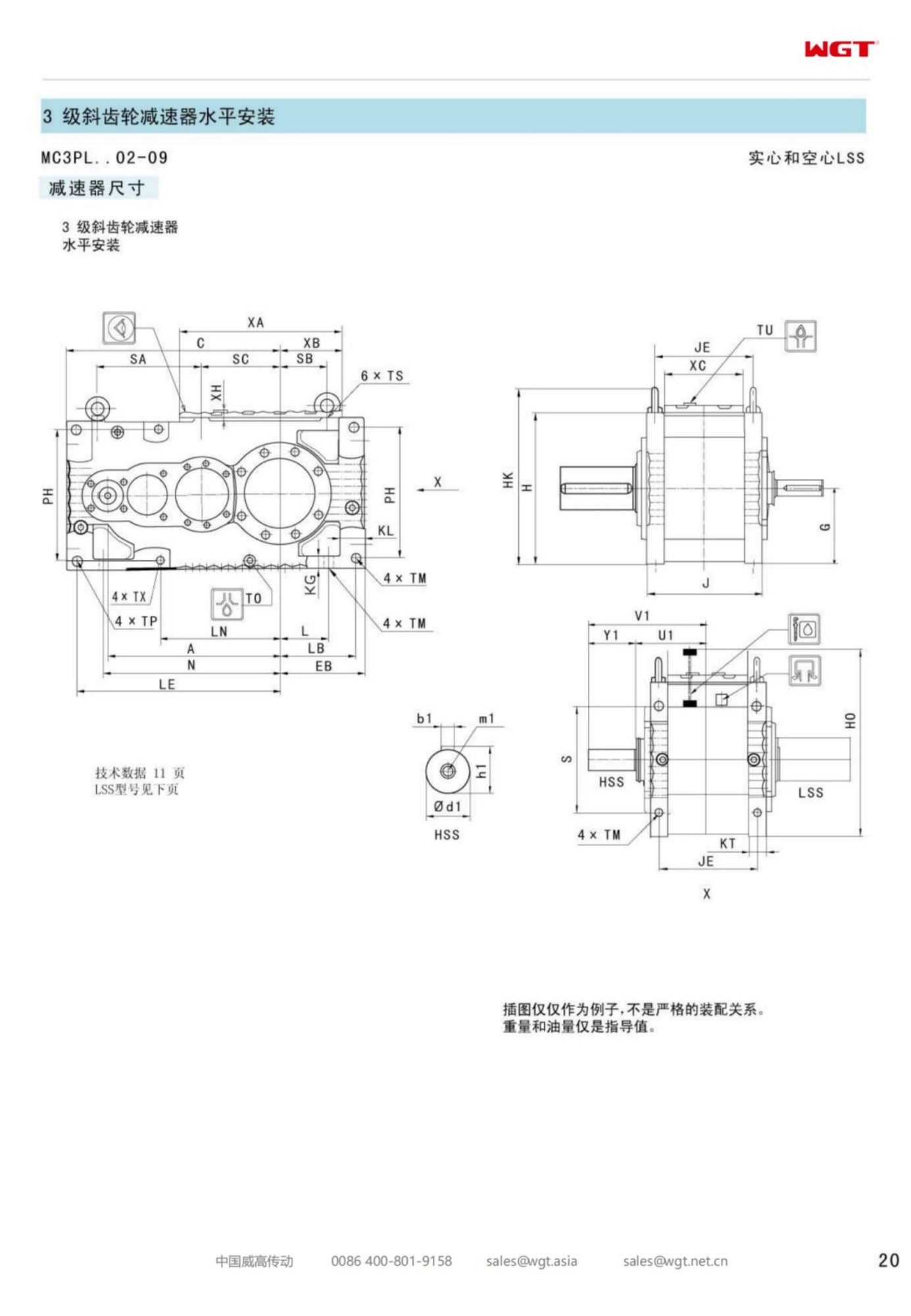
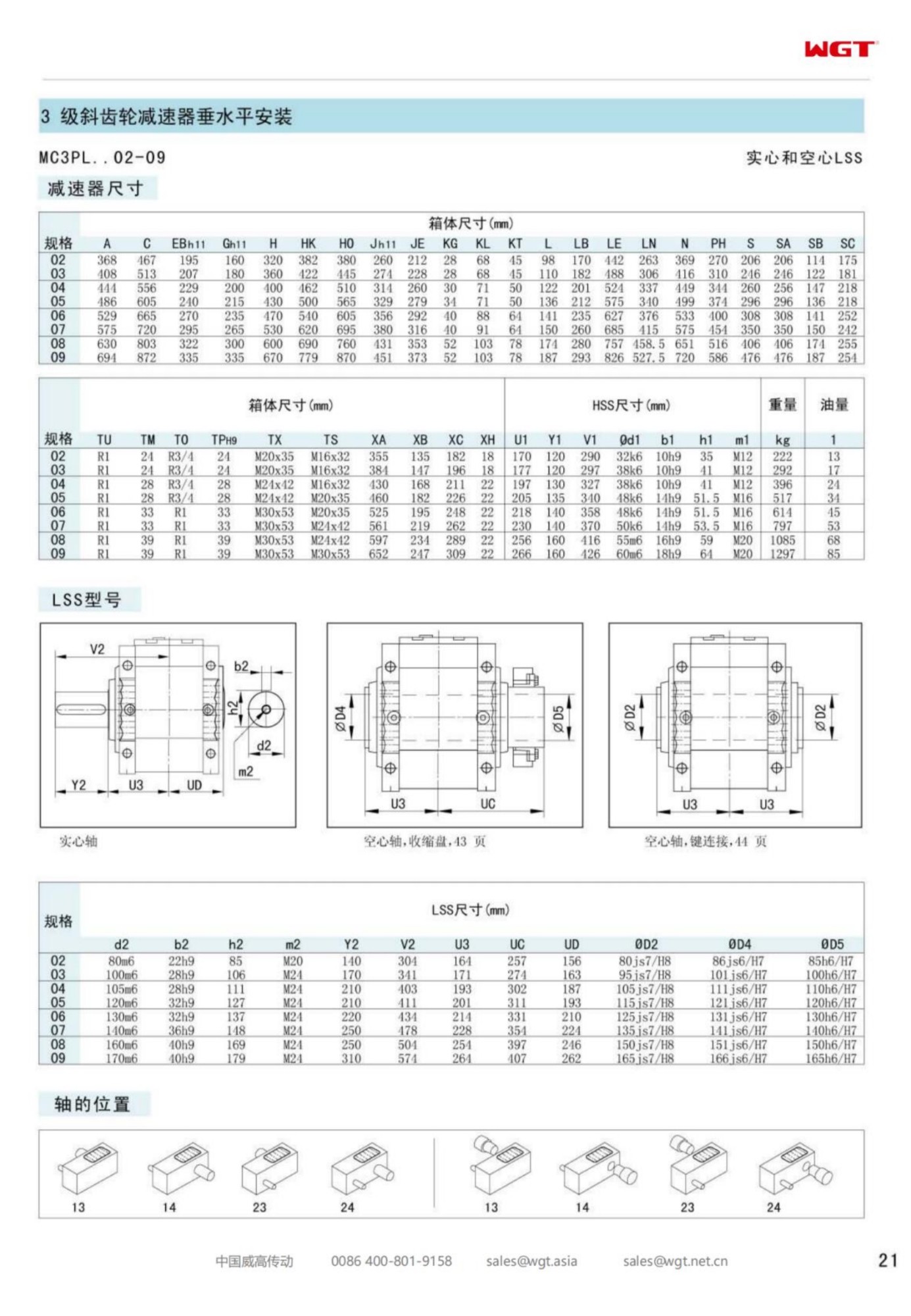
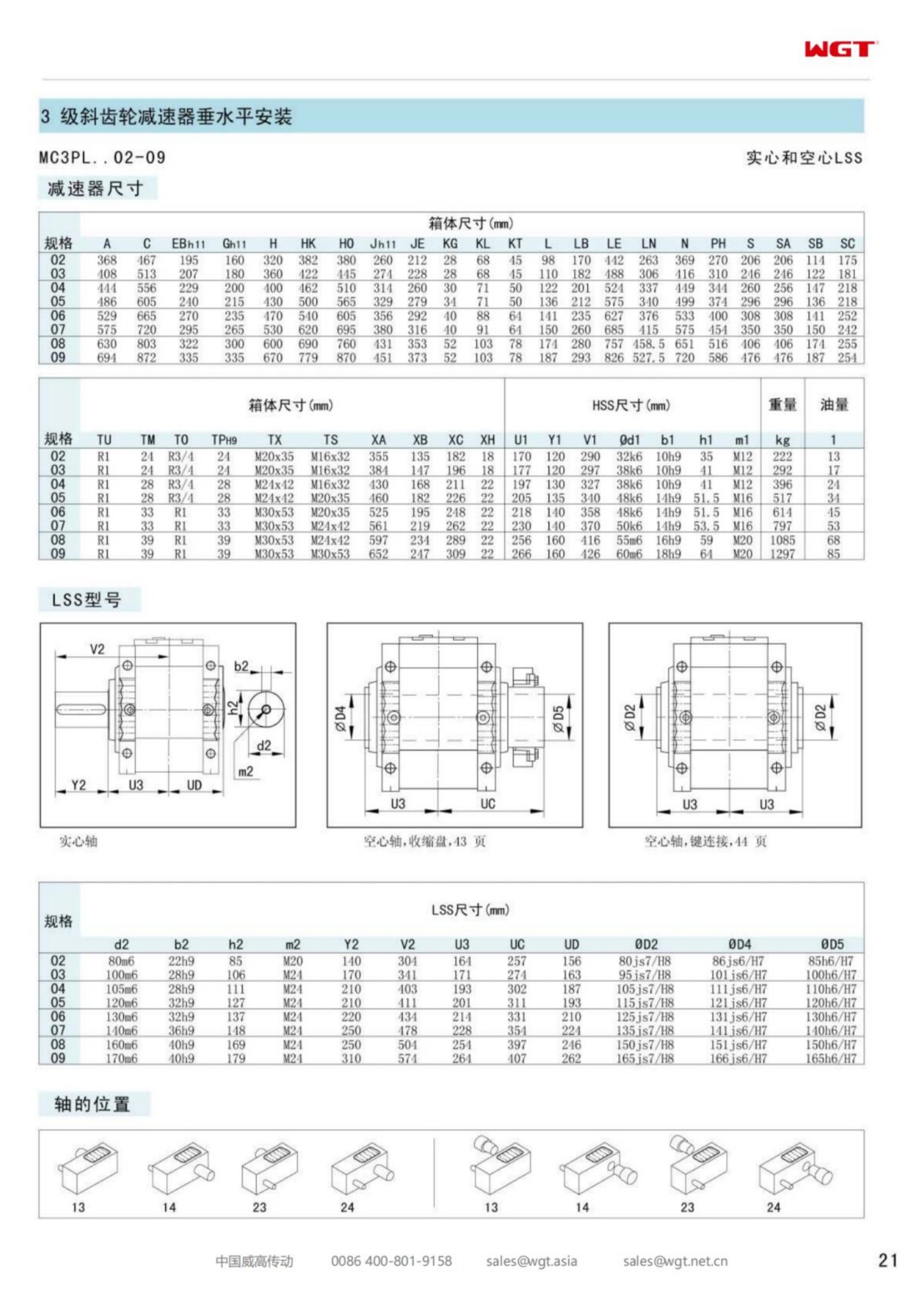
Cullet is honest material with sharp edges: it flows, it cuts, it finds every seal on a sorting line, and it never stops being abrasive. The belt that carries it through a recycling plant runs through dust, occasional wash water and feed that arrives with whatever the collection stream brought along. The MC3PLHF05 three-stage parallel shaft gearbox drives that belt from the head shaft: a foot-mounted case, a hollow bore over the pulley shaft, and three helical stages turning motor speed down to belt pace.
The sections below unpack the designation, the mounting logic and the enquiry content that lets a sorting-line drive be ordered once.
Cullet Cuts: Glass Recycling Duty
Sorting lines live on tonnage, and cullet belts run continuous shifts with contaminated, unpredictable feed. The drive sees steady slow torque with irregular shocks as glass packs against a scraper or a piece of contamination goes through. Sizing therefore starts from the worst credible moment, not the average one.
The MC3PLHF05 String Explained
Every position of the code settles a layout choice.
| MC | Industrial gear unit family for continuous plant duty |
| 3 | Three stages of reduction in one housing |
| P | Parallel-shaft helical gearing, coaxial input and output |
| L | Level output axis into the pulley shaft |
| H | Hollow output bore over the belt head shaft |
| F | Foot mounting on the line base |
| 05 | Mid frame of the three-stage band |
The practical reading: the case bolts to the line base, hangs itself on the head shaft through the bore, and needs no coupling alignment for the rest of its working life.
A Hollow Bore for the Belt Head Shaft
Carrying the pulley shaft through the bore removes the low-speed coupling, the guard over it, and the alignment session every belt change would otherwise need. On a line where belts are changed as consumables, that is the difference between a two-hour job and a two-day one.
Foot Mounting Without a Torque Arm
Foot mounting takes the reaction into the base instead of into structure behind the shaft. It suits lines whose bases are substantial and whose steelwork offers no convenient arm bracket - the common case on sorting lines built from standard conveyor modules. The requirements are flatness and honest shimming; a twisted case punishes its own output seal.
Abrasive Fines and the Housing
Glass dust works into breathers, covers and seal lips with unfailing patience. Specification answers are simple: a breather sited away from the dust stream, covers that seal after every service, and an oil regime short enough to find any intrusion early. A plant that samples oil quarterly catches a failed cover before the gearing does.
Shock Loads From Contaminated Feed
Every sorting line has the shift where something wrong goes through. The frame and its shaft set exist to absorb those minutes: the service factor is chosen with contamination in mind, and the shear features on the line - scraper stalls, jammed chutes - are treated as design cases rather than surprises.
Wet Glass, Wash Water and the Seals
Plants that wash down belts ask their seals to work in slurry. That changes the specification: a protected seal arrangement rather than a bare lip in the spray path, a breather that cannot ingest water, and drain positioning that suits a hose-down routine. Saying so on the enquiry costs one line and saves the seal.
Three Stages on a Sorting Line Belt
Sorting belts run slowly and steadily, which lands the ratio in the deep three-stage band. Three meshes share the reduction, the case stays inside the machine spacing, and the train turns with the smoothness that keeps glass from being flung at the transfer points.
Case Strength and Paint in a Recycling Hall
Recycling halls are rough on paint and rougher on anything that sticks out. The case should be specified with a finish suited to the hall's chemistry, lifting lugs that survive the plant's actual rigging, and inspection points facing the walkway the line actually has.
Working Out the Ratio From the Belt
Belt speed comes from the sorting rate the line must hold, and pulley diameter from the tension, so the output speed is arithmetic before any catalogue is opened. Motor speed over that figure gives the ratio; the continuous rate plus the contamination margin gives the frame.
Assembling the Enquiry for a Cullet Drive
The complete first message carries the head shaft diameter and keyway, belt speed, motor frame, ambient and wash-down regime, and the plant's restart assumptions. A photograph of the base and shaft entry finishes it. That enquiry returns one quotation, and the drive arrives ready to hang.
The Mid Band on a Glass Line
Mid-band frames suit the belt widths sorting lines actually run: enough case to sink continuous duty in a harsh hall, enough shaft to shrug off contaminated feed, and a mounting that turns belt changes into routine. That is the quiet argument for a hollow-bore, foot-mounted three-stage build on every line that handles glass.
Glass that cuts, grit that bites and feed that surprises - three stages take it:
- Glass cullet belt conveyor on a sorting line
- Cullet transfer belt ahead of the crusher
- Optical sorting line infeed conveyor
- Contaminated-glass takeaway belt at a MRF
- Cullet load-out conveyor to the container bay
- Fines discharge belt under a glass screen
The M3 Series at a Glance
| Model | Centre distance | Output | Typical duty |
|---|
| M3PSF50 | size 50 | solid shaft, foot | conveyors, feeders |
| M3PSF60 | size 60 | solid shaft, foot | crushers, mixers |
| M3PSF70 | size 70 | solid shaft, foot | ball mills, shredders |
| M3PSF80 | size 80 | solid shaft, foot | kilns, heavy conveyors |
| M3PSF90 | size 90 | solid shaft, foot | mill and kiln drives |
| M3RSF50 | size 50 | solid shaft, foot, right-angle | inclined conveyors, elevators |
| M3RSF60 | size 60 | solid shaft, foot, right-angle | screw classifiers, feeders |
| M3RHF70 | size 70 | hollow shaft, foot, right-angle | agitators, drum drives |
| M3PHT80 | size 80 | hollow shaft, torque arm, parallel | shaft-mounted conveyors |
| M3RHT90 | size 90 | hollow shaft, torque arm, right-angle | heavy shaft-mounted drives |
All frames in the table belong to one industrial family. P = helical parallel-shaft, R = bevel-helical right-angle; the low-speed shaft is solid (S) or hollow (H), mounted on feet (F) or a torque arm (T).
Selection Example: Glass cullet belt conveyor on a sorting line
Take an 11 kW motor at 1450 rpm driving the head pulley at 18 rpm. The ratio follows directly: 1450 / 18 = 80.6, so a ratio near i=80 is drawn from the three-stage parallel band, and the frame is confirmed against the shock of contaminated feed going through rather than against the steady sorting rate. In this case frame five runs the cullet line from a case bolted to the line base, carries the pulley shaft on a hollow bore, and specifies its seals for glass fines and wash water. That single division gives the catalogue ratio; the service factor for your duty class is then applied to the torque, and the frame size follows.
![how to size a industrial helical gearbox in four steps]()
Sizing flow: motor speed, target output speed, torque, service factor.
Where This Series Works in Practice
Asphalt plant aggregate feeder
An asphalt plant powers its aggregate feeders with reducers in outdoor, dusty conditions. The cast-iron housing and standard paint finish have come through several winters without refurbishment.
Fertiliser granulator drum
A fertiliser producer drives granulator drums with gear units. The slow, high-torque rotation needed to tumble the granules is a natural fit, and the torque-arm option avoids a heavy base frame.
Technical Questions, Answered
What inspection access does the housing provide?
The horizontally split housing opens along the shaft centreline, so gearing and bearings can be examined without removing the unit from its foundation. Covers give access to the oil galleries and bearing seats during service.
Can you supply vertical-shaft versions?
Yes. Vertical builds of the same industrial family cover the smaller size band and are common on vertical mixers, agitators and clarifier drives. State the orientation when ordering so oil levels and breathers are set correctly.
![industrial helical gear reducer application fields]()
Common application areas for right-angle industrial helical drives.
Duty Data In, Firm Model Out
Three numbers decide it. Skip the back-and-forth: configure your drive in the WGT Motor & Gearbox Online Selection System and send us the result for a same-day quotation.
Motor power and speed, required output speed and the driven-machine description fix the selection. Send them and the confirmed model, service factor and price come back in writing the same day. Looking for a reducer for woodworking machine? Tell us the duty point and we will confirm the model in writing.