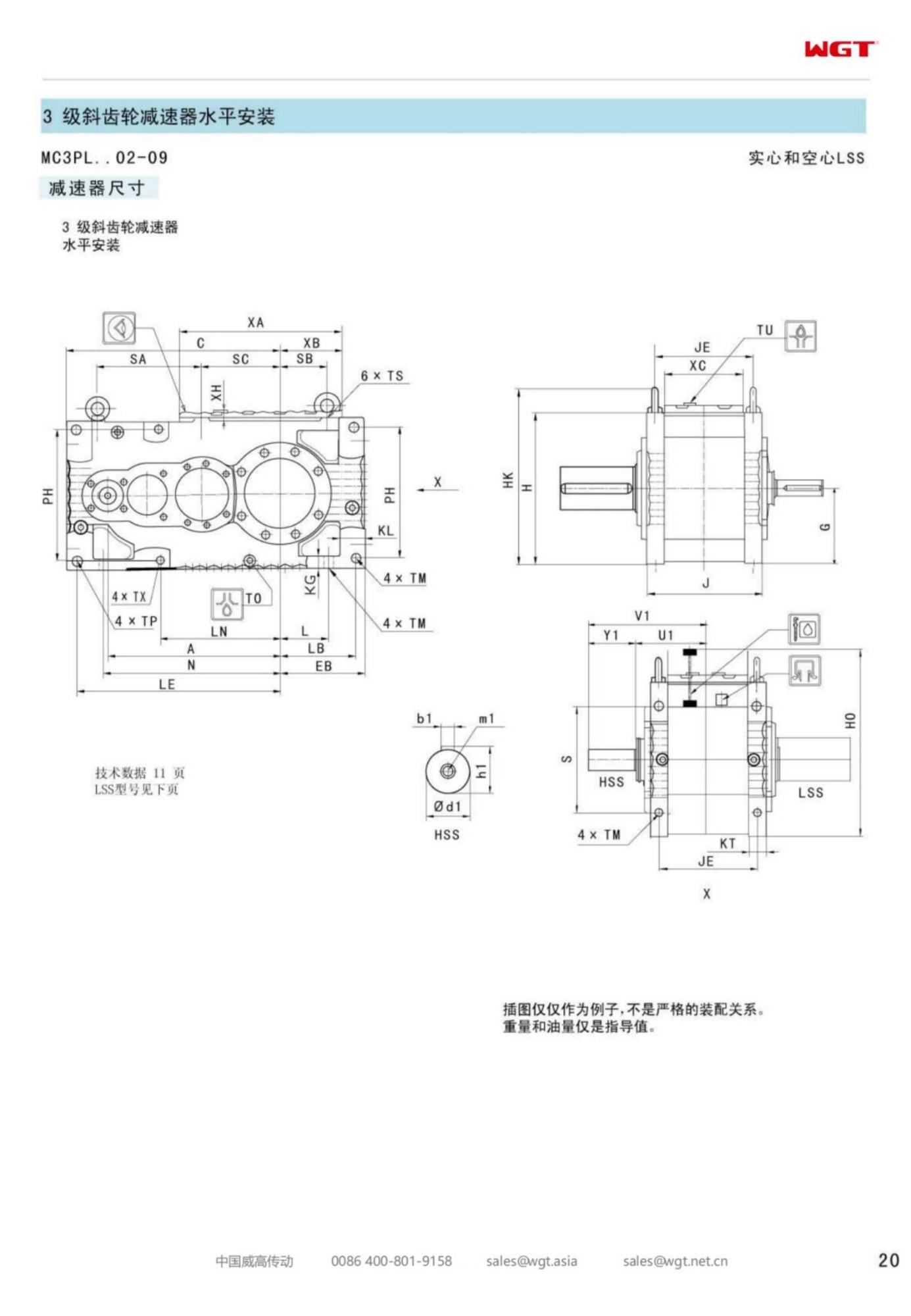
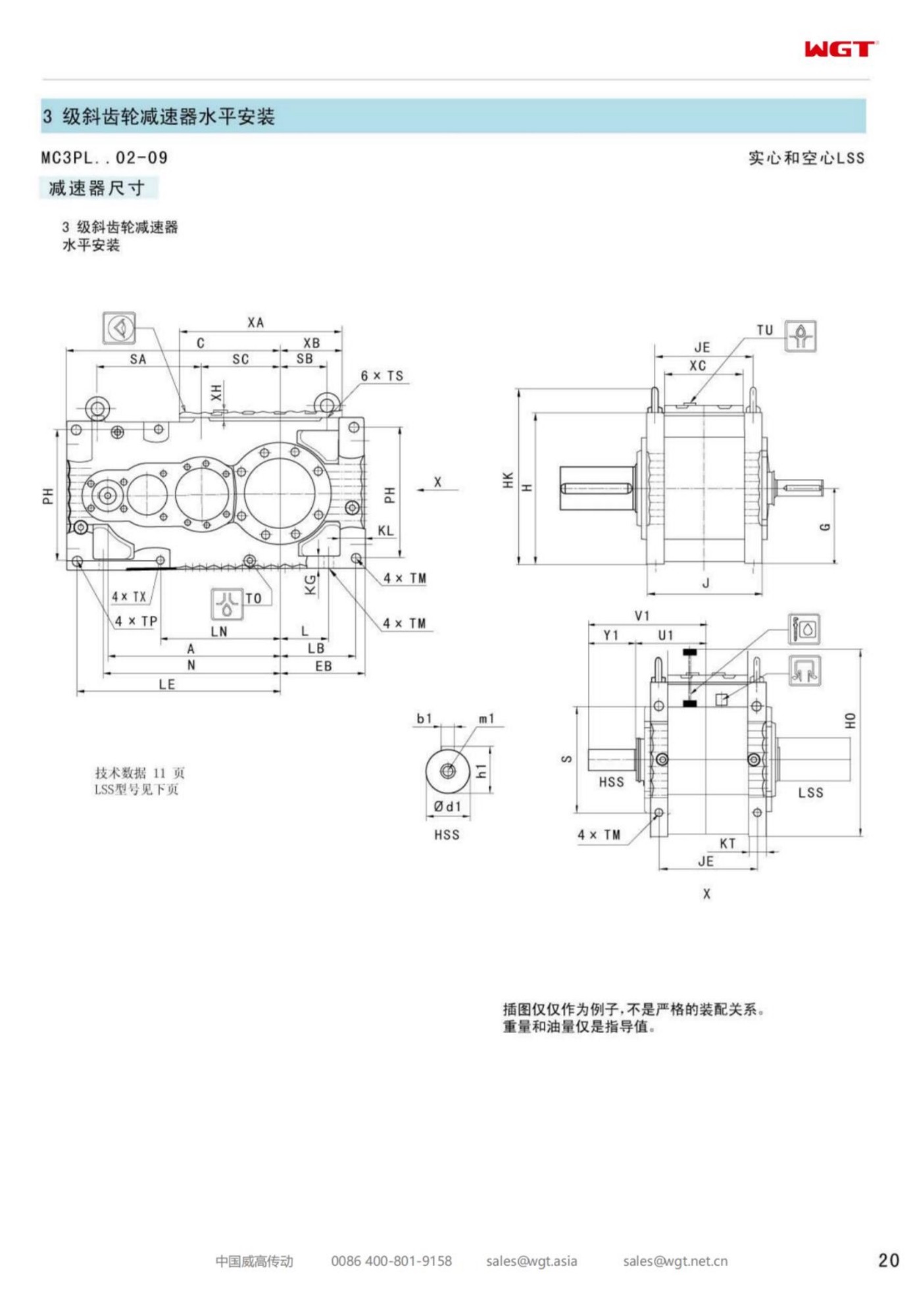
Concentrate is the product the whole concentrator exists to make, and the belt that loads it into trucks and wagons is the last machine the value touches before the customer. The dust at a load-out is the ore itself, reduced to its most abrasive form; the loading is metered, which makes speed stability a commercial matter; and the drive end sits on a loading gantry where floor space was never generous. The MC3PLHT05 parallel shaft gearbox fits that brief with three reductions, a hollow bore onto the head shaft and a motor line that runs along the gantry instead of across it.
The notes below are for the metallurgist and the plant electrical engineer who will jointly own that drive: where the code commits, what concentrate dust does to seals, and how the metering duty reshapes the selection.
Abrasion at Its Most Honest
Ore dust has no lubricity, no cohesion and no mercy. It sits on every surface, works into every clearance and polishes every steel face it touches - which is why gear drives at load-out points live or die on their sealing philosophy rather than their torque rating. The rating is rarely the problem; the ingress is.
A hollow-bore, shaft-mounted unit removes the low-speed coupling from that exposure entirely, and that alone is worth a season of seal inspections.
What the MC3PLHT05 Code Commits To
The seven characters read as a drawing brief.
| MC | Industrial gear unit family for plant duty |
| 3 | Three reductions between motor and output |
| P | Parallel-shaft helical build, axes level and in line |
| L | Horizontal output axis into the driven shaft |
| H | Hollow output bore, keyed onto the head shaft |
| T | Torque-arm bracket, reaction into the gantry steel |
| 05 | Mid frame of the three-stage band |
The '05' sits where most metered load-out belts land: enough frame for a continuous metered flow, without carrying the ballast of the top band into a gantry that never asked for it.
The Gantry Layout Argument
Load-out gantries concentrate equipment: weighbridge interface, sampler, dust extraction, lighting, access. Every square metre the drive does not consume is a square metre the other systems inherit. A parallel-shaft unit keeps its motor behind the pulley along the belt axis, inside the footprint the conveyor already reserved.
It also keeps the motor reachable. On a gantry, reachability is not a comfort feature - it is the difference between a two-hour motor swap and a day of scaffolding.
Three Stages for the Metering Duty
Metered loading means the belt runs slow and exact. Slow and exact from a standard motor means a deep ratio, and a deep ratio done in two stages buys its compactness with a small final pinion - the part that concentrate dust and load spikes find first. Three stages spread the ratio across larger, sturdier pairs and hold the case within gantry headroom.
The mid frame suits the tonnage most concentrators actually ship: continuous, metered, and unchanged for years once the flowsheet settles.
Seals, Breathes and Dust Geography
Dust falls where gravity puts it, so the sealing plan starts with the geometry: output seal sheltered from fall-out, breather raised and filtered, shaft exit given a labyrinth collar where spillage tracks. These are installation disciplines rather than catalogue options, which is exactly why they belong in the enquiry - the supplier's drawing can reflect them only if the enquiry mentions them.
The alternative is learned at the first teardown, when the 'dry' case opens to reveal a paste where oil should be.
Torque Arm Against the Gantry
Gantry steel is usually lighter than shed steel, which makes the torque arm's landing point a genuine design item rather than a fitting detail. The bracket should land on a primary member, the pad should spread the load, and the arm's adjuster should reach belt-tension range without shimming.
A five-minute structural check when the order is placed has saved more than one commissioning week.
Start Profile at a Load-Out
Load-out belts start empty or lightly loaded most of the time - the metering discipline keeps them that way. That is kind to the drive, and it means the selection case is thermal and sealing rather than breakaway. The exception is the restart after a full stop with a choked head chute, which every plant eventually meets; the service factor should absorb it without being sized entirely around it.
Honest duty description in the enquiry lets the frame sit exactly where the two cases balance.
Speed Stability and the Weighbridge
Commercial loading runs on the weighbridge, and the weighbridge trusts the belt's steadiness. Backlash at the final mesh, keyway wear and arm slop all surface first as weighing noise; the instruments flag gear problems free of charge, months before metal damage would.
Monitoring that noise trend is the cheapest gearbox health programme a load-out point can run.
Cleaning Without Damage
Between loads the gantry gets cleaned, and the cleaning method matters: high-pressure wash finds every seal path and the breather. Positioning the unit so the breather and seals face away from the wash lance, and choosing a breather with a blast cap, converts cleaning from a risk into a routine.
What the Enquiry Should Say
The load-out enquiry that closes in one round carries: motor power and speed, output speed, head shaft diameter and keyway, rotation direction, duty profile including the choked-restart assumption, ambient honesty, and the cleaning regime. A dimensioned sketch of the drive end removes the rest of the questions.
Maintenance Windows Between Trains
Load-out points are only free between consignments. Everything serviceable should be reachable without isolating the belt: level gauge, filler, breather, torque-arm bolts. A hollow-bore unit helps here too - an oil service does not involve uncoupling anything, so the window it needs is measured in the tea break rather than the shift.
The Frame Five Record
Concentrators that treated the load-out drive as a sealing problem with a torque rating, rather than the reverse, report the pattern that matters: gear sets outlasting the seal programme, weighing drift caught by instruments before it became metal wear, and a drive that never appears in the shutdown scope. That record is written at selection - one frame chosen once, for the dust it would actually breathe.
Ore dust with no mercy and a metered flow that must hold its rate - three stages keep the tally:
- Concentrate load-out belt at a concentrator dispatch gantry
- Metered truck loading conveyor at a base-metal mine
- Wagon loading belt at a concentrate rail spur
- Filter cake discharge conveyor to the stockpile loader
- Bulk bag filling station feed belt
- Concentrate transfer belt into the covered storage bay
Model Range and Centre Distances
| Model | Centre distance | Output | Typical duty |
|---|
| M3PSF50 | size 50 | solid shaft, foot | conveyors, feeders |
| M3PSF60 | size 60 | solid shaft, foot | crushers, mixers |
| M3PSF70 | size 70 | solid shaft, foot | ball mills, shredders |
| M3PSF80 | size 80 | solid shaft, foot | kilns, heavy conveyors |
| M3PSF90 | size 90 | solid shaft, foot | mill and kiln drives |
| M3RSF50 | size 50 | solid shaft, foot, right-angle | inclined conveyors, elevators |
| M3RSF60 | size 60 | solid shaft, foot, right-angle | screw classifiers, feeders |
| M3RHF70 | size 70 | hollow shaft, foot, right-angle | agitators, drum drives |
| M3PHT80 | size 80 | hollow shaft, torque arm, parallel | shaft-mounted conveyors |
| M3RHT90 | size 90 | hollow shaft, torque arm, right-angle | heavy shaft-mounted drives |
Frame sizes in this series follow a widely used industrial dimension ladder: foundations, couplings and guards of the existing installation are reused as they are.
Proven Installations
Automatic car-wash line
A car-wash equipment builder fits hollow-shaft reducers to its conveyor chains. The compact frame hides inside the wash tunnel, and FKM seal options handle the constant moisture.
Textile dyeing drums
A dyeing machine maker uses speed reducers on its fabric-turning drums. Low vibration (under 20 microns) prevents streaks in the fabric, and the 94-96% efficiency keeps the heat load down in a warm workshop.
![gearbox applications in quarry food and water plants]()
Conveyor, mixer, crusher and wastewater duties share the same gear family.
Selection Example: Typical duty point
Here is how the selection is made for this frame size. Motor speed divided by the target output speed gives the ratio, rounded to the nearest available step, and the required torque with the service factor then fixes the frame size. Motor speed over target speed gives the ratio; the driven machine decides the service factor, and the two together decide the model.
![industrial gear unit sizing procedure diagram]()
The four inputs the online selector asks for.
Tell Us the Torque, We Confirm the Model
Not sure where to start? Work out the ratio, torque and frame size yourself with the WGT Motor & Gearbox Online Selection System, then send the result - we confirm it in writing.
A photo of the nameplate, the motor power and the output speed you need are enough to start. We confirm the frame size, ratio and mounting style and return a written quotation the same day. Looking for a speed reducer for cement plant? Tell us the duty point and we will confirm the model in writing.
FAQ: Selection, Mounting and Maintenance
What payment terms do you accept?
We normally work on 30% deposit and 70% against the bill-of-lading copy for sea freight, or 100% before dispatch for small orders. Other terms can be discussed for framework or repeat business.
Can you manufacture a custom ratio or a special shaft?
Beyond the catalogue ratios we can quote special ratios and custom output shafts - splined, extended, special keyways or drilled - for OEM volumes. Tooling is amortised across the order, so unit cost falls as quantity rises.