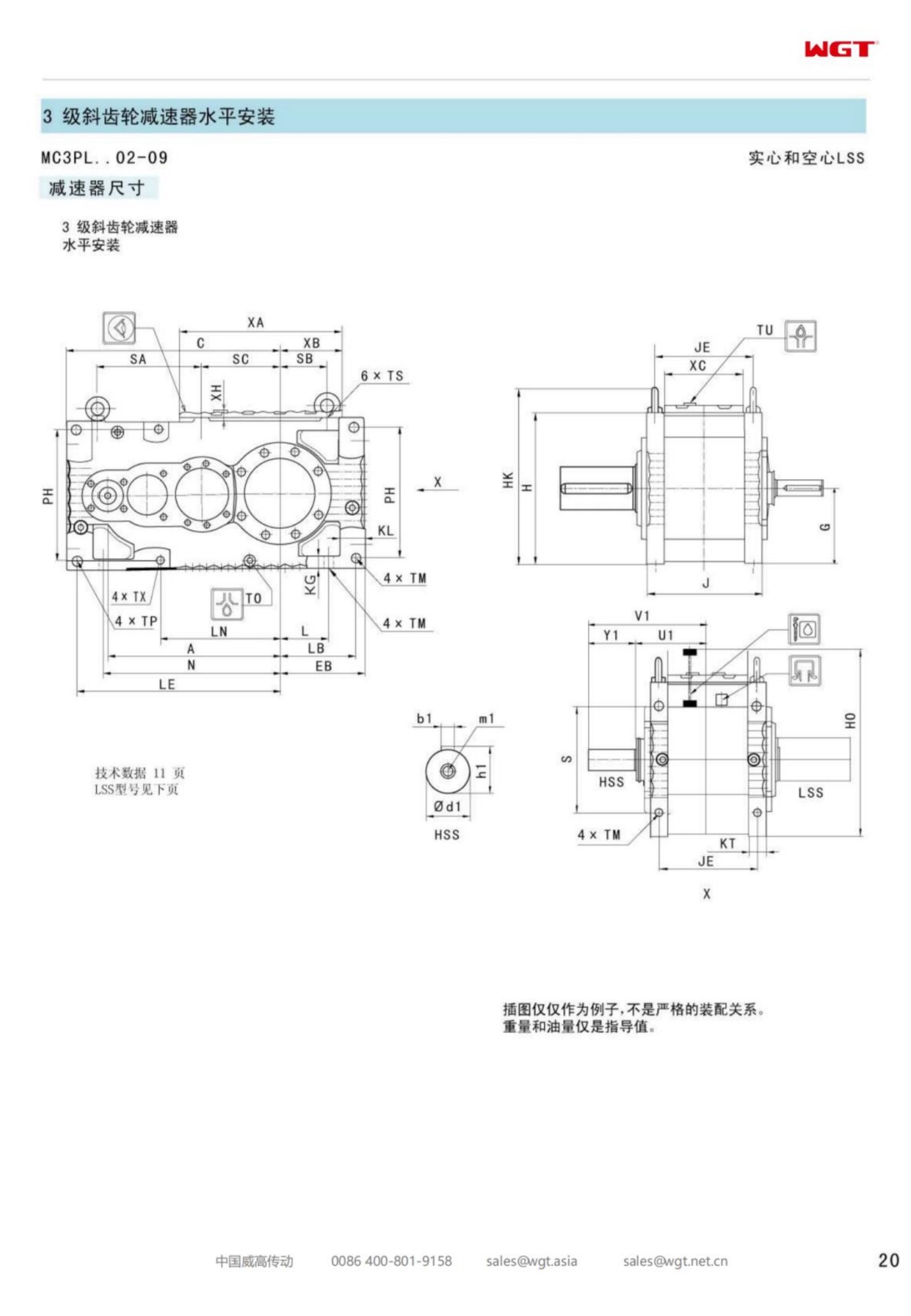
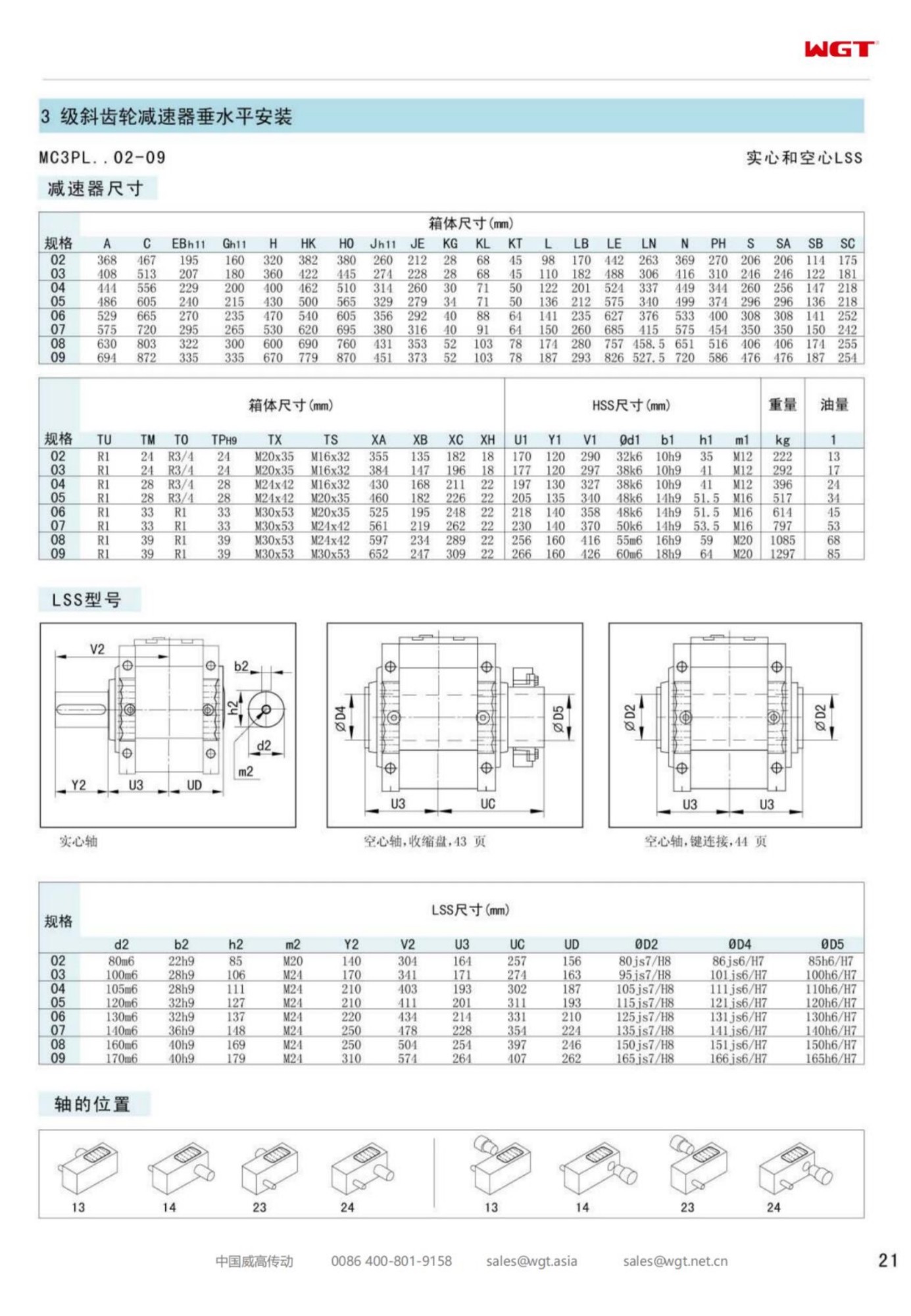
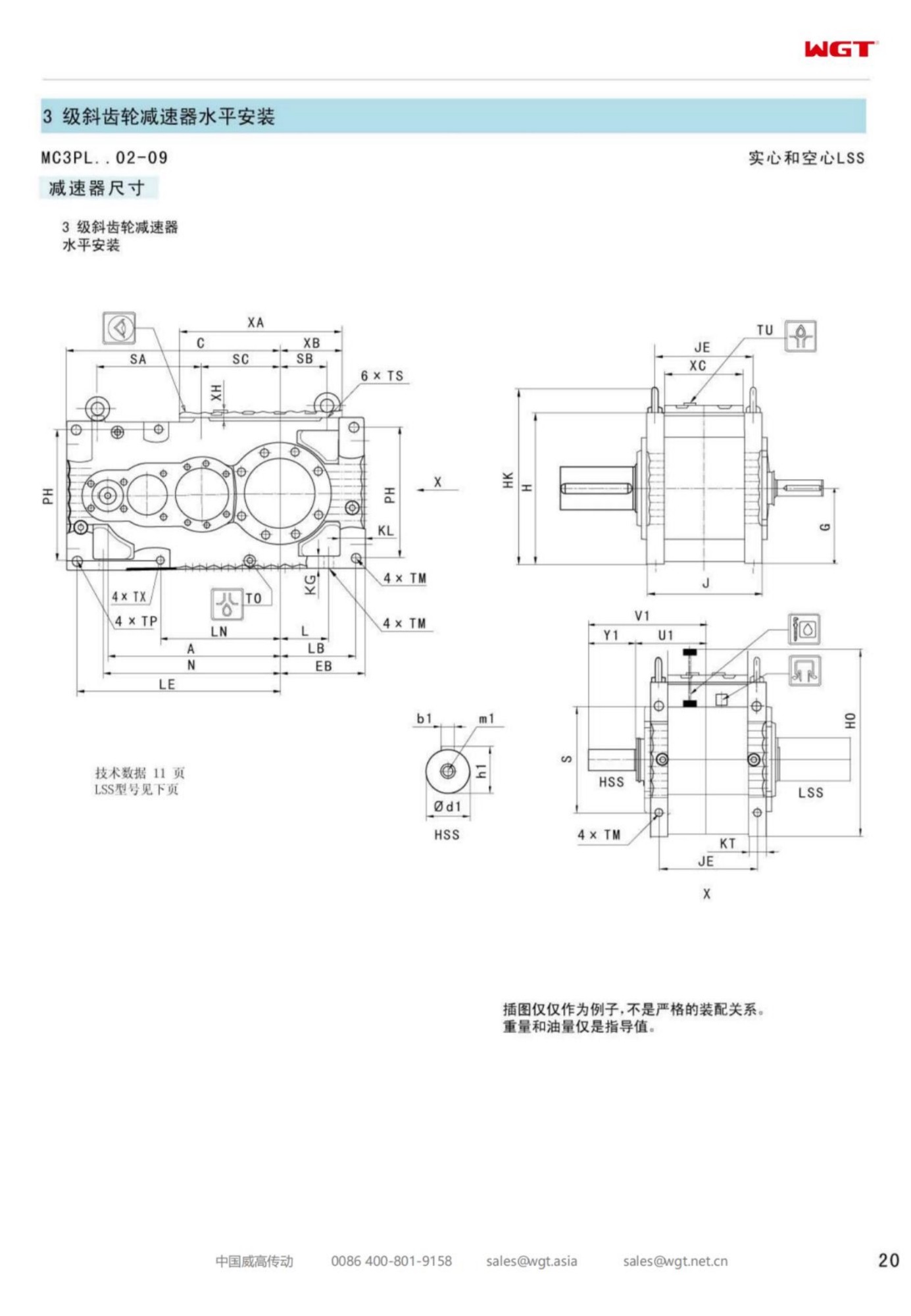
An ore yard keeps the mine and the rail loader honest: what comes down the pit road has to leave by the tonne, on schedule, through a belt that runs under the pile with iron fines working into every joint. The drive for that belt wants to sit on the head shaft itself, take its reaction from structure that is already there, and turn slowly with a great deal of authority. The MC3PLHT08 three-stage parallel shaft gearbox is drawn for exactly that seat: a hollow bore straight onto the pulley shaft, a torque arm braced into the trestle steel, and three helical stages in a case built for continuous yard duty.
These notes set out what the frame gives a yard engineer, where the losses usually come from, and what a first-round enquiry should carry so the quotation lands in one pass.
Iron Ore Does Not Reclaim Itself
Stockpiles bridge, compact and flood the recovery point without warning. The belt under them runs at walking-pace speed against a head pulley that sees the full tension of a long loaded run, and the drive has to hold that through shift after shift of continuous reclaim. Nothing about the duty is peaky, and that is the point: the rating that matters is the one the unit can carry for a year, not for a minute.
Reading the MC3PLHT08 String
The designation settles the mechanical questions before any drawing is opened.
| MC | Industrial gear unit family for continuous plant duty |
| 3 | Three reductions inside a single case |
| P | Parallel-shaft helical build, axes level and in line |
| L | Level output axis turning the pulley shaft horizontally |
| H | Hollow output bore, keyed onto the head shaft |
| T | Torque-arm bracket, the reaction carried by structure |
| 08 | Upper-mid frame of the three-stage band |
Two choices dominate yard economics. The hollow bore deletes the low-speed coupling and the foundation block entirely, and the torque arm turns the reaction into a bracing detail the trestle already has the metal for.
Parallel Shafts Along a Reclaim Corridor
A reclaim corridor is long, narrow and already crowded with idlers, cords and spillage. A parallel build keeps the motor behind the pulley, inside the corridor envelope, where a right-angle unit would swing the motor out into walkway space. The savings are practical rather than elegant: guarding stays simple, the walkway survives, and the coupling alignment nobody has time for never has to be done.
Abrasive Dust and the Case
Iron fines are harder than most paint systems and patient beyond belief. The casting carries more metal than the duty strictly needs, and that mass does real work: it sinks running heat, and it gives the breather and the seals somewhere to sit away from the worst of the dust stream. Inspection covers should be checked and re-sealed at every oil change, because a cover that has vibrated loose becomes a dust funnel pointed at the gearing.
Reclaim Belts Start Loaded
A yard belt rarely gets to start empty. The pile does not care where the drive sits in its duty cycle, and the restarted belt asks for breakaway torque well above running load while the entire length of belting creeps forward. That moment picks the frame: the service factor is chosen against the restart, with the running condition then confirmed as comfortable rather than as the design case.
Torque Arm Reaction Into the Trestle
The arm pushes against steelwork that must take the reaction without rolling or flexing. On a reclaim trestle the bracket lands naturally on a member that sees the load in shear, which is exactly where it belongs. The arm should be slotted so belt tension can be trimmed from the take-up end instead of by shimming the case, and the pin should be a known spare rather than a job-lot bush.
Oil, Heat and a Three-Shift Yard
Yards run through summer ambient without a pause. A three-stage case at this duty holds sump temperature on its own surface area, but only if the oil is correct for the season and the breather is actually a breather rather than a plugged one. Oil sampling at the quarterly shutdown is the cheap version of an insurance policy: ore fines that have found their way inside show up in the sample long before they show up in the bearing temperatures.
Where the Ratio Comes From
The belt speed is set by the reclaim rate, and the pulley diameter follows the tension, so the output speed is known before any gearbox is chosen. Motor speed divided by that output speed gives the ratio, and the three-stage band reaches the deep values without forcing an oversized first pinion. Checking the ratio against the actual pulley speed, rather than the nominal one, avoids the awkward discovery that the belt runs ten percent slow.
Seals Against Ore Fines
The output seal works in a dust stream that never stops. Standard lip seals hold if the seal face area is kept greased and the spillage is not allowed to pack against the housing, but a yard that reclaims wet ore in winter should talk about sealed-for-life or labyrinth alternatives at the enquiry stage. The cheapest seal failure is the one specified out before the order.
Building the Enquiry for a Reclaim Drive
A one-pass enquiry carries the motor frame and speed, the pulley shaft diameter and keyway, the required output speed, the service factor the site applies to restart conditions, and the ambient range the yard actually sees. Photographs of the drive seat and the trestle member for the arm bracket remove the last of the guesswork, and a drawing of the pulley shaft settles the bore and key in one exchange.
Access for Service in a Working Yard
The unit will be inspected where it hangs, not in a workshop. Drain and fill points must face a walkway, dipsticks must be readable without removing guarding, and the lifting lugs must suit the crane the yard actually has. These are one-minute decisions at selection that save an hour every shutdown for the life of the belt.
Frame Eight on the Reclaim Line
Upper-mid band frames suit reclaim belts that feed rail loading directly: enough case to sink a three-shift yard duty, enough shaft to forgive the restart, and a layout that keeps the drive inside the corridor it was drawn into. Plants that select on that logic end up discussing the drive at the annual review, which is where drive discussions belong.
Ore fines, continuous reclaim and a belt that never starts empty - three stages carry it:
- Iron-ore stockpile reclaim belt at a rail load-out terminal
- Blend yard recovery belt feeding the ore transfer house
- Tunnel conveyor under a concentrate stockpile
- Rail unloading pit discharge belt at a steelworks ore yard
- Overland belt from the yard to the primary screening station
- Emergency standby reclaim on the same corridor
Available Frames and Their Typical Duty
| Model | Centre distance | Output | Typical duty |
|---|
| M3PSF50 | size 50 | solid shaft, foot | conveyors, feeders |
| M3PSF60 | size 60 | solid shaft, foot | crushers, mixers |
| M3PSF70 | size 70 | solid shaft, foot | ball mills, shredders |
| M3PSF80 | size 80 | solid shaft, foot | kilns, heavy conveyors |
| M3PSF90 | size 90 | solid shaft, foot | mill and kiln drives |
| M3RSF50 | size 50 | solid shaft, foot, right-angle | inclined conveyors, elevators |
| M3RSF60 | size 60 | solid shaft, foot, right-angle | screw classifiers, feeders |
| M3RHF70 | size 70 | hollow shaft, foot, right-angle | agitators, drum drives |
| M3PHT80 | size 80 | hollow shaft, torque arm, parallel | shaft-mounted conveyors |
| M3RHT90 | size 90 | hollow shaft, torque arm, right-angle | heavy shaft-mounted drives |
Note that PSF and RSF frames of the same size share the mounting footprint; the R build simply inserts a bevel stage, so switching layout rarely forces a foundation change.
Questions and Answers
What if the ratio I need falls between two catalogue steps?
Choose the next available step and adjust the driven speed, or ask us for a special pair of gears. Trimming the driven machine is normally cheaper than ordering a special ratio, and a slightly higher ratio never hurts the drive.
How is the unit protected against dust and water ingress?
Housings are sealed to IP55 as standard with NAK oil seals and gasketed covers. Heavy dust, washdown chemicals or steam cleaning call for the higher protection option, which we specify together with the correct lubricant.
Do you support commissioning and after-sales service?
Every shipment includes an installation manual and a test record. Our engineers answer commissioning questions by e-mail or video call, and spare seals, bearings and shafts remain traceable to your original order for years afterwards.
Installation Examples
Cement plant clinker belt
A cement plant drives its clinker transport belt with reducers in dusty, high-ambient conditions. Sealed housings and a 40 deg C maximum temperature rise let the units sit close to the kiln without extra cooling.
Paper mill pulp agitator
A paper mill uses reducers on pulp chest agitators. Continuous 24-hour duty is handled by lifetime lubrication, and the low backlash keeps the agitator steady when the stock consistency changes.
![gear box application map for industry]()
From quarries to food plants - one right-angle drive concept.
Selection Example: Ore stockpile reclaim belt at a rail load-out yard
Take a 45 kW motor at 1480 rpm turning the head pulley at 10 rpm. The ratio follows directly: 1480 / 10 = 148, so a ratio near i=150 is taken from the three-stage parallel band, and the frame is confirmed against the loaded restart under a bridged pile rather than against the steady reclaim rate. In this case frame eight hauls the yard tonnage from a bore keyed to the pulley shaft, takes its reaction through an arm braced into the trestle, and keeps its seals out of the ore-fines stream. The ratio is the easy part. The service factor for the shock level is what makes the selection safe, and we check that for you at no charge.
![how to choose a speed reducer model]()
Ratio first, then torque, then frame size: the standard selection route.
Design Review, Datasheet and Price - Same Day
Planning a new machine? The WGT Motor & Gearbox Online Selection System covers motor power, ratio and mounting on one screen - enter your numbers and see the model immediately.
Send the interface drawing or the frame dimensions you need to match, and we return a 2D drawing and 3D STEP model with the quotation, so your design review is not held up waiting on the supplier. Looking for a gearbox for mixer and agitator? Tell us the duty point and we will confirm the model in writing.