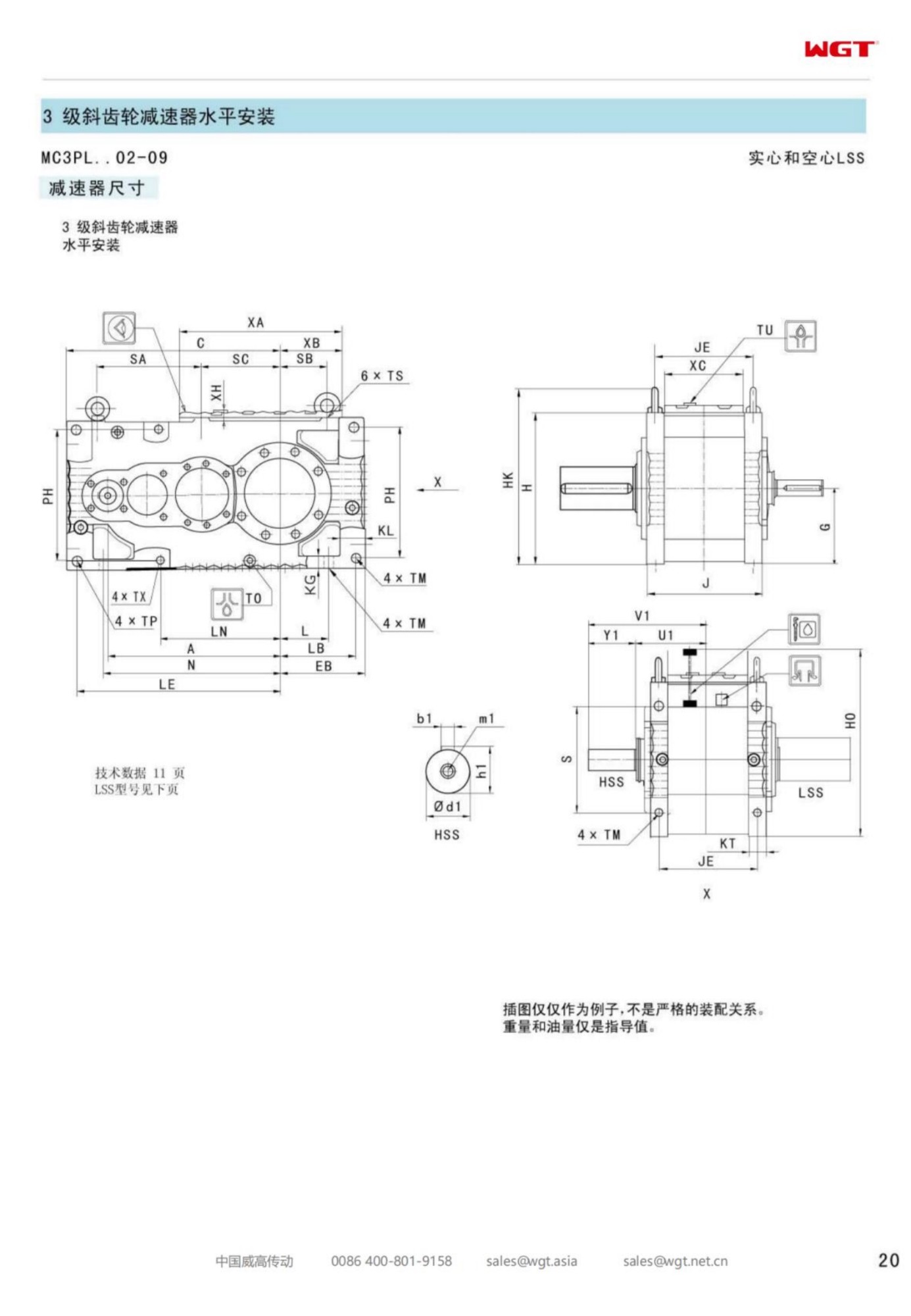
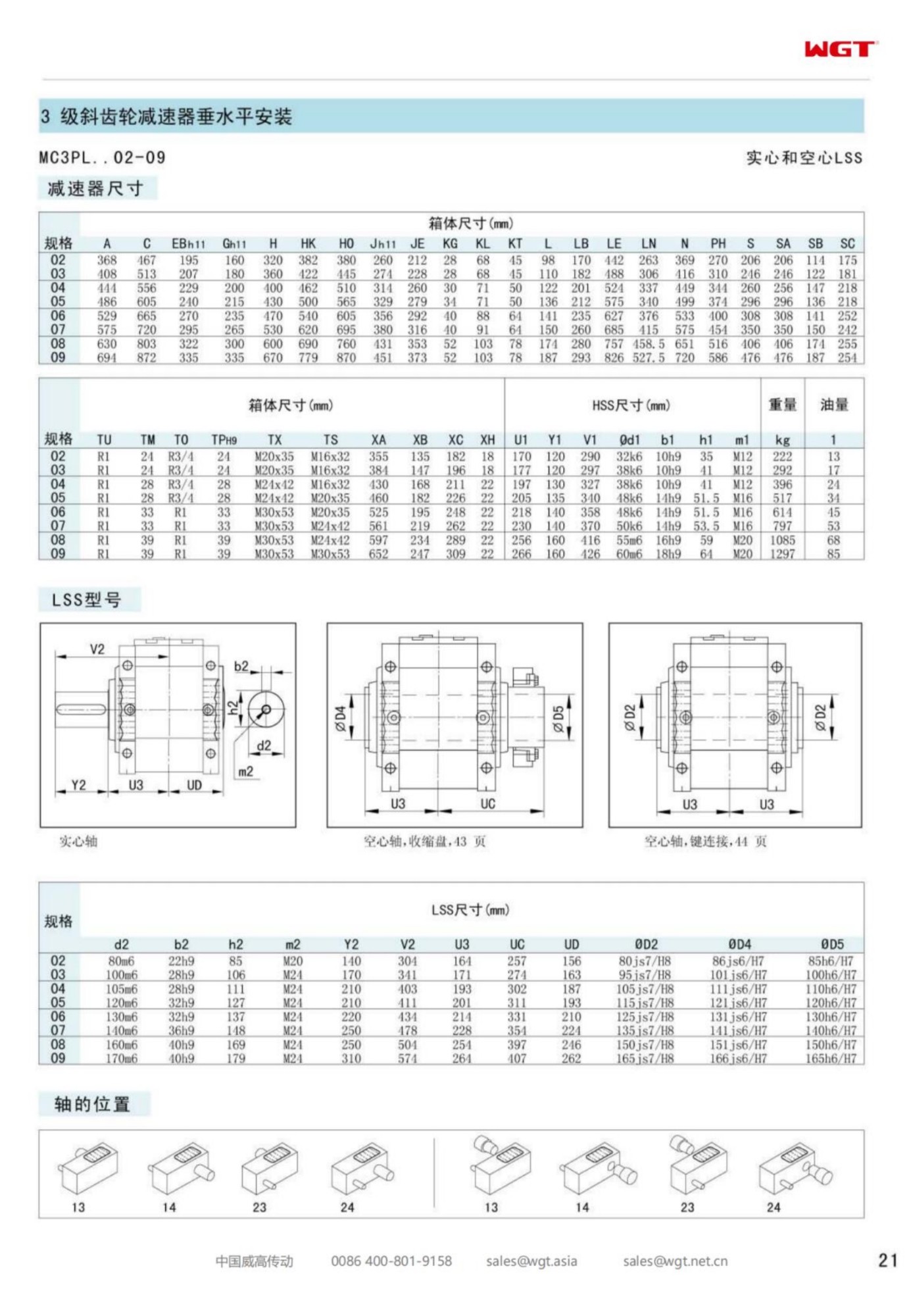
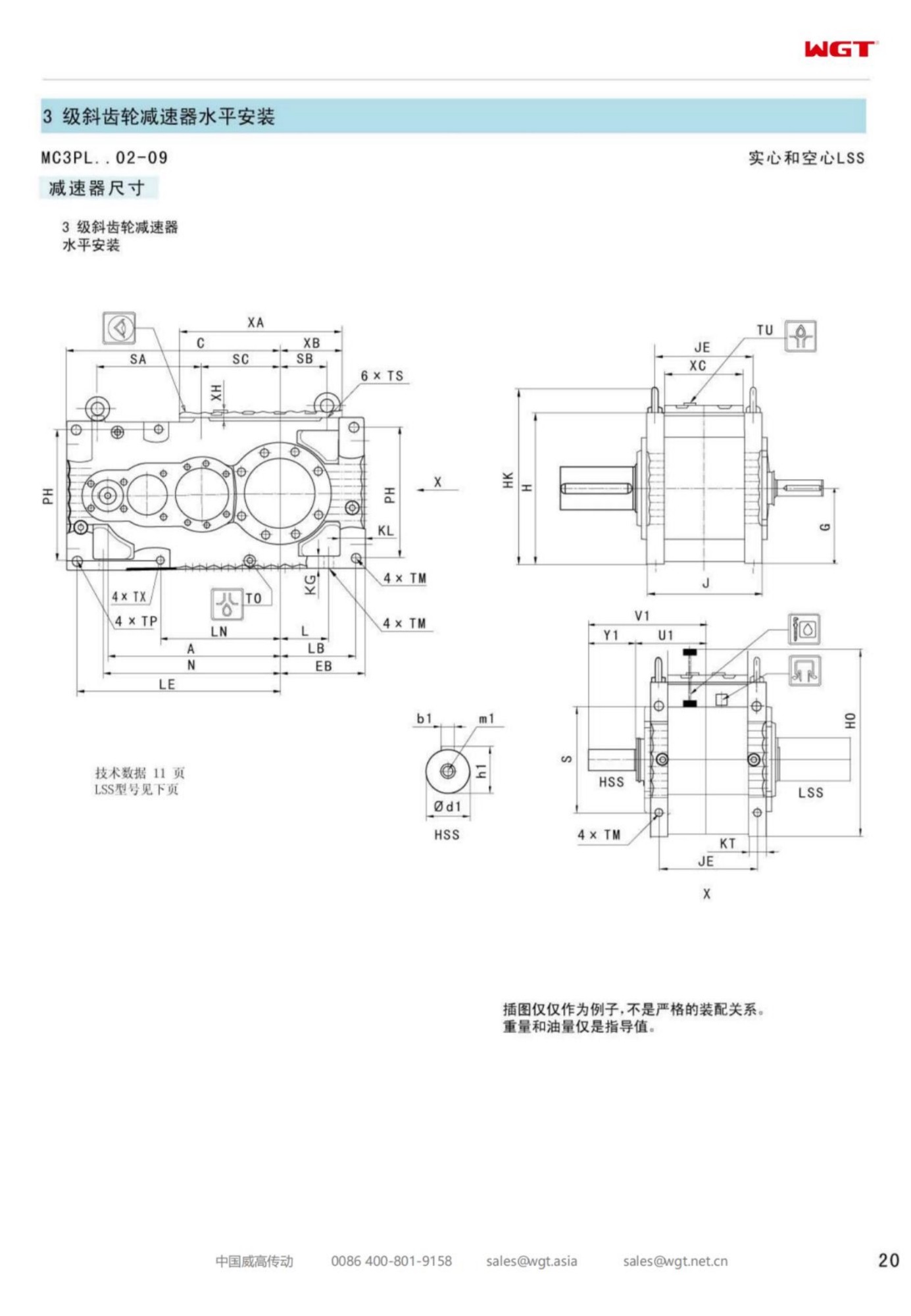
A pulp mill is a supply-chain machine wearing the clothes of a factory: the digester eats chips at a rate the recovery boiler sets, and the chip pile outside has to feed that rate through bark, rain and whatever the logging season delivers. The reclaim belt that ties the pile to the screen house runs slow, wet and continuous. The MC3PLHT09 three-stage parallel shaft gearbox sits on the head shaft of that belt, hung through a hollow bore and braced by a torque arm, with three helical stages between the motor and the pulley.
The sections below cover what the code fixes, why the parallel layout earns its seat in a reclaim tunnel, and what a mill buyer should put in the first enquiry.
A Chip Pile That Feeds the Digester
Reclaim duty looks steady and is not. Chip flow varies with moisture, pile geometry and the grate condition at the recovery point, and the belt sees all of it as torque at the shaft. The drive is sized for the top of that variation, not the average, because a starved digester costs the mill far more than a larger frame ever will.
The MC3PLHT09 Code and What It Sets
Every position in the string answers a layout question.
| MC | Industrial gear unit family for continuous plant duty |
| 3 | Three stages of reduction in one housing |
| P | Parallel-shaft helical gearing, coaxial input and output |
| L | Level output axis into the driven shaft |
| H | Hollow output bore over the conveyor head shaft |
| T | Torque-arm mounting, reaction into steelwork |
| 09 | Largest frame of the three-stage band |
The combination reads as a shaft-mounted drive that hangs where the belt needs it and pushes its reaction into steel the mill already built - no bedplate, no low-speed coupling, no alignment campaign after every belt change.
Why Parallel Layout Suits a Reclaim Tunnel
Tunnels are sized for the belt and the man, with nothing left over for a motor hung sideways. A parallel build tucks the motor behind the pulley along the belt line, so guarding and walkway survive. The bonus shows up at belt changes: with no coupling to break, the unit lifts clear, the new belt goes in, and the drive drops back onto the same shaft.
Three Stages for a Slow, Heavy Belt
Deep ratios in two stages distort the gearset: a huge first wheel, a skinny final pinion, and a housing that has grown to fit neither well. Three stages share the work so each mesh runs near its best geometry, which is why the slowest belts end up with the calmest, most compact drives.
Bark, Dust and Moisture at the Seals
Chip reclaim is a wet, fibrous job. Stringy bark wraps anything that turns, and fine dust finds every labyrinth. The output seal wants protection from wrapped fibre - a seal collar and clear spillage path cost little at order time - and the breather belongs high on the case where wash-down water cannot reach it.
Torque Arm Into Tunnel Steelwork
The bracket should land on a member chosen for the reaction, not on the nearest cleat. In a reclaim tunnel the stringers usually have the capacity; the detail that matters is the arm being adjustable, so take-up tension is set at the take-up and the arm simply follows the settled position.
Restart With the Pile Flowing
The worst minute of a reclaim shift is the restart after a blockage, when the belt is loaded and the pile above has consolidated. The frame is checked against that breakaway figure, taken honestly from the belt maker, rather than against a nameplate running load that the belt will only see in its dreams.
Temperature Swings and the Oil Choice
Mill tunnels stay humid and swing less than outdoor yards, but they never get a break. A sump that runs continuously wants oil specified for the true tunnel ambient, and a mill that stops the reclaim line for seasonal maintenance should note the standby period too, because half-filled sumps breathing through a wet season collect condensation that a sample will find.
Guarding and Layout Around a Shaft-Mounted Unit
Guarding a shaft-mounted drive is easier than guarding a coupled one, but the torque arm and the motor position still decide whether the guard can come off for service without rigging. Confirm at layout stage that the inspection covers, dip stick and drain all face the walkway the tunnel actually has.
Sizing Against the Screen House Demand
The belt serves the screen house, and the screen house serves the digester, so the honest design point comes from the chip rate the digester can accept, plus the surge the reclaim system is expected to absorb. Frames at the top of the three-stage band exist for exactly the mills whose surge expectations are ambitious.
The Enquiry That Avoids Second Letters
One message should carry the motor details, the pulley shaft diameter and keyway, the target belt speed, the ambient and wash-down regime, and the breakaway assumptions if the pile restarts loaded. A photo of the drive seat settles the arm-bracket question; a shaft drawing settles the bore. Everything else is catalogue work.
Frame Nine in a Mill That Runs Seasonal
Wood rooms live on logging seasons and maintenance windows, and the drive that serves them should be the boring part of the plant: sized past the surge, sealed past the fibre, and mounted so belt changes stay a two-hour job. That is the whole argument for a hollow-bore, torque-arm, three-stage build in the largest frame of the band.
A tunnel that feeds the digester by the tonne and never skips a shift - three stages pull it:
- Wood-chip reclaim belt in the pile tunnel
- Screen house feed conveyor at a pulp mill
- Chip surge bin discharge belt ahead of the digester
- Bark and oversize transfer belt to the hog
- Chip reclaim under an outdoor heap at a panel board mill
- Seasonal reclaim belt on a second chip pile
How Customers Use This Unit
Mining slurry pump drive
At a mineral processing site, hollow-shaft reducers drive slurry pump agitators. The hollow bore takes the pump shaft with no coupling, so a pump change-out no longer means re-aligning a separate drive.
Palm oil mill fruit elevator
A palm oil mill powers its fruit elevator with reducers. The humid, oily atmosphere is handled by FKM seals, and the compact frame fits between the steriliser and the threshing drum.
What Engineers Ask Us
What is a service factor and which value should I use?
The service factor multiplies your required torque to cover shock and duty class: around 1.0 for uniform conveyors, 1.25 for moderate shocks and 1.5 or higher for crushers, shredders and reversing drives. Tell us the driven machine and we apply the correct value before quoting.
Can the gear unit hold a load on an inclined conveyor?
For inclined belts a backstop prevents the loaded belt from driving the unit backwards when power is cut. Specify the incline angle when ordering so the backstop and the oil level are matched to the actual mounting position.
Model Table: Frames, Shafts and Duty
| Model | Centre distance | Output | Typical duty |
|---|
| M3PSF50 | size 50 | solid shaft, foot | conveyors, feeders |
| M3PSF60 | size 60 | solid shaft, foot | crushers, mixers |
| M3PSF70 | size 70 | solid shaft, foot | ball mills, shredders |
| M3PSF80 | size 80 | solid shaft, foot | kilns, heavy conveyors |
| M3PSF90 | size 90 | solid shaft, foot | mill and kiln drives |
| M3RSF50 | size 50 | solid shaft, foot, right-angle | inclined conveyors, elevators |
| M3RSF60 | size 60 | solid shaft, foot, right-angle | screw classifiers, feeders |
| M3RHF70 | size 70 | hollow shaft, foot, right-angle | agitators, drum drives |
| M3PHT80 | size 80 | hollow shaft, torque arm, parallel | shaft-mounted conveyors |
| M3RHT90 | size 90 | hollow shaft, torque arm, right-angle | heavy shaft-mounted drives |
Larger size numbers mean higher torque capacity and larger shafts. Because interfaces follow the common industrial dimensions, a size-for-size change is the normal upgrade route for these industrial units.
Selection Example: Wood-chip reclaim belt in a pulp mill tunnel
Take a 30 kW motor at 1470 rpm driving the head pulley at 12 rpm. The ratio follows directly: 1470 / 12 = 122.5, so a ratio near i=122 is drawn from the three-stage parallel band, and the service factor is set on the blockage restart when the pile has consolidated above the recovery point. In this case frame nine tops the band for the surge the digester can demand, hangs on the head shaft through a measured bore, and reacts into tunnel steel through an adjustable arm. Note that the ratio comes from speeds alone, while the frame size depends on torque and service factor - never size a unit on ratio only.
![industrial helical gearbox selection chart]()
A quick visual of the selection sequence for a industrial helical unit.
![M3 series gear reducer installation examples]()
Application coverage of the the M3 series.
Gearbox Selection Support from the Factory Floor
Talk to the people who build it. Prefer to check the figures yourself? The WGT Motor & Gearbox Online Selection System gives you the model, torque margin and ratio before you ask us.
Our technical team sits beside the assembly line, not in a call centre. Describe the application in your own words - we will tell you honestly whether this series is right, or point you to a better frame or a different series. Looking for a speed reducer for bucket elevator? Tell us the duty point and we will confirm the model in writing.