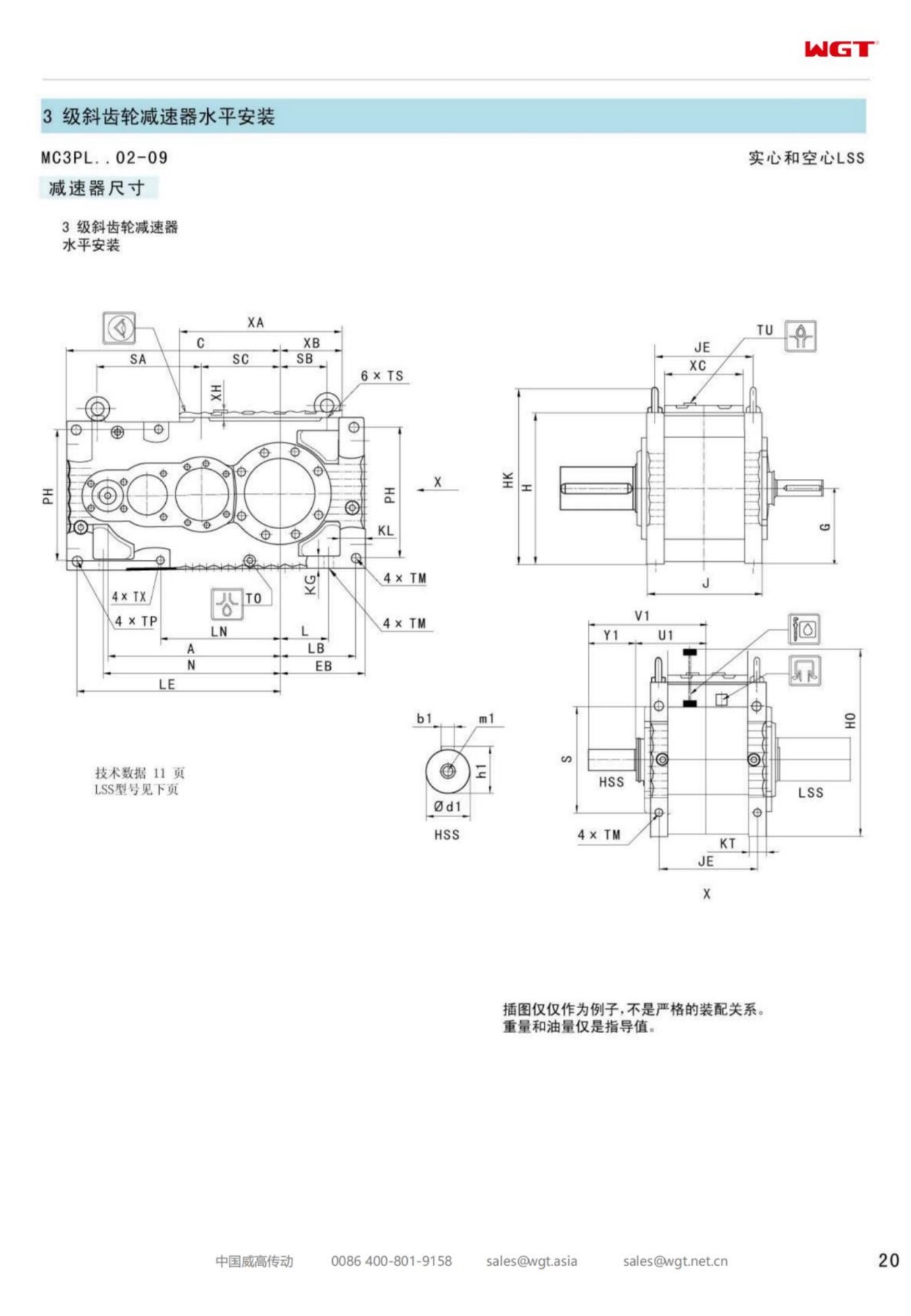
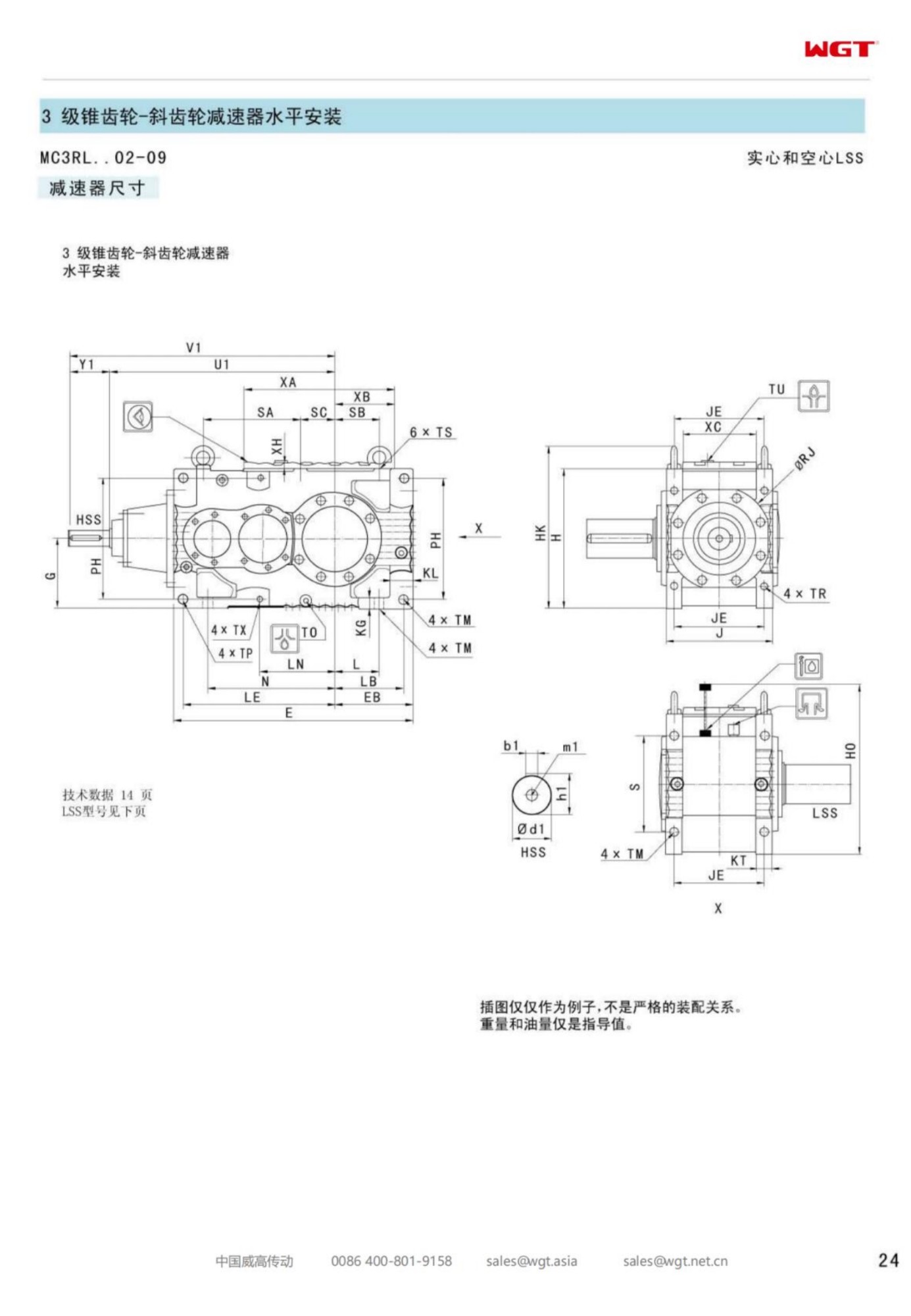
Every frame band has a threshold, and in the hollow-bore foot-mounted line the fifth frame is where the duties cross it. Below a frame five, a stoppage is usually an inconvenience; at a frame five and above, the machine on the output shaft is generally one the production plan is built around. The MC3RLHF05 bevel-helical gearbox is specified exactly there - on kiln feed conveyors, roller tables, cake conveyors and reclaimers that the plant cannot quietly do without.
The architecture holds to the family standard: a bevel pair turns the input through ninety degrees, two helical stages bring the speed down, and the output is a hollow bore that mounts over the driven shaft from a footed case. What the fifth frame adds is margin - in oil, in bearings, in the sheer rightness of a case that no longer flinches at a loaded restart.
The Fifth Frame Where Lines Harden
Between the fourth and fifth frames the character of the driven machinery changes faster than the torque table shows. Frame four duties are episodic but local; frame five duties are continuous and public. A cake conveyor leaving a press line runs whether the shift is staffed or not. A kiln feed conveyor that stops has the whole pyro section following it down within minutes. The selection consequence is simple: at this frame the duty cycle, the starts and the worst material surge decide the size, and the running kilowatts merely confirm it.
Between Auxiliary and Heavy Process Duty
Walk a mid-size plant and the frame fives sit in a recognisable band of positions: kiln feed and clinker elevators on the dusty side of a cement works, roller tables where scale and shock arrive together, sludge cake conveyors at paper mills, scrapers travelling a stockpile all week, shredder infeed belts that take whatever the baler sends. These are drives with real consequence and real dirt, which is why the right-angle input earns its place - the motor parks where the aisle and the access say, not where the shaft points.
It is also where hollow-bore mounting stops being a space-saver and becomes a reliability decision. With no coupling in the line there is one less component to align, guard and balance, and the case locates itself on the machine it drives. On a dusty conveyor gantry, that simplicity is worth more than any rating figure.
Decoding the Type String on a Frame Five
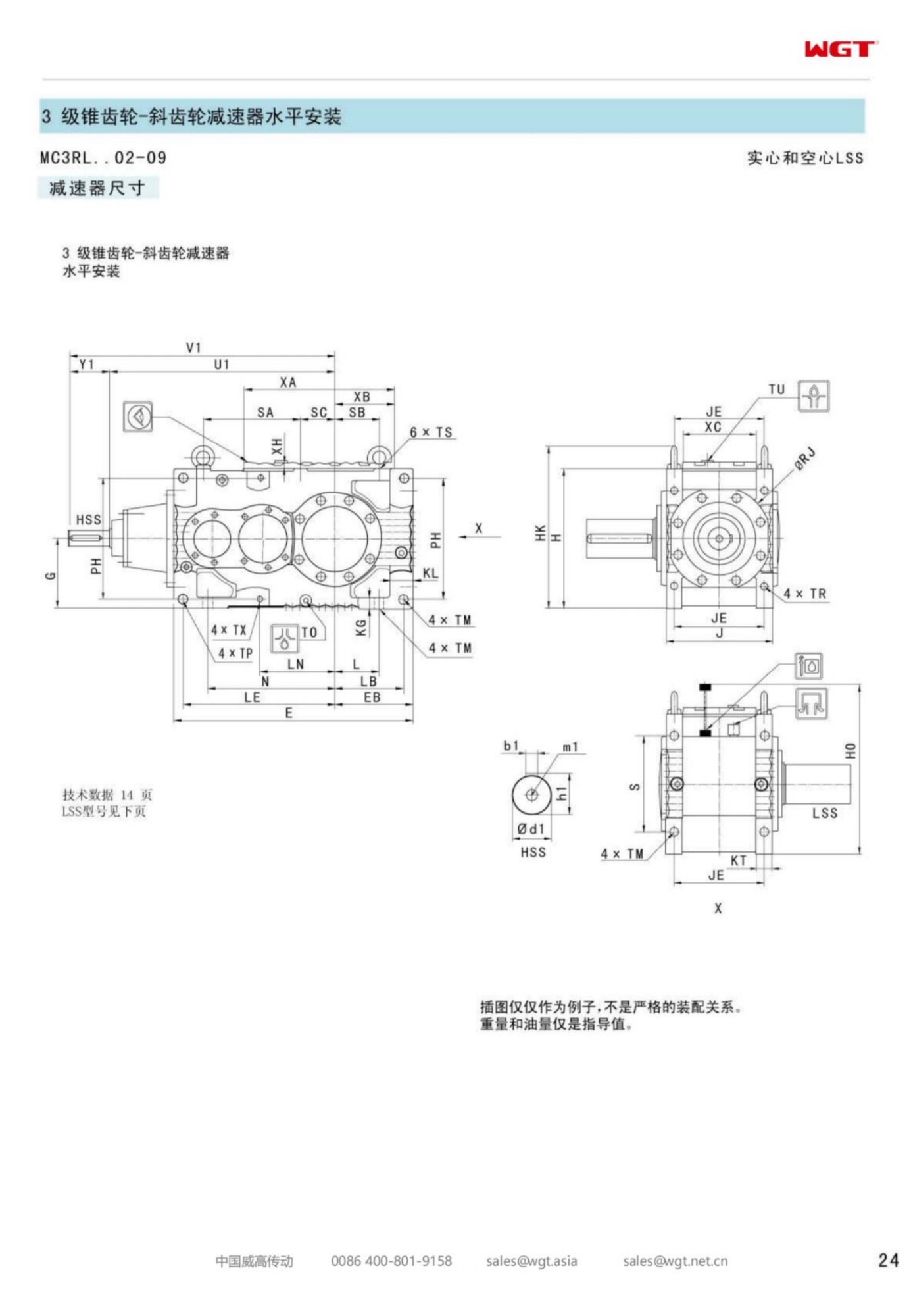
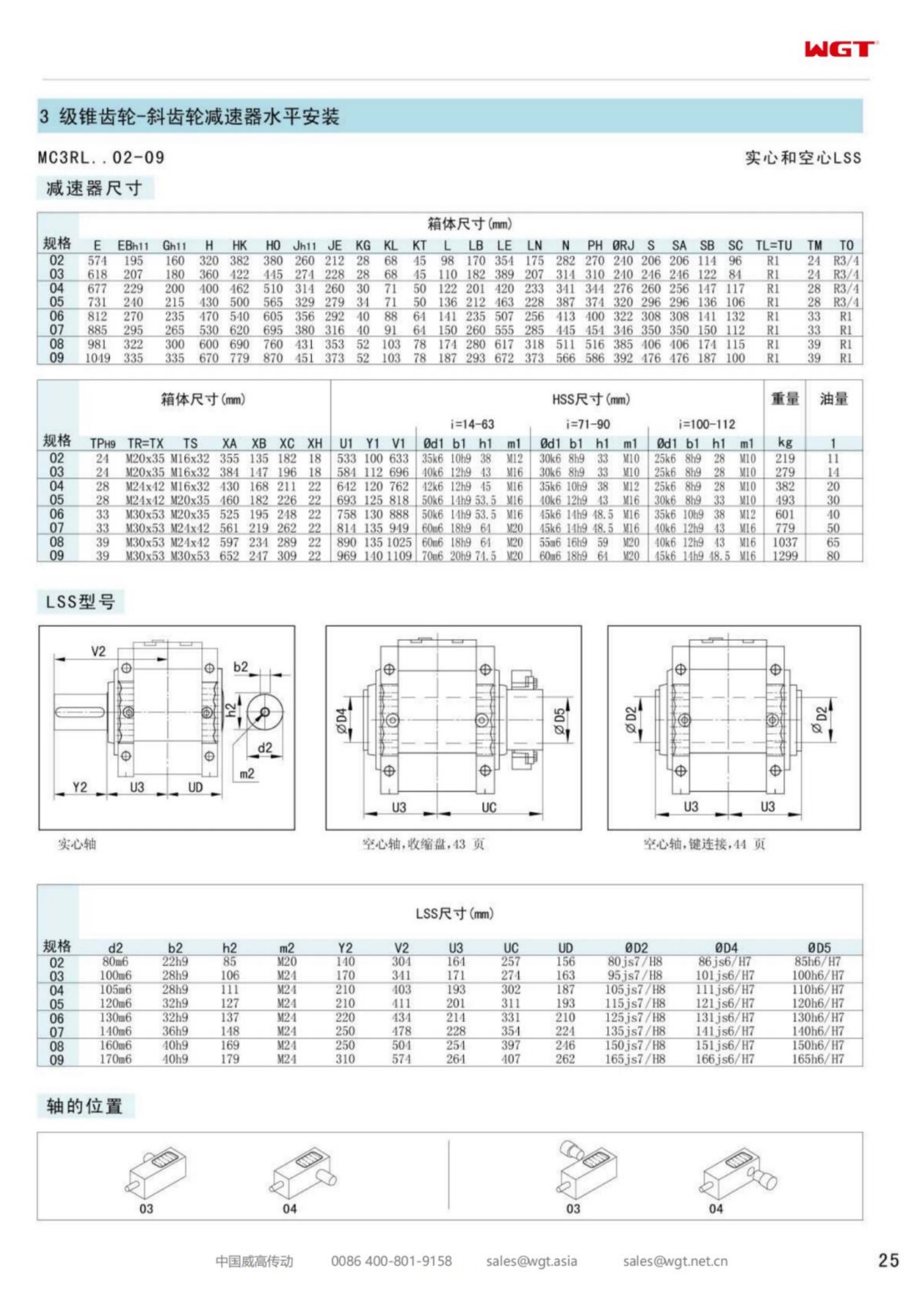
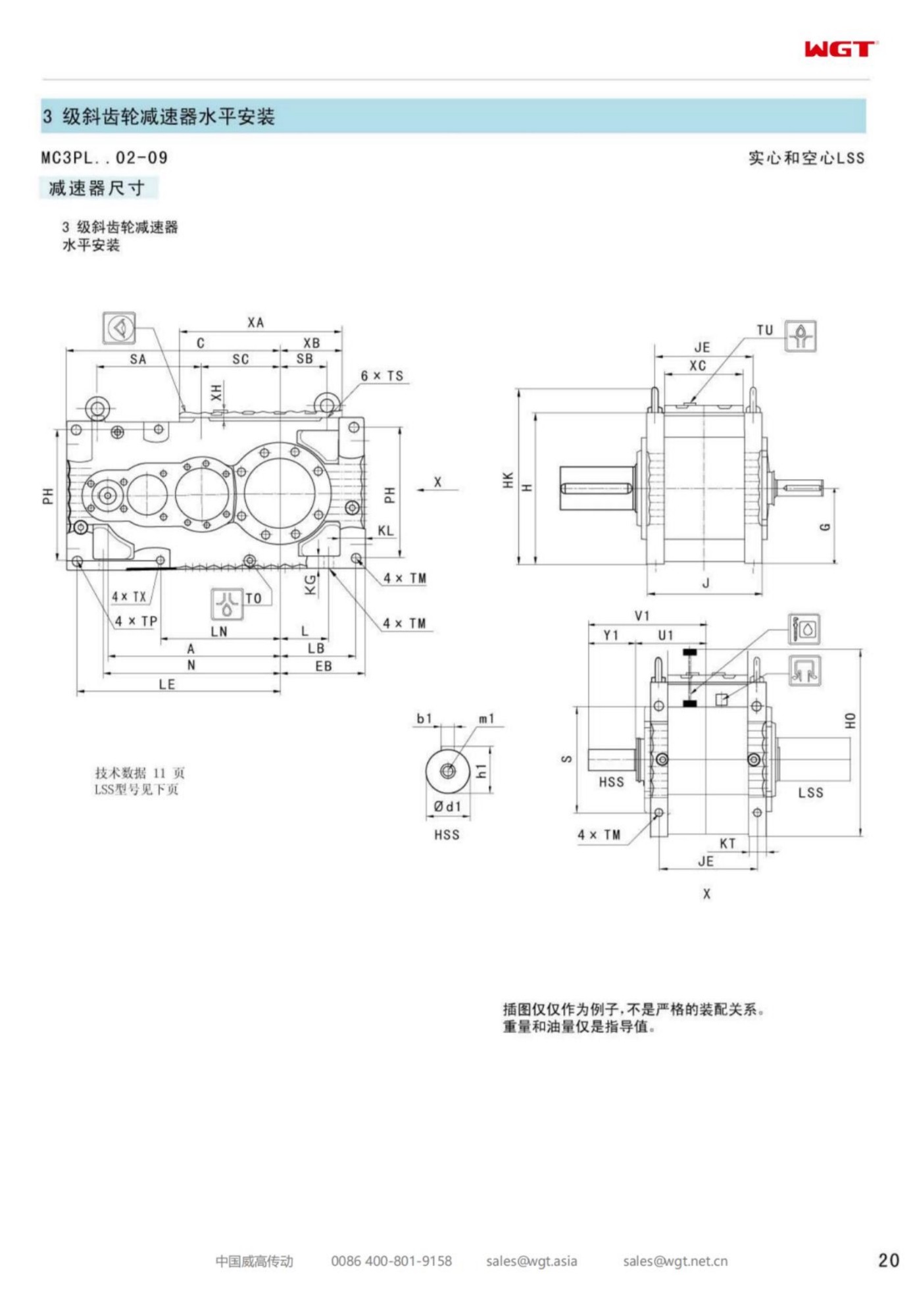
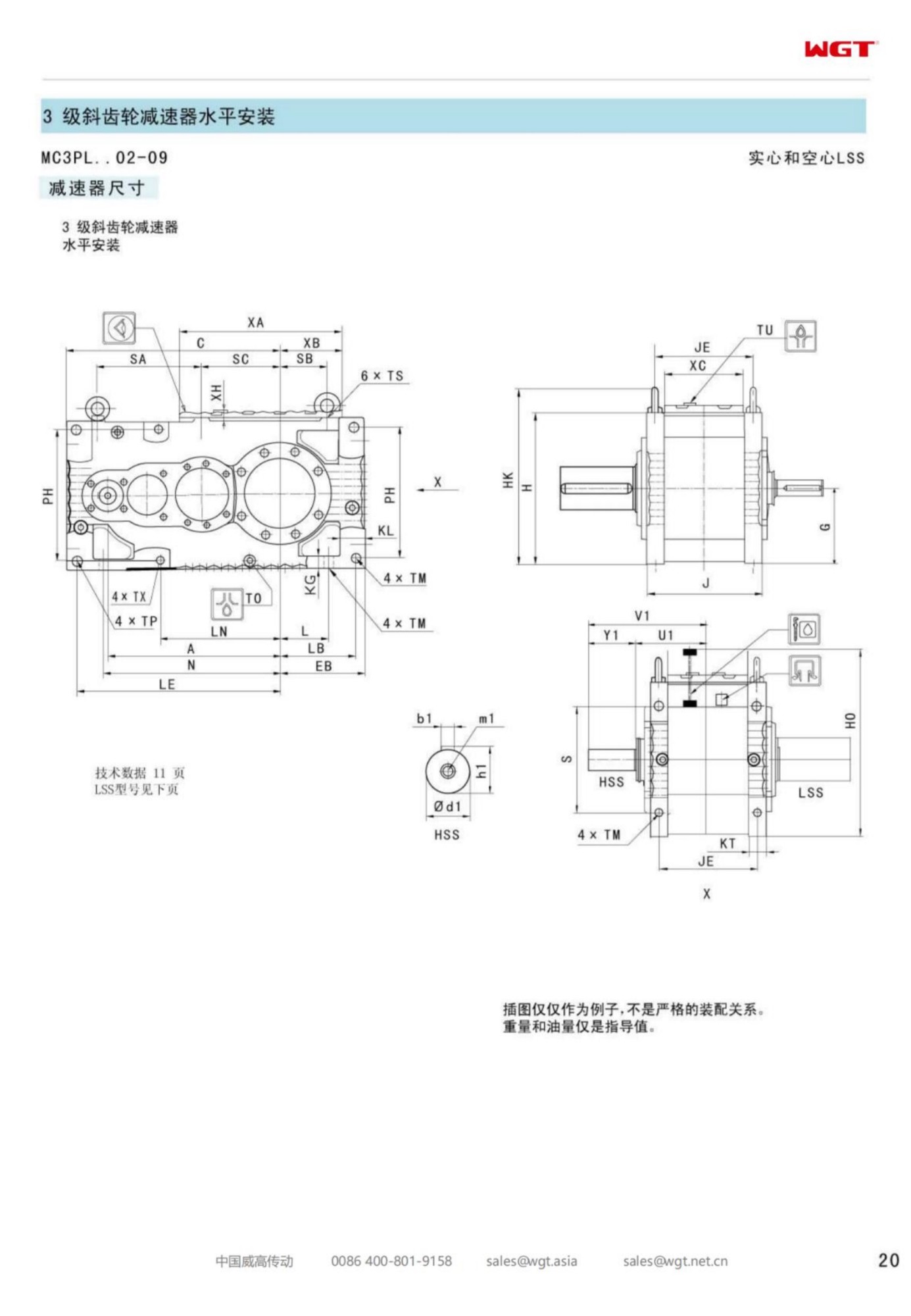
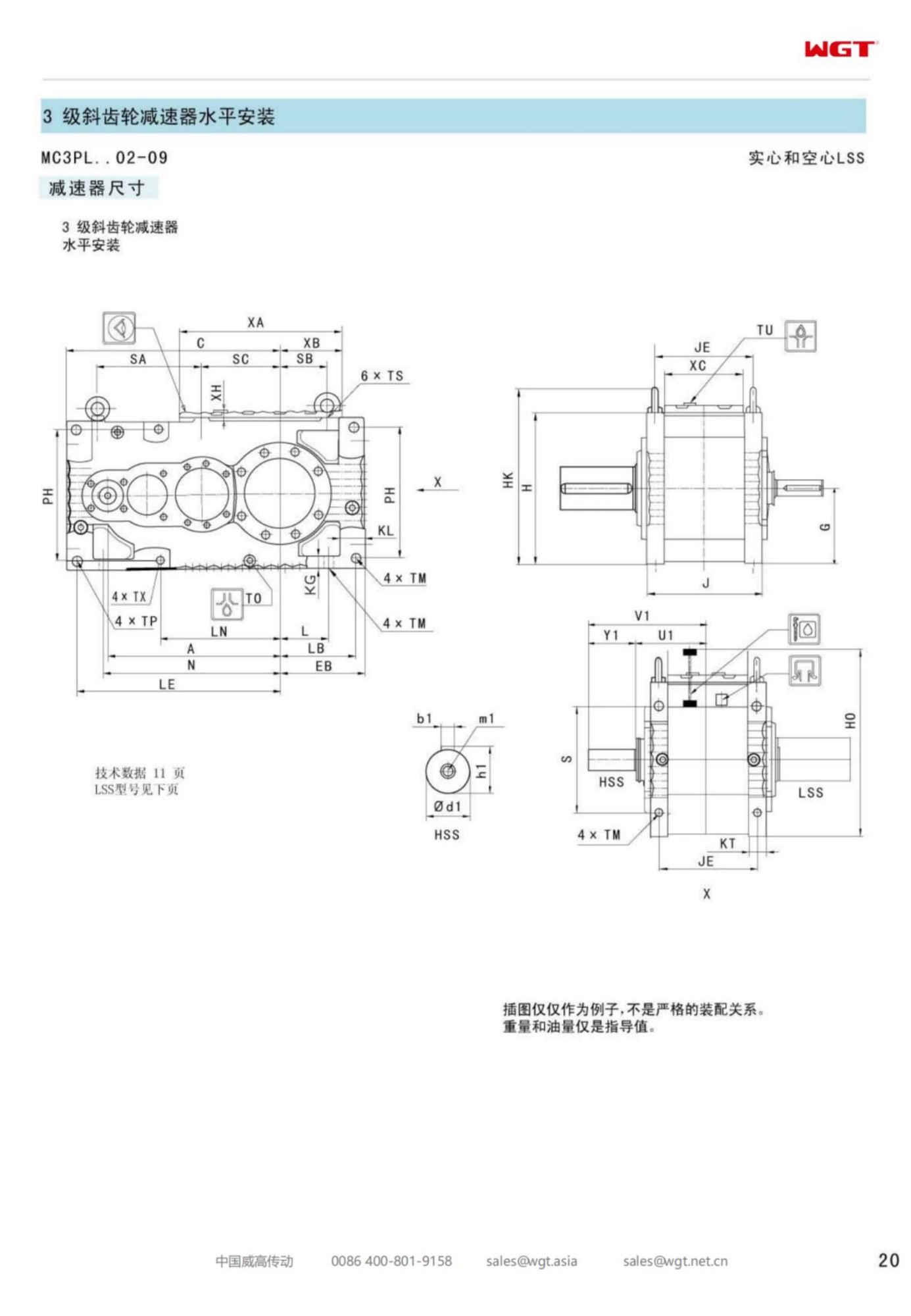
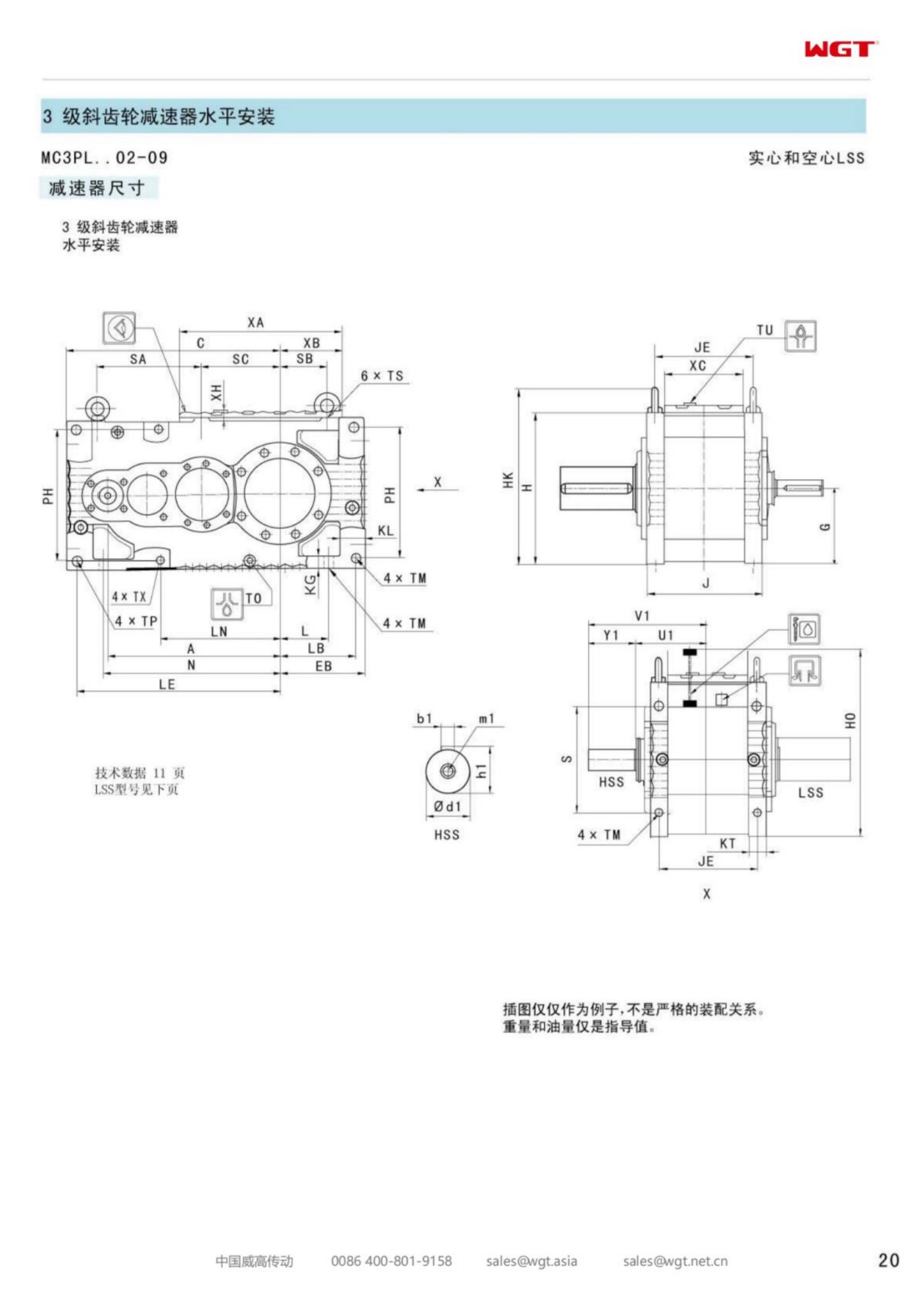
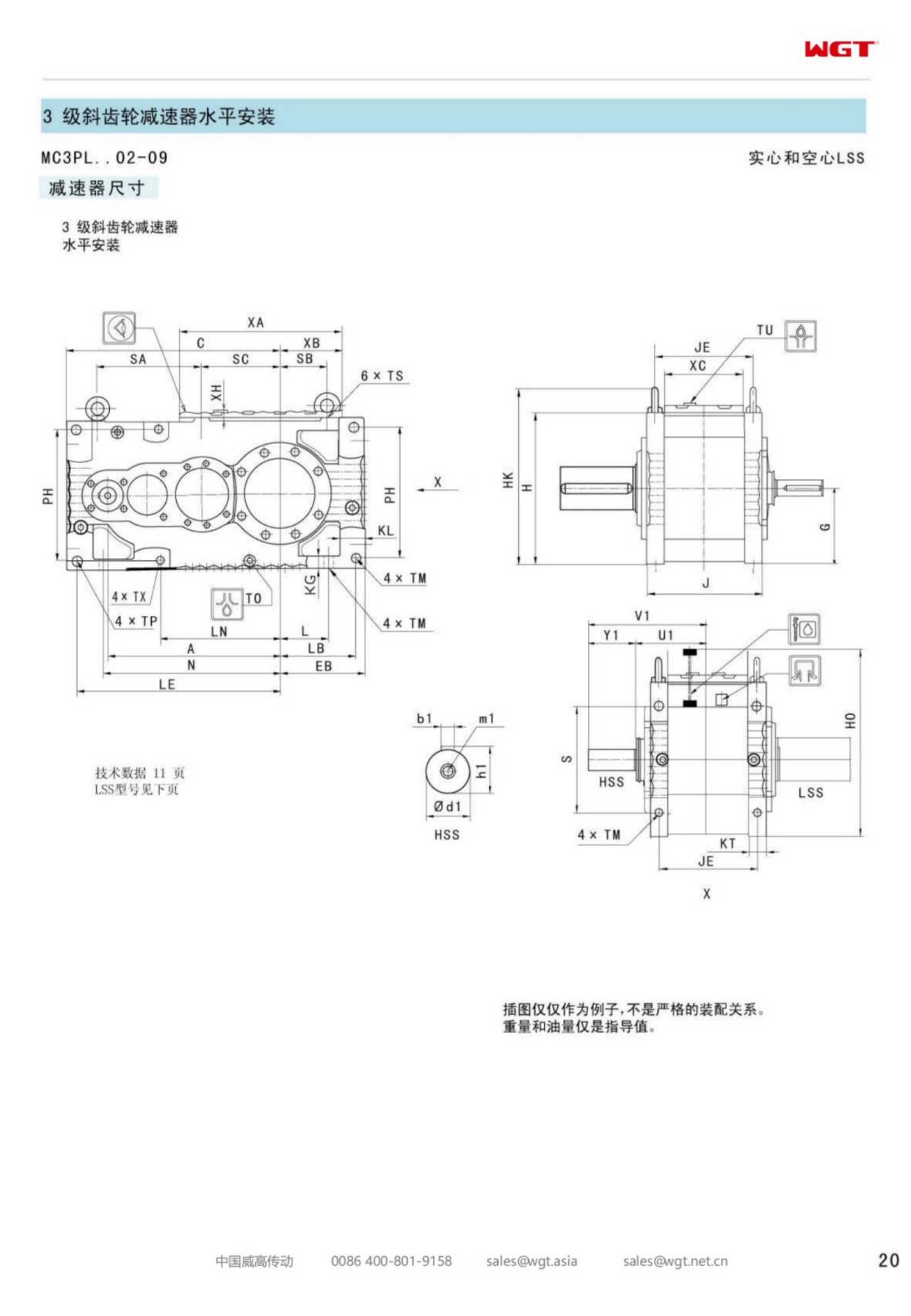
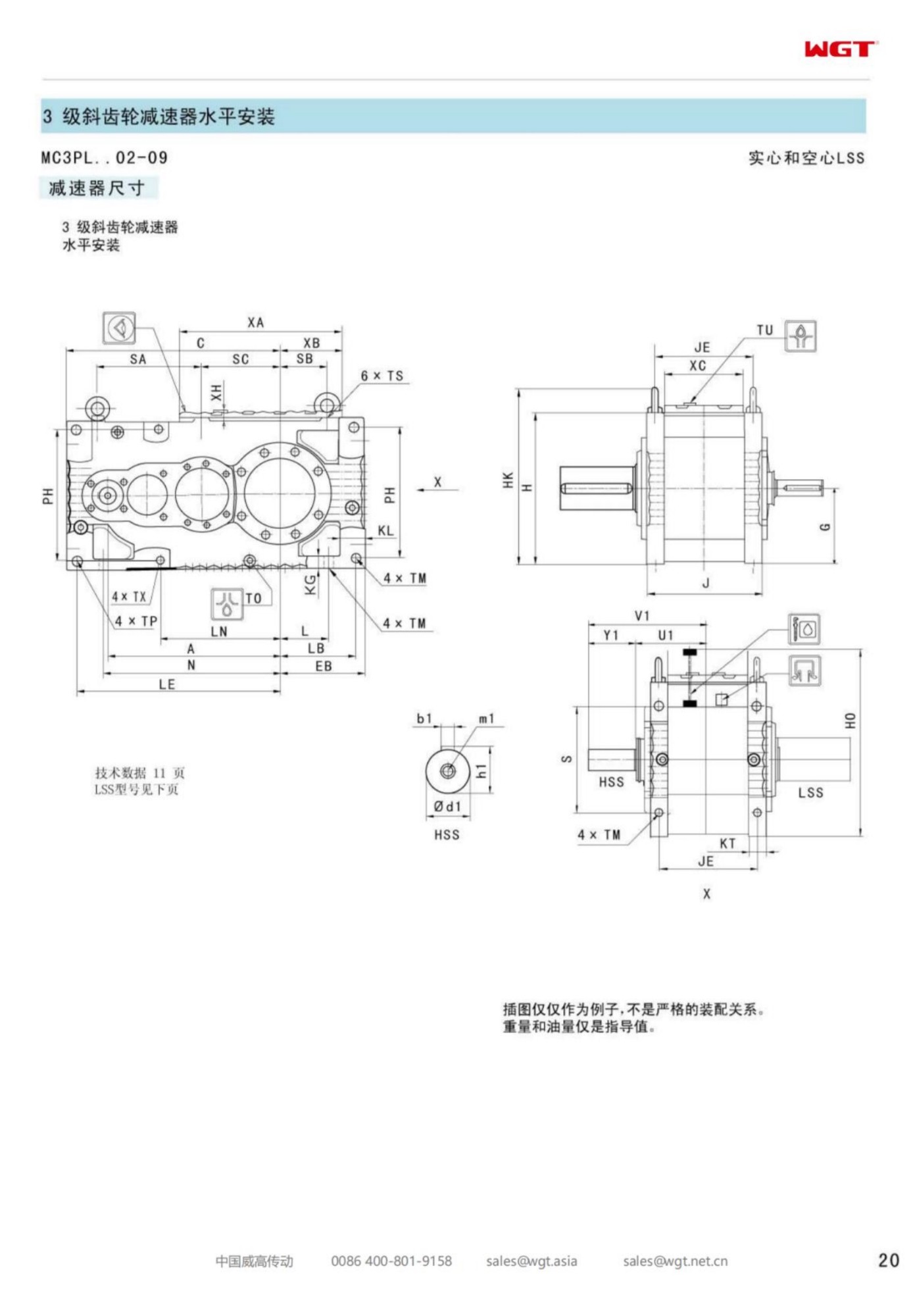
Each character of the designation is a decision already taken, and reading it once against the outline drawing prevents most later correspondence.
| MC | Industrial gear unit family built for continuous process duty |
| 3 | Three-stage train: bevel input pair and two helical reductions |
| R | Right-angle bevel-helical geometry, motor across the driven shaft |
| L | Horizontal arrangement, both shafts level in one case |
| H | Hollow output bore mounting directly over the driven shaft |
| F | Foot mounting onto a bedplate or fabricated support |
| 05 | Fifth frame of the band: continuous duties where the duty cycle, not the ratio, sizes the unit |
The string stays silent on the details that cost weeks when missed. Which end carries the motor. Whether a second shaft end is wanted for a brake or an encoder. Where the breather must face to survive dust or washdown. None of these are page options; all of them are single lines on an order confirmation, which is where they belong.
Load Profile, Starts and the Honest Factor
The selection error this frame punishes hardest is a duty cycle written for the average hour. A line described as 'continuous, gentle starts' and a line that is in truth 'continuous with six starts a shift, two of them against a stalled belt' fit the same row of a simplified table and behave very differently in year three. Breakaway torque, starts per hour and the worst surge belong on the enquiry in writing, because they are the numbers the service factor is calculated from.
Overhang keeps its importance even on a hollow-shaft build. The bore carries the driven shaft, but anything hung beyond it - a sprocket for an auxiliary drive, a sheave, a bracket - loads the bearings through a lever the rating never saw. Stating the actual overhang costs nothing and removes the single assumption most often proved wrong.
Mounting and Alignment on a Larger Bore
A larger bore forgives less carelessness, not more. The sequence stays the same as the small frames but each step carries more weight: verify the shaft diameter, runout and key against the drawing; support the unit so its weight never rests on the bore edges; slide home, fit the key and retaining hardware, then level the feet in the diagonal sequence before final tightening. The torque arm or reaction bracket goes on last, at its designed position, with its bushings free to articulate as intended.
The failure mode to avoid is the case braced against the machine through its own mounting hardware. A foot bolt torqued against an unleveled pad turns a pad into a hinge; a torque arm used as a second foundation imposes a load path the bearings were never credited for. Both show up later as fretting at the bore and a seal that weals the shaft - symptoms that look like factory faults and almost never are.
Oil Capacity, Cooling and the Summer Check
Oil volume grows with the frame, and so does what the oil can tell you. The first change comes early to clear running-in debris; an annual sample after that catches water from a tired breather, wear metal from a bevel mesh and the dust that finds any open path. A milky sample from a dusty corner is a breather problem wearing a bearing costume, and catching it at sample stage is the whole point of taking one.
Thermally, the fifth frame has real reserve but not infinite patience. Beside a kiln or under a summer roof the sump temperature must be checked at the true corner ambient, and where it runs high the answers are ordinary: a breather relocated, air directed across the case, or one frame up for the oil rather than the torque. Case temperature after four loaded hours, recorded at commissioning, gives every later reading a baseline to be judged against.
Spares Strategy for the Mid Frames
Plants that run several frame fives learn to hold them as a family: one seal kit, one breather standard, one oil grade, one disassembly sequence the crew knows without the manual. Because the hollow-bore foot build repeats across the band, the same spare strategy covers conveyor, elevator and reclaimer positions alike, and a breakdown anywhere borrows the shelf rather than the budget. The question worth asking at specification time is not 'what is the minimum frame for this duty' but 'does our standard cover it'.
An Enquiry a Frame Five Deserves
Everything the selection engineer needs fits a short list. Motor power, speed and starting method. Driven machine and load pattern, with starts per hour and breakaway stated. Output speed and tolerance. Hours per day and the worst duty hour described in a line. True ambient at the position, dust and washdown included. Driven shaft diameter, key and length available to the bore. Mounting position, motor orientation, rotation direction. Paint, nameplate and documentation requirements.
Sent complete, that list returns a quotation and an outline drawing in one pass, and the order confirmation doubles as the commissioning checklist. Sent incomplete, it returns questions, and every round of questions is a week the production plan already assumed it had. A frame five is modest money in a project; the delay it can cause is not.
The M3 Series at a Glance
| Model | Centre distance | Output | Typical duty |
|---|
| M3PSF50 | size 50 | solid shaft, foot | conveyors, feeders |
| M3PSF60 | size 60 | solid shaft, foot | crushers, mixers |
| M3PSF70 | size 70 | solid shaft, foot | ball mills, shredders |
| M3PSF80 | size 80 | solid shaft, foot | kilns, heavy conveyors |
| M3PSF90 | size 90 | solid shaft, foot | mill and kiln drives |
| M3RSF50 | size 50 | solid shaft, foot, right-angle | inclined conveyors, elevators |
| M3RSF60 | size 60 | solid shaft, foot, right-angle | screw classifiers, feeders |
| M3RHF70 | size 70 | hollow shaft, foot, right-angle | agitators, drum drives |
| M3PHT80 | size 80 | hollow shaft, torque arm, parallel | shaft-mounted conveyors |
| M3RHT90 | size 90 | hollow shaft, torque arm, right-angle | heavy shaft-mounted drives |
All frames in the table belong to one industrial family. P = helical parallel-shaft, R = bevel-helical right-angle; the low-speed shaft is solid (S) or hollow (H), mounted on feet (F) or a torque arm (T).
Selection Example: Kiln feed belt conveyor at a cement plant
Take a 15 kW motor at 1470 rpm driving the head pulley at 19 rpm. The ratio follows directly: 1470 / 19 = 77.4, so a ratio near i=77 is drawn, and the service factor is set by the dusty ambient and the restart against a loaded belt rather than by the running load alone. In this case the fifth frame carries the ratio with the thermal reserve a kiln-side position demands, and the footed case holds the conveyor line true through the season. That single division gives the catalogue ratio; the service factor for your duty class is then applied to the torque, and the frame size follows.
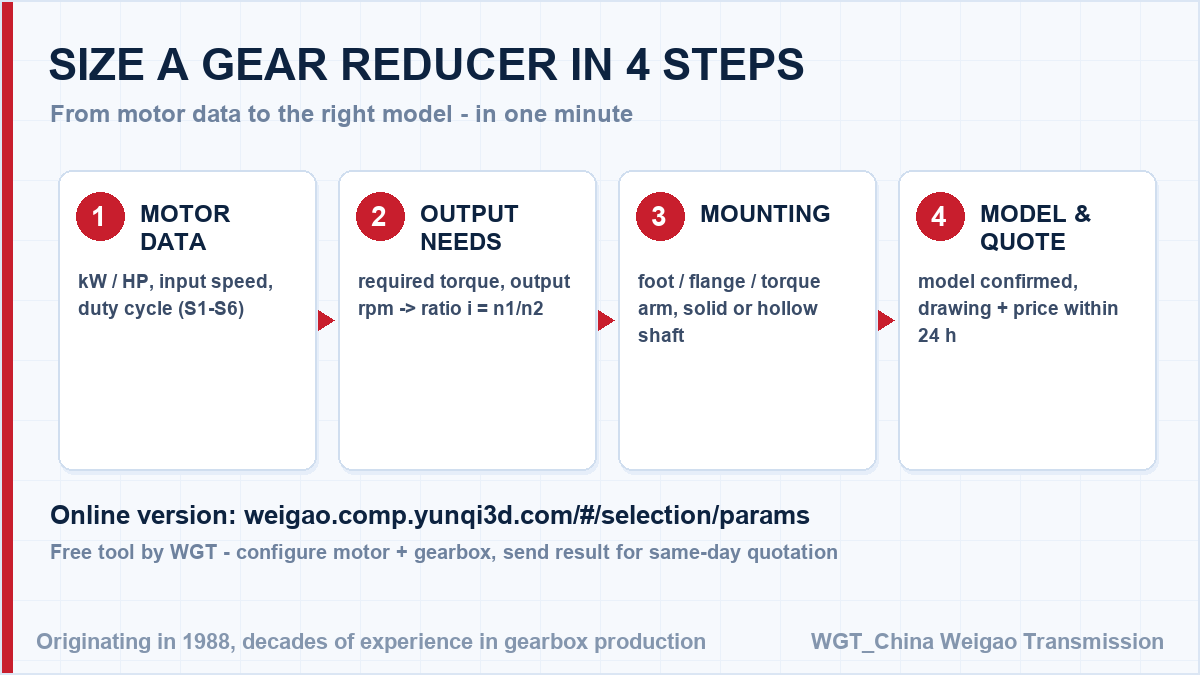
![how to size a industrial helical gearbox in four steps]()
Sizing flow: motor speed, target output speed, torque, service factor.
Where This Series Works in Practice
Mining slurry pump drive
At a mineral processing site, hollow-shaft reducers drive slurry pump agitators. The hollow bore takes the pump shaft with no coupling, so a pump change-out no longer means re-aligning a separate drive.
Palm oil mill fruit elevator
A palm oil mill powers its fruit elevator with reducers. The humid, oily atmosphere is handled by FKM seals, and the compact frame fits between the steriliser and the threshing drum.
Technical Questions, Answered
Can existing motors, couplings and guards be reused?
In most upgrade projects yes: because input and output interfaces follow the common industry dimensions, the existing motor, coupling and guard usually bolt straight on. Send the old nameplate and we confirm before you order.
What happens if my duty changes after installation?
Send us the new duty point. A revised torque and service-factor calculation is free of charge, and the answer is usually one of three: the unit is fine, add an oil change interval, or plan a frame change at the next shutdown.
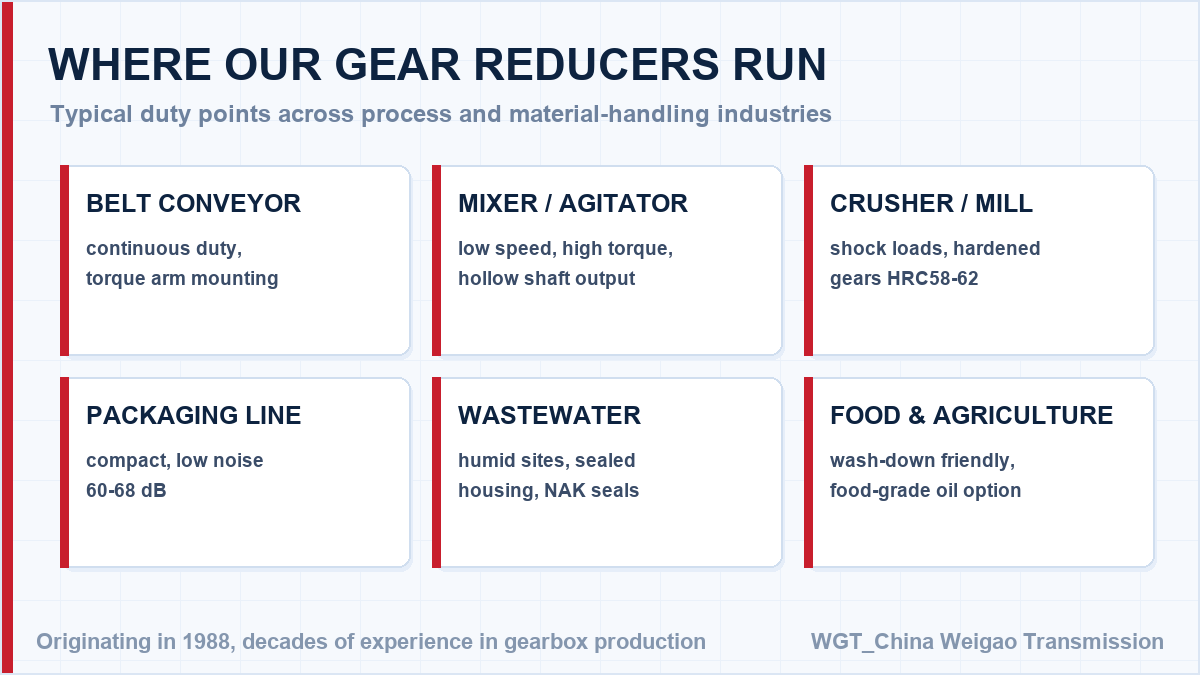
![industrial helical gear reducer application fields]()
Common application areas for right-angle industrial helical drives.
Design Review, Datasheet and Price - Same Day
Planning a new machine? Skip the back-and-forth: configure your drive in the WGT Motor & Gearbox Online Selection System and send us the result for a same-day quotation.
Send the interface drawing or the frame dimensions you need to match, and we return a 2D drawing and 3D STEP model with the quotation, so your design review is not held up waiting on the supplier. Looking for a gear reducer for textile machinery? Tell us the duty point and we will confirm the model in writing.