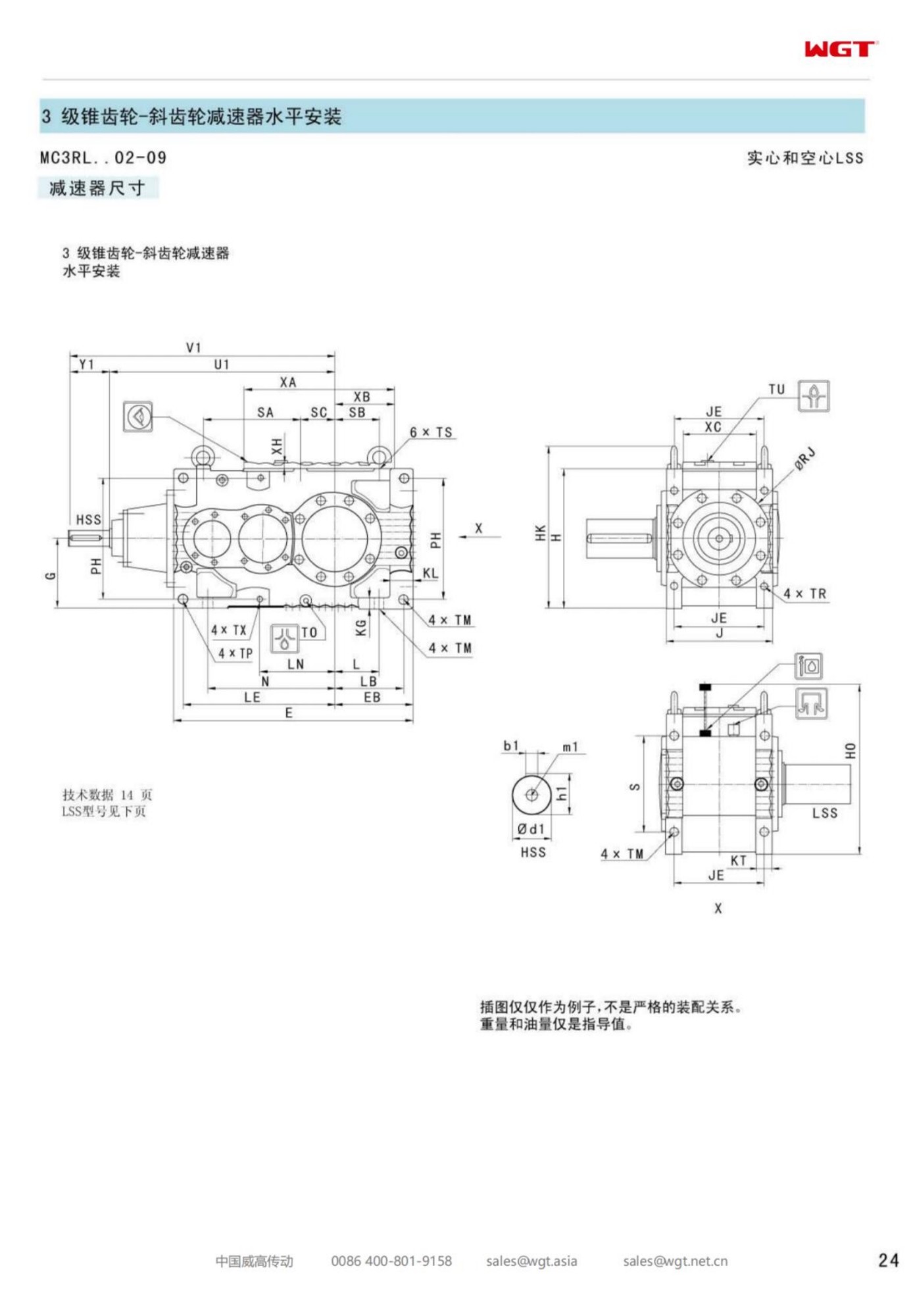
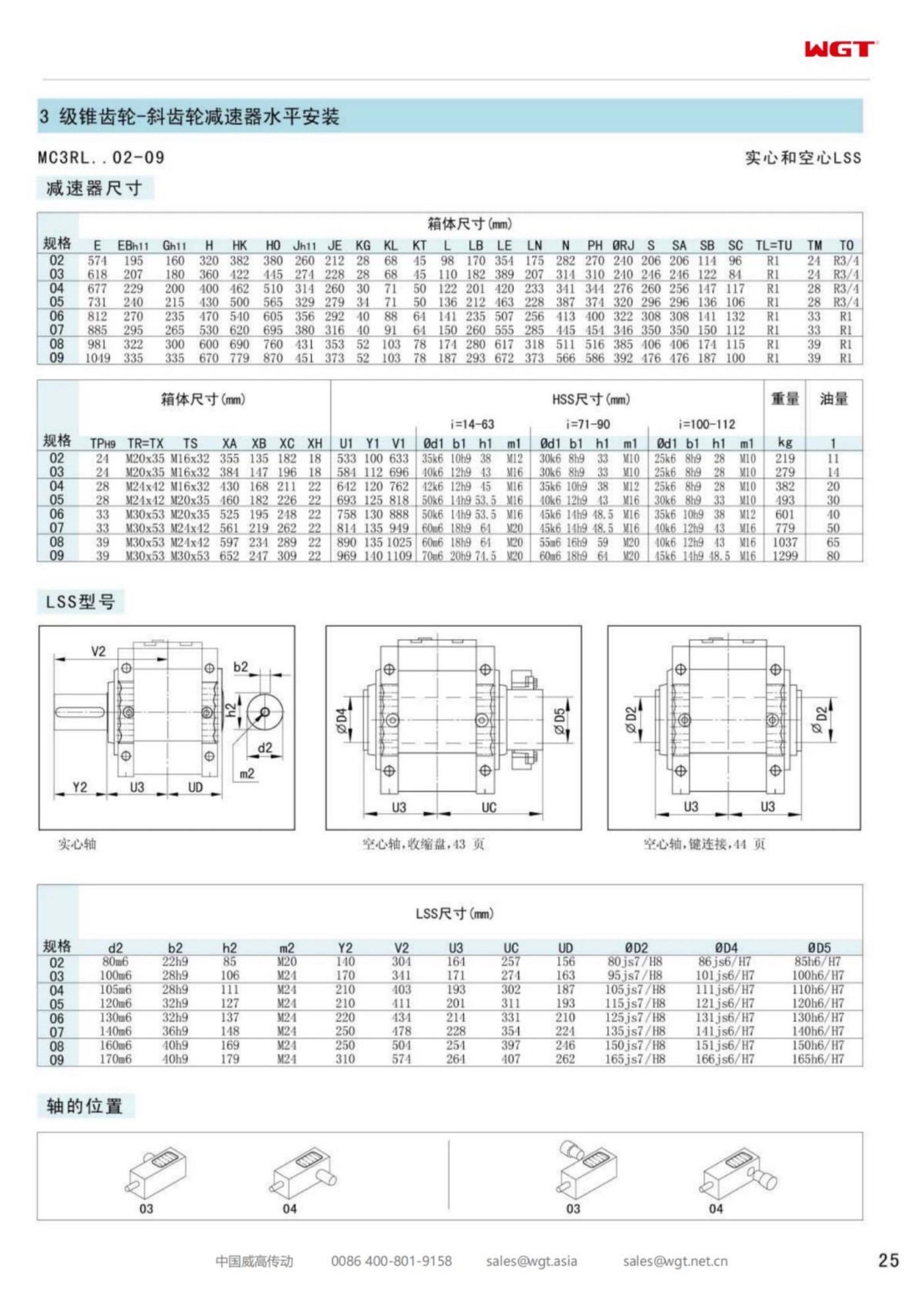
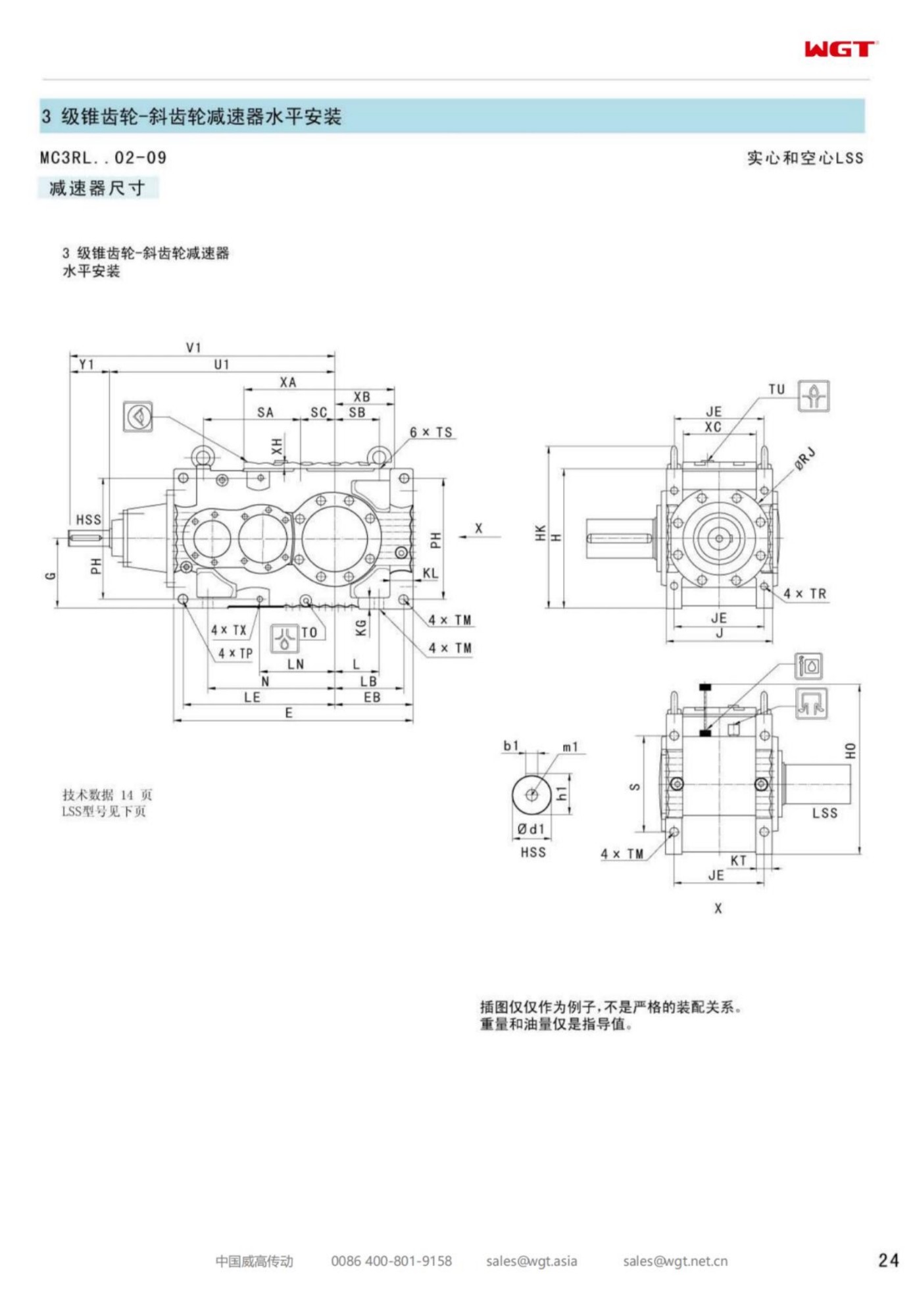
A sand wash plant is a wear test with a production target attached. Water carries the fines, sand carries the abrasion, and everything the drive touches is either wet, gritty or both. Where the duty is a slow, heavily loaded shaft - a screw washer, a classifying screw, a dewatering wheel - a three-stage unit is the natural answer. The MC3RLHT03 right-angle hollow shaft gear unit is that frame: small enough to hang on a chassis, geared low enough to turn a loaded screw.
The notes below cover what slurry does to a case that lives outdoors, how a screw washer loads on start, why a floating chassis changes the arm bracket, and what the enquiry should say so the unit arrives fit for a wash plant rather than a workshop.
Slurry Is a Wear Problem First
Sand plus water is a lapping compound. It does not attack a case in the way an acid does; it removes material slowly and evenly from anything that moves against it, starting with seal lips and shaft surfaces and ending with bore fits.
That changes the priorities. Ingress protection matters more than paint finish, shaft hardness under the seal matters more than case appearance, and a service routine that checks the seal path is worth more than one that washes the unit down at the end of the week.
Reading the MC3RLHT03 String
Read the code and the geometry is settled before the drawing is opened.
| MC | Industrial gear unit family for continuous plant duty |
| 3 | Three stages in the case - two helical reductions into a bevel set |
| R | Right-angle build, keeping the motor clear of the water box |
| L | Level output axis along the screw or the wheel shaft |
| H | Hollow output bore keyed onto the driven shaft |
| T | Torque-arm bracket reacting into the chassis frame |
| 03 | Third frame, the smallest of the three-stage band |
Three stages buy ratio, which is what a slow screw needs. They also mean the frame is chosen on output torque and on the structure that absorbs the reaction - two numbers that are rarely on the same drawing as the motor.
Three Stages for a Slow, Loaded Shaft
A screw washer turns slowly because the sand needs time to drain, not because the drive is weak. That combination - low speed, high torque, continuous - is exactly where a third reduction earns its keep: the same motor delivers several times the output torque in one compact case.
The trade is that every mesh adds a place for wear and a place for heat. On a wash plant both are managed by oil discipline and by keeping grit out, which is why the seals and the breather deserve as much attention as the ratio on the enquiry.
Sand, Water and the Abrasive Path
Grit reaches a seal in two ways: carried by water, and carried by air. The water route is obvious and gets attention; the air route is the splash mist that settles on a warm case and dries into a crust that the next rotation works into the lip.
A dust lip ahead of the main seal, a shaft surface that is smooth where the lip runs, and a case arranged so water runs off rather than pooling on a cover are the three measures that make the difference. None of them is expensive at the order stage; all of them are awkward to add later.
Screw Washer and the Settled Load
A screw washer that stops with sand in the trough restarts against a settled load. The material has drained, the friction has risen, and the breakaway torque can be several times the running figure - the classic reason a wash-plant drive trips on the first start of the morning.
Size on that start, not on the running torque, and give the control system a way to clear the trough before the screw is asked to move a full load. Where the plant cannot guarantee a clear trough, the service factor and the torque relay are the only things standing between a trip and a twisted shaft.
Torque Arm on a Floating Chassis
Mobile wash plants sit on chassis beams that were designed for transport, not for a torsional reaction at mid-span. The arm bracket therefore lands on a member that flexes when the plant is towed and settles when it is set down on uneven ground.
Keep the stay short and square, land it on a main beam rather than a brace, and inspect the bracket welds after every move. A chassis that has been over a rough site road is not the structure it was in the yard, and the arm is where that shows up first.
Classification Tank and the Return Water
Classification is where the plant decides what counts as product. Screws and wheels in the tank run in water that carries fines, and the drives sit at the tank edge where the spray reaches them on a windy day.
That position argues for a right-angle input, which keeps the motor above the water line and back from the spray, and for a hollow bore, which removes the coupling that would otherwise need aligning in a wet corner. Both are geometry decisions that pay for themselves in maintenance hours.
Beach Slopes and the Inclined Duty
Screw washers and dewatering wheels run at an incline, and an incline adds a gravity component that does not appear on a horizontal conveyor calculation. The drive carries the sand up the beach as well as along it, and the load rises as the beach builds.
Describe the incline, the beach length and the expected build-up on the enquiry. A frame sized for a horizontal run will be marginal on an incline, and the symptom - a drive that runs warm and trips in the last hour of the shift - is easy to misdiagnose as an electrical problem.
Seals Against Grit and Standing Water
Standing water is worse than flowing water because it sits against the seal with nowhere to go. A unit mounted low on a chassis, in a corner where the wash water collects, is the worst case.
Raise the mounting where the layout allows, fit a deflector where it does not, and specify a seal arrangement that keeps grit away from the lip. Then check the seal path on the weekly walk: a few minutes with a rag tells you whether the lip is still doing its job.
Bearings and the Wet-End Service
Bearings fail slowly and then suddenly. On a wash plant the early signal is usually a temperature rise on a warm day, then a noise that only appears at low speed, then a seal that starts to weep because the shaft is no longer running true.
A monthly temperature record and an oil sample at each service will catch the first stage. Neither is sophisticated; both are the reason some plants get years out of a drive while the plant next door goes through one every season.
Writing the Enquiry for a Wash-Plant Drive
The enquiry that gets this frame right names the duty and the site: screw or wheel, diameter and incline, beach length, throughput, feed size, water flow, standing-water conditions, shaft dimensions and wear, chassis or frame available for the stay, and the wash-down routine.
The reply should answer as a system: bore and key against the drawing, ratio and output speed, service factor argued on the settled start and the beach load, seals and breather for grit and spray, arm geometry drawn against the chassis, and a wear-parts list. Then the drive fits the plant instead of being made to.
A Frame Three Through the Season
Wash plants are judged at the end of a season, when the chassis has moved three times and the water has been everywhere. The drives that survive are the ones whose seals were specified for grit, whose brackets were checked after each move, and whose oil was changed on condition rather than on hope.
Frame three carries its half with three stages that turn a loaded screw at a few revolutions per minute, a hollow bore that removes a coupling from a wet corner, and a case that tolerates spray. The plant carries the rest - and the plant is where the difference is actually made.
Grit, spray and a screw that restarts under a settled load - three stages turn it slowly:
- Screw washer drive on a sand washing plant
- Dewatering wheel shaft at a sand classification line
- Fine sand recovery screw behind a hydrocyclone
- Coarse material washer on an aggregate wash chassis
- Return water screw feeding the settling pond
- Mobile wash plant transfer conveyor on a towable chassis
Model Range and Centre Distances
| Model | Centre distance | Output | Typical duty |
|---|
| M3PSF50 | size 50 | solid shaft, foot | conveyors, feeders |
| M3PSF60 | size 60 | solid shaft, foot | crushers, mixers |
| M3PSF70 | size 70 | solid shaft, foot | ball mills, shredders |
| M3PSF80 | size 80 | solid shaft, foot | kilns, heavy conveyors |
| M3PSF90 | size 90 | solid shaft, foot | mill and kiln drives |
| M3RSF50 | size 50 | solid shaft, foot, right-angle | inclined conveyors, elevators |
| M3RSF60 | size 60 | solid shaft, foot, right-angle | screw classifiers, feeders |
| M3RHF70 | size 70 | hollow shaft, foot, right-angle | agitators, drum drives |
| M3PHT80 | size 80 | hollow shaft, torque arm, parallel | shaft-mounted conveyors |
| M3RHT90 | size 90 | hollow shaft, torque arm, right-angle | heavy shaft-mounted drives |
Frame sizes in this series follow a widely used industrial dimension ladder: foundations, couplings and guards of the existing installation are reused as they are.
Proven Installations
Cold-store conveyor
A cold-store operator uses reducers on freezer-room conveyors. Low-temperature synthetic oil and moisture-resistant seals keep the units running below -20 deg C ambient.
Bakery spiral cooler
A bakery equipment builder fits units to spiral cooler drives. The compact right-angle layout fits under the spiral cage, and food-grade lubrication was specified for the hygienic area.
![gearbox applications in quarry food and water plants]()
Conveyor, mixer, crusher and wastewater duties share the same gear family.
Selection Example: Screw washer on a sand washing plant
Take a 7.5 kW motor at 1450 rpm turning the screw at 9 rpm. The ratio follows directly: 1450 / 9 = 161, so a ratio near i=160 is taken from the three-stage right-angle band, and the frame is confirmed against the beach load on the incline and the settled trough at the morning start rather than the free-running figure. In this case frame three keeps the motor above the water line through its right-angle input, carries grit with a dust lip and a sealed bore, and pins reaction into a main chassis beam. Motor speed over target speed gives the ratio; the driven machine decides the service factor, and the two together decide the model.
![industrial gear unit sizing procedure diagram]()
The four inputs the online selector asks for.
Drive Down? Ask About Priority Builds
A drive is down right now? Work out the ratio, torque and frame size yourself with the WGT Motor & Gearbox Online Selection System, then send the result - we confirm it in writing.
Priority builds slot into the next production run, and urgent units can be air-freighted within days of payment. Describe the failure and the machine - we tell you honestly what is possible. Looking for a speed reducer for bucket elevator? Tell us the duty point and we will confirm the model in writing.
FAQ: Selection, Mounting and Maintenance
How often should the oil be changed in heavy duty?
With mineral oil, plan an initial change after the running-in period and then roughly every 5,000 hours. Synthetic oil stretches the interval to around 10,000 hours. Hot environments, dust or frequent starts shorten the interval - we advise the schedule with the quotation.
Can the unit be rebuilt instead of replaced?
Yes. Bearings, seals and gear sets are available as spare internals, and the horizontally split housing allows inspection and reassembly on site. Many operators overhaul units during annual shutdowns instead of buying new.