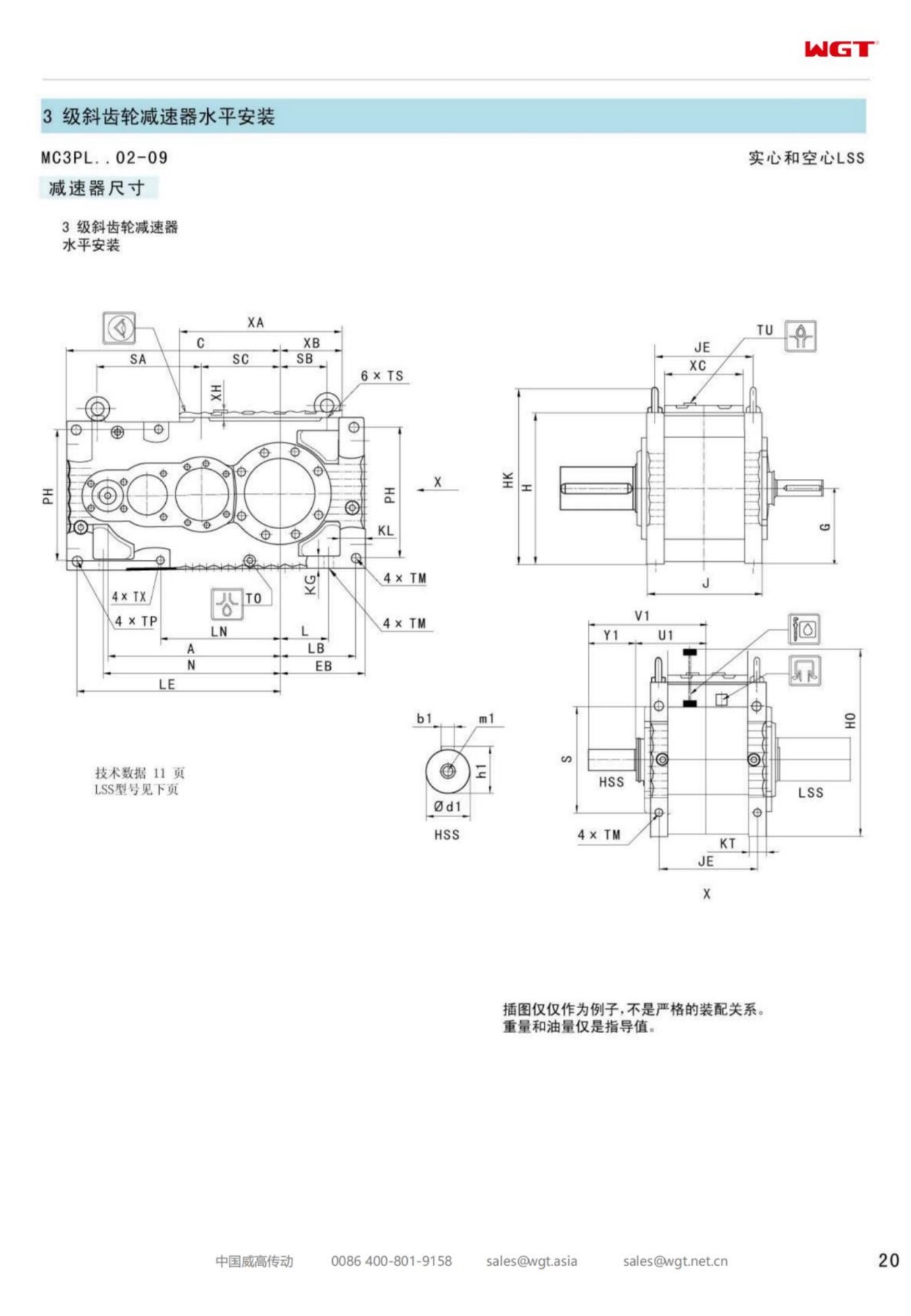
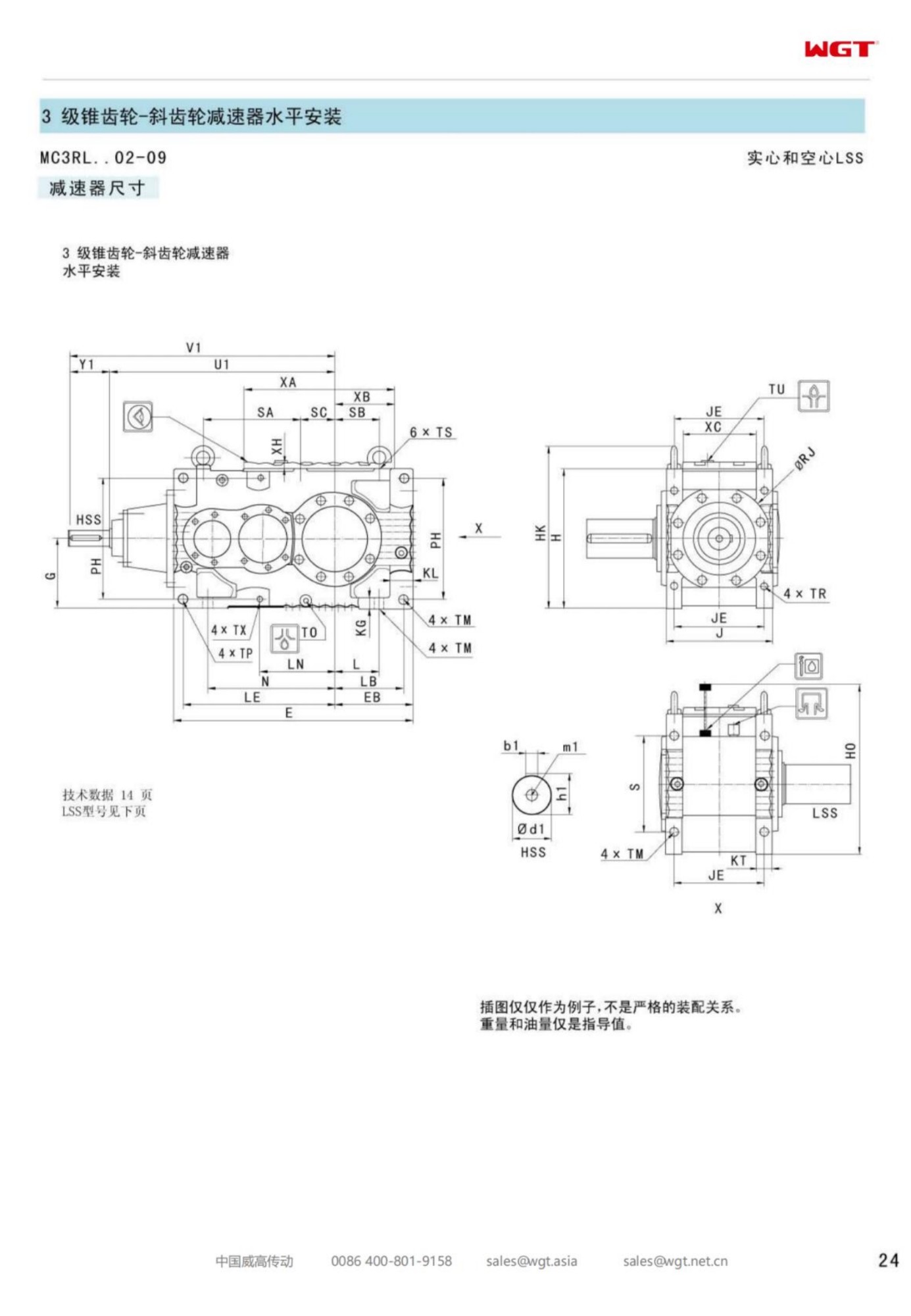
A dryer drum is the one machine on a wallboard line that cannot be allowed to stop for long. The board inside sets around the drum's schedule, not the maintenance planner's, and the drive that turns it is asked for the same output hour after hour in air that is hot, humid and carrying gypsum dust. Where the drum is big and the speed is low, a three-stage unit is what fits. The MC3RLHT04 right-angle hollow shaft gearbox is that frame: geared deep enough to turn a loaded drum at drum speed, small enough to mount beside it, and hollow at the output so the drum shaft passes straight through.
These notes are written for the plant engineers who live with a dryer: why the drum duty is harder than its kilowatt figure suggests, what hot wet air does to a case over a campaign, and what an enquiry for a drum drive should say to get the right frame back.
A Drum That Cannot Afford a Long Stop
Wallboard is a continuous product. When the drum stops, the line behind it stops, and the board in the dryer begins to set wherever it lies. The cost of a drive failure is therefore not the drive; it is the scrap, the restart and the schedule missed while the line is cleaned out.
That is why the drum drive is usually specified with more margin than the running load suggests, and why the whole chain - coupling, bore, key, footings - is designed around the worst restart rather than the average turn. A gearbox chosen only on the nameplate load has no seat at this table.
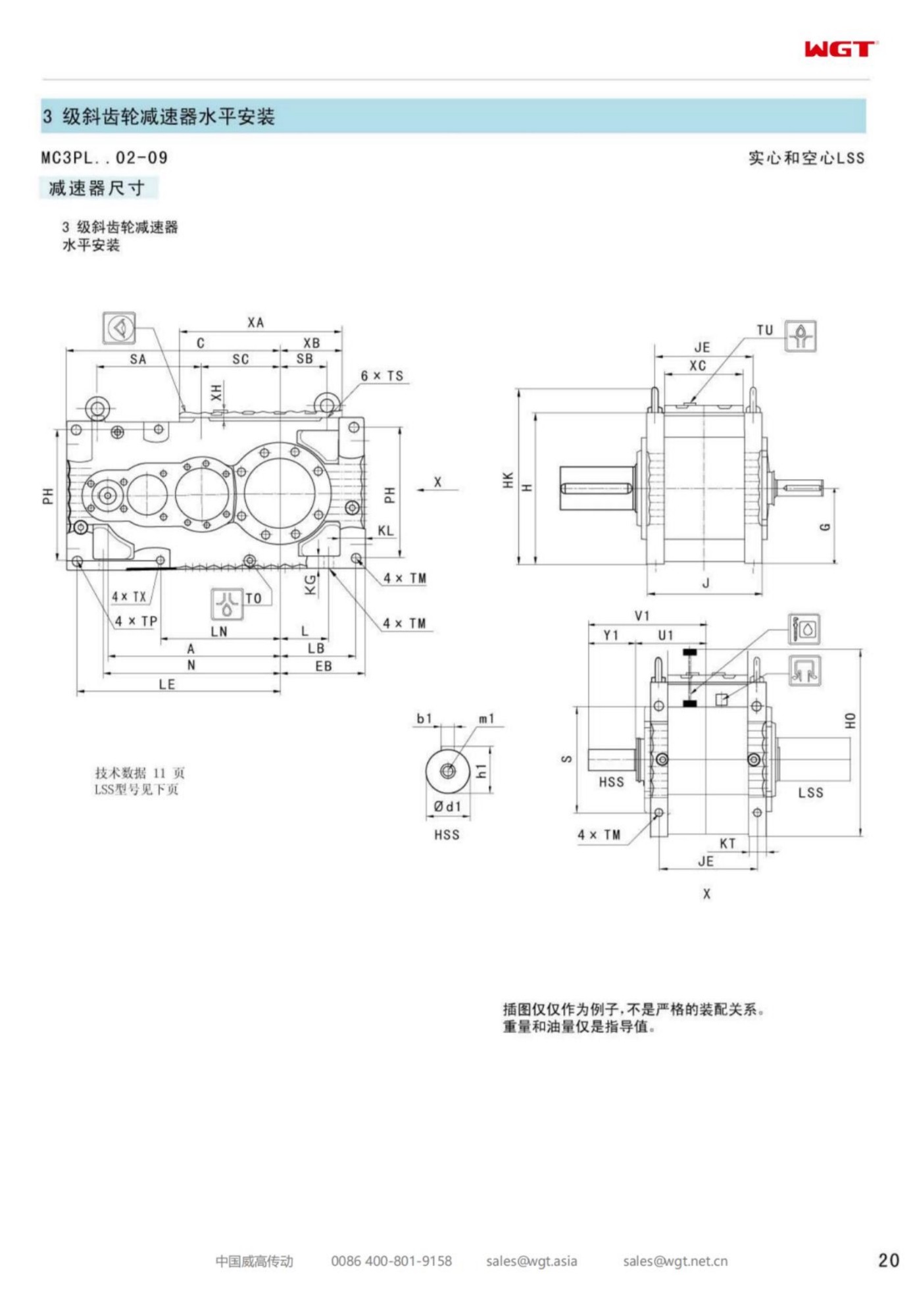
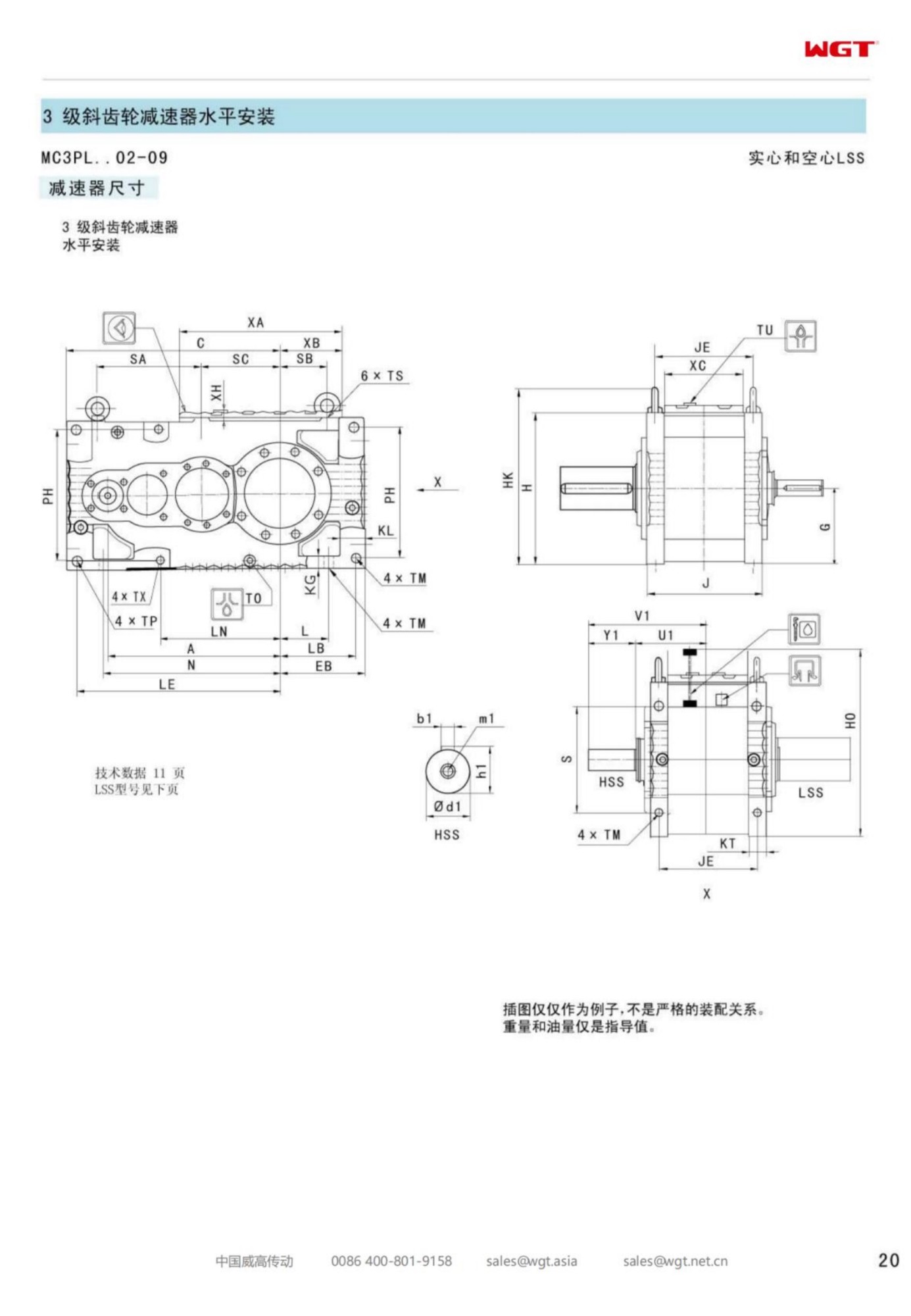
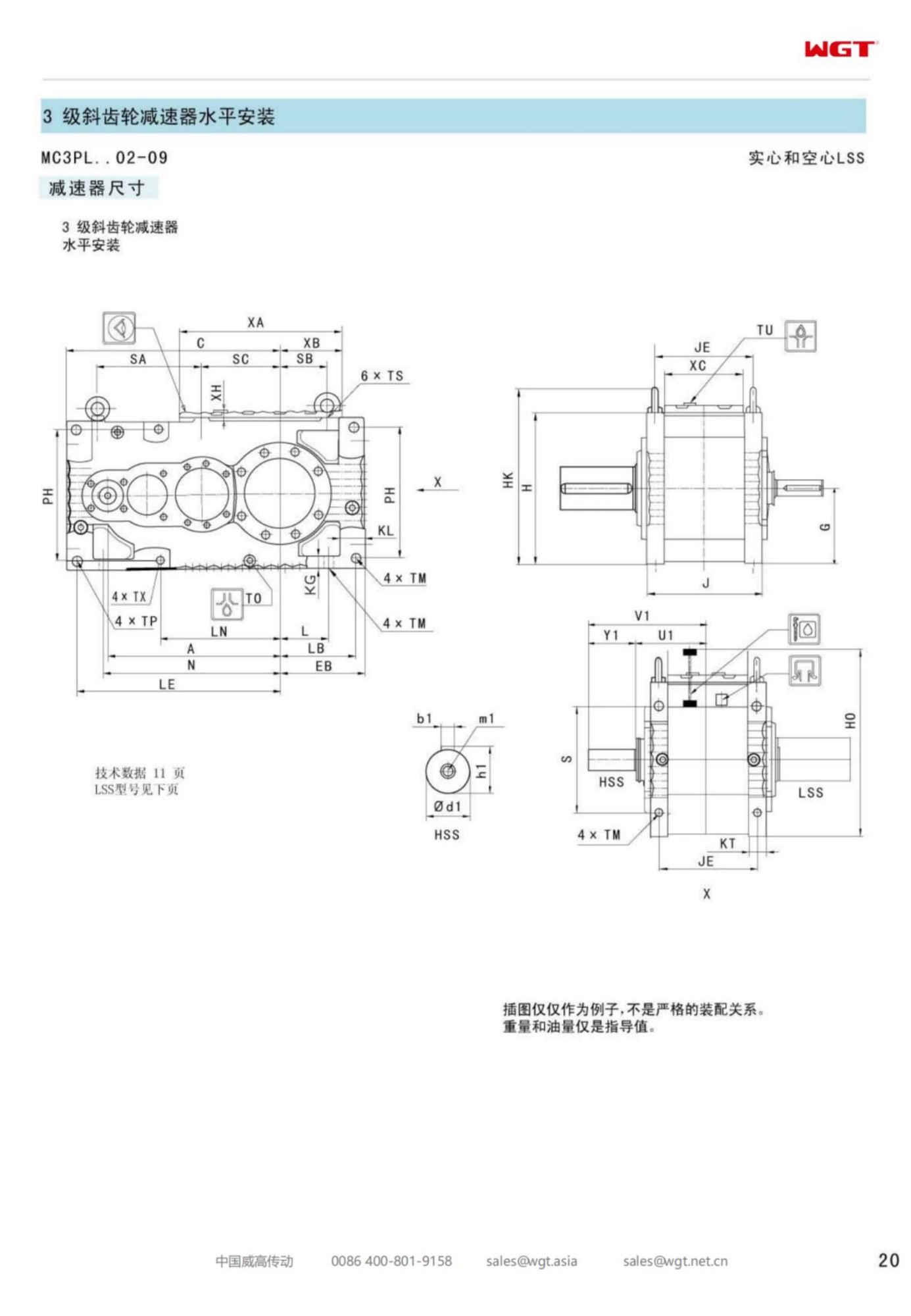
Reading the MC3RLHT04 String
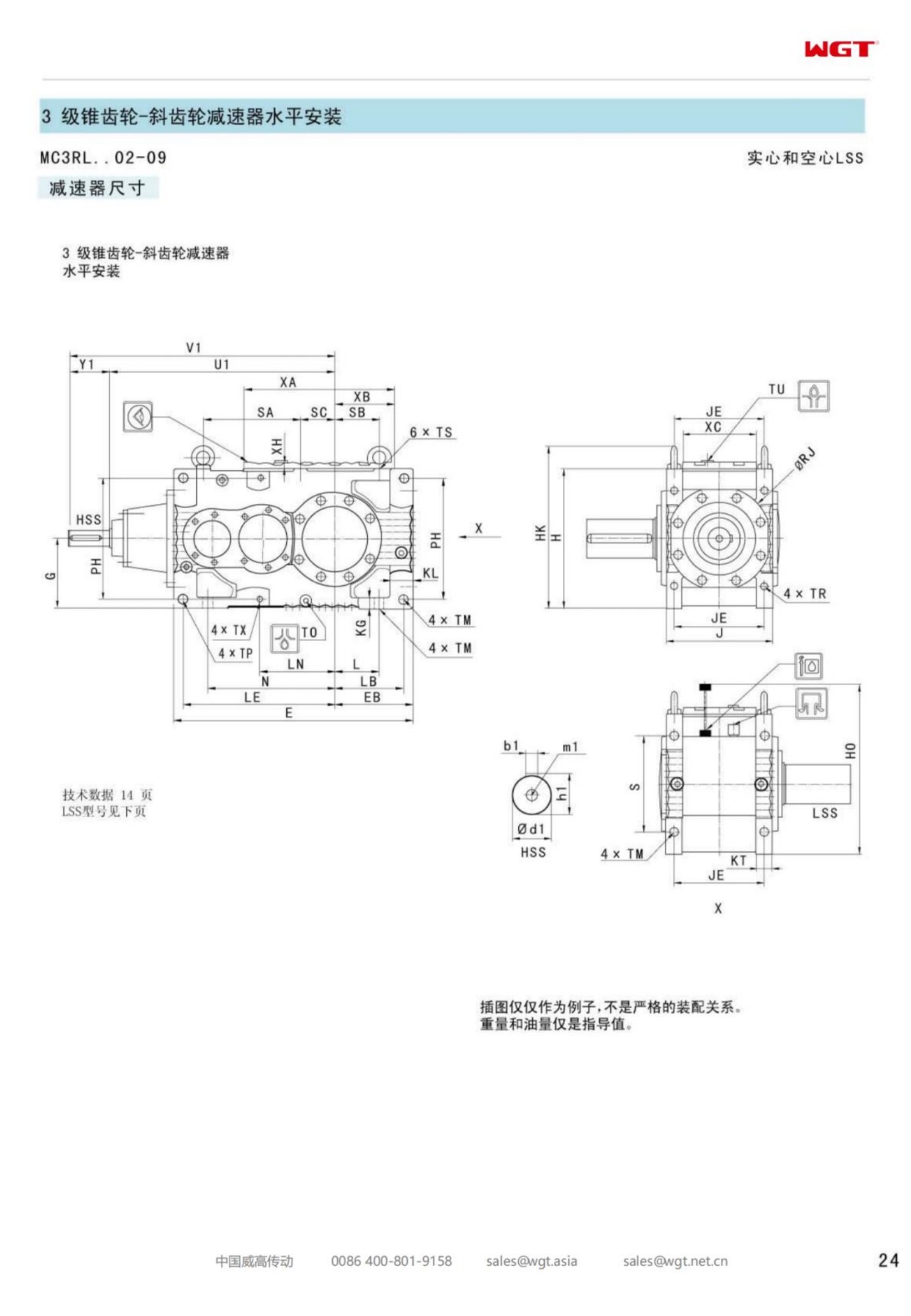
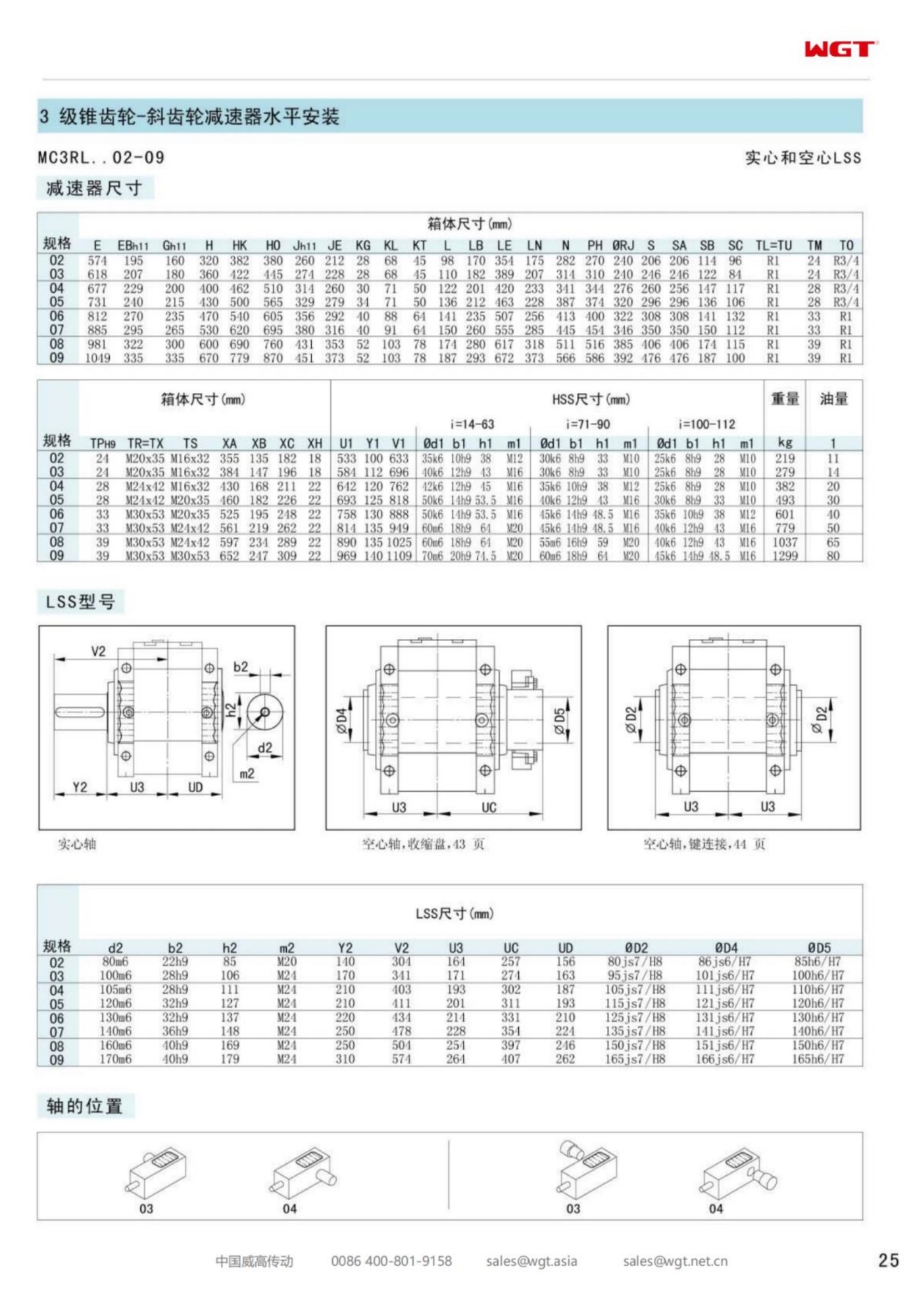
The code answers the questions a dryer-house engineer asks before the drawing is opened.
| MC | Industrial gear unit family for continuous plant duty |
| 3 | Three stages in the case - two helical reductions into a bevel set |
| R | Right-angle build, the motor set back from the hot drum |
| L | Level output axis along the drum centreline |
| H | Hollow output bore keyed onto the drum drive shaft |
| T | Torque-arm bracket, reaction into the deck steelwork |
| 04 | Fourth frame of the three-stage band |
Three stages buy the ratio that a slow drum needs without a separate belt or chain stage, and the right-angle input keeps the motor clear of the plenum and the hot deck where nobody wants to reach for a coupling guard.
Three Stages and the Slow Drum
A wallboard dryer turns slowly by design. The board needs residence time, and the drum needs to move the mass gently through the heat. Slow rotation at full load is exactly the operating point where a three-stage gear unit earns its place: the same motor delivers many times the output torque of a two-stage frame in a case that is barely bigger.
The trade is one more mesh to maintain, and oil that works harder because every stage multiplies the speed it sees. Both are handled by a service routine built around oil condition rather than calendar, which is worth stating in the order documents because it changes the breather, the fill and the sampling points.
Hot, Wet Air and the Case
The air around a gypsum dryer carries moisture driven off the board and heat radiated from the shell. A case that lives there sweats on the inside of its paint as well as the outside, and the places that corrode first are the ones where water can stand: cover joints, fastener heads, the lip of the output bore.
The specification that survives this is not exotic. It is a paint system chosen for a humid interior, fasteners in a grade that does not rust into the threads, and a geometry that drains rather than pools. Ask for those three and the case will still look like a gearbox in ten years, not a geological specimen.
Gypsum Dust and the Joints
Gypsum dust is fine, slightly abrasive and mildly setting when damp. It finds every joint on the case and builds up on every horizontal surface, where it holds moisture against the paint and hides the fasteners that the walk-round is supposed to check.
The answers are routine but they belong on the order: sealed covers rather than gasket tape, a breather mounted where the dust plume does not pass on its way up, and a case shape that does not offer ledges. A drive specified for a clean hall and planted in a dryer house will spend its life collecting gypsum.
Hollow Bore onto the Drum Shaft
Mounting on the drum shaft through a hollow bore removes the coupling that would otherwise have to be aligned on a frame that grows with heat. It also carries a responsibility: the fit between bore and shaft is now the whole of the torque path.
The shaft surface must be clean, round and sized to the drawing, and the key must be checked for seating rather than assumed. A drum that has been re-shafted or re-turned over the years is a frequent trap; measure before the drive is ordered, because the bore cannot be corrected after the case is machined.
Torque Arm and the Hot Deck
The deck around a dryer is structural steel that has been warmed, cooled and welded more than once. The torque arm lands there, and the reaction it carries reverses when the drum is barred round during maintenance.
Keep the stay square to the reaction, land it on a primary member rather than a secondary brace, and use a plate to spread the load instead of trusting four bolts in thin flange. Check the anchor after the first month of running; a deck that was true at installation may have settled once the drum warmed up and the steel grew.
The Restart After a Board Break
When the board line breaks inside the dryer, the drum stops with a mass of partly set board where the flights expect loose material. The restart torque on that condition can be several times the running figure, and it arrives at the moment when everyone wants the line back.
This is the case that decides the frame. Describe the jam condition on the enquiry - what the drum carries, how long it stands, whether the drive is permitted to jog - and size the service factor on it. A drive that trips on the restart after every break is a drive the operators will learn to distrust.
Thermal Growth and the Alignment Question
A drum shell that runs hot grows in length and diameter, and the deck under the drive grows differently. With a hollow-bore mount the gearbox moves with the shaft, so the question is not alignment but clearance: at the stay, at the pins, at the case-to-structure gaps.
Leave the clearances the drawing asks for even where the fit looks loose cold, and re-check them at the first hot inspection. Most drum-drive troubles that appear in week three are assembly clearances that were closed by growth, not gear problems at all.
Oil, Heat and the Sampling Point
Heat near the drum raises the case temperature above what a hall-mounted frame sees, and the oil is the first thing to show it. A sampling point fitted at order stage costs little and turns the annual service from a guess into a reading.
Sample at fixed intervals, watch the trend rather than a single result, and change the oil on condition. Where the ambient is genuinely hot, ask the supplier to confirm the oil grade against the measured case temperature rather than the catalogue default - the two are not always the same figure in a dryer house.
Writing the Enquiry for a Drum Drive
The enquiry that gets this frame right describes the machine and its worst day: drum diameter and weight, speed, drive shaft dimensions and condition, running and jam torque if known, the ambient temperature and humidity in the dryer house, the dust, and the steelwork available for the stay.
The reply should answer as a package: bore and key against the measured shaft, ratio and output speed, service factor argued on the jam restart, paint and fasteners for hot humid air, breather placed out of the plume, and arm geometry drawn against the deck. Then the unit arrives as part of the dryer rather than as a visitor to it.
A Frame Four Through the Campaign
Dryer drives are judged at the end of a campaign, when the shell has been welded, the board has broken twice and the plume has deposited its dust everywhere. The units that come through are the ones whose bore fits were measured, whose stays were checked hot, and whose oil was sampled instead of trusted.
Frame four carries its half with three stages that turn a loaded drum from a small case, a hollow bore that removes a coupling from a hot deck, and a finish specified for the air that actually surrounds it. The line carries the rest - and the line is where the money is made.
Heat, gypsum dust and a drum that must restart after every break - three stages hold it:
- Rotary dryer drum drive at a gypsum wallboard plant
- Drum dryer feed conveyor on a board production line
- Flue-gas fan shaft duty in a dryer house, low speed fan assist
- Wet board transfer conveyor between dryer sections
- Drum internals rotator for maintenance barring duty
- Sand classifier drum at a recycled-gypsum recovery line
Questions We Hear Most Often
Do you supply the unit with an electric motor fitted?
We deliver the bare gear unit with an input suitable for your motor, or as a complete motor-gearbox assembly aligned and tested at the works. For upgrade projects many customers keep the existing motor and order the unit alone.
How is the gear unit protected against dust and moisture?
Housings are gasket-sealed with labyrinth or lip seals at both shafts as standard. Dusty plants, washdown areas and outdoor installations are covered by coating and sealing options specified together with the order.
What inspection access does the housing provide?
The horizontally split housing opens along the shaft centreline, so gearing and bearings can be examined without removing the unit from its foundation. Covers give access to the oil galleries and bearing seats during service.
Choosing the Right Frame Size
| Model | Centre distance | Output | Typical duty |
|---|
| M3PSF50 | size 50 | solid shaft, foot | conveyors, feeders |
| M3PSF60 | size 60 | solid shaft, foot | crushers, mixers |
| M3PSF70 | size 70 | solid shaft, foot | ball mills, shredders |
| M3PSF80 | size 80 | solid shaft, foot | kilns, heavy conveyors |
| M3PSF90 | size 90 | solid shaft, foot | mill and kiln drives |
| M3RSF50 | size 50 | solid shaft, foot, right-angle | inclined conveyors, elevators |
| M3RSF60 | size 60 | solid shaft, foot, right-angle | screw classifiers, feeders |
| M3RHF70 | size 70 | hollow shaft, foot, right-angle | agitators, drum drives |
| M3PHT80 | size 80 | hollow shaft, torque arm, parallel | shaft-mounted conveyors |
| M3RHT90 | size 90 | hollow shaft, torque arm, right-angle | heavy shaft-mounted drives |
One family, two layouts. Choose P for a coaxial-in / parallel-out drive train, R when the motor must turn 90 degrees; then pick the shaft type and mounting style that the machine interface needs.
Selection Example: Rotary dryer drum at a gypsum wallboard plant
Take a 15 kW motor at 1470 rpm turning the drum at 8.4 rpm. The ratio follows directly: 1470 / 8.4 = 175, so a ratio near i=175 is taken from the three-stage right-angle band, and the frame is confirmed against the jam restart after a board break rather than against the steady thermal load, since the drum carries whatever the line leaves in it. In this case frame four turns the drum from a case sized on the worst restart, hangs on the shaft through a hollow bore, and takes its reaction into deck steelwork that grows with the heat. It always comes down to those three figures. Send them over and we confirm the frame, ratio and service factor in writing.
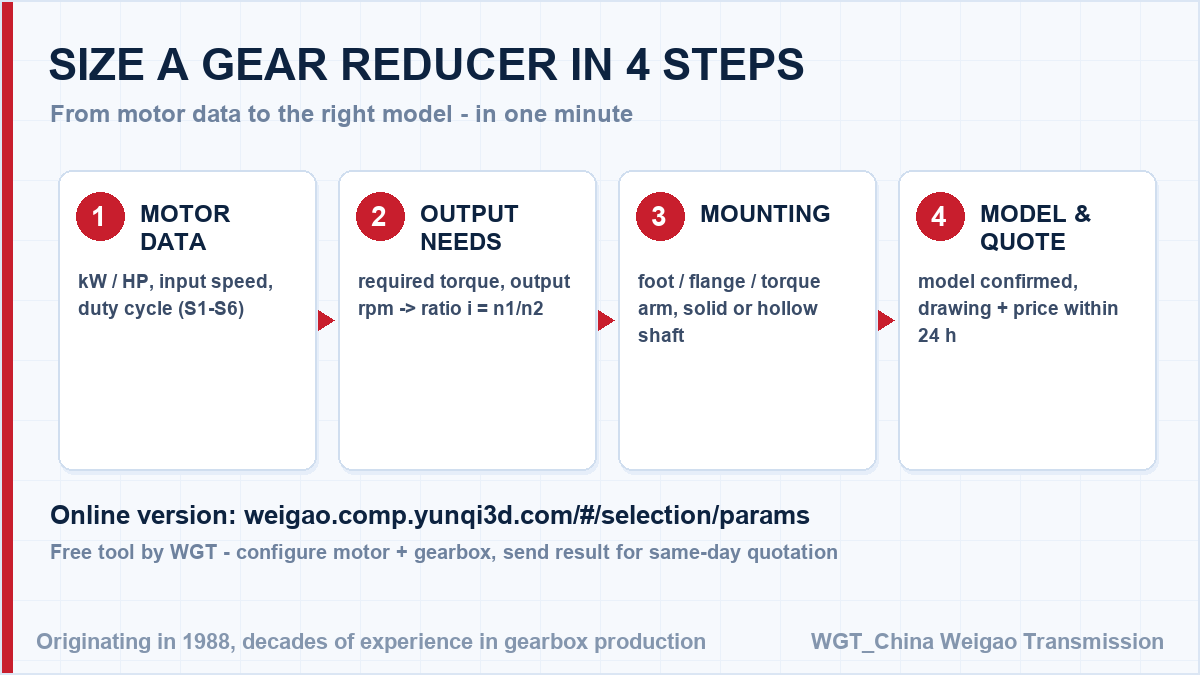
![online gearbox selection system workflow]()
Selection workflow used by our engineers for every quotation.
Real-World Duty Points
Airport baggage conveyor
An airport baggage-handling integrator uses reducers on check-in conveyors. Thousands of start-stop cycles a day are absorbed without overheating, and the low noise level matters in a public terminal.
Quarry primary crusher
A quarry operator fits industrial gear units on its primary jaw crusher feeders. The shock of rock dumped straight from the haul truck is covered by the service factor, and the cast-iron housing shrugs off years of dust and vibration.
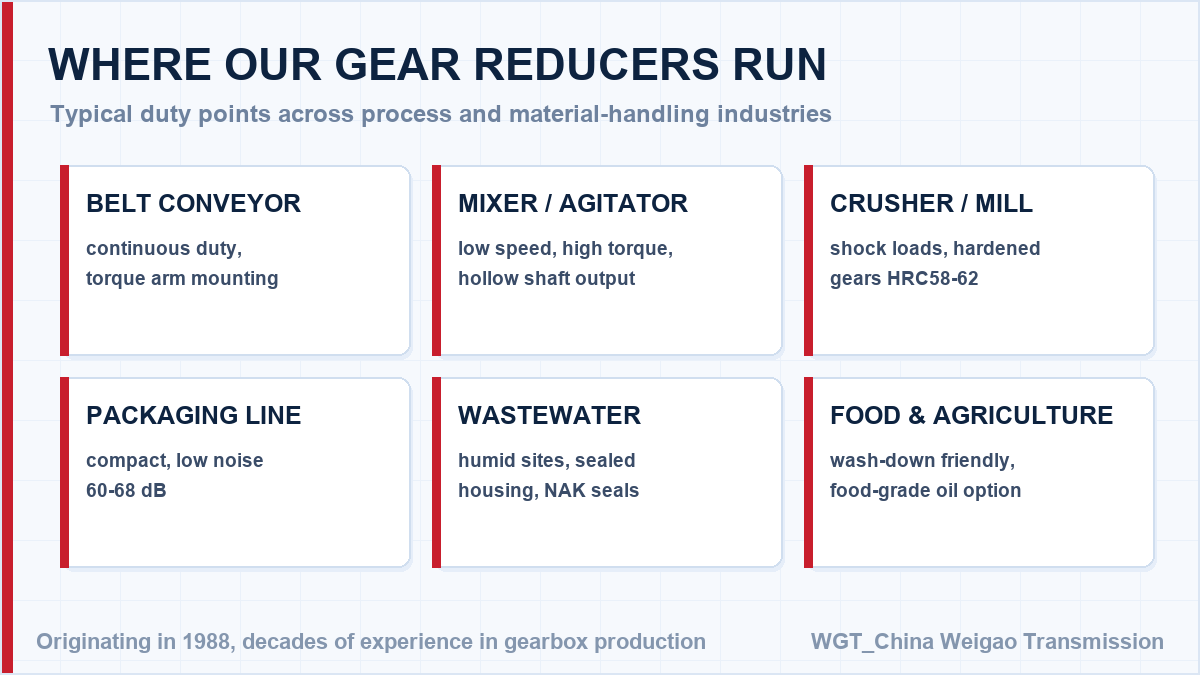
![right angle gearbox duty points overview]()
An overview of the duty points this series is built for.
Torque Margin Checked Before Every Quotation
No catalogue guessing. Use the WGT Motor & Gearbox Online Selection System to turn your motor data into a model number, and we will quote that exact unit within the day.
Every quotation includes the calculated service factor and the resulting torque margin, so the unit you buy covers the real duty - including starts, jams and reversals - not just the average load. Looking for a gearbox for wastewater treatment? Tell us the duty point and we will confirm the model in writing.