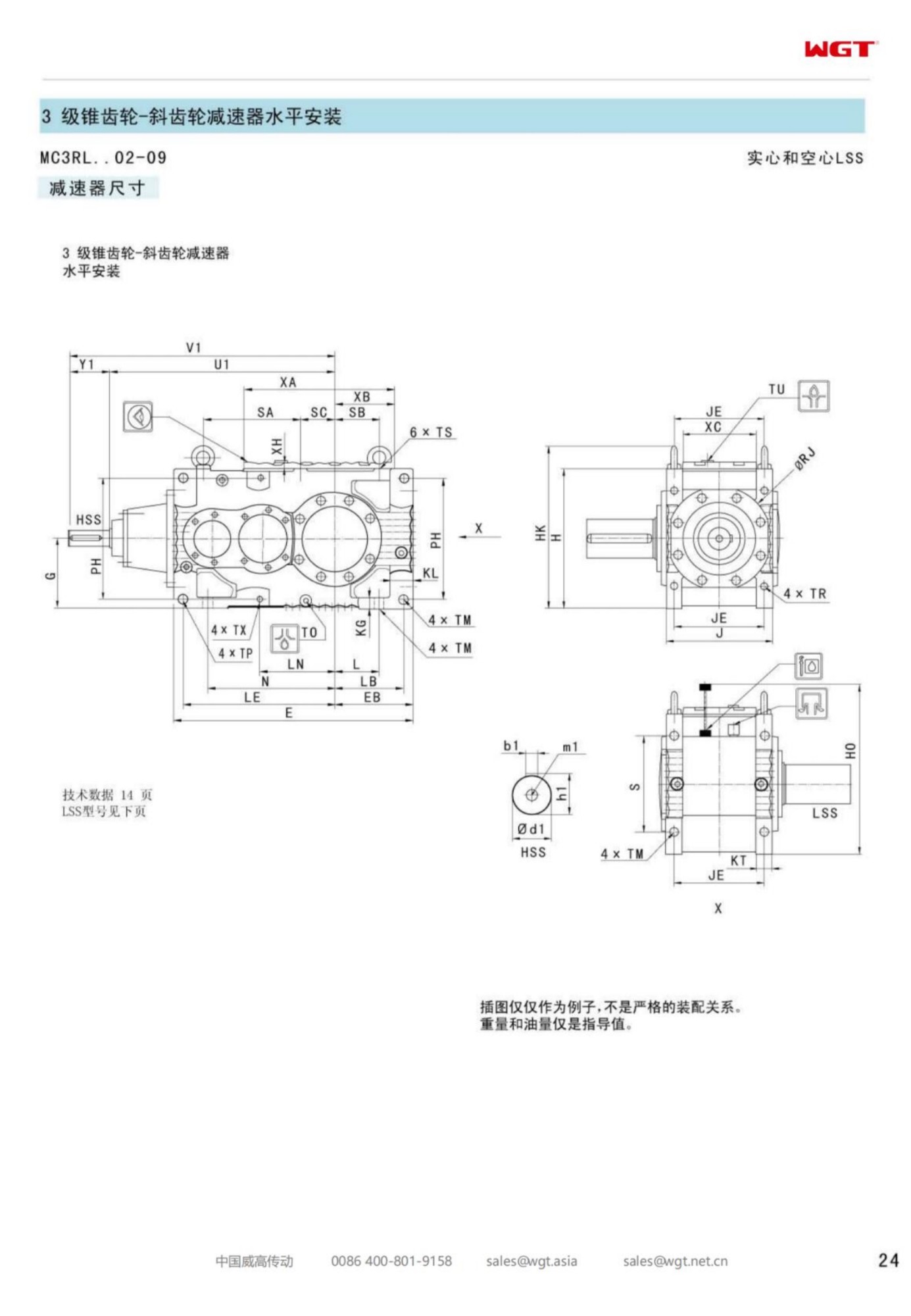
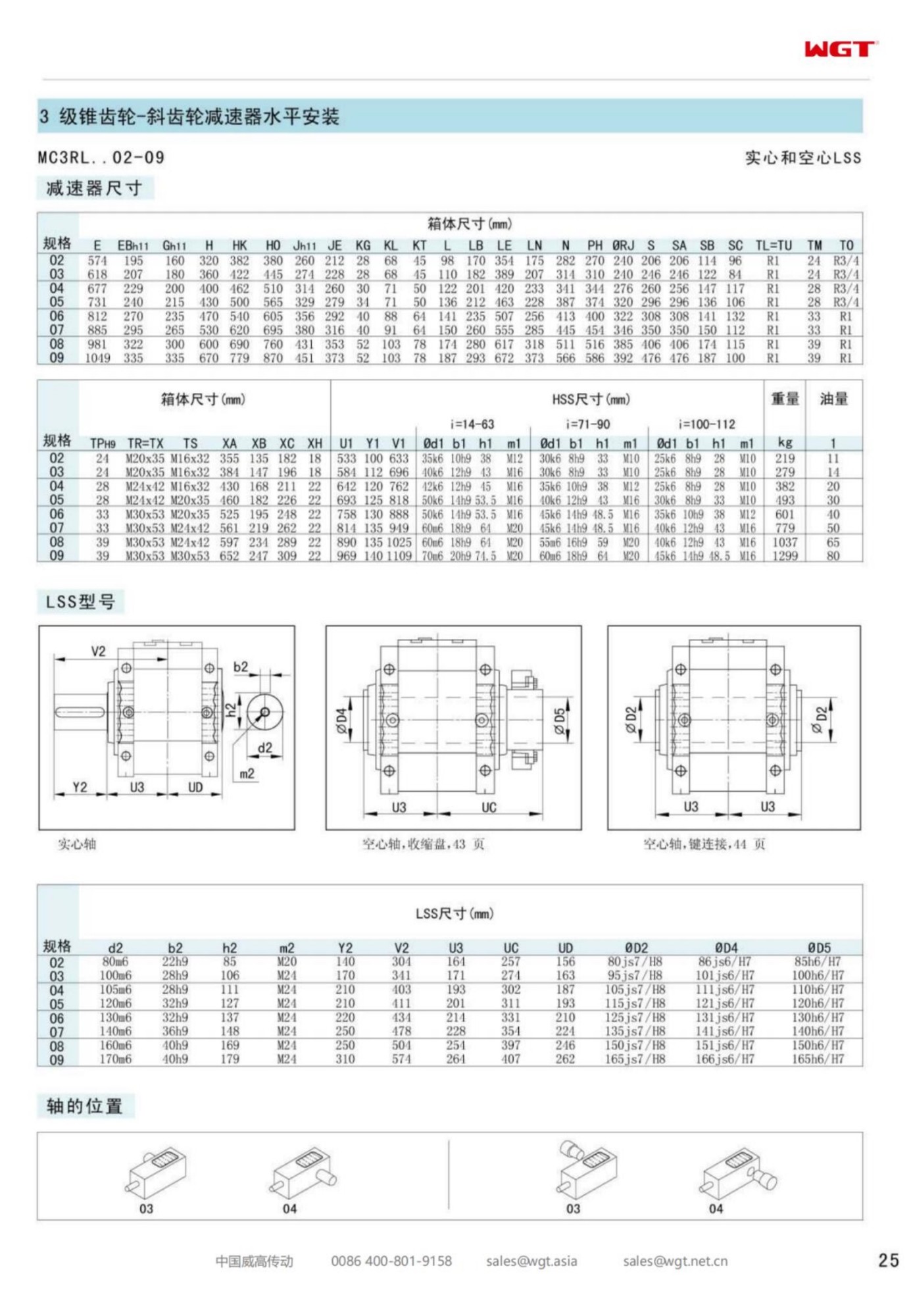
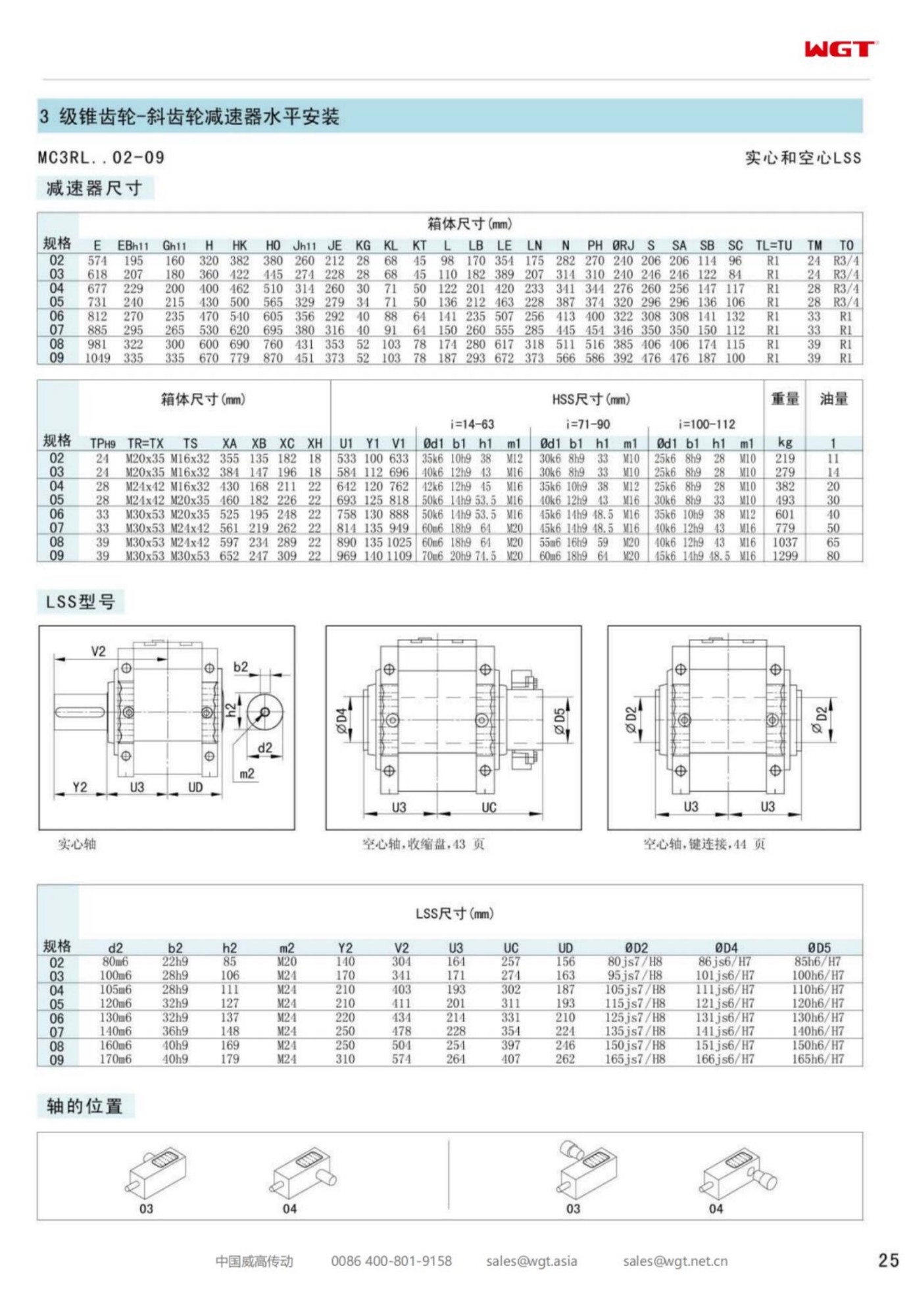
A palm oil mill runs on steam, fruit and momentum. From the steriliser to the press to the kernel line, the machines turn slowly under loads that change with every fruit load, in air that is hot, wet and carrying oil where it is not wanted. Slow, heavy, continuous duty is the three-stage band's home ground, and the MC3RLHT06 right-angle hollow shaft gearbox is the frame that sits there: geared deep for press and conveyor duty, mounted on the shaft it drives, and braced against the structure that carries the mill.
The notes below are for the engineers who keep a mill through the harvest peak: what wet fibre and oil mist do to a case, why the press restart decides the frame, and what an enquiry from a mill should say to come back with the right answer.
Fruit, Steam and a Continuous Press
Nothing in a palm mill waits. Fruit arrives at the rhythm of the harvest, the steriliser cycles on its own clock, and the press is fed continuously because a press that stops fouls. Every drive in the train shares the same expectation: run through the shift, start again on demand, and never be the reason the fruit backs up.
That expectation is worth more than any single torque figure. It argues for margin on the start, seals that tolerate washdown, and a case that can be hosed down without the breather drinking the hose.
Reading the MC3RLHT06 String
The code is short, and each position answers a mill question.
| MC | Industrial gear unit family for continuous plant duty |
| 3 | Three stages in the case - two helical reductions into a bevel set |
| R | Right-angle build, the motor set back from the press deck |
| L | Level output axis along the press or conveyor line |
| H | Hollow output bore keyed onto the driven shaft |
| T | Torque-arm bracket, reaction into the mill structure |
| 06 | Sixth frame of the three-stage band |
Three stages are there for torque at slow speed, which is what a screw press and a loaded fruit conveyor both ask for. The right-angle input keeps the motor out of the wash zone and off the deck where the hoses work.
Three Stages for Press Torque
A screw press does its work in the squeeze section, where the resistance rises with the cake and falls with the oil. The torque pattern is therefore uneven by nature, and the peaks arrive with every digesting charge. Three reductions let a moderate motor hold those peaks without the frame growing past the deck space the mill actually has.
The extra stage also means the internal speeds are higher for the same output, so oil condition carries more of the reliability story. A sampling point and a fixed interval are cheap lines in the order, and they turn the first warning of trouble from a bearing into a number on a report.
Wet Fibre and the Case Exterior
Fruit fibre is wet, oily and persistent. It packs against anything it lands on, holds moisture there, and slowly works under covers and into the gap around the output seal. A case that is cleaned on schedule sheds it; a case that is ignored grows a blanket that keeps the paint damp and the inspection blind.
The specification that works is unglamorous: sealed covers, a breather mounted high and away from the direct spray, and a shape that offers no ledges. Add the case to the washdown schedule by name, and the fibre never gets a foothold.
Oil Mist and the Seals
Press house air carries a fine oil mist that settles on everything warm. On a gearbox output seal, an oil film that is not the gearbox's own oil is a nuisance rather than a blessing: it swells the wrong elastomers and carries fines into the lip.
Name the environment on the enquiry and the seal material follows from it. A dust lip ahead of the main seal gives the mist something to remove before it reaches the lip, and a shaft path that stays smooth does the rest. Once the groove has been cut, every seal fitted afterwards is a temporary answer.
Steam, Washdown and the Paint System
The mill is washed with hot water and caustic on a schedule, and the steriliser leaks steam on all the days between. That combination strips the wrong paints in a season and attacks the fasteners before it attacks anything else.
Ask for a paint system rated for washdown chemicals, fasteners in a corrosion-resistant grade, and covers whose joints do not trap caustic. The premium over a standard finish is small at the order and large at the third year, when the comparison between units is painted on their covers.
Torque Arm on the Press Deck
The press deck is a working platform: walkways, pipes, hoses and a structure that has been modified since the drawings were issued. The torque arm lands in that landscape, and its reaction reverses whenever the press is barred round for clearing.
Keep the stay short and square to the reaction, land it on a primary member, and spread the load with a plate. Inspect the anchor after the first fouling of the season, when the structure has taken its first real shock - the deck of a working mill is not the structure it was at commissioning.
Fibre Build-Up and the Jam Start
When the mill stops with fruit in the system, the restart meets a compressed, fibrous mass that has settled into everything. The breakaway torque on that condition is the highest number the drive will ever see, and it arrives at the worst hour - the Monday morning after an unplanned stop.
Size the frame and the service factor on that restart, describe the jam condition honestly on the enquiry, and give the control system a way to break the mass gently before the full load is asked for. A drive that survives the jam start is the drive the operators trust.
Bearings Under Continuous Load
A press that runs all season gives its drive bearings no rest, and the heat of the mill raises the case temperature above the catalogue's cool-hall assumption. The first sign of trouble is usually a bearing that runs warm at the end of the shift and quiet by the next morning.
A monthly temperature record catches that trend early. So does an oil sample that watches water content, because steam and washdown put moisture in the air and the breather lets the case breathe it. Where the duty is genuinely hot, confirm the oil grade against the measured temperature rather than the default.
The Harvest Peak and the Duty Cycle
The mill's hardest weeks are the harvest peak, when throughput rises and the presses run longer hours than any other time. A drive specified on the average month meets its real design case in those weeks, and the margin it carries either shows up as uptime or as a trip on the hottest afternoon.
Describe the peak on the enquiry - hours, throughput, ambient - and let the frame be chosen for it. The difference costs little when the frame is selected and cannot be bought afterwards.
Writing the Enquiry from the Press House
The enquiry that gets this frame right names the machine and the conditions: press or conveyor, shaft dimensions and condition, running and jam torque, washdown chemicals and frequency, steam and ambient temperatures, oil mist, and the structure available for the stay.
The reply should answer as a package: bore and key against the drawing, ratio and output speed, service factor argued on the jam restart, seals and breather for oil mist and fibre, paint and fasteners for caustic washdown, and arm geometry drawn against the deck. Then the unit arrives as part of the mill.
A Frame Six Through the Season
Mills are judged at the end of the season, when the presses have been opened, the steriliser has been descaled and the drives have run every hour they were asked for. The units that come through are the ones whose seals were specified for the mist, whose paint survived the caustic, and whose oil was sampled before it failed.
Frame six carries its half with three stages that hold press torque from a compact case, a hollow bore that removes a coupling from a wet deck, and a finish chosen for the mill's chemicals rather than a showroom. The fruit carries the rest - and the fruit never waits.
Steam, oil mist and a press that cannot foul - three stages hold the squeeze:
- Screw press main drive at a palm oil mill
- Digestor screw conveyor feeding the press line
- Continuous steriliser car puller, slow heavy duty
- Empty fruit bunch conveyor out of the press house
- Kernel crushing line transfer conveyor
- Cake breaker conveyor after the screw press
Available Frames and Their Typical Duty
| Model | Centre distance | Output | Typical duty |
|---|
| M3PSF50 | size 50 | solid shaft, foot | conveyors, feeders |
| M3PSF60 | size 60 | solid shaft, foot | crushers, mixers |
| M3PSF70 | size 70 | solid shaft, foot | ball mills, shredders |
| M3PSF80 | size 80 | solid shaft, foot | kilns, heavy conveyors |
| M3PSF90 | size 90 | solid shaft, foot | mill and kiln drives |
| M3RSF50 | size 50 | solid shaft, foot, right-angle | inclined conveyors, elevators |
| M3RSF60 | size 60 | solid shaft, foot, right-angle | screw classifiers, feeders |
| M3RHF70 | size 70 | hollow shaft, foot, right-angle | agitators, drum drives |
| M3PHT80 | size 80 | hollow shaft, torque arm, parallel | shaft-mounted conveyors |
| M3RHT90 | size 90 | hollow shaft, torque arm, right-angle | heavy shaft-mounted drives |
Note that PSF and RSF frames of the same size share the mounting footprint; the R build simply inserts a bevel stage, so switching layout rarely forces a foundation change.
Questions and Answers
What tooth quality and grinding finish do you apply?
Gearing is case-hardened and profile-ground to international accuracy grades, with crowning and end relief applied to avoid edge loading. This is what keeps noise and vibration stable over years of continuous duty.
Can existing motors, couplings and guards be reused?
In most upgrade projects yes: because input and output interfaces follow the common industry dimensions, the existing motor, coupling and guard usually bolt straight on. Send the old nameplate and we confirm before you order.
What happens if my duty changes after installation?
Send us the new duty point. A revised torque and service-factor calculation is free of charge, and the answer is usually one of three: the unit is fine, add an oil change interval, or plan a frame change at the next shutdown.
Installation Examples
Steel mill transfer car
A rolling mill drives its slab transfer cars with industrial gear units mounted on torque arms. Reversing duty every few minutes is handled without complaint, and the hollow-shaft connection keeps the wheel axles free of couplings.
Rotary dryer drive
A minerals processor powers a rotary dryer with a large foot-mounted gear unit. Slow rotation with high torque is the natural duty band, and the housing stays within its temperature limits without auxiliary cooling.
![gear box application map for industry]()
From quarries to food plants - one right-angle drive concept.
Selection Example: Screw press main drive at a palm oil mill
Take a 22 kW motor at 1470 rpm turning the press screw at 12 rpm. The ratio follows directly: 1470 / 12 = 122.5, so a ratio near i=122 is selected from the three-stage right-angle band, and the frame is confirmed against the jam start with fruit compressed in the barrel, not against the running squeeze. In this case frame six holds press torque through the harvest peak on a bore keyed to the screw shaft, a torque arm into the press deck, and a finish specified for caustic washdown and oil mist. The ratio is the easy part. The service factor for the shock level is what makes the selection safe, and we check that for you at no charge.
![how to choose a speed reducer model]()
Ratio first, then torque, then frame size: the standard selection route.
Full Documentation for Project Tenders
Bidding a project? The WGT Motor & Gearbox Online Selection System covers motor power, ratio and mounting on one screen - enter your numbers and see the model immediately.
We support tenders with complete technical files: dimension drawings, rating tables, material certificates and test record formats, in the format your client specifies. Looking for a gearbox for crusher? Tell us the duty point and we will confirm the model in writing.