Most right-angle enquiries that reach a factory desk are the same question in different accents: will this drive still be honest with me in twenty years? Below a certain size the answer depends mostly on how the unit is treated. Above it, the answer depends on whether the frame was chosen with the plant's worst afternoon in mind. The MC3RLSF06 bevel-helical gear unit sits on the far side of that line. It is the sixth frame of the right-angle band, and at this size the case stops behaving like a housing and starts behaving like a piece of structure.
Inside the case the arrangement is unchanged from its smaller brothers: a bevel pair turns the drive through ninety degrees at motor speed, then two helical stages bring the shaft down to whatever the driven machine needs. What changes is the proportion of the design devoted to stiffness. Walls, ribs, bearing spans and foot pads all grow faster than the torque figure does, because at this level the load path through the casting matters as much as the tooth geometry.
When Frame Six Becomes the Only Sensible Answer
There is a recognisable set of conditions that pushes a selection upward. The duty is continuous rather than shift-bound. The output shaft carries something with real overhang - a head pulley, a sprocket on a long hub, a boom pivot. The machine must start loaded, because the material does not politely leave the belt when the plant stops. Ambient in the drive enclosure climbs past forty degrees in summer and stays there. Any two of those together usually mean the frame below is being asked to live on its margins.
The sixth frame answers all four without drama. Its output assembly is built to take bending as well as torsion, its sump holds enough oil to ride out a slow leak between inspections, and its foot pattern is wide enough that the bolts are not the weakest link in the chain from motor to foundation. That last point is easy to overlook and expensive to discover: on a small unit a soft foot shows up as noise, on a heavy unit it shows up as a cracked pad two years later.
The One-Step Jump from an 05
Bigger is not automatically better, and a plant that oversizes pays for it in oil, in starting current and in the space the guard needs. The honest test is a comparison of two numbers rather than a feeling. First, the calculated running torque against the thermal capacity at the true ambient. Second, the breakaway torque the machine can demand when it restarts into a full load, against what the frame can pass without exceeding its mechanical limit.
Where both comparisons close on the smaller frame, the smaller frame is the right purchase - it will run slightly warmer and cost less to keep. Where either one closes only by assuming a clean start, a mild summer and a well-behaved material, the 06 is not an upgrade but a correction. The difference in price between the two frames is almost always smaller than the cost of one unplanned stop on a main conveyor.
Decoding the Seven-Character Nameplate
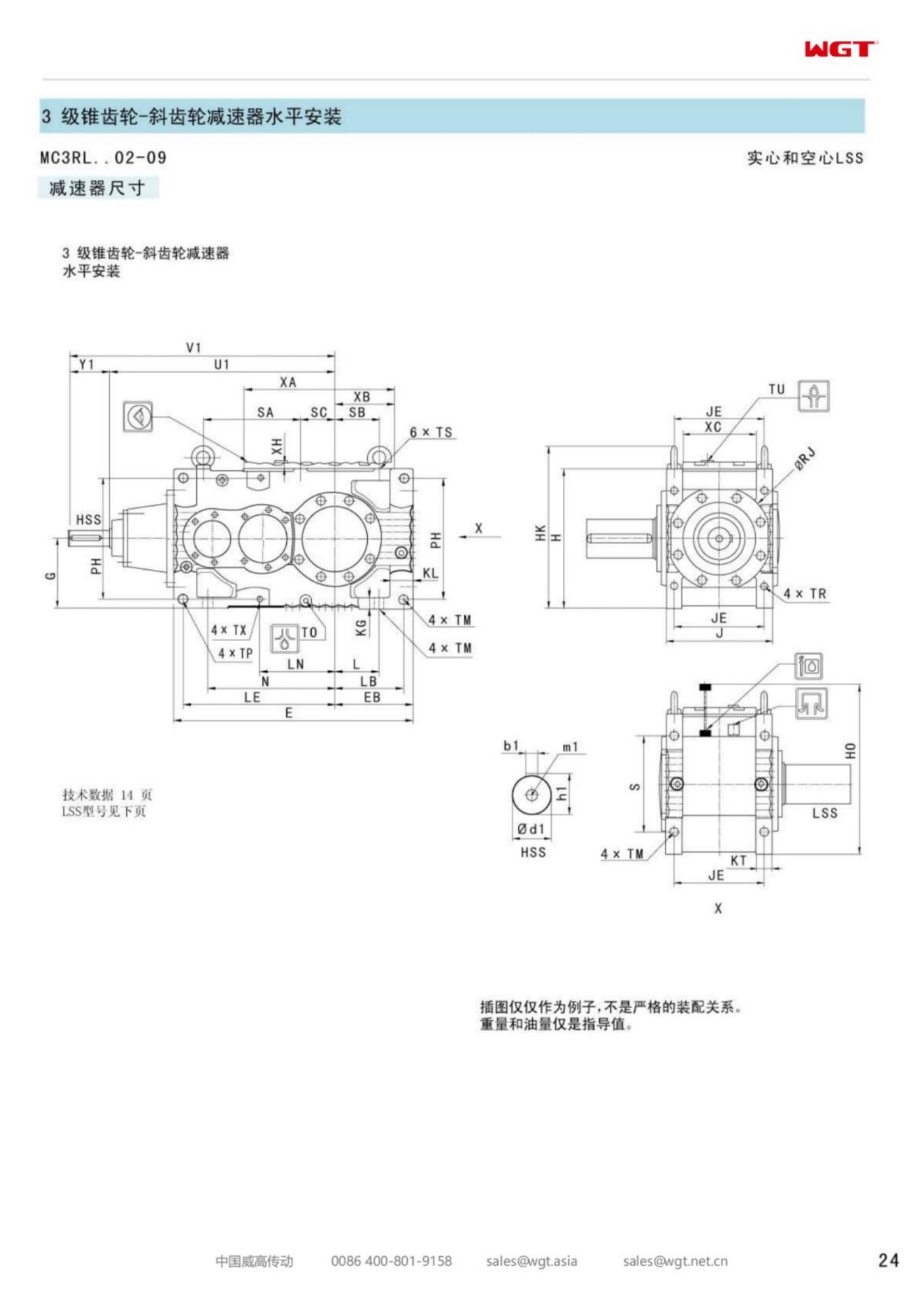
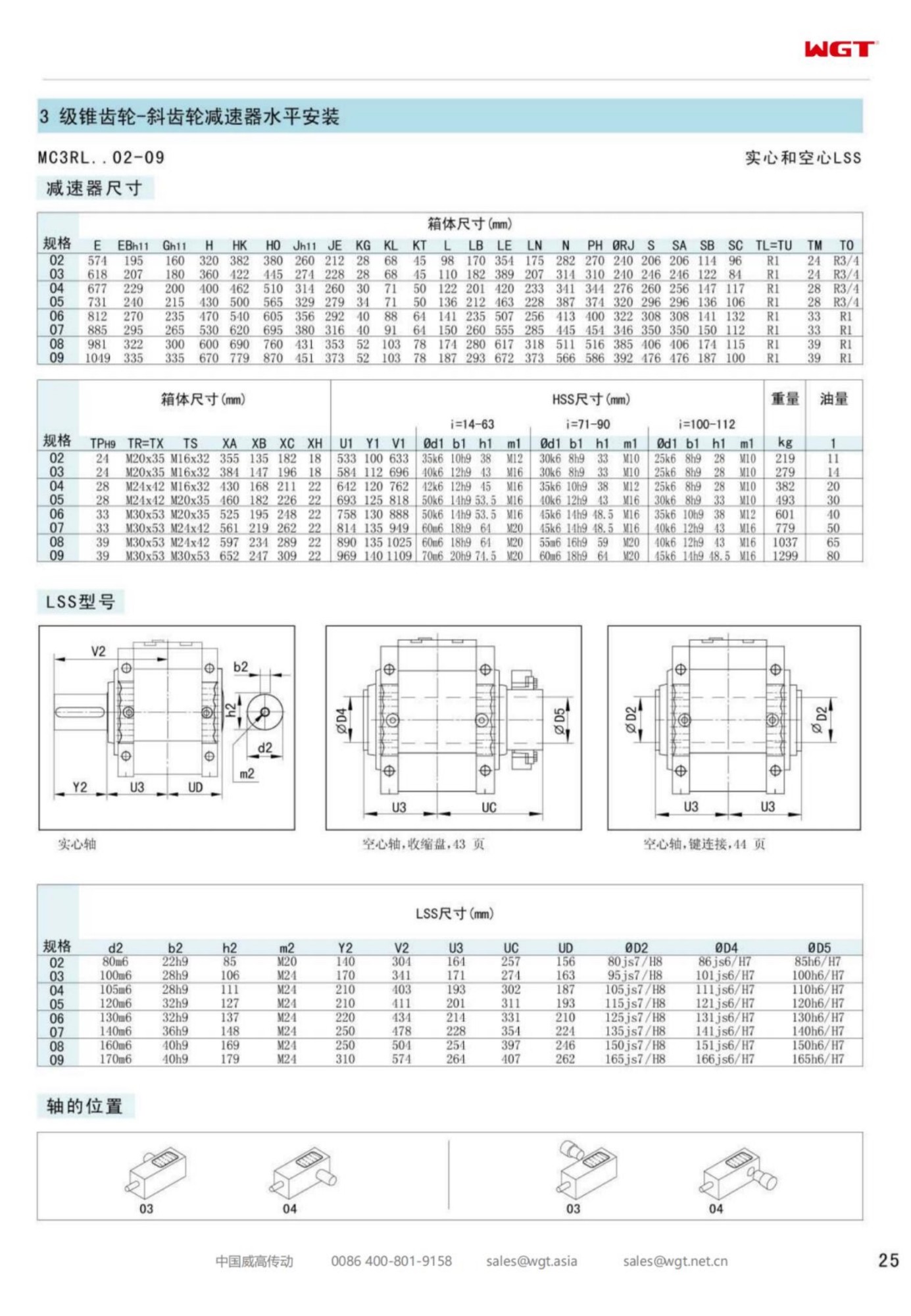
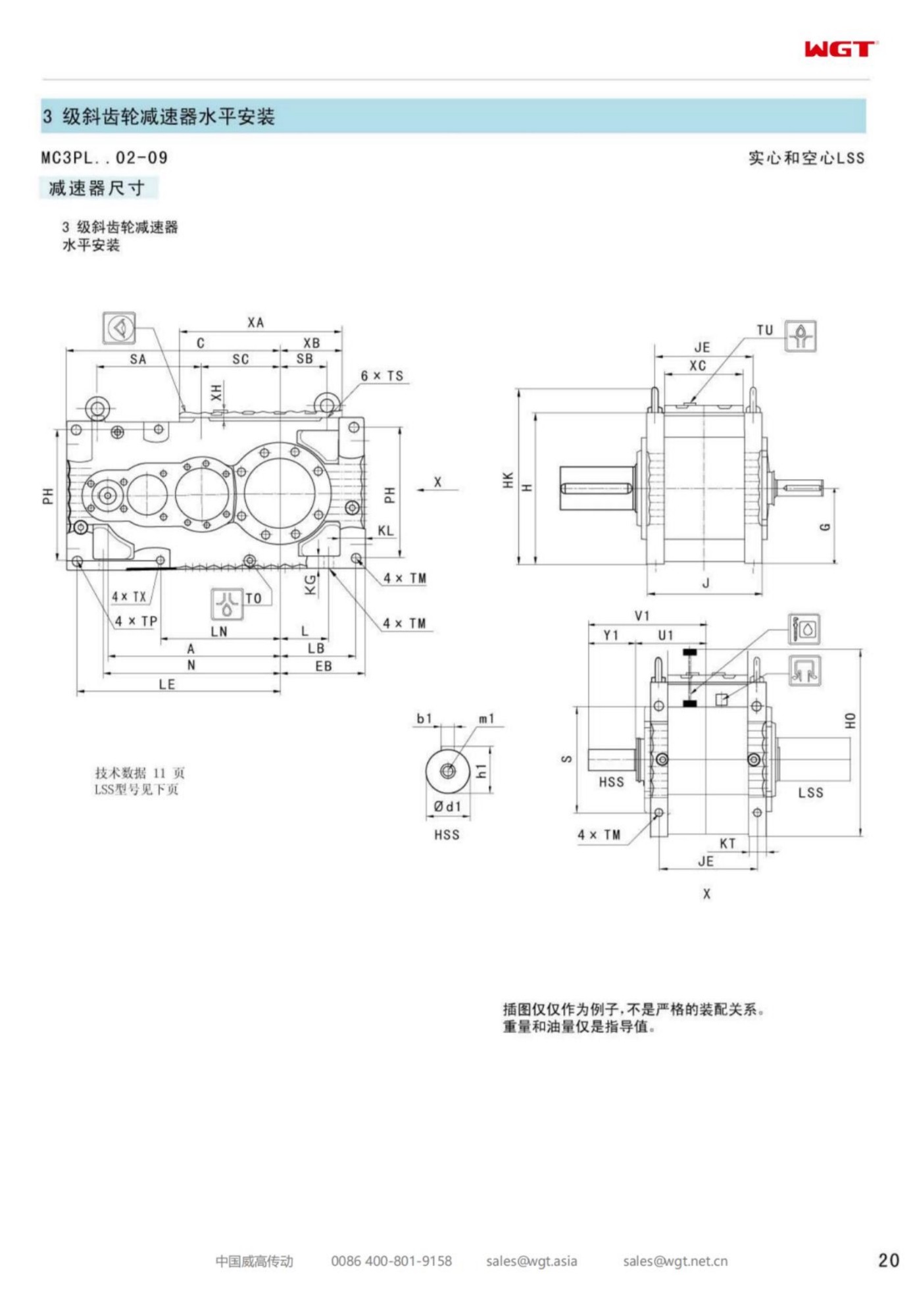
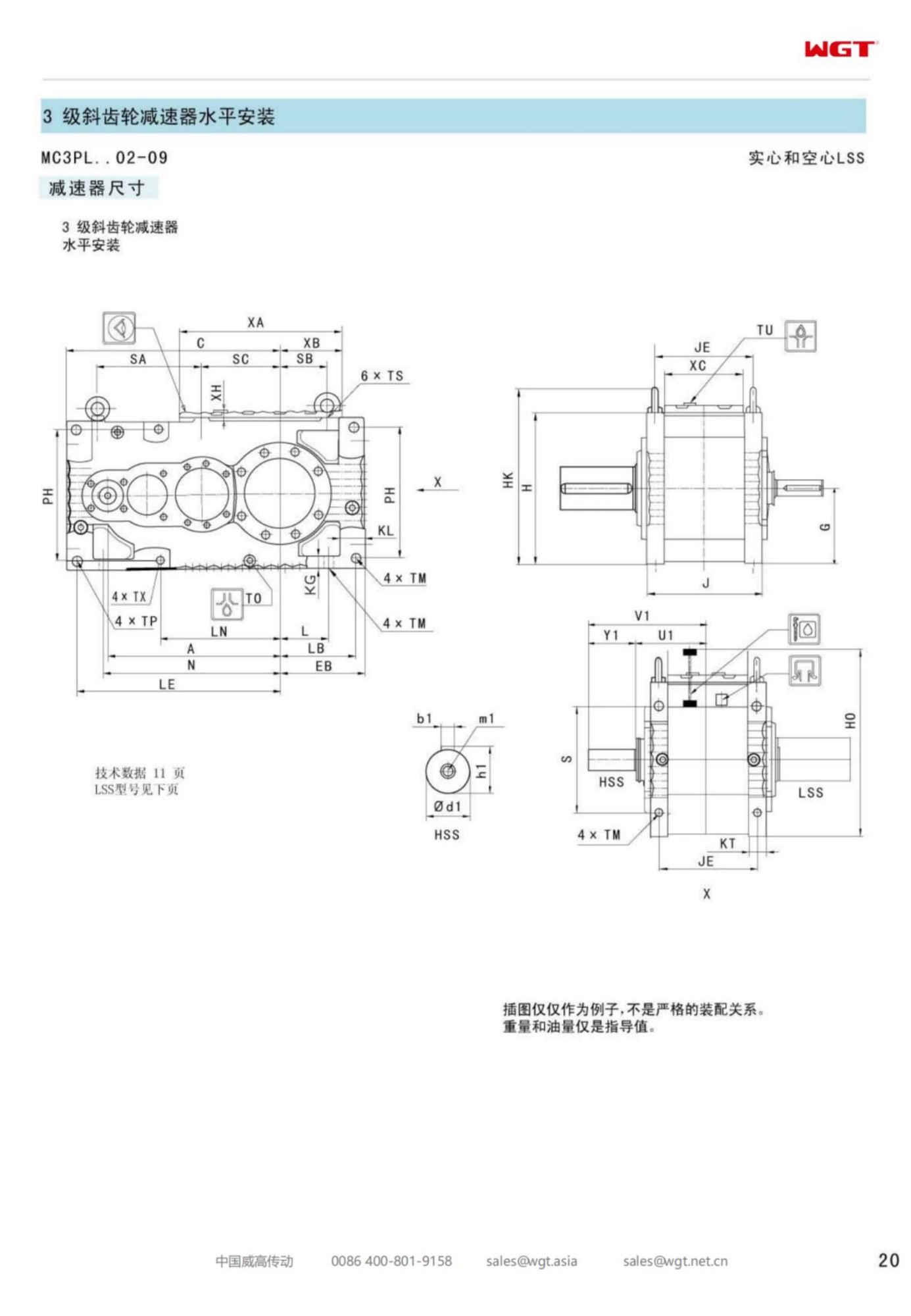
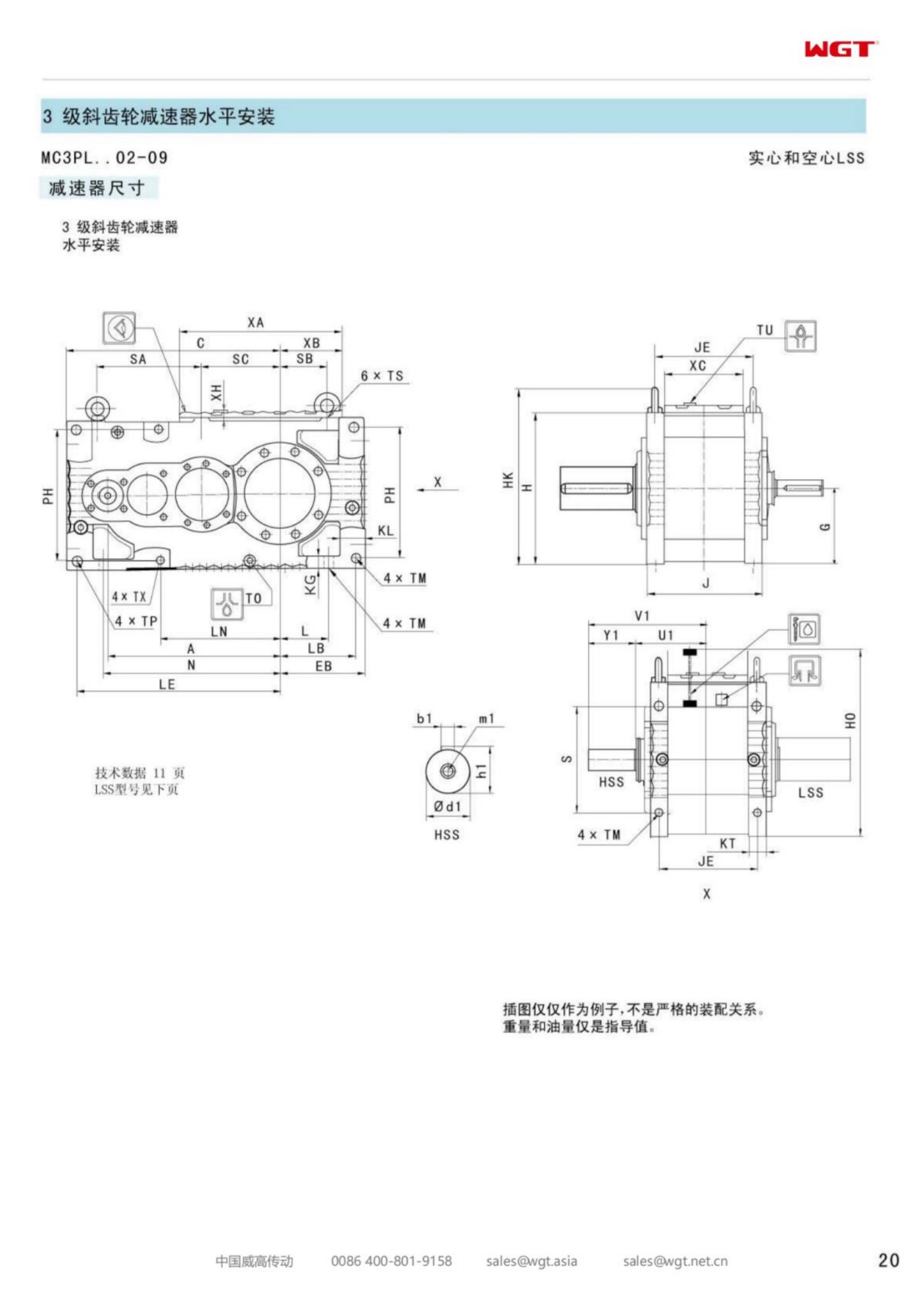
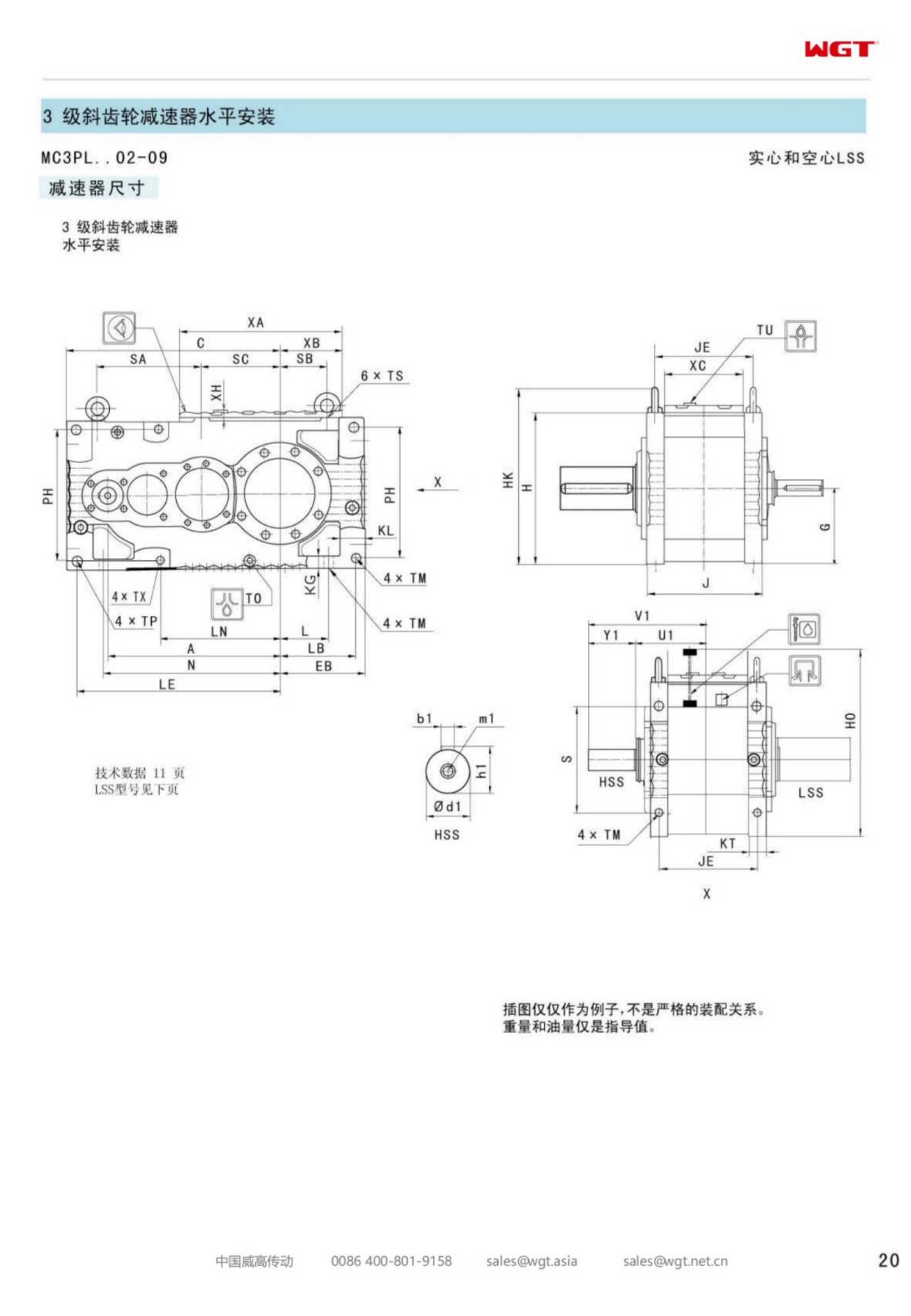
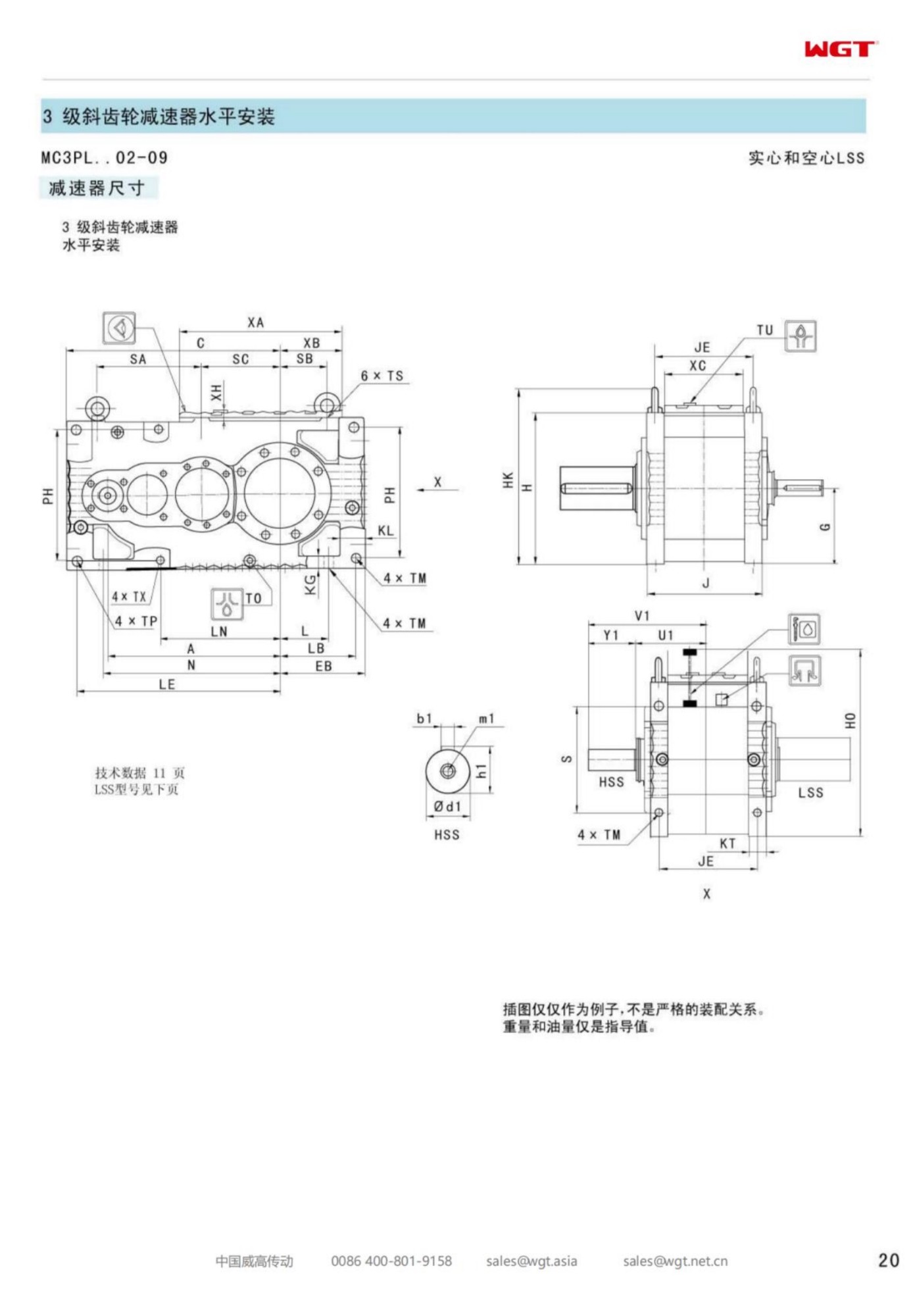
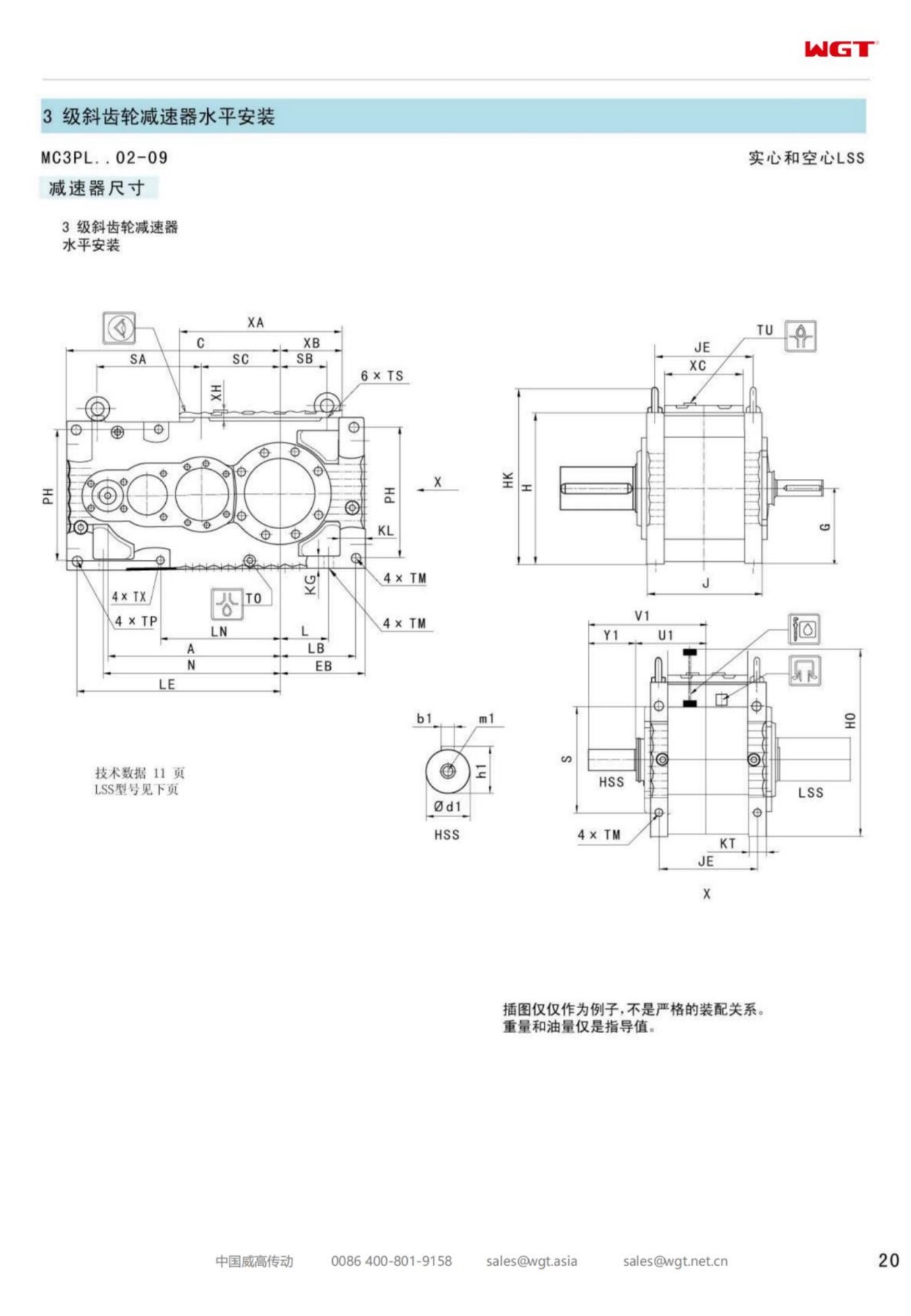
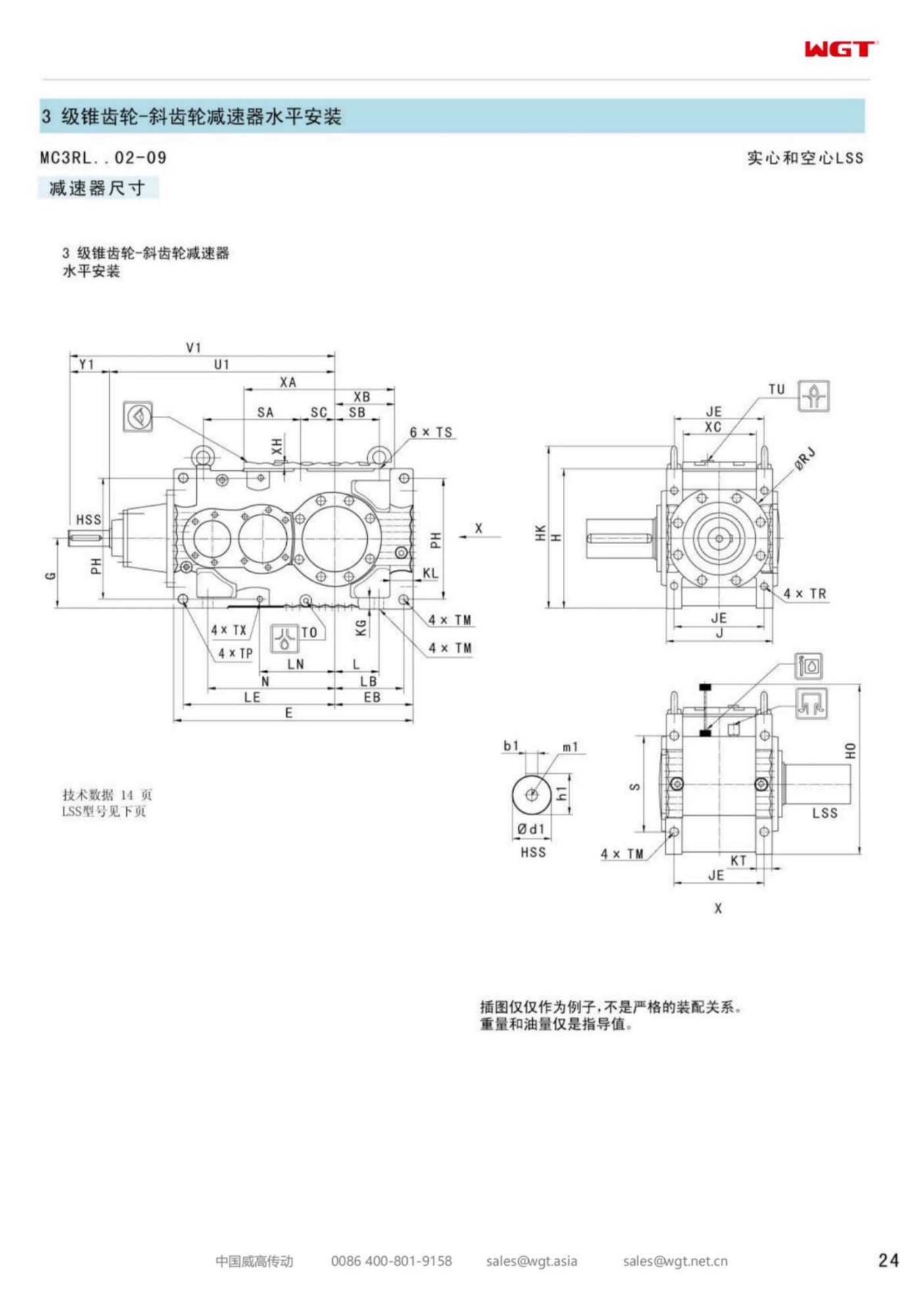
The type string is a contract written in abbreviations. Reading it once against the outline drawing saves a great deal of correspondence later, particularly when a project is copying a specification from a plant built a decade ago.
| MC | Industrial gear unit for continuous service in process and bulk handling plants |
| 3 | Three reductions: bevel input pair plus two helical stages |
| R | Right-angle bevel-helical layout, input shaft at ninety degrees to the output |
| L | Horizontal arrangement, shafts level, case resting on its foot plane |
| S | Solid output shaft with parallel key, single shaft end |
| F | Foot mounting on a rigid bedplate, frame or grouted steel base |
| 06 | Sixth frame of the 02-09 band: heavy bulk duties where stiffness governs the design |
Two variables live outside the string and cause most of the site surprises. The first is motor orientation: left, right, above or below the case, each option relocates the breather and the drain, and one of them will put the level plug where a fitter can actually reach it. The second is the direction of rotation, which decides which flank of the bevel teeth carries the load in forward running. Both belong on the order drawing, not in a conversation after the unit lands.
Torque Travels a Crooked Path Here
In a parallel-shaft unit the reaction torque tries to rotate the case about the output axis, and a torque arm or a set of well-tightened feet deals with it. In a right-angle unit the reaction has two components, because the input arrives on a different axis from the one the case naturally wants to spin about. The result is a rocking couple that the foot pads and the bedplate share between them.
That is why the foundation drawing matters more at frame six than at frame three. A bedplate that flexes by a fraction of a millimetre under load will let the case move in step with the belt tension, and the bevel mesh will feel it as a contact pattern that walks across the tooth every revolution. Nothing in the gearbox is defective in that scenario, and nothing in the gearbox can fix it either. Stiffness below the feet is part of the transmission, whether the purchase order mentions it or not.
Duties That Keep a Frame Six Busy
Upright right-angle duties where bearing seats and flanges must grow with the shaft:
- Main drives on overland belt conveyors at a bulk terminal
- Slew and boom hoist gear units on stacker-reclaimers
- Kiln and dryer auxiliary drives in cement and lime works
- Coarse ore apron feeders under a primary crusher
- Large bucket elevators lifting clinker into storage silos
- Twin-shaft mixers in a ready-mix batching plant
The common thread is that every one of these machines is a single point of failure for the line behind it. A terminal conveyor, a reclaimer boom, a kiln auxiliary - none has a bypass that anyone wants to use. That is the real argument for the sixth frame: not that it is faster or more efficient than a smaller unit, but that its margin is wide enough that nobody has to think about it during the shift when everything else is going wrong.
The Half of the Installation Nobody Photographs
Commissioning photographs usually show the unit, the coupling and a proud fitter. They rarely show the bedplate before the unit landed on it, which is a pity, because that is where most of the longevity is decided. The sequence that works is unglamorous and quick. Check the pad heights with a straight edge and a feeler gauge before anything is lifted. Shim or machine until every foot sits flat with no bolt doing the levelling. Bring the bolts up in the diagonal sequence the drawing gives, in three passes rather than one. Then, and only then, align the couplings.
Alignment deserves a second pass warm. A case this size grows a little when it reaches running temperature, and the growth is not symmetrical - the input end and the output end sit at different heights above the oil level. Cold alignment to the gauge figures, then a warm check after the first loaded hour, catches the difference while the unit is still under warranty and the crew is still on site. Record both sets of readings and keep them with the contact-pattern photograph; the next alignment, years later, will start from evidence instead of guesswork.
Stretching the Oil Interval Without Gambling
A large sump is a buffer, not an excuse. The extra volume means contamination takes longer to reach a harmful concentration, which is why intervals on heavy frames can be longer than on small ones - but only when the contamination itself is being managed. Three habits do most of the work. Keep the breather clean and correctly sized for the enclosure; a blocked breather pressurises the case and pushes oil past the seals. Wipe the area around the filler before opening it, every time, because grit on a dirty rag is how a sump starts wearing its bearings. Sample at a fixed point in the interval rather than when someone remembers.
Where the site runs hot or dusty, a sample every quarter turns the oil into a record of the machine's health. Iron rising steadily, water creeping up, viscosity drifting outside the grade - each points at a different cause and each is cheaper to act on early. Extending the oil change interval is a legitimate saving; extending it while skipping the sampling is simply a decision to find out later.
Building an Enquiry a Heavy Frame Deserves
A frame-six enquiry should read like a short technical brief. Motor rating, speed and starting method. Target output speed with the tolerance the process really accepts. Running torque and breakaway torque stated separately, because they size different parts of the unit. Hours per day and starts per hour. Worst-case ambient inside the enclosure, with radiant heat from a kiln or a dryer noted. Mounting position and motor orientation. Shaft and key dimensions if an existing coupling is being reused. Overhung load and its distance from the shaft shoulder where a pulley or sprocket is involved. Painting system, nameplate data and documentation required by the project.
Send that in one message and the answer comes back as a firm quotation with a drawing number. Send a nameplate photo and a hope, and the answer comes back as questions - which is the factory's polite way of saying the risk is still yours. A unit of this size will probably outlive the person who specifies it; it is worth an hour of careful writing now.
Questions We Hear Most Often
Can the reducer be used outdoors or in a washdown area?
Standard paint and NAK seals suit sheltered outdoor duty. For washdown or coastal sites specify the heavy-duty coating, FKM seals and stainless fasteners; for humid rooms we recommend the breather and oil-check routine in the manual.
What if the ratio I need falls between two catalogue steps?
Choose the next available step and adjust the driven speed, or ask us for a special pair of gears. Trimming the driven machine is normally cheaper than ordering a special ratio, and a slightly higher ratio never hurts the drive.
How is the unit protected against dust and water ingress?
Housings are sealed to IP55 as standard with NAK oil seals and gasketed covers. Heavy dust, washdown chemicals or steam cleaning call for the higher protection option, which we specify together with the correct lubricant.
Choosing the Right Frame Size
| Model | Centre distance | Output | Typical duty |
|---|
| M3PSF50 | size 50 | solid shaft, foot | conveyors, feeders |
| M3PSF60 | size 60 | solid shaft, foot | crushers, mixers |
| M3PSF70 | size 70 | solid shaft, foot | ball mills, shredders |
| M3PSF80 | size 80 | solid shaft, foot | kilns, heavy conveyors |
| M3PSF90 | size 90 | solid shaft, foot | mill and kiln drives |
| M3RSF50 | size 50 | solid shaft, foot, right-angle | inclined conveyors, elevators |
| M3RSF60 | size 60 | solid shaft, foot, right-angle | screw classifiers, feeders |
| M3RHF70 | size 70 | hollow shaft, foot, right-angle | agitators, drum drives |
| M3PHT80 | size 80 | hollow shaft, torque arm, parallel | shaft-mounted conveyors |
| M3RHT90 | size 90 | hollow shaft, torque arm, right-angle | heavy shaft-mounted drives |
One family, two layouts. Choose P for a coaxial-in / parallel-out drive train, R when the motor must turn 90 degrees; then pick the shaft type and mounting style that the machine interface needs.
Selection Example: Boom conveyor drive on a bulk terminal stacker
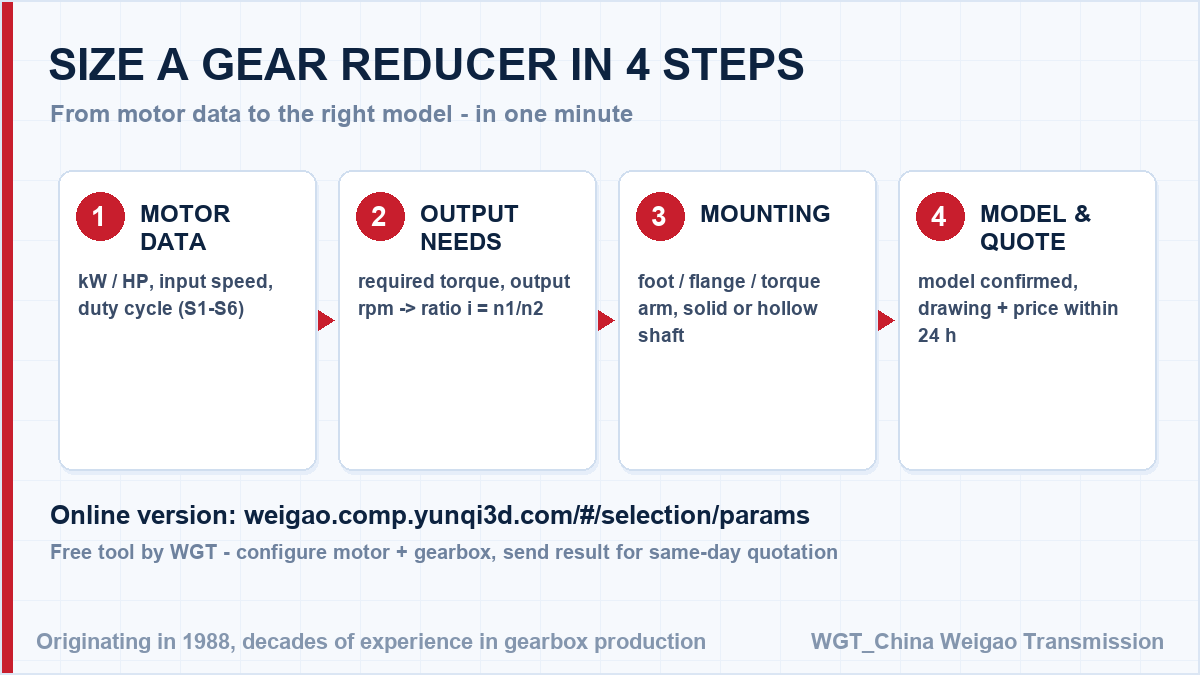
Take a 75 kW motor at 1485 rpm turning the boom belt head pulley at 38 rpm. The ratio follows directly: 1485 / 38 = 39.1, so a ratio near i=39 is drawn from the three-stage band, and the frame is checked against the surge that follows a boom being lowered into a pile that has settled overnight. In this case the sixth frame has the case stiffness to hold a wide bevel contact pattern under that rocking couple, which is what a terminal running two berths actually demands. It always comes down to those three figures. Send them over and we confirm the frame, ratio and service factor in writing.
![online gearbox selection system workflow]()
Selection workflow used by our engineers for every quotation.
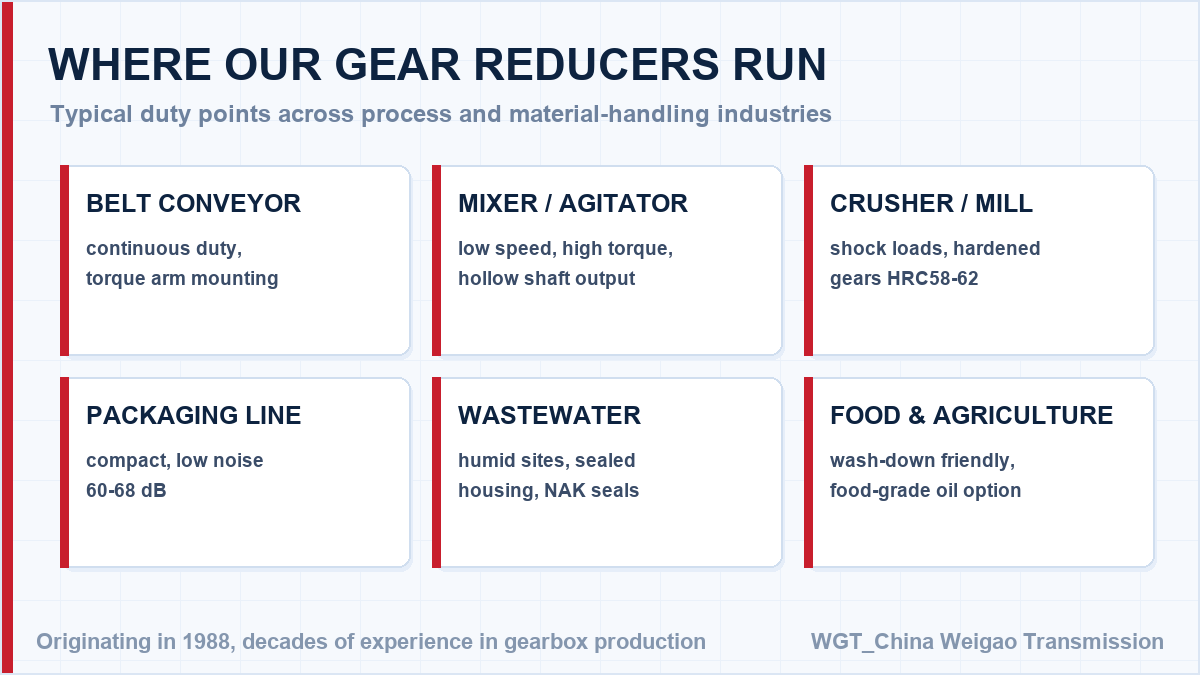
Real-World Duty Points
Sugar mill bagasse conveyor
A sugar mill moves wet bagasse on conveyors driven by industrial gear units. High moisture, fibrous material and sticky residue are the daily conditions, and the sealed housings have kept lubricant clean between oil changes.
Slag handling crane
A steelworks drives the long-travel motion of a slag-handling crane with industrial gear units on torque arms. Heat radiation from the slag pot is handled by the increased clearance and standard high-temperature paint.
![right angle gearbox duty points overview]()
An overview of the duty points this series is built for.
Get the Selection Checked - Free of Charge
Already picked a model? Use the WGT Motor & Gearbox Online Selection System to turn your motor data into a model number, and we will quote that exact unit within the day.
Send us your calculated model and duty point. We cross-check the ratio, torque and service factor independently and confirm or flag the difference - a free second pair of engineer eyes. Looking for a gearbox for wastewater treatment? Tell us the duty point and we will confirm the model in writing.